
Why Choosing the Best Type of Roof Vent Matters More Than You Think
The best type of roof vent for most homes is a ridge vent paired with soffit vents — this combination creates a balanced, continuous airflow system that outperforms other options in nearly every climate and roof type.
Here’s a quick comparison to help you decide:
| Vent Type | Best For | Passive or Active |
|---|---|---|
| Ridge vent + soffit | Most homes, most climates | Passive |
| Turbine vent | Windy areas, snowy climates | Active (wind-powered) |
| Box/static vent | Simple roofs, tight budgets | Passive |
| Powered attic fan | Large or complex roofs | Active (electric) |
| Solar-powered vent | Sunny climates, eco-focused | Active (solar) |
| Gable vent | Supplemental airflow | Passive |
Most homeowners don’t think twice about their roof vents — until something goes wrong.
By then, the damage is already done. A poorly ventilated attic can quietly cause mold growth, rotting wood decking, ice dams in winter, and cooling bills that spike by up to 30% in summer. These aren’t small problems. They’re the kind that turn into expensive repairs fast.
The tricky part? There’s no single “best” vent that works for every home. The right choice depends on your roof type, your local climate, your attic size, and how your intake and exhaust vents work together. Get that balance wrong, and even the best individual vent won’t perform as it should.
This guide walks you through everything you need to know — clearly and without the jargon.
I’m John Martin of Martin & Sons, and with over 35 years of hands-on roofing experience in the St. Louis area, I’ve seen what happens when homeowners choose the wrong best type of roof vent — or skip proper ventilation altogether. In this guide, I’ll share what actually works, based on decades of real-world installs across hundreds of local homes.
Understanding the Best Type of Roof Vent for Your Home
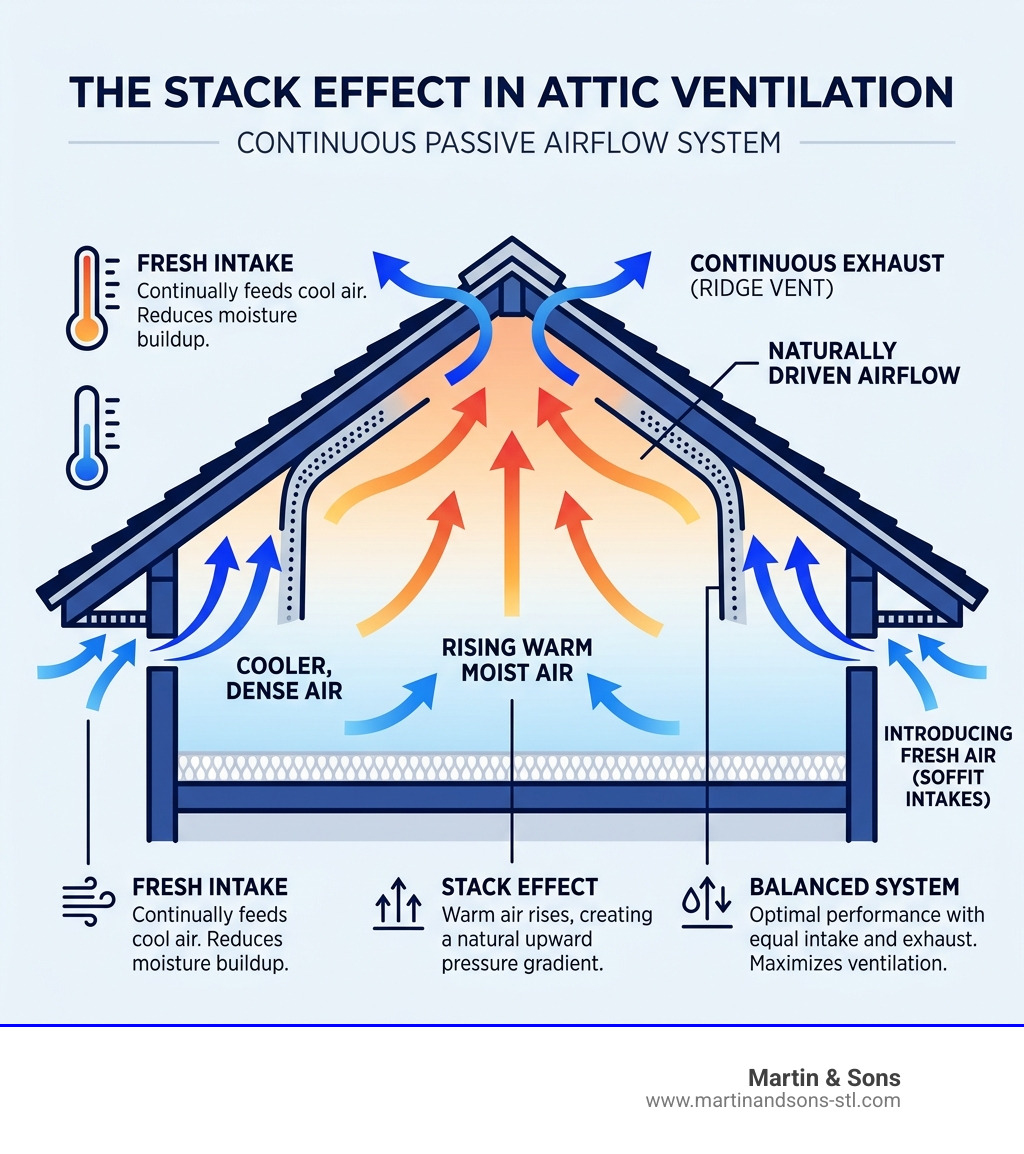
To find the best type of roof vent, we first have to understand how air moves. Roof ventilation isn’t just about putting a hole in the roof; it’s about creating a “breathing” system. This system relies on two main components: intake and exhaust.
Passive vs. Active Ventilation
There are two primary ways to move air through your attic:
- Passive Ventilation: This relies on natural forces like wind and the “stack effect” (the tendency of hot air to rise). Because it has no moving parts, it is generally the most reliable and low-maintenance option.
- Active Ventilation: This uses mechanical force to pull air out. This could be wind-driven (like a turbine) or motor-driven (like a solar or electric fan).
Exhaust vs. Intake: The Power of Balance
Nature abhors a vacuum. If you have an exhaust vent pushing hot air out at the top of your roof, you must have an intake vent at the bottom (usually the eaves) to pull fresh air in. Without this balance, your exhaust vents might actually start pulling conditioned air from inside your home through light fixtures or attic hatches, which is a recipe for high utility bills.
The Best Types of Vents for Your Roof (2026) highlight that the most efficient systems are those that distribute air movement evenly across the entire roof deck, preventing “dead zones” where moisture can settle.
| Feature | Passive Ventilation | Active Ventilation |
|---|---|---|
| Energy Cost | $0 | Variable (Electric/Solar) |
| Maintenance | Extremely Low | Moderate (Motors/Bearings) |
| Noise | Silent | Can hum or whir |
| Performance | Constant (Stack Effect) | High volume when running |
Exhaust Vents: Ridge, Turbine, and Box Options
When we talk about the best type of roof vent for exhaust, we usually focus on the peak of the roof. This is where the hottest, most humid air gathers.
Ridge Vents
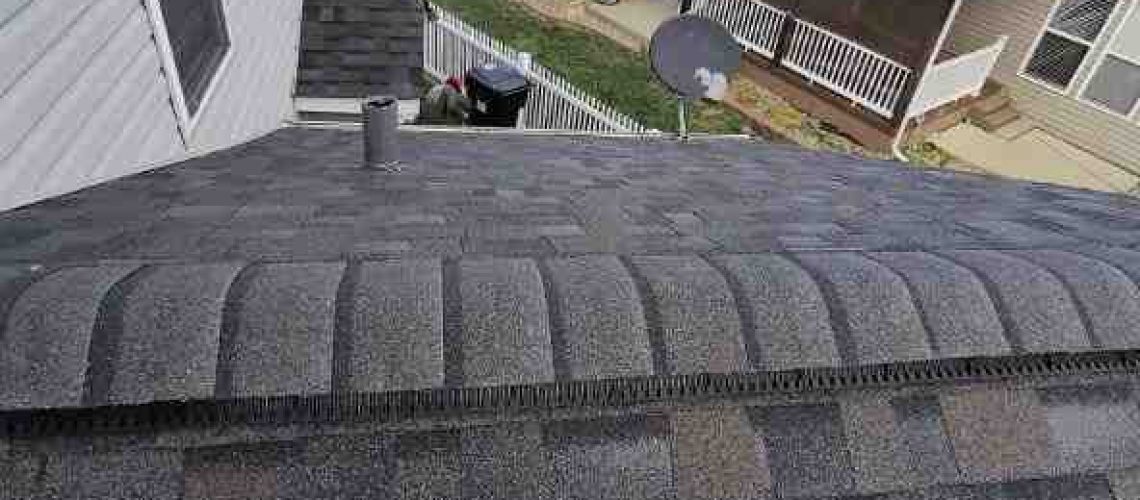
Ridge vents are installed along the very peak of the roof. They are often considered the “gold standard” because they provide continuous airflow along the entire length of the attic. They are low-profile and covered by ridge cap shingles, making them nearly invisible from the street. For the best results, we recommend ridge vents with an internal baffle, which creates a pressure drop that “sucks” air out of the attic even when there is only a slight breeze.
Turbine Vents (Whirlybirds)
These are the spinning metal canisters you often see on older homes or commercial buildings. Turbine vents are active vents that use wind to spin a series of vanes, creating a powerful vacuum that pulls air out. A 14-inch turbine vent can move significantly more air than a standard box vent—about 150 square inches of Net Free Area (NFA) compared to just 50. They are fantastic in windy areas like St. Louis but do require high-quality ball bearings to prevent squeaking over time.
Box Vents (Static Vents)
Also known as “turtle vents” or “slant-backs,” these are small boxes installed near the ridge. They have no moving parts and rely entirely on convection. While they are affordable and easy to install, you often need many of them to achieve the same airflow as a single ridge vent. For example, a 1,500-square-foot attic might need 8 box vents to meet code, whereas just two turbine vents or a single run of ridge vent could do the job.
More info about common roof vent types can help you visualize how these different shapes fit onto your specific roofline.
Intake Vents: The Foundation of the Best Type of Roof Vent System
You cannot have effective exhaust without intake. Intake vents are usually located at the lowest part of the roof, allowing cool, fresh air to enter the attic and push the hot air up and out.
- Soffit Vents: These are the most common intake vents, installed in the eaves (underside) of your roof. They can be continuous strips or individual small vents.
- Drip Edge Vents: If your home has no eaves (common in some older St. Louis architecture), we use specialized drip edge vents that allow air to enter at the roof’s edge.
- Over-Fascia Vents: These sit tucked behind the gutter and provide a sleek way to get air into the attic when soffits aren’t an option.

Climate and Design: Choosing the Best Type of Roof Vent for Your Roof
In Missouri, we deal with “four seasons in a week.” Our vents have to handle 100-degree humidity in July and heavy snow in January.
- Gable Roofs: These are ideal for ridge vents. The long, straight peak allows for maximum exhaust.
- Hip Roofs: Because hip roofs have shorter ridges, we often supplement them with turbine vents or powered fans to ensure enough air is moving.
- Snowy Climates: In St. Louis winters, snow can pile up. Turbine vents are excellent here because they sit higher off the roof deck, remaining clear even when a few inches of snow accumulate.
- High Humidity: If your attic feels like a sauna, you may need active ventilation. Powered vents can move air 10-12 times per hour, which is essential for preventing mold in our humid Missouri summers.
According to the 15 Best Roof Vent Types for Your Home (2024 Update), your roof’s pitch also matters. Steeper roofs (11:12 pitch or higher) actually require about 30% more ventilation area because the volume of the attic space is so much larger.
How to Calculate Your Attic Ventilation Needs
Calculating the best type of roof vent requirements isn’t guesswork—it’s math. The industry standard is the 1:150 rule. This means you need 1 square foot of Net Free Area (NFA) for every 150 square feet of attic floor space.
If your home has a balanced system (equal intake and exhaust) and a vapor barrier, you can often use the 1:300 rule.
Example Calculation:
- Attic Size: 1,500 square feet.
- Calculation: 1,500 / 300 = 5 square feet of NFA needed.
- Conversion: 5 square feet = 720 square inches.
- Distribution: You would need 360 square inches of intake and 360 square inches of exhaust.
Signs You Have Poor Ventilation
If you notice any of the following in your St. Louis home, it’s time for an assessment:
- Ice Dams: Thick ridges of ice at the edge of your roof in winter.
- Curling Shingles: Excessive heat from underneath “bakes” the shingles.
- Musty Smells: A sign of moisture buildup and potential mold.
- Hot Spots: Rooms directly below the attic feeling significantly warmer than the rest of the house.
- Frost in the Attic: Seeing white frost on the underside of your roof deck during a cold snap.
Common Pitfalls: Mixing Vents and Over-Ventilation
One of the biggest mistakes we see in the field is “vent mixing.” Homeowners often think, “If one vent is good, two different types must be better!” This is actually dangerous for your roof.
The Danger of Short-Circuiting
If you have a ridge vent and you decide to add a powered fan or a box vent nearby, you “short-circuit” the system. Air follows the path of least resistance. Instead of pulling cool air from the soffits at the bottom of the roof, the higher vent will pull air from the nearby box vent or fan. This leaves the lower half of your attic stagnant, trapping heat and moisture exactly where you don’t want it.
Can You Over-Ventilate?
While rare, over-ventilation can occur. If you have too much exhaust and not enough intake, the vacuum created can pull conditioned air out of your living space or even pull rain and snow into the attic during a storm. This is why we always aim for a 50/50 balance, or even slightly more intake than exhaust.
For a deeper dive into why we stick to one exhaust type, check out our Roof Vent Installation Guide Static Vs Turbine Vs Ridge.
Frequently Asked Questions about Roof Ventilation
Are solar-powered vents worth the extra cost?
Solar vents are a popular choice for eco-conscious homeowners. They provide active airflow without increasing your electric bill. However, their ROI depends on how much direct sunlight your roof receives. In some parts of Missouri with heavy tree cover, a traditional passive system or a hard-wired electric fan might be more reliable. They typically cost between $300 and $600, but can save you $20-$40 a month in cooling costs during peak summer.
Can a roof be over-ventilated?
Yes. As mentioned, if the exhaust far exceeds the intake, you create a pressure imbalance. This can lead to “ghosting” (dark streaks on your ceiling from dust being pulled through) and increased energy loss. The goal is a steady, gentle flow, not a wind tunnel.
Should you mix different types of exhaust vents?
Absolutely not. Mixing ridge vents with box vents or turbines is the fastest way to ruin your attic’s airflow. Stick to one exhaust method per roof plane to ensure the stack effect works correctly.
Conclusion
Choosing the best type of roof vent is one of the most important decisions you’ll make for the longevity of your home. Whether you are in Florissant, O’Fallon, or right here in St. Louis, your roof needs to breathe to survive our Missouri weather.
At Martin & Sons, we believe in doing the job right the first time. That’s why we offer no upfront deposits—you only pay when the job is 100% complete and you are satisfied. Plus, with our lifetime labor warranties, you can rest easy knowing your ventilation system is backed by decades of expertise.
Don’t let a hot attic bake your shingles or invite mold into your home. Schedule a professional roof vent assessment with us today, and let’s make sure your home is protected for years to come. Give us a call at our Florissant office or visit us at 8460 N. Lindbergh Blvd to get started!