Residential Siding in St. Louis Starts With Weather-Ready Installation
When hiring a contractor for residential siding St. Louis homeowners should look for more than a good color and a low bid. Choose a company that can explain the best material for your home, inspect for hidden moisture damage, install a proper weather-resistive barrier and flashing, and provide clear workmanship and material warranty terms.
St. Louis siding must handle humid summers, sharp temperature changes, hail, wind, and frequent winter freeze-thaw cycles. Vinyl remains a popular choice for its value and low upkeep, while fiber cement offers strong resistance to moisture and impact. The right choice also depends on your home’s style, insulation needs, budget, and any local or HOA rules.
New siding can improve curb appeal, reduce drafts when paired with proper insulation, and help protect older homes from rot and mold. A careful inspection after a storm – especially for cracks, loose panels, warped boards, or water stains – can prevent a small problem from becoming a costly wall repair.
I am John Martin of Martin & Sons, a family-owned company founded in 1953, with more than 35 years of hands-on experience helping homeowners make informed residential siding St. Louis decisions. In this guide, I will cover the materials, warning signs, costs, and contractor questions that matter most.

Top Material Choices for Residential Siding in St. Louis
Choosing the right exterior cladding for your property comes down to balancing aesthetic preference, maintenance tolerance, structural needs, and your budget. Across our service regions in St. Louis, Florissant, Chesterfield, Creve Coeur, Maryland Heights, O’Fallon, St. Charles, and St. Peters, we see a wide range of architecture—from century-old brick-and-frame hybrids to modern suburban builds.
Exploring the ultimate guide to house siding options will show you that no two materials behave identically under midwestern weather conditions. Below is a quick comparison of how common cladding options perform locally:
| Material | Relative Cost | Durability Rating | Maintenance Level | Ideal Architecture |
|---|---|---|---|---|
| Standard Vinyl | Low to Moderate | High (20–30+ years) | Very Low (Occasional wash) | Ranches, Colonials, Modern Subdivisions |
| Insulated Vinyl | Moderate | High (25–35+ years) | Very Low | Split-levels, Craftsman, Energy-focused homes |
| Fiber Cement | Moderate to High | Very High (40–50 years) | Low (Paint every 12–15 yrs) | Historic, Craftsman, Modern Farmhouse |
| Engineered Wood | Moderate | Moderate to High | Moderate (Periodic sealing) | Rustic, Traditional, Tudor accents |
| Steel / Aluminum | Moderate to High | High (30–40+ years) | Low (Prone to denting) | Contemporary, Urban Modern |
1. High-Performance Vinyl Cladding
Vinyl remains the undisputed heavyweight champion in our region, capturing approximately 65% of all local residential siding installations. Homeowners appreciate that contemporary vinyl provides exceptional curb appeal without requiring the regular scraping, staining, or painting of traditional wood.
Engineered from robust polyvinyl chloride (PVC), modern vinyl resists pest intrusion, does not rot when exposed to humidity, and features UV inhibitors that help prevent premature fading. When browsing the ultimate guide to vinyl siding options, you will discover profiles ranging from traditional Dutch lap and clapboard to vertical board-and-batten and realistic cedar-shake textures.
2. Durable Fiber Cement Boards
For homeowners seeking maximum resilience against extreme weather, fiber cement has seen an incredible 22% surge in local installations over the past five years. Made from a blend of Portland cement, sand, water, and cellulose fibers, this dense material is virtually impervious to woodpeckers, termites, rot, and severe hail impacts.
Our fiber cement siding complete guide breaks down why this option stands out: it holds a Class A fire rating and handles moisture without expanding, warping, or buckling. It provides the deep shadow lines and authentic grain of real timber while standing strong against torrential downpours.
3. Classic Wood and Engineered Composites
Natural cedar siding and engineered wood products provide an undeniable architectural warmth. In historic neighborhoods across St. Louis County, real cedar shake or lap siding is frequently selected to honor original architectural designs.
However, natural wood demands diligent maintenance. St. Louis summers bring relentless relative humidity, creating ideal conditions for moss, mildew, and rot if the wood is left unsealed. Engineered composite siding addresses many of these vulnerabilities by blending treated wood strands with exterior-grade resins, though proper ground clearance and strict moisture barrier integration remain essential.
4. Modern Aluminum and Steel Profiles
Metal cladding offers a sleek, modern look alongside outstanding fire and pest resistance. Seamless steel, in particular, handles severe wind events easily without cracking in sub-zero winter temperatures.
While aluminum can be vulnerable to hail dents, modern heavy-gauge steel siding provides superior impact resistance. Because metal expands and contracts minimally compared to standard polymers, it keeps its clean architectural lines across varying seasons.
Weather Defense and Energy Efficiency in the Midwest
Living in the Gateway City means enduring sweltering, humid summers followed by brisk winters. St. Louis regularly experiences over 40 freeze-thaw cycles per winter season. When daytime temperatures melt snow and nighttime freezes lock that water into tiny exterior crevices, expanding ice can pry unsealed siding seams wide open.
Insulated Siding and Energy Savings
An uninsulated exterior wall allows heat to escape right through the framing studs—a phenomenon known as thermal bridging. Understanding how siding replacement can boost energy efficiency is critical if your goal is lowering seasonal heating and cooling bills.
By upgrading your exterior with rigid foam backing, you create a continuous thermal barrier around your framing. In fact, reviewing the homeowner guide to high performance insulated siding illustrates how contoured insulation increases the wall’s overall R-value, absorbs external sound, and improves impact resistance against stray baseballs or hail stones.
Moisture Management and Mold Prevention
With our high summer humidity, siding must be installed as a dynamic exterior drainage plane. Siding panels stop the bulk of wind-driven rain, but moisture will inevitably find its way behind any exterior cladding over time.
Preventing structural framing rot requires a layered line of defense:
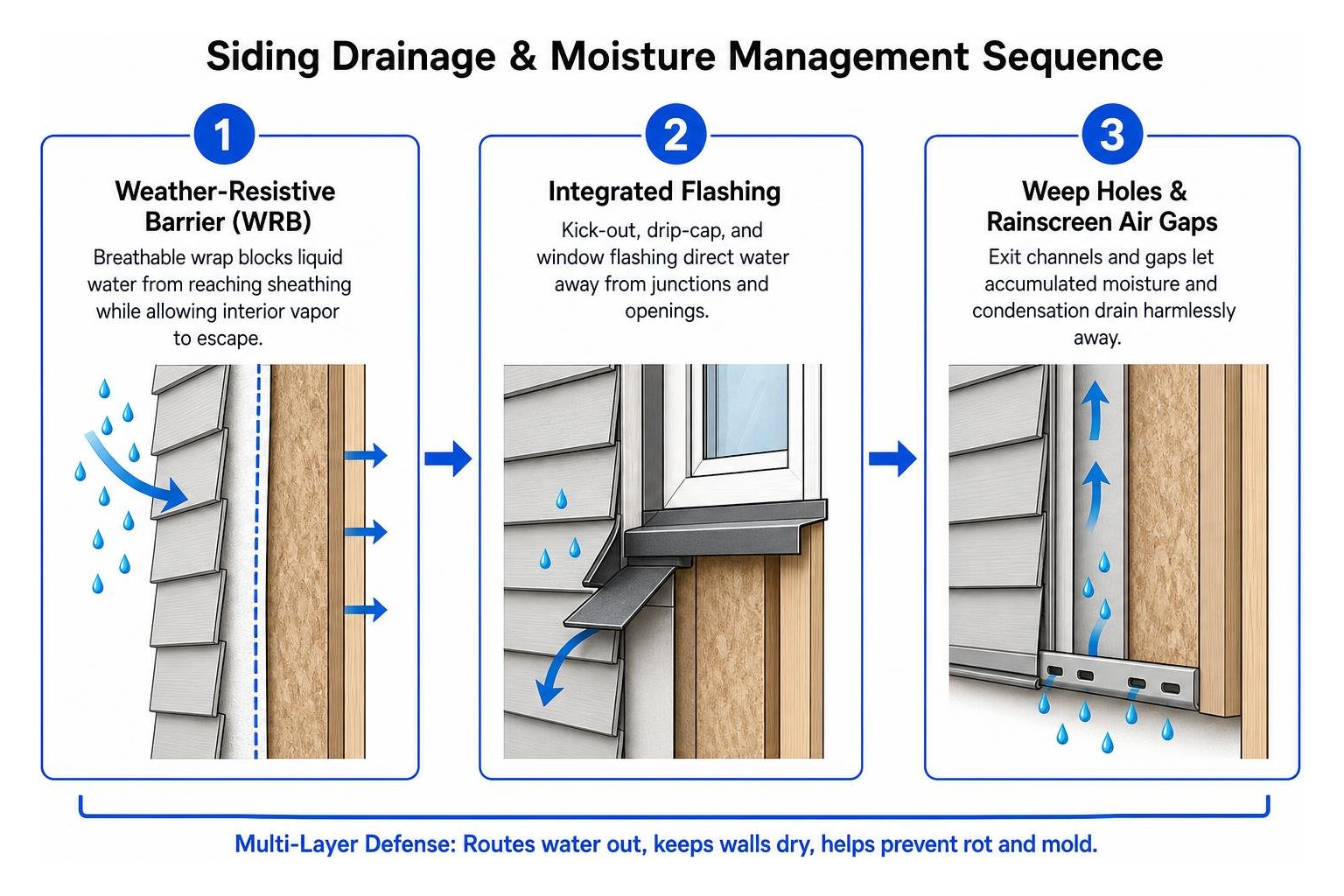
- Weather-Resistive Barrier (WRB): A breathable house wrap that stops liquid bulk water from reaching structural sheathing while letting internal vapor escape.
- Integrated Flashing: Heavy-duty aluminum or composite kick-out, drip-cap, and window flashing that routes water away from junctions and openings.
- Weep Holes and Rainscreen Air Gaps: Built-in exit channels along the lower edges of panels that let accumulated condensation drain harmlessly away.
Key Signs You Need Siding Repair or Replacement
With more than 300,000 single-family homes across the greater St. Louis area—many constructed over 50 years ago—thousands of properties are protected by aging, degraded siding. Knowing how to tell when it is time to get new siding on your home can save you thousands in framing repairs.
Storm Damage and Hail Impacts
Midwestern spring storms bring high winds and destructive hail. Inspect your exterior annually for the following warning signs:
- Cracked or Chipped Panels: Small impact cracks along panel bottoms that allow rain into your framing.
- Loose or Detached Sections: High winds can rip interlocking panels from nail hems, exposing your house wrap.
- Dents and Bruising: Hail impacts that compromise the protective finish of aluminum or fiber cement.
Hidden Moisture and Structural Decay
Moisture intrusion rarely stays confined to your exterior walls. Watch for these red flags:
- Warping or Buckling: Siding that bulges outward usually indicates water-damaged, swollen wall sheathing underneath.
- Interior Peeling Paint or Wallpaper: Damp insulation inside your exterior walls often manifests as bubbling paint inside your living spaces.
- Fungus, Mildew, and Dry Rot: Soft, spongy wood along corner boards or bottom tracks indicates that moisture is trapped behind the cladding.
Investment, Value, and Project Execution
Upgrading your home’s exterior cladding is one of the most cost-effective investments you can make in your property.
Navigating Residential Siding St. Louis Costs and ROI
The average cost of siding replacement in St. Louis typically ranges from $8,000 to $15,000 for a standard 1,500-square-foot home, depending on your chosen material, custom trim profiles, and wall preparation needs. For an in-depth breakdown, consult a comprehensive guide to siding installation costs.
In a survey of local homeowners, 58% cited curb appeal as their primary motivator for updating their exterior, while 34% prioritized energy efficiency. The financial return is equally compelling:
- Exceptional ROI: St. Louis homes with updated siding recoup an average of 76% of project costs at resale.
- Faster Sales Cycles: Real estate data shows that local properties with freshly upgraded siding sell roughly 12% faster than comparable listings with worn exteriors.
Typical Timelines for Residential Siding St. Louis Projects
A full siding replacement on an average home takes between 3 and 6 business days once our crews arrive on-site. The process follows a structured sequence:
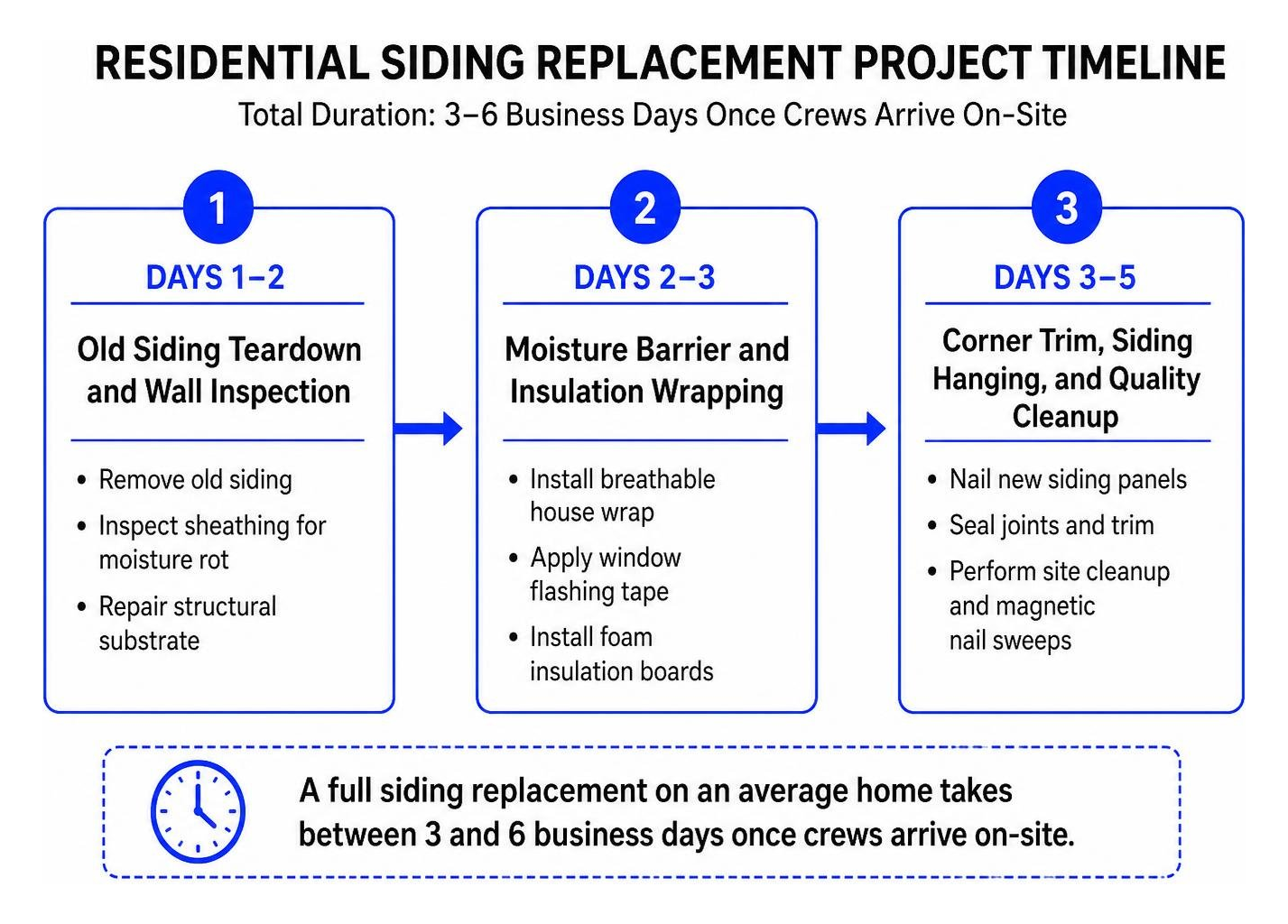
- Phase 1: Old Siding Teardown and Wall Inspection (Days 1–2): Removing old materials, inspecting sheathing for moisture rot, and repairing structural substrate.
- Phase 2: Moisture Barrier and Insulation Wrapping (Days 2–3): Installing breathable house wrap, window flashing tape, and foam insulation boards.
- Phase 3: Corner Trim, Siding Hanging, and Quality Cleanup (Days 3–5): Nailing new panels, sealing joints, and performing site cleanup and magnetic nail sweeps.
Choosing a Contractor and Local Compliance
Never hire an exterior contractor based solely on a quick estimate written on the back of a business card. Check our ultimate checklist for hiring siding replacement contractors to evaluate prospective teams thoroughly.
Make sure you also understand the scope of protection offered by checking everything you need to know about siding warranties. Quality installations should be backed by strong manufacturer material coverage as well as comprehensive workmanship warranties.
Local compliance considerations across our area include:
- Municipal Permitting: Cities like Florissant, Chesterfield, and O’Fallon require verified building permits and post-installation inspections.
- Historic District Guidelines: Communities with historic oversight require strict adherence to approved material profiles and era-accurate colors.
- Homeowners Association (HOA) Regulations: Many suburban subdivisions enforce specific color palettes, minimum panel thicknesses, and restrictions on trim materials.
Frequently Asked Questions About St. Louis Siding
How long does siding installation take on an average St. Louis home?
A standard residential siding replacement takes 3 to 6 working days. Severe structural rot repairs beneath the old cladding, unexpected rain delays, or complex custom architectural shapes can occasionally extend the schedule.
Do I need a building permit to replace siding in St. Louis?
Yes. Most municipalities across St. Louis County and St. Charles County require building permits for full-scale siding replacement. A professional contractor should manage the permit filings and ensure code compliance throughout the project.
How does new siding protect homes against St. Louis humidity?
Modern siding systems combine an exterior water-shedding surface with a high-performance, breathable weather-resistive barrier underneath. This setup keeps heavy rain out while allowing trapped interior moisture vapor to escape, stopping mold, rot, and wall decay before they start.
Conclusion
Your home’s exterior cladding is its primary defense against Missouri’s intense weather swings, summer humidity, and winter freezes. Whether you are leaning toward low-maintenance insulated vinyl or long-lasting fiber cement, quality installation makes all the difference.
At Martin & Sons, we do things differently to ensure your peace of mind. We require no upfront deposits—you pay only upon 100% completion and satisfaction with our work. We offer the best prices upfront, backed by our lifetime labor warranties. While we provide complete exterior solutions for roofing, windows, and siding, we are not a standalone gutter company; we only provide gutter services when performing a roofing project.
Ready to protect your home and boost its curb appeal? Contact us today to discuss your project for residential siding in St. Louis!