
Why Algae Cleaning Roof St Louis Homes Can’t Wait
Algae cleaning roof St Louis is one of the most overlooked — yet most important — forms of home maintenance in the area. If you need a quick answer, here’s what St. Louis homeowners should know:
Quick Overview: Algae Cleaning for St. Louis Roofs
| Question | Quick Answer |
|---|---|
| What causes black streaks? | A bacteria called Gloeocapsa magma (blue-green algae) |
| Is it just cosmetic? | No — it shortens roof life by up to 35% |
| Best cleaning method? | Soft washing with biodegradable solutions |
| How often should you clean? | Every 3-5 years in St. Louis’s humid climate |
| Can you DIY it? | Yes, but professional treatment is safer and lasts longer |
| Does insurance cover it? | Typically no — it’s considered routine maintenance |
Those dark streaks creeping across your shingles aren’t just an eyesore. Gloeocapsa magma — the algae responsible — feeds on the limestone filler in your asphalt shingles. Left alone, it can cut your roof’s lifespan nearly in half. St. Louis’s humidity and frequent storms make local roofs especially vulnerable, turning a manageable cleaning job into a costly replacement if ignored.
I’m John Martin, and my family has been working on St. Louis roofs since 1953 — which means I’ve seen how quickly algae can destroy a roof that otherwise had decades of life left in it. That experience is exactly why I put together this guide on algae cleaning roof St Louis style, so you can make smart, confident decisions about your home.
Understanding the Cause of Black Streaks on St. Louis Roofs
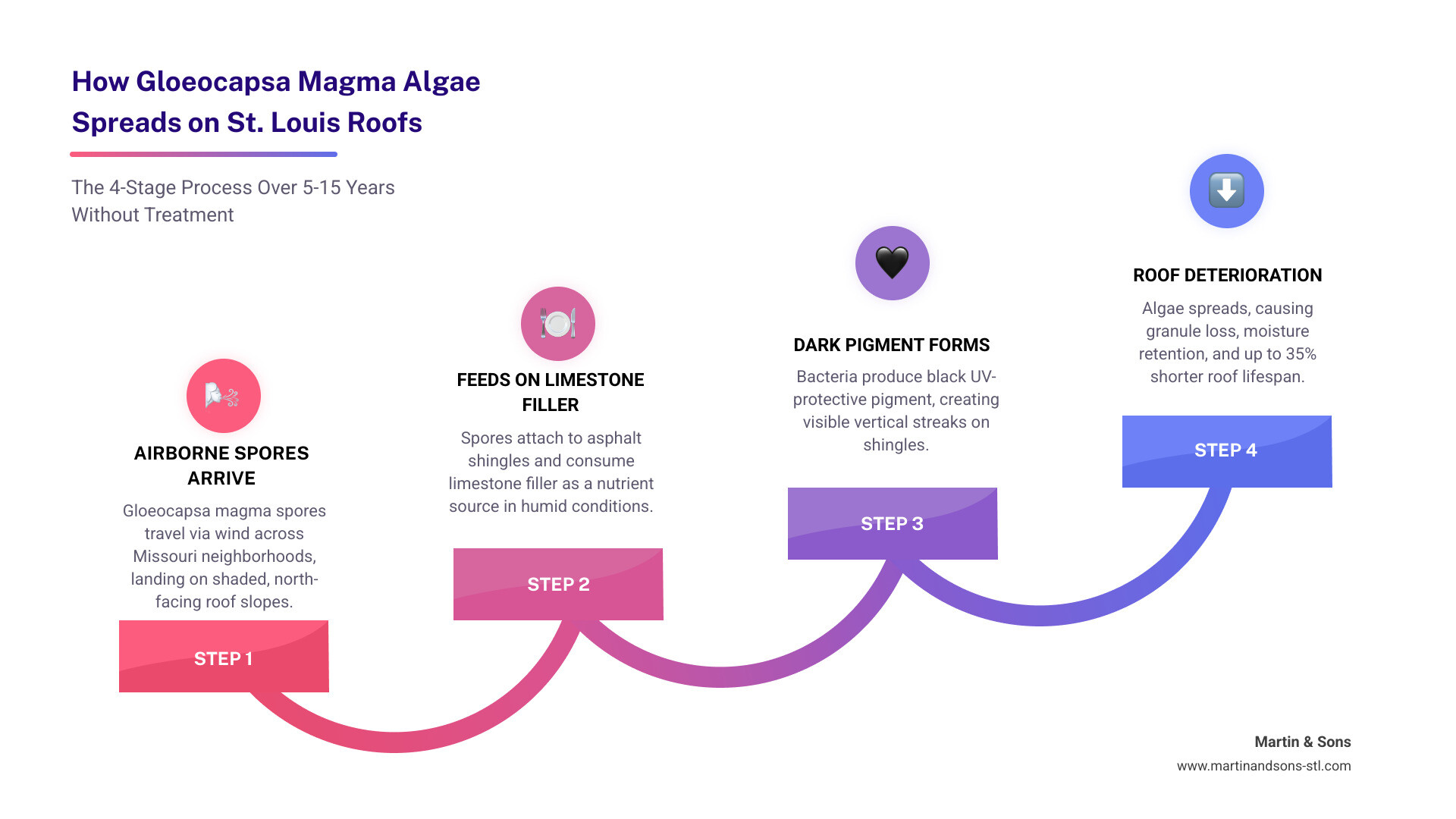
If you’ve noticed dark, vertical stains on your roof that look like someone poured a giant cup of coffee over your peak, you aren’t alone. These streaks are caused by a hardy bacterium called Gloeocapsa magma. While often referred to as “blue-green algae,” it’s actually a type of photosynthetic bacteria that has evolved a clever survival mechanism: it produces a dark, ultraviolet-protective pigment to shield itself from the sun. This pigment is exactly what creates those unsightly black stains.
Why does it love St. Louis so much? It comes down to two things: food and climate. Modern asphalt shingles contain limestone as a filler to add weight and durability. To Gloeocapsa magma, your roof is essentially a giant buffet. When you combine this food source with Missouri’s climate and local experience—specifically our high humidity and damp springs—you have the perfect breeding ground.
Algae spores are airborne and “contagious.” They can be carried by the wind or even by birds and squirrels from one rooftop to another. This is why you’ll often see entire subdivisions in O’Fallon or Chesterfield developing streaks at the same time. The growth typically starts on north-facing slopes or heavily shaded areas where moisture lingers the longest after a Missouri thunderstorm.
Why Algae Cleaning Roof St Louis Homes is Essential for Longevity
Many homeowners view roof cleaning as a purely aesthetic choice—like washing your car or painting your shutters. However, the reality is far more serious. Experts and shingle manufacturers estimate that untreated algae, mold, and moss can shorten the life of your roof by up to 35%. If you were expecting 30 years out of your shingles, algae could force a st-louis/roofing/replacement in as little as 15 years.
Here is how the damage happens:
- Granule Loss: As the algae “eats” the limestone filler, the protective ceramic granules on your shingles begin to loosen and wash away into your gutters.
- Heat Absorption: A clean roof reflects sunlight. A black, algae-covered roof absorbs it. This increases attic temperatures, forcing your AC to work harder and driving up your utility bills.
- Moisture Retention: Algae and its more aggressive cousin, moss, hold onto water. This constant dampness can lead to structural rot in the roof deck and eventually cause leaks.
- Lichen and Moss Growth: Algae often acts as a precursor. Once the algae established a base, moss and lichen can take root. These organisms have roots that can lift shingle edges, making them vulnerable to wind damage.
For more technical details on how these organisms interact with your home, the Algae & Moss Prevention and Cleaning for Asphalt Roofing Systems guide provides excellent industry-standard insights. Proper st-louis/roofing/maintenance is the only way to interrupt this cycle.
Identifying Signs Your Roof Needs Treatment
You don’t always need to wait for giant black streaks to know it’s time for a cleaning. Here are the signs-of-roof-damage-you-should-never-ignore:
- Dark Streaks: The most obvious sign, usually appearing on the north side first.
- Green Fuzzy Patches: This indicates moss, which is far more dangerous than algae because it physically lifts the shingles.
- Curling Shingles: If the edges of your shingles are warping, it may be due to moisture trapped by organic growth.
- Granules in Gutters: If you see an excessive amount of “sand” in your gutters, your shingles are losing their protective layer.
- Water Spots in the Attic: Check your attic ceiling for damp spots, which can indicate that moss has already caused a minor leak.
Soft Wash vs. Pressure Washing: The Safest Cleaning Methods
When it comes to algae cleaning roof St Louis style, the method you choose matters as much as the cleaning itself. Many well-meaning homeowners (and even some “pros”) make the mistake of using a high-pressure power washer on their shingles. This is a recipe for disaster.
| Feature | Pressure Washing | Soft Washing |
|---|---|---|
| Pressure Level | High (can damage shingles) | Low (similar to a garden hose) |
| Cleaning Agent | Mostly water | Biodegradable surfactants/bleach |
| Longevity | Short-term (doesn’t kill spores) | Long-term (kills algae at the root) |
| Warranty Safety | Often voids shingle warranty | Manufacturer recommended |
| Plant Safety | Low risk | Requires careful rinsing/protection |
Soft washing is the industry gold standard. It uses a low-pressure delivery system to apply a specialized mixture of water and eco-friendly, biodegradable cleaning solutions. This solution “dwells” on the roof, breaking down the algae and killing the spores so they don’t grow back immediately. It’s a much more effective way to handle a st-louis/roofing/repair or cleaning project without blasting away the granules that protect your home.
We always take extra care to protect your landscaping. This includes wetting down plants before and after the treatment to ensure that any runoff is diluted and safe for your garden.
The Benefits of Professional Algae Cleaning Roof St Louis Services
While we’re all for a good DIY project, professional roof cleaning offers several advantages that are hard to replicate with a ladder and a bucket of soap:
- 18-Month Mold-Free Guarantees: Most professionals offer a guarantee that the growth won’t return for a specific period, giving you peace of mind.
- Safety: Walking on a wet, soapy roof is incredibly dangerous. Professionals have the harness systems and experience to do it safely.
- Specialized Equipment: We use professional-grade pumps and nozzles designed to deliver the right chemical ratio at the right pressure.
- Property Value: A clean roof instantly boosts curb appeal, which is vital if you’re planning to sell your home in Creve Coeur or Maryland Heights.
- Insurance Compliance: While you might wonder is-roof-damage-covered-by-insurance, the truth is that insurance companies may actually cancel your policy if they see a roof covered in moss or algae, viewing it as a sign of neglect.
DIY vs. Professional Roof Cleaning in the Missouri Climate
If you’re considering the DIY route, you need to be aware of the risks. Beyond the obvious fall hazards, using the wrong chemicals can be catastrophic. Many homeowners reach for straight pool bleach, which can dry out shingles, corrode metal flashings, and kill your prize-winning hydrangeas.
Missouri weather also plays a role. You need a window of dry, calm weather for the cleaning solutions to work effectively. Spring and Fall are generally the best times for algae cleaning roof St Louis homes, as the temperatures are moderate enough for the solutions to dwell without evaporating too quickly.
Professional services for st-louis/roofing ensure that the job is done according to the Asphalt Roofing Manufacturers Association (ARMA) standards. This is crucial because improper cleaning can actually void your shingle manufacturer’s warranty.
Long-Term Prevention and Maintenance for Algae Cleaning Roof St Louis
Once your roof is clean, you want to keep it that way. Prevention is always cheaper than a cure. Here are the best ways to keep the green (and black) away:
- Zinc or Copper Strips: Installing these metal strips near the ridge caps of your roof can provide years of protection. When it rains, metallic ions are released and wash down the roof, creating an environment where algae cannot survive.
- Tree Trimming: Algae and moss love shade. Trimming back overhanging branches allows more sunlight to hit the shingles and improves airflow, helping the roof dry faster.
- Regular Gutter Cleaning: Clogged gutters trap moisture at the roof’s edge. Keeping them clear is a vital part of roof-inspection-is-important-to-prevent-damage.
- Proper Ventilation: Ensuring your attic is well-ventilated reduces the heat and moisture buildup that can encourage growth from the inside out.
- Algae-Resistant Shingles: If you are currently looking at a full st-louis/roofing/installation, ask about shingles with built-in copper granules. These are specifically designed to resist Gloeocapsa magma for 10 to 25 years.
Frequently Asked Questions About St. Louis Roof Cleaning
Will cleaning my roof void the shingle warranty?
Not if it’s done correctly! In fact, most manufacturers recommend soft washing with a bleach-and-water solution. However, using a pressure washer or unapproved chemicals will almost certainly void your warranty. This is why hiring a pro who understands manufacturer specs is so important.
Does homeowners insurance cover algae removal?
Typically, no. Insurance companies view algae and moss as “maintenance issues” rather than “sudden damage” like a hail storm. However, keeping your roof clean can prevent them from denying a future claim for st-louis/storm-damage due to “prior neglect.”
How long does a professional algae treatment last in Missouri?
In our humid St. Louis climate, a professional soft wash treatment typically keeps a roof clean for 3 to 5 years. Factors like heavy tree cover or a north-facing slope might mean you need a touch-up closer to the 3-year mark.
Conclusion
Your roof is the first line of defense for your home. Letting algae and moss eat away at your shingles is like letting termites eat your walls—it’s a slow-motion disaster that is entirely preventable. Whether you are in Florissant, Chesterfield, or St. Peters, algae cleaning roof St Louis is a smart investment that pays for itself in extended roof life and lower energy bills.
At Martin & Sons, we believe in doing things the right way. That’s why we offer a unique promise: no upfront deposits. You don’t pay a dime until the job is 100% complete and you are totally satisfied. We back our work with lifetime labor warranties and provide the best prices upfront, so there are no surprises.
Don’t let those black streaks win. Schedule your professional roof assessment today and let us help you protect your home for the long haul. Give us a call at our Florissant office or visit us online to get started!