What Does a New Roof Actually Cost in 2026?
Using a new roof cost estimator is the fastest way to set a realistic budget before you talk to a single contractor. Here’s what most homeowners in 2026 actually pay:
| Roof Size | Asphalt Shingles | Metal Roofing | Tile / Slate |
|---|---|---|---|
| 1,500 sq ft | $8,000 – $14,000 | $16,000 – $28,000 | $20,000 – $45,000+ |
| 2,000 sq ft | $10,000 – $18,000 | $20,000 – $36,000 | $25,000 – $60,000+ |
| 2,500 sq ft | $13,000 – $22,000 | $25,000 – $45,000 | $32,000 – $75,000+ |
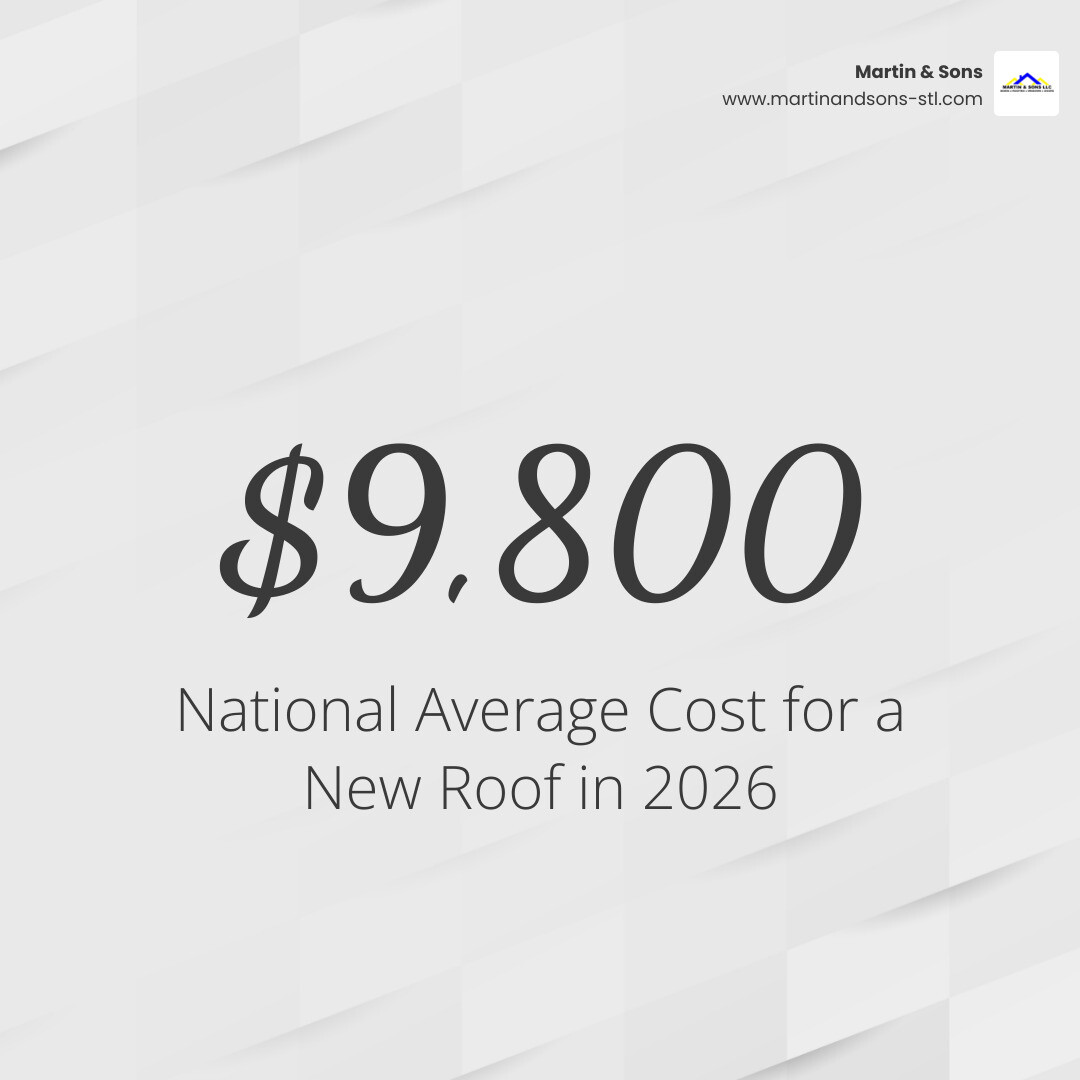
The national average is $9,800, with most homeowners spending between $5,500 and $18,000 for architectural asphalt shingles on a standard home.
These numbers shift based on four things:
- Roofing material — the single biggest cost driver
- Roof size and pitch — steeper roofs cost more to install
- Your location — labor rates vary dramatically by region
- Hidden extras — tear-off, decking repairs, permits, and flashing add up fast
If you’re in the St. Louis area dealing with storm damage or an aging roof, the number you get from an online estimator is just a starting point — not a final price.
I’m John Martin, co-owner of Martin & Sons, a family roofing business serving the St. Louis area since 1953, and over my 35+ years in the industry I’ve helped thousands of homeowners make sense of new roof cost estimator figures before they ever sign a contract. In the sections below, I’ll walk you through every factor that moves the number so you know exactly what to expect.
Key Factors Influencing Roof Replacement Costs in 2026
When you begin researching roof replacement costs, you quickly realize that prices aren’t what they used to be. According to National Roofing Contractors Association (NRCA) data, construction material prices were 43.4% higher in late 2025 than they were in February 2020. While the rapid supply chain spikes have finally started to normalize in 2026, the baseline cost for raw materials like asphalt, steel, and plywood remains elevated.
Labor costs have also risen steadily. In 2026, labor typically accounts for 50% to 60% of your total roof replacement bill. Experienced roofing crews command higher wages, and because roofing is highly physical, dangerous work, reputable companies must carry comprehensive workers’ compensation and general liability insurance.
These nationwide trends hit close to home when we look at regional variations. For instance, a roof that costs $10,000 in Mississippi might cost 68% more in Hawaii. In high-cost coastal states like California and New York, prices easily run 40% to 50% above the national average.
Fortunately, here in the Midwest, our pricing is much closer to the national baseline. In Missouri, the average roof replacement cost for a 2,000 sq ft home sits around $8,820, with most projects landing between $4,950 and $16,200 depending on the materials used.
To get a better idea of how these variables interact, you can use the Roofing Cost Calculator (2026) | Asphalt, Metal, Tile, Slate to see how different materials scale. But if you want to know how to beat high St. Louis roofing prices, the secret is choosing a local contractor who offers transparent, honest pricing upfront, rather than one who inflates bids to cover massive sales commissions or heavy corporate overhead.
Roof Pitch, Size, and the Geometry of ‘Squares’
One of the most common mistakes homeowners make when using a new roof cost estimator is assuming their roof’s surface area is identical to their home’s square footage. If you have a 2,000 sq ft ranch home, your roof area is actually much larger.
First, roofing contractors don’t measure in standard square feet; they measure in “squares.” One roofing square is equal to 100 square feet. A 2,000 sq ft home will typically yield 22 to 25 squares of actual roof surface area. This difference is caused by roof pitch (the slope of your roof), overhangs (eaves), and the complexity of your roof’s shape (valleys, hips, and dormers).

Roof pitch is calculated as the vertical rise over a 12-inch horizontal run. For example, a 6/12 pitch means the roof rises 6 inches for every 12 inches of horizontal distance. To find the actual surface area, we must multiply the flat footprint of the home by a slope correction factor:
- A walkable 6/12 pitch adds about 12% to the flat area (multiplier of 1.118).
- A steeper 12/12 pitch (a 45-degree angle) adds 41.4% to the area (multiplier of 1.414).
- An extreme 24/12 pitch requires a massive 2.236 multiplier, meaning the roof surface is more than double the home’s flat footprint!
Pitch doesn’t just increase the material quantities; it also dramatically increases labor costs. Steep roofs (9:12 pitch or greater) add 25% to 45% to labor rates because they are slower, more difficult, and more dangerous to work on. Crews must wear safety harnesses, set up specialized scaffolding, and move materials much more slowly to prevent falls.
Finally, every estimator must include a “waste factor.” When cutting shingles to fit valleys, hips, and gables, a portion of the material is discarded. A standard gable roof requires a 10% waste factor, while a complex hip roof with multiple valleys can require 15% to 18% extra material.
Regional Labor Rates and Local Building Codes
Your geographic location dictates more than just the baseline labor rate. Local building codes and weather patterns heavily influence the specific materials required to protect your home.
For homeowners in St. Louis, St. Charles, St. Peters, O’Fallon, and surrounding Eastern Missouri communities, our winters bring freezing temperatures, ice, and heavy snow, while our summers bring severe thunderstorms, high winds, and hail. Because of this, local building codes require specific protective measures.
For example, the International Residential Code (IRC) mandates that in cold climates, an ice and water barrier (a self-adhering rubberized membrane) must be installed at the eaves and valleys. This barrier must extend at least 24 inches past the interior wall line to prevent water from backing up under the shingles when ice dams form in winter. Adding this crucial protection adds roughly $1.00 to $2.00 per square foot to those specific areas, but it is non-negotiable for protecting your home from structural water damage.
Additionally, local municipalities require building permits and independent inspections to ensure the work is done safely and to code. Permit fees in our service areas—ranging from Florissant and Creve Coeur to Chesterfield and Maryland Heights—typically run between $150 and $800 depending on the scope of the project. If you are dealing with storm damage, wind, or hail, navigating these code requirements is an essential part of getting your home back in order. You can learn more about how we handle these situations by visiting our page on storm damage repair in Florissant MO.
How to Use a New Roof Cost Estimator to Plan Your Budget
A new roof cost estimator is an incredibly helpful budgeting tool, but only if you feed it accurate information. Most basic online calculators simply ask for your zip code and your home’s square footage, which often leads to wildly inaccurate estimates that leave homeowners shocked when they receive real bids.
To get a highly accurate baseline, you need a tool that accounts for the physical realities of your specific property. An advanced tool like The 40-Factor Roof Estimator & Calculator – Total Roof Estimator allows you to input details like roof pitch, number of stories, material upgrades, and even solar potential to generate a highly customized projection.
Why Every Online New Roof Cost Estimator Needs Your Pitch and Size
If an estimator doesn’t ask for your roof’s pitch, it is simply guessing. As we established, a steep roof requires significantly more material and labor than a flat or low-slope roof of the exact same footprint.
To illustrate, let’s look at the math. If you have a single-story home with a 1,500 sq ft flat footprint:
- At a gentle 4/12 pitch, the actual roof surface area is roughly 1,580 sq ft. Adding a 10% waste margin brings your material order to about 17.4 squares.
- At a steep 10/12 pitch, that same home’s roof surface jumps to 1,950 sq ft. Adding a 12% waste margin for the steeper cuts brings the material order to 21.8 squares—a 25% increase in materials alone, before even factoring in the steep-roof labor surcharges!
Without including pitch and a realistic waste margin, any estimate you generate will be too low, leaving you unprepared for the actual cost of the project.
Limitations of a Standard New Roof Cost Estimator
While online calculators are great for a ballpark figure, they have natural limitations that they cannot calculate from a satellite image or a basic questionnaire.
First, they cannot evaluate the actual condition of your roof’s underlying structure. If your roof has been leaking, there is a high probability that the wood decking underneath is rotted and must be replaced. A standard calculator won’t show this hidden cost.
Second, they don’t account for site access. If your home is a multi-story property in Chesterfield with tight property lines, or a historic home in St. Charles with delicate landscaping, the roofing crew will have to work around these obstacles. If they cannot park a dumpster close to the roof or must hand-carry materials across the yard, labor costs will rise.
Finally, calculators don’t factor in local permit fees or the specific contractor’s overhead and warranty standards. To understand how to navigate these variables and protect yourself from inflated online promises, read our guide on how to find the best price roofing quotes online.
Comparing Roofing Materials: Lifespan vs. Upfront Cost
Choosing the right material is the biggest financial decision you will make during a roof replacement. To make an informed choice, you must compare the upfront cost against the expected lifespan of each material to find the true long-term value.
| Material Type | Average Cost per Sq Ft (Installed) | Expected Lifespan | 50-Year Cost-Per-Year (2,000 Sq Ft Roof) |
|---|---|---|---|
| 3-Tab Asphalt Shingles | $3.50 – $5.50 | 15 – 20 Years | $545 / Year (Requires 2-3 replacements) |
| Architectural Asphalt | $4.50 – $7.50 | 25 – 30 Years | $480 / Year (Requires 1-2 replacements) |
| Standing Seam Metal | $9.00 – $18.00 | 40 – 70 Years | $560 / Year (Zero replacements needed) |
| Concrete / Clay Tile | $10.00 – $25.00 | 50 – 100 Years | $600 / Year (Zero replacements needed) |
| Natural Slate | $20.00 – $30.00 | 100+ Years | $800 / Year (Zero replacements needed) |
To run different scenarios for your home’s unique dimensions, you can use the Roof Replacement Cost Calculator 2026 — By Size & Material | CostPrism to compare these materials side-by-side.
Asphalt Shingles: The Cost-Effective Standard
Asphalt shingles remain the most popular choice for residential homes in the Midwest because they offer an excellent balance of affordability and performance.
- 3-Tab Shingles are the most basic and affordable option. They lie flat against the roof and typically last 15 to 20 years. However, they have lower wind resistance (usually up to 60-70 mph) and have fallen out of favor for most modern homes.
- Architectural Shingles (also known as dimensional shingles) are thicker, multi-layered, and designed to mimic the look of natural wood shakes. They offer superior wind resistance (up to 110-130 mph) and a much longer lifespan of 25 to 30 years.
While architectural shingles cost slightly more upfront, they are vastly superior in durability, especially during Midwestern storms. To get a realistic look at the numbers, check out our asphalt shingles roof replacement cost reality check.
Metal, Tile, and Slate: Premium Long-Term Value
If you plan to stay in your home for 20 years or more, upgrading to a premium material like metal, tile, or slate can actually save you money over time.
- Standing Seam Metal Roofing features interlocking panels with concealed fasteners, virtually eliminating leak points. It lasts 40 to 70 years, reflects solar heat to cut cooling costs by 10% to 25%, and easily handles high winds and heavy snow.
- Clay or Concrete Tiles are incredibly durable and offer a beautiful, classic aesthetic. They can last up to 100 years, though they are very heavy and require a structurally reinforced roof frame.
- Natural Slate is the undisputed king of longevity, lasting 100 to 150 years. However, it is highly specialized, heavy, and requires an expert hand to install.
For a deeper dive into these premium options and their structural requirements, check out the New Roof Installation Cost: $5,000–$25,000 (2026) | RealCostIQ.
Hidden Costs and Additional Roof Replacement Expenses
When homeowners receive a roof replacement bid, they are sometimes surprised by charges that weren’t highlighted in a basic online estimator. A complete roof replacement is not just about nailing down new shingles; it is about rebuilding an entire protective system.
Understanding these components ahead of time will prevent surprises and help you understand the real price of fixing your roof.
Tear-Off, Disposal, and Decking Repairs
The first step of a proper roof replacement is removing the old materials down to the bare wood.
- Tear-Off Costs: A standard single-layer tear-off of old asphalt shingles costs between $100 and $200 per square ($1.00 to $2.00 per sq ft). If your home has two layers of shingles (which is the legal limit under most local building codes), the tear-off cost will double because of the extra weight and labor.
- Disposal and Dumpster Fees: Discarding tons of old roofing material requires heavy-duty dumpsters and local landfill fees, which typically add $300 to $600 to the project.
- Decking Repair: Once the old shingles are off, we inspect the plywood or OSB decking underneath. If we find soft spots, rot, or water damage, those sheets must be replaced to ensure structural integrity. Rotten plywood replacement typically costs about $85 per sheet (materials and labor included).
Ventilation Upgrades, Flashing, and Gutters
To protect your new investment, we must also address the roof’s accessories and ventilation.
- Attic Ventilation: Without proper ventilation, heat and moisture build up in your attic, cooking your shingles from the inside out and voiding your manufacturer warranty. Upgrading to ridge vents and soffit vents ensures continuous airflow, keeping your home cooler and extending your roof’s life.
- Flashing and Pipe Boots: Flashing is the metal installed in high-risk areas like valleys, chimneys, and where the roof meets a wall. Replacing worn flashing and upgrading cheap plastic pipe boots to lifetime silicone or lead boots is essential, as these are the most common leak points on any roof.
- Gutters: While we are not a standalone gutter company, we coordinate seamless gutter and downspout replacements ($5 to $14 per linear foot) specifically when we are replacing your roof. Doing these projects together ensures that your new roof and water drainage system work in perfect harmony, preventing water from backing up under your new shingles.
Frequently Asked Questions about Roof Replacement Costs
How do I know if I need a full roof replacement or just a repair?
As a rule of thumb, if your roof is under 15 years old and the damage is isolated to a small area (like a few shingles blown off in a storm), a simple repair is usually the best path. However, if your roof is over 20 years old, has widespread leaks, or shows significant signs of wear—such as curling, buckling shingles, or heavy granule loss (which looks like dark sand in your gutters)—a full replacement is necessary. We generally recommend replacement if the cost of required repairs exceeds 30% of the total replacement cost.
Does homeowners insurance cover the cost of a new roof?
Yes, but only under specific circumstances. Homeowners insurance is designed to cover sudden, accidental damage caused by events like wind, hail, fire, or fallen trees. It does not cover gradual wear and tear, neglect, or old age.
When filing a claim, your policy type matters:
- Replacement Cost Value (RCV) policies pay the full current cost to replace your roof, minus your deductible.
- Actual Cash Value (ACV) policies only pay the depreciated value of your roof based on its age. If a 20-year-old roof is damaged, an ACV policy may only cover a small fraction of the replacement cost.
How should I compare multiple contractor bids?
We always recommend getting three written, itemized bids from local, licensed contractors. When comparing them, do not simply look at the bottom-line price. Look at the scope of work:
- Does the bid include a full tear-off, or are they overlaying shingles?
- Are they replacing the flashing, underlayment, and pipe boots, or reusing old ones?
- What kind of warranties are they offering?
Be highly suspicious of extremely low bids. These “lowball” quotes almost always feature a thin scope of work, cheap materials, and uninsured crews, and they frequently lead to mid-project price increases or early roof failure. Always verify that the contractor has a physical local office, active general liability and workers’ compensation insurance, and strong local reviews.
Conclusion
A new roof is a major investment, but using a new roof cost estimator and understanding the factors that drive pricing will help you make the best decision for your home and your family.
At Martin & Sons, we believe in making the roofing process as stress-free and transparent as possible. We proudly serve homeowners across Eastern Missouri, including St. Louis, St. Charles, St. Peters, Florissant, Chesterfield, Creve Coeur, Maryland Heights, and O’Fallon.
We do things differently to protect you and your hard-earned money:
- No Upfront Deposits: You pay absolutely nothing until the job is 100% complete and you are entirely satisfied.
- Lifetime Labor Warranties: We stand behind our craftsmanship for the lifetime of your roof.
- Best Prices Upfront: No high-pressure sales tactics, no hidden fees, and no artificial markups.
If you want to understand the physical factors that shape your roof’s final price tag, read our detailed guide on roof installation costs and key factors. And when you’re ready for an honest, accurate, and completely free in-person estimate, we are here to help. Reach out to us today to schedule your consultation!