

Manufacturer vs. Workmanship: The Two Pillars of Lifetime Warranty Siding Repair
Lifetime warranty siding repair is one of the most misunderstood topics in home improvement — and it can cost you thousands if you get it wrong.
Here’s what you need to know at a glance:
| Question | Quick Answer |
|---|---|
| What does a lifetime siding warranty cover? | Manufacturing defects like cracking, peeling, and fading — for as long as you own the home |
| Does it cover labor? | Manufacturer warranties usually don’t. Contractor workmanship warranties often do. |
| Is it transferable? | Sometimes — but coverage usually drops to a prorated schedule after the home is sold |
| What voids it? | Improper installation, third-party repairs, lack of maintenance, and acts of God |
| How do you file a claim? | Written notice to the manufacturer or contractor, with photos and proof of purchase |
Most homeowners assume a “lifetime” warranty means total, permanent protection. It doesn’t.
The word lifetime typically means the coverage lasts as long as you own the home — not the life of the product itself. And what’s covered depends heavily on whether you’re looking at a manufacturer’s product warranty or a contractor’s workmanship warranty. These are two very different things, and most siding repairs involve both.
When something goes wrong with your siding — a cracked panel after a hail storm, warping near a window, or moisture creeping behind the boards — knowing exactly what your warranty covers (and what it doesn’t) determines whether you’re protected or paying out of pocket.
I’m John Martin, and with over 35 years of experience navigating lifetime warranty siding repair on behalf of St. Louis homeowners, I’ve seen how confusing — and costly — warranty gaps can be. Let’s break it all down so you know exactly where you stand.
Lifetime warranty siding repair terminology:
- home siding repair near me
- siding contractors near me
- roofing & siding contractors near me
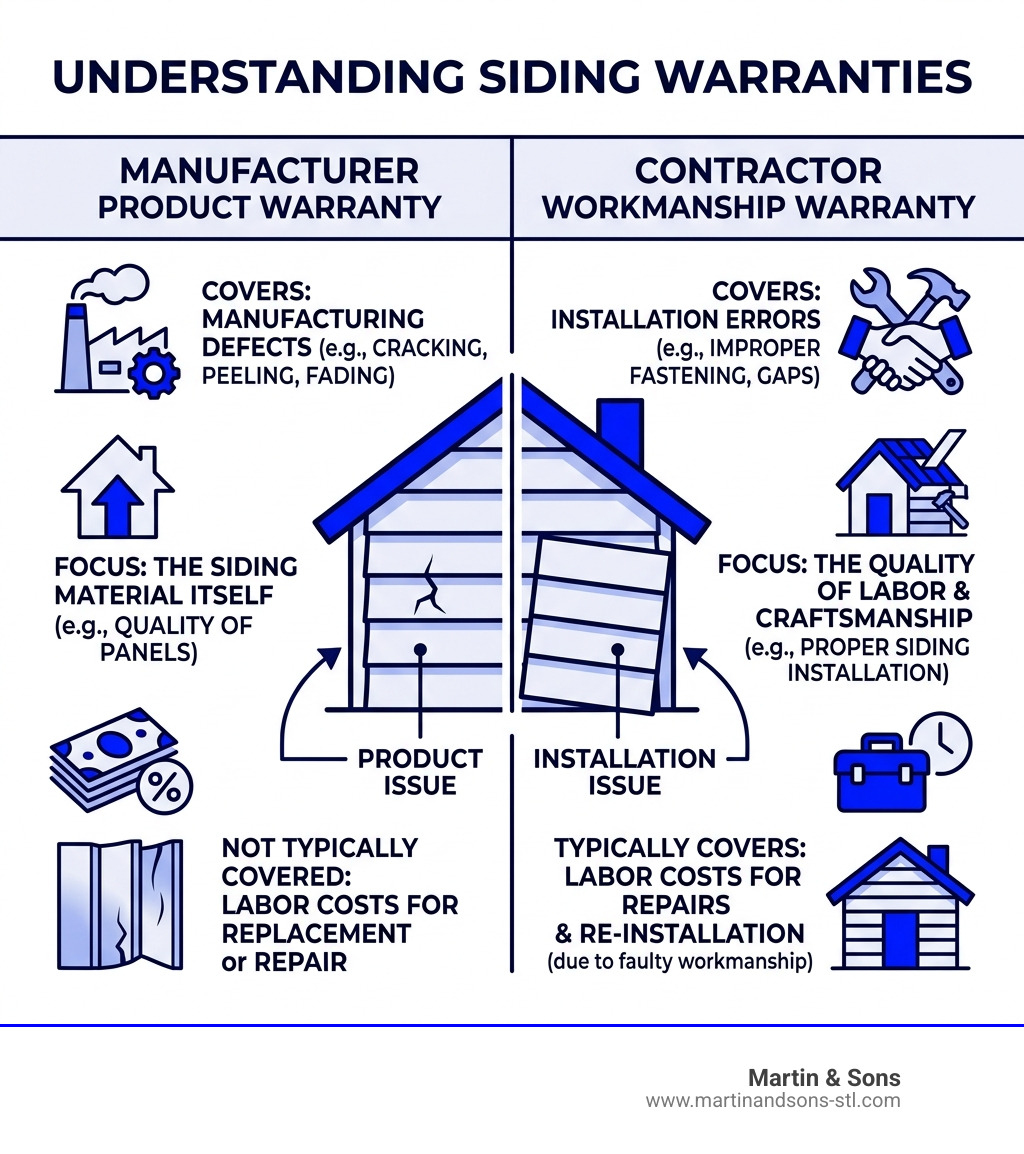
When we talk about lifetime warranty siding repair, we are actually talking about two separate legal agreements that work together to protect your home. If your siding fails, the first thing we determine is why it failed. Did the material itself break down, or did the person holding the hammer make a mistake?
Understanding this distinction is the most important part of everything you need to know about siding warranties. If a manufacturer finds that your siding is warping because it was nailed too tightly (an installation error), they will deny your claim. Conversely, if your siding is flaking due to a chemical imbalance in the vinyl, your contractor’s labor warranty won’t cover the cost of the new materials.
Manufacturer Product Warranties
A manufacturer warranty is a promise from the company that made the siding (like CertainTeed or James Hardie) that their product is free from defects. In lifetime warranty siding repair, these warranties typically cover specific “material failures.”
Commonly covered issues include:
- Peeling or Blistering: The surface of the siding begins to bubble or flake off.
- Rotting: Specifically for wood-composite or fiber cement products if they haven’t been exposed to standing water.
- Corrosion: For metal-based siding accessories.
- Manufacturing Defects: Cracks or splits that appear without any external impact.
For example, James Hardie offers a 30-year non-prorated substrate limited warranty on their siding products. This is a massive benefit because “non-prorated” means the value of the warranty doesn’t drop as the siding gets older. However, most manufacturer warranties have a major catch: they usually cover the material but not the labor to remove the old siding and install the new pieces. This is where how home siding repair can help bridge the gap between getting free boards and actually getting them onto your wall.
Contractor Workmanship and Lifetime Warranty Siding Repair
The second pillar is the workmanship warranty. This is provided by us—the contractor. It covers the actual physical labor of the installation. If a piece of siding falls off because it wasn’t hooked into the locking channel correctly, or if your window flashing was installed upside down leading to a leak, that is a workmanship issue.
In places like St Peters/Siding/Repair, we’ve seen many homeowners left stranded because their previous contractor offered a “tailgate warranty”—meaning the warranty ended as soon as the truck’s tailgate cleared the driveway.
A true lifetime workmanship warranty should cover:
- Installation Defects: Errors in how the siding was fastened or leveled.
- Crew Damage: Any accidental damage caused to your home during the installation process.
- Labor Coverage: The cost of the technicians’ time to come out and fix the error.
At Martin & Sons, we believe a warranty is only as good as the company backing it. That’s why we offer lifetime labor warranties and only collect payment once you are 100% satisfied. This ensures that if a repair is needed due to an installation oversight, you aren’t stuck paying for the same job twice.
What Does a Lifetime Siding Warranty Typically Cover?
When you look at the fine print of a lifetime warranty siding repair policy, you’ll see a lot of technical language. Most “Limited Lifetime Warranties” for vinyl siding guarantee that the product will not peel, rot, blister, rust, flake, chip, crack, or corrode under normal use and proper maintenance.
One of the more complex areas of coverage involves aesthetics—specifically “chalking” and “fading.”
- Chalking: This is the appearance of a white, powdery substance on the surface of the siding caused by the breakdown of the material’s binder.
- Excessive Fading: All siding fades over time due to UV exposure. However, manufacturers use a measurement called Hunter Units to determine if fading is “normal” or “excessive.” Usually, a change of more than 4 Hunter Units is considered a defect.
Hail Damage and Weathering Exclusions
Missouri weather is famous for its unpredictability, and hail is a major concern for anyone seeking lifetime warranty siding repair. It is a common misconception that a lifetime warranty is a “bumper-to-bumper” insurance policy. It isn’t.
Most warranties explicitly exclude “Acts of God,” which includes hail, tornadoes, and extreme wind. However, some premium vinyl siding manufacturers provide a limited hail damage warranty. There is a specific process for this:
- Insurance First: You must first file a claim with your homeowner’s insurance.
- Shortfall Coverage: If your insurance covers the damage but there is a gap in the cost of the materials, the manufacturer may reimburse you for that difference (excluding labor and deductibles).
Knowing when to call the siding repair pros after a storm is vital. We can help you document the damage to determine if it’s a warranty issue or an insurance claim.
Transferability and Prorated Coverage for Lifetime Warranty Siding Repair
If you decide to sell your home in Creve Coeur/Siding/Repair, what happens to that “lifetime” protection?
Most lifetime warranties are “transferable” exactly once. When the property changes hands, the warranty usually converts from a “Lifetime” status to a “Prorated” status. For example, many vinyl siding brands convert to a 50-year prorated schedule upon transfer.
How Proration Works:
- Years 0-5: Usually 100% coverage.
- Year 10: Coverage might drop to 50%.
- Year 15+: Coverage may drop to 10% of the original purchase price.
This means the “lifetime” benefit is really a reward for the original purchaser. If you are buying a home with existing siding, always ask for the original warranty documents and check the deadline for transferring the name—usually, you only have 30 to 45 days after closing to notify the manufacturer.
How to Avoid Voiding Your Siding Warranty
A warranty is a two-way street. The manufacturer promises the product will last, but you promise to take care of it. If you neglect basic maintenance, you might find your request for lifetime warranty siding repair denied.
| Maintenance Task | Vinyl Siding | Fiber Cement (Hardie) |
|---|---|---|
| Cleaning Frequency | Once a year | Once a year |
| Cleaning Method | Garden hose & soft brush | Garden hose & soft brush |
| Avoid | Pressure washers (can drive water behind panels) | High-pressure water (can damage the surface) |
| Chemicals | No organic solvents or liquid grease removers | No harsh abrasives |
| Heat Sources | Keep grills at least 10 feet away | Generally heat resistant |
To keep your warranty valid, you must follow the manufacturer’s specific cleaning instructions. For instance, using a pressure washer on vinyl siding can often void the warranty because it risks forcing water into the weep holes or behind the panels, leading to mold and structural rot that the manufacturer won’t cover. Always use a soft-bristle brush and a mild detergent solution.
Furthermore, be mindful of heat. We’ve seen siding “melt” or warp because of a backyard grill placed too close to the wall or even due to “solar reflection” from high-efficiency windows on a neighboring house. These are typically considered environmental factors, not manufacturing defects, and won’t be covered under home siding repair near me warranty claims.
The Risks of Third-Party Repairs
One of the fastest ways to void a lifetime warranty siding repair agreement is to allow an unauthorized third party to perform “fixes.”
Most workmanship warranties state that if anyone other than the original installer modifies, repairs, or “improves” the siding, the warranty is immediately void. If you notice a loose panel, don’t try to nail it back in yourself with a hammer and roofing nails. Vinyl siding needs to “float” to expand and contract with the Missouri temperature swings. Nailing it tight will cause it to warp, and once you’ve touched it, the original contractor is no longer responsible for the result.
Steps to Filing a Successful Siding Warranty Claim
Filing a claim for lifetime warranty siding repair is a formal process. You cannot simply call and say, “My siding looks bad.” You need to build a case.
- Gather Documentation: You will need your original contract, the date of installation, and ideally, the “lot number” or product ID from the original packaging (though a good contractor like Martin & Sons will have these records for you).
- Take Photos: Document the issue from multiple angles. Take “wide” shots to show the location on the house and “close-ups” to show the specific defect (like a crack or peeling).
- Provide Written Notice: Most warranties require a written claim sent via certified mail or through an official online portal within 30 to 60 days of discovering the defect.
- The Inspection Window: Once the claim is filed, the manufacturer or contractor usually has 30 days to inspect the property. Do not repair the damage before this inspection, or the claim will be denied because they couldn’t verify the “original” state of the defect.
- Wait for the Remedy: The manufacturer will decide whether to repair, replace, refinish, or offer a prorated refund.
If you are in Maryland Heights/Siding/Repair, we can assist you in this documentation process to ensure you have the best chance of an approved claim.
Frequently Asked Questions about Siding Warranties
Does a lifetime warranty cover the cost of labor for repairs?
Usually, no. Standard manufacturer warranties cover the cost of the replacement material only. However, some premium brands (like James Hardie’s ColorPlus finish) include labor for a limited number of years. This is why a lifetime labor warranty from your contractor is so important—it covers the part the manufacturer leaves out.
How do I transfer my siding warranty to a new buyer?
You typically need to send a written notice to the manufacturer within 30 days of the property transfer. This notice should include the property address, the names of the new owners, and a copy of the original warranty or proof of purchase. Some companies charge a small transfer fee (usually around $100).
What is considered “excessive fading” in siding?
Manufacturers use the Hunter Lab Color Scale to measure fade. If the color change is greater than 4 Hunter units, it is generally considered “excessive.” To test this, manufacturers often ask for a small sample of the damaged siding to compare against a “control” sample of the original color.
Conclusion
A lifetime warranty siding repair policy is a powerful tool for protecting your home’s value, but it is not a “set it and forget it” solution. It requires professional installation, regular cleaning, and a clear understanding of the difference between product defects and workmanship errors.
At Martin & Sons, we’ve built our reputation in St. Louis, Florissant, and O’Fallon by being transparent about these protections. We don’t believe in high-pressure sales or upfront deposits. Our goal is to provide you with the best price upfront and the peace of mind that comes with a 100% satisfaction guarantee and a lifetime labor warranty.
Whether you’re dealing with storm damage or just want to upgrade your home’s exterior, we are here to help. If you’re looking for expert siding contractors near me, give us a call today. We’ll make sure your home stays protected for a lifetime—and we’ll back it up with the service you deserve.