
Why Your Home’s Siding Deserves Immediate Attention
House siding repair services address critical damage to your home’s protective exterior shell—from cracked panels and warping to water intrusion and pest infiltration. Professional contractors assess damage, match existing materials, seal moisture barriers, and restore both structural integrity and curb appeal.
Quick Guide to Evaluating Siding Repair Options:
- Minor damage (1-2 panels): $200-$600 repair
- Moderate damage (several sections): $800-$2,000 repair
- Extensive damage (large areas, rot, or structural issues): $3,000+ or full replacement
- Age consideration: If siding is 10+ years old with widespread issues, replacement often makes more financial sense
- Professional vs. DIY: Complex moisture sealing, flashing installation, and material matching make professional repair the safer investment
Your home’s siding isn’t just about looking good from the street. It’s your first line of defense against St. Louis’s harsh weather—from summer storms that pack 60+ mph winds to winter freeze-thaw cycles that crack and warp panels. When siding fails, moisture sneaks behind your walls, energy bills climb, and minor problems snowball into structural nightmares.
Most homeowners wait too long to call for repairs. They see a few cracks or a loose panel and think “I’ll deal with that later.” But damaged siding works like a bad roof—the longer you wait, the more expensive the fix becomes. Water that seeps through compromised siding can flatten insulation, rot framing, and create mold problems that cost thousands more than the original repair would have.
The good news? Knowing when to call professionals (instead of attempting DIY fixes or ignoring the problem entirely) can save you serious money and protect your home’s value. This guide walks you through the warning signs, cost factors, and decision points that help you evaluate your siding repair options with confidence.
Identifying Common Signs You Need House Siding Repair Services
Recognizing siding damage early is the key to preventing “exterior home repair” from turning into “full structural restoration.” In areas like Florissant and Chesterfield, our homes face humidity, high winds, and fluctuating temperatures that test every square inch of our siding.
Here are the most common red flags that indicate you need to call for professional house siding repair services:
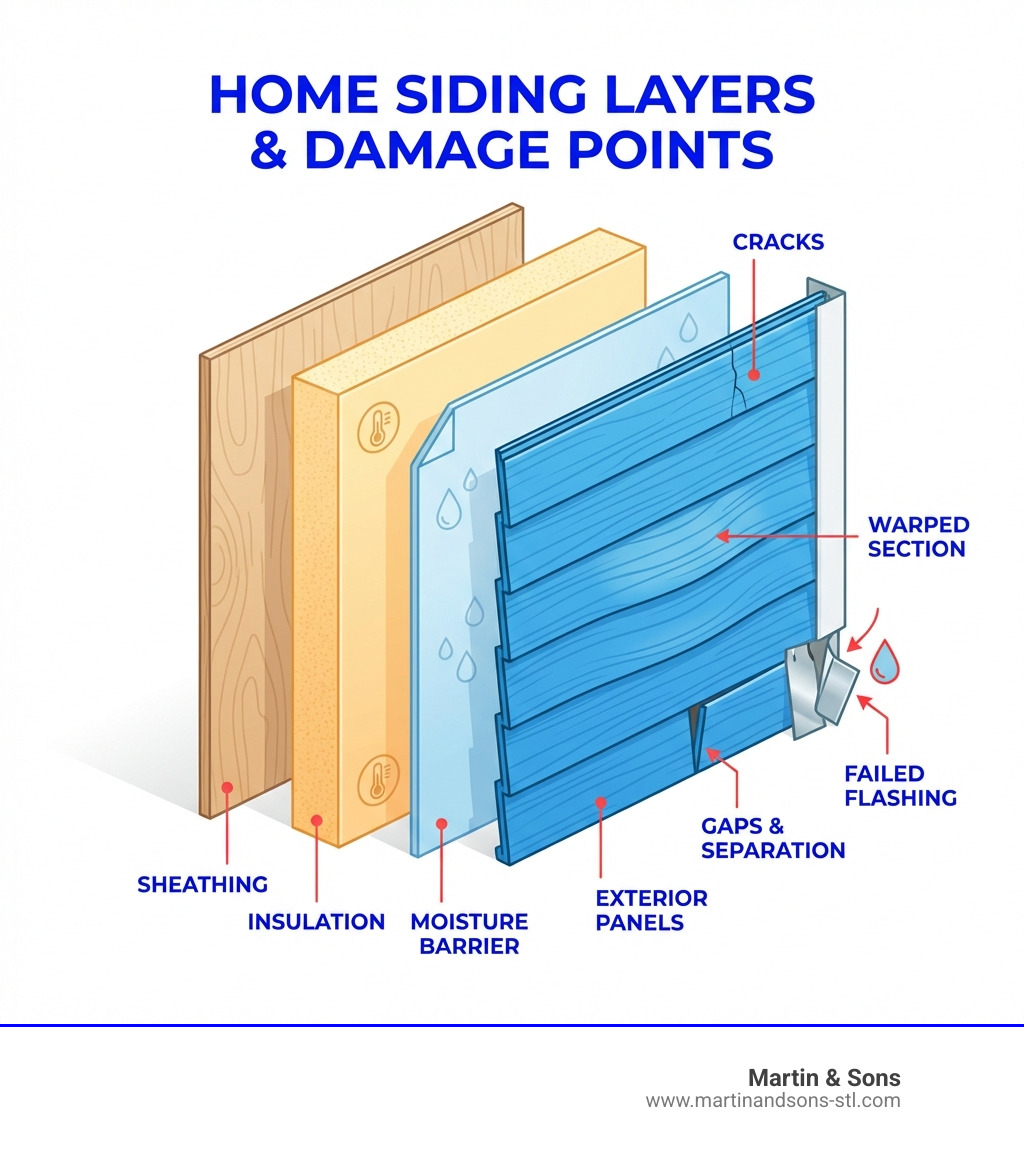
- Visible Cracks and Gaps: Even hairline cracks can be an invitation for moisture. Over time, these expand, allowing water to sit against your home’s sheathing.
- Warped or Buckled Panels: If your vinyl or wood siding looks like it’s “waving” or bulging, it’s often a sign of poor installation or moisture trapped behind the panel.
- Mold, Mildew, and Algae: While some surface grime is normal, persistent mold growth—especially near joints—suggests that water is being held against the material.
- Skyrocketing Energy Bills: If your HVAC system is working harder than usual, your siding might be the culprit. Gaps and cracks create drafts that compromise your home’s thermal envelope.
- Peeling Interior Paint or Wallpaper: This is a major warning sign. If the paint inside your house is bubbling or peeling, it often means moisture has traveled through the siding and into the wall cavity.
- Rotting Boards: For those with wood siding, soft spots or crumbling wood are signs of advanced rot that require immediate removal and replacement.
- Pest Damage: Holes from woodpeckers or gaps that allow insects and rodents to nest behind the siding can lead to massive internal damage.
Understanding how home siding repair can help goes beyond aesthetics. Repairs restore the “moisture barrier,” ensuring that rain and humidity stay outside where they belong.
Siding Materials: Lifespan and Maintenance Requirements
Different materials have different “personalities.” Some are low-maintenance champions, while others require a bit more love to reach their full potential. Knowing the lifespan of your material helps you decide if a repair is a smart investment or just a temporary band-aid.
| Siding Material | Typical Lifespan | Maintenance Level | Common Repair Needs |
|---|---|---|---|
| Vinyl | 20–40 Years | Low | Cracks, fading, wind uplift |
| Fiber Cement | 30–50 Years | Low/Moderate | Re-caulking, painting (rarely) |
| Wood | 15–40 Years | High | Rot, pest damage, staining |
| Aluminum | 30+ Years | Low | Dents, scratches, fading |
| Engineered Wood | 20–50 Years | Moderate | Edge swelling, moisture seals |
Popular Materials in St. Louis
In our local Missouri climate, Vinyl Siding remains the most popular choice due to its affordability and durability. High-quality options like Mastic premium vinyl offer excellent UV protection to prevent the color fading common in homes older than five years. There are many 7 benefits of choosing vinyl siding for your home, including its ability to mimic the look of wood without the risk of rot.
Fiber Cement is another top-tier choice for St. Louis homeowners. It is fire-resistant, pest-resistant, and can withstand the heavy hailstorms we often see in Maryland Heights and O’Fallon. While it carries a higher upfront cost, its 50-year lifespan makes it a “once-in-a-lifetime” investment for many.
Regardless of the material, annual cleaning is the best way to extend lifespan. A simple wash removes dirt and acidic pollutants that can break down the finish of your siding over time.
Repair vs. Replacement: When to Invest in New Siding
This is the million-dollar question: Should you patch it or replace the whole thing? Generally, if the damage is localized—like a few panels dented by a rogue lawnmower or a single section torn by a storm—repair is the way to go.
However, you should consider a full replacement if:
- The Siding is 20+ Years Old: Most materials start to lose their structural integrity and color after two decades.
- Widespread Moisture Damage: If rot or mold is found in multiple areas around the house, it usually indicates the original installation or the moisture barrier has failed.
- Frequent Repairs: If you’re calling for house siding repair services every season, you’re likely spending more in the long run than you would on a replacement.
- Fading and Discontinued Colors: If your siding is more than 5-10 years old, sunlight has likely faded the panels. Matching new panels to old ones can result in a “patchwork” look that hurts curb appeal. In these cases, replacement ensures a uniform look.
- Severe Storm Damage: After a major hail or wind event, insurance claims often cover a full replacement if a significant portion of the home is impacted.
Knowing when to schedule a St. Charles siding repair is crucial after any high-wind event (60+ mph) or hailstorm. We recommend a 10-year inspection for all siding types to catch minor issues before they compromise the structural integrity of your home.
Why Professional House Siding Repair Services Outperform DIY
It’s tempting to grab a ladder and a tube of caulk from the big-box store, but siding repair is deceptively complex. Here’s why the pros are worth it:
- Specialized Tools: Professionals use “zip tools” to unlock vinyl panels without snapping them and high-grade flashing that isn’t always available at retail.
- Seamless Matching: We have access to vast networks of suppliers to match discontinued textures and colors as closely as possible.
- Moisture Sealing: The most important part of the repair is what you don’t see. Ensuring the moisture barrier and flashing are correctly installed prevents internal rot.
- Ladder Safety: Siding work often involves heights and awkward angles. Professional crews are trained and insured for this specific risk.
- Warranties: DIY fixes don’t come with a guarantee. Professional repairs often include labor warranties that give you peace of mind for years to come.
Maintenance Tips to Extend Siding Lifespan
You don’t have to be a contractor to keep your siding in great shape. A little bit of proactive care goes a long way in preventing the need for major house siding repair services.
- Annual Washing: Use a soft-bristle brush and a mild detergent to remove dirt, bird droppings, and pollen. Avoid high-pressure power washing on vinyl, as it can force water behind the panels.
- Gutter Maintenance: Clogged gutters cause water to overflow and run down your siding. This is the #1 cause of “tiger striping” and moisture intrusion.
- Foliage Clearance: Keep bushes and trees trimmed at least 12 inches away from your siding. Branches can scratch the surface, and dense foliage traps moisture against the panels.
- Inspect Your Caulk: Check the seals around windows, doors, and corners. If the caulk is cracked or missing, apply a high-quality exterior grade caulk to prevent leaks.
- Pest Prevention: Seal any small gaps or holes immediately. Bees, wasps, and rodents love the space behind siding.
For more detailed guidance, check out our resources on O’Fallon siding maintenance to keep your home’s exterior looking brand new.
Frequently Asked Questions
How much do house siding repair services typically cost?
Costs vary based on the material and the extent of the damage. For a minor vinyl repair (1-2 panels), you can expect to pay between $200 and $600. Moderate damage involving several sections or corner posts typically ranges from $800 to $2,000. If the damage is extensive or involves structural rot, costs can exceed $3,000. That storm damage is often covered by homeowners’ insurance. For residents in the St. Louis metro area, we offer specific insights for St. Peters siding repair to help you budget effectively.
How long does a typical siding repair project take?
Most minor siding repairs can be completed in one day. If we are replacing a few panels or fixing a loose corner post, our crews are often in and out within a few hours. More extensive restorations involving moisture barrier repair or large-scale panel replacement may take 2-3 days, depending on weather conditions.
Can siding repairs be performed during the winter?
Yes! While vinyl becomes more brittle in freezing temperatures, professional crews use specific “cold weather techniques” to ensure the material doesn’t crack during installation. Repairing damage in the winter is actually highly recommended because it prevents melting snow and ice from seeping into cracks and causing water damage during the spring thaw.
Conclusion
Your home’s siding is a hardworking system designed to protect your family and your biggest investment. Whether you’re dealing with a few hail dents or aging wood rot, addressing the problem quickly with professional house siding repair services is the smartest move you can make.
At Martin & Sons, we believe in doing things differently. We serve the entire St. Louis region—from O’Fallon and St. Charles to Creve Coeur and Maryland Heights—with a commitment to elite craftsmanship. We offer no upfront deposits, meaning you only pay when you are 100% satisfied with the completed work. Plus, our lifetime labor warranties and “best price upfront” policy ensure you get the highest value without the stress.
Don’t let a small crack turn into a major headache. Schedule a FREE Consultation today and let our experts restore the protection and beauty your home deserves.