
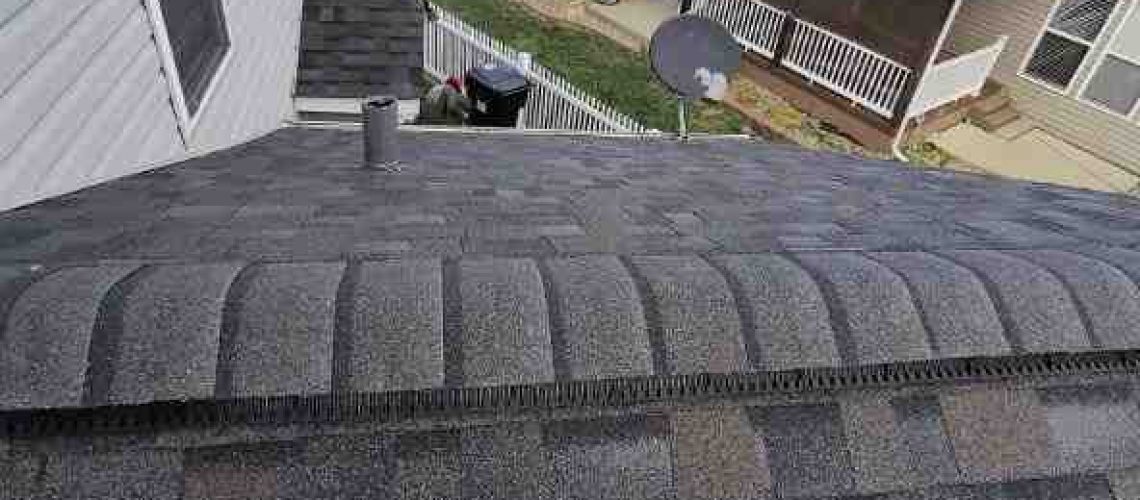
Why a Roof Ventilation System Install Matters for Your Home
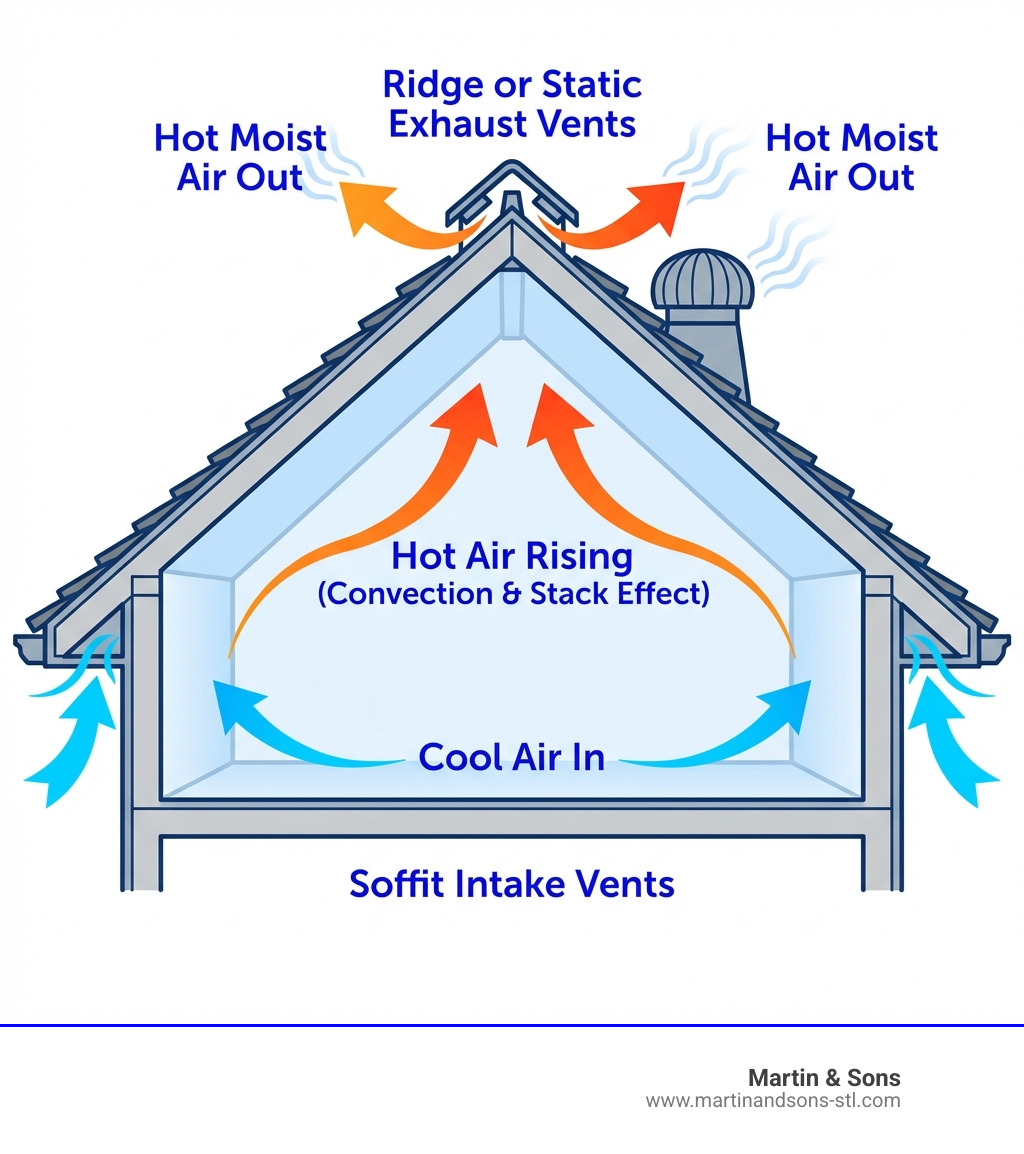
A roof ventilation system install is one of the most critical—yet often overlooked—components of a healthy, long-lasting roof. Proper attic ventilation moves hot, moisture-laden air out of your attic space while drawing in fresh, cooler air from outside. Without it, your home faces serious risks: ice dams in winter, shingle failure in summer, mold growth year-round, and skyrocketing energy bills.
Quick Answer: Essential Steps for Roof Ventilation System Install
- Calculate your needs — Use the 1:300 rule (1 sq ft of ventilation per 300 sq ft of attic floor space with a vapor barrier) or 1:150 without one
- Balance intake and exhaust — Split ventilation 50/50 between low intake vents (soffit/eaves) and high exhaust vents (ridge, static, or turbine)
- Choose your vent types — Ridge vents offer continuous airflow, static vents are cost-effective, turbine vents use wind power
- Install intake first — Add soffit vents or rafter baffles to ensure air can enter at the eaves
- Add exhaust vents — Cut openings, seal properly with roofing cement, and test for leaks
According to research, unventilated attics can reach temperatures of 150°F or more—at least 25°F above outside air temperatures. That extreme heat radiates down into your living space, forces your air conditioner to work overtime, and literally bakes your roof shingles from below. In winter, warm air escaping into a poorly ventilated attic melts snow on the roof, which then refreezes at the eaves, forming damaging ice dams.
The good news? A properly planned roof ventilation system install isn’t complicated, but it does require understanding the right balance of intake and exhaust, choosing appropriate vent types for your roof, and following best practices for installation and sealing. Whether you’re installing vents during a roof replacement or retrofitting an existing roof, getting it right protects your investment and keeps your home comfortable year-round.
Why Proper Attic Ventilation Is Essential
In the St. Louis area, we experience the full gamut of Midwestern weather—from humid, sweltering summers to freezing, snowy winters. Without a proper roof ventilation system install, your home is at the mercy of these elements.
Preventing Ice Dams and Moisture Damage
During a cold Missouri winter, heat escaping from your living space into the attic can warm the roof deck. This causes snow to melt and run down to the eaves, where it refreezes because the eaves are colder. This creates a “dam” that traps water, forcing it under your shingles and into your walls. Proper ventilation keeps the roof deck at a temperature closer to the outside air, preventing this cycle.
Furthermore, condensation is a leading cause of damage to roofing materials. When warm, moist air from showers or cooking migrates into a cold attic, it turns into frost or water droplets. This moisture rots your wood decking and ruins your insulation’s R-value.
Extending Shingle Longevity and Energy Efficiency
In the summer, an unventilated attic acts like a giant radiator above your head. This heat buildup can reach 150°F, which effectively “bakes” asphalt shingles, causing them to curl, blister, and age prematurely. By implementing a balanced approach to roof ventilation, you allow that heat to escape, reducing the load on your AC and extending the life of your roof.
Comparing Static, Turbine, and Ridge Vents
When planning your roof ventilation system install, you need to choose the right exhaust hardware. Each has its own Net Free Area (NFA)—the actual open space through which air can pass.
| Vent Type | Aesthetics | Cost | Best Use Case |
|---|---|---|---|
| Ridge Vent | High (Low Profile) | Moderate | Long, straight roof ridges |
| Turbine Vent | Low (Bulky) | Low | Areas with consistent wind |
| Static Vent | Moderate | Very Low | Kitchen/Bath exhaust or small roofs |
Static Vents (Box or Gooseneck)
Static vents are non-moving units that allow air to escape naturally. While they are cost-effective, they are often used for specific exhaust needs like bathrooms. For general attic ventilation, they are less efficient than ridge systems because they only vent air in the immediate area where they are installed.
Turbine Vents (Whirlybirds)
Turbine vents use convection and wind to pull air out of the attic. Even when there is [no wind](https://www.billraganroofing.com/blog/types-attic-ventilation-systems#:~:text=Turbine%20vents%20(also%20known%20as,10%2D12%20times%20per%20hour.), they can be effective as heat rises, but they perform best when spinning. Turbine vents are excellent for hip roofs where ridge space is limited.
Ridge Vents
Ridge vents are widely considered the gold standard. They are installed along the entire peak of the roof, providing a continuous exhaust path. They are aesthetically pleasing because they sit under the ridge cap shingles, making them nearly invisible from the street.
How to Plan Your Roof Ventilation System Install
You can’t just throw a couple of vents on a roof and call it a day. A successful roof ventilation system install requires a “balanced” approach.
The 1:300 and 1:150 Rules
The U.S. Federal Housing Authority and NRCA provide clear guidelines:
- With a Vapor Barrier: Install 1 square foot of NFA for every 300 square feet of attic floor space.
- Without a Vapor Barrier: You need more airflow—1 square foot of NFA for every 150 square feet.
Balancing Intake and Exhaust
This is where many DIYers (and some pros) fail. You must split your ventilation 50/50. If you need 10 square feet of NFA, 5 should be intake (soffit vents) and 5 should be exhaust (ridge or static vents). If you have too much exhaust and not enough intake, the system will actually pull conditioned air from your home or pull rain/snow in through the exhaust vents. It is always better to have slightly more intake than exhaust.
Adjusting for Pitch
If your roof is steep, you have more attic volume to clear. For pitches between 7:12 and 10:12, add 20% to your calculations. For 11:12 or greater, add 30%. You can find more details on how to calculate the amount of ventilation you need in professional roofing manuals.
Step-by-Step Guide to Installing Roof Vents
Before you start, ensure you have the right tools: a circular saw or reciprocating saw, a Wonder bar for prying shingles, galvanized roofing nails, and high-quality roofing cement.
Preparation and Safety
Always work on a dry day and use a harness. Mark your vent locations from inside the attic by driving a nail through the roof deck between rafters. This ensures you don’t accidentally cut into a structural member.
The Smoke Test
After your roof ventilation system install is complete, we recommend a smoke test. By pushing artificial smoke through the system, you can see if air is flowing correctly and ensure there are no leaks in your sealant.
Steps for a Ridge Roof Ventilation System Install
Ridge vents provide the most uniform cooling. Here is how we handle a standard installation:
- Cut the Slot: Use a circular saw to cut a slot in the sheathing along the ridge. The slot should be 2 inches wide (1 inch on each side of the peak). If there is a ridge beam, cut 1 inch on either side of the beam.
- Leave a Border: Stop your cut at least 12 inches away from the gable ends or chimneys to prevent weather infiltration.
- Snap a Chalk Line: Ensure the vent sits straight by snapping a line.
- Position the Vent: Lay the ridge vent over the slot. If using a mesh-style ridge vent, be careful not to over-compress it, as this can shut off the airflow.
- Fasten: Use 2-inch galvanized nails to secure the vent through the roof deck.
- Cap It: Install ridge cap shingles over the vent using longer nails (usually 2.5 to 3 inches) to ensure they penetrate the roof deck by at least 1/2 inch.
Installing Static and Turbine Roof Ventilation System Install
For static and turbine vents, the process is slightly different:
- Mark and Cut: Trace the diameter of the vent throat on the shingles. Cut the hole through the shingles and the decking.
- Pry Shingles: Use a flat bar to carefully lift the shingles above the hole.
- Apply Sealant: Apply a generous bead of roofing cement to the bottom of the vent flange. Pro tip: Start the bead slightly before the most critical spot to ensure a continuous seal.
- Slide and Secure: Slide the top of the flange under the lifted shingles so the shingles overlap the vent. Nail the flange down with galvanized nails.
- Level (Turbines Only): Turbine vents have a variable pitch base. Rotate the elbow until the turbine head is perfectly vertical. If it’s tilted, it won’t spin correctly and will wear out the bearings.
- Seal Nail Heads: Cover all exposed nail heads with a dab of roofing cement to prevent leaks.
Ensuring Proper Intake with Soffit Vents and Baffles
Exhaust is only half the battle. For air to leave the ridge, it must enter at the eaves.
Installing Soffit Vents
Soffit vents are installed in the underside of your roof’s overhang. Whether you use individual small vents or continuous strips, they must be kept clear. A common mistake is for painters to paint over them, effectively “suffocating” the house.
The Role of Rafter Vents (Baffles)
If you have thick attic insulation, it often spills over the edge of the wall and blocks the soffit vents. To prevent this, we install rafter vents or baffles. These are plastic or cardboard channels stapled to the roof decking between the rafters. They create a “tunnel” for air to travel from the soffit, over the insulation, and into the main attic space.
Common Installation Mistakes and Best Practices
Even a high-quality roof ventilation system install can fail if these common errors occur:
- Mixed Exhaust Types: Never mix ridge vents with static vents or turbines on the same roof plane. The ridge vent will actually pull air from the static vent instead of the soffit, “short-circuiting” the system and leaving the lower attic stagnant.
- Blocked Intakes: Always check that insulation isn’t covering your soffit vents. Use baffles to maintain that critical airflow channel.
- Poor Sealing: Don’t be stingy with the sealant. Use non-petroleum-based sealants where possible, as some roofing tars can actually damage certain vent materials or shingles.
- Climate Considerations: In St. Louis, we recommend vents with snow filters or internal baffles to prevent wind-driven rain and snow from blowing into your attic during our winter storms.
Frequently Asked Questions about Roof Ventilation
How do I know if my attic is poorly ventilated?
Look for warning signs: “hot spots” in your ceiling during summer, frost on the underside of your roof deck in winter, or a musty smell in the attic. If you see shingles curling or dark stains on your eaves (a sign of ice dams), your ventilation needs an upgrade.
Can I mix different types of exhaust vents?
No! This is a major mistake. Mixing vent types (like a ridge vent and a powered fan) disrupts the natural “stack effect.” The higher vent will pull air from the lower vent rather than the soffit, leaving most of your attic unventilated.
Do I need a powered attic fan?
In most cases, a properly designed passive system (ridge and soffit) is superior. Powered fans consume electricity and can actually pull conditioned air out of your home if the attic floor isn’t perfectly sealed. However, for very large or complex roofs, a powered vent might be necessary.
Conclusion
A professional roof ventilation system install is an investment in your home’s future. It protects your shingles, lowers your utility bills, and prevents the structural rot caused by Missouri’s humidity. At Martin & Sons, we believe in doing the job right the first time. That’s why we offer no upfront deposits—you only pay when you are 100% satisfied with the completion of the project.
Whether you are in St. Louis, St. Charles, or O’Fallon, our team is ready to help you balance your attic’s ecosystem. With our lifetime labor warranties and upfront pricing, you can rest easy knowing your roof is breathing exactly as it should. Schedule your roofing maintenance with us today and keep your home protected for years to come.