
What St. Louis Homeowners Need to Know About Storm Damage Repairs in 2026
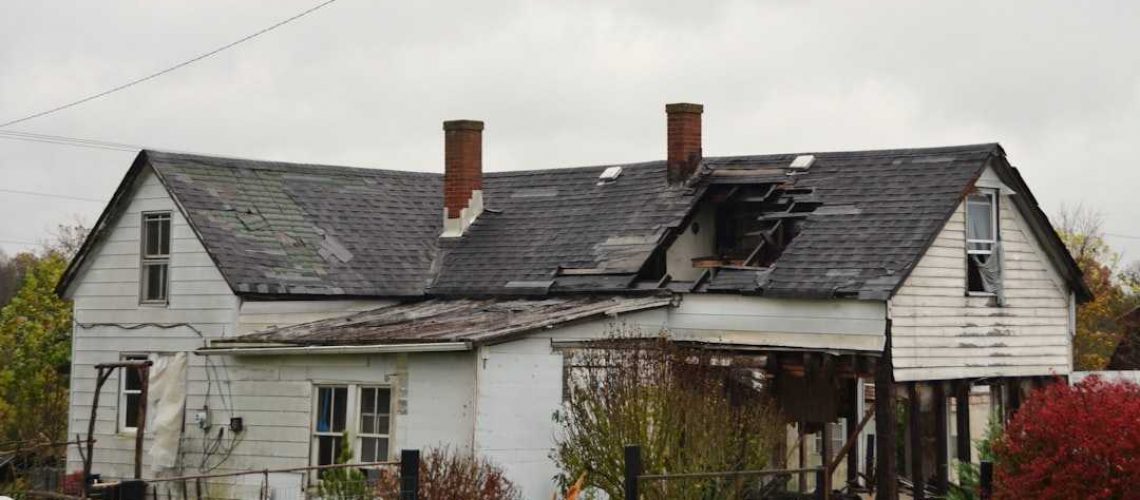
Storm damage repairs are one of the most urgent — and most stressful — challenges a homeowner can face after severe weather hits.
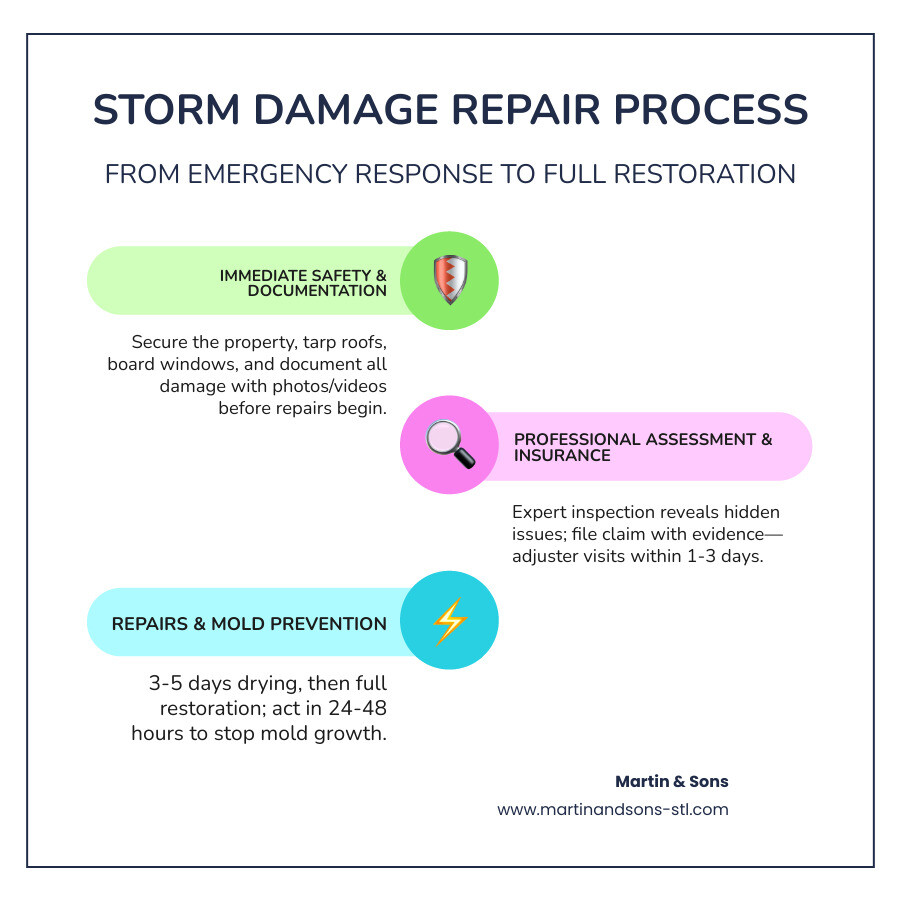
Here’s a quick overview of what the process typically involves:
| Step | What Happens |
|---|---|
| 1. Safety first | Check for downed power lines, gas leaks, and structural hazards before entering |
| 2. Document everything | Take photos and video of all visible damage before touching anything |
| 3. Emergency stabilization | Tarp the roof, board up windows, extract standing water |
| 4. Professional inspection | A contractor assesses the full extent of visible and hidden damage |
| 5. Insurance claim | File promptly with documentation; an adjuster typically inspects within 1-3 days |
| 6. Repairs and restoration | Drying takes 3-5 days; full repairs can range from days to weeks depending on severity |
| 7. Mold prevention | Critical — mold can begin growing within 24-48 hours of water exposure |
Storms in St. Louis can cause serious damage fast — missing shingles, cracked siding, broken windows, flooded basements, and hidden structural problems that aren’t obvious until weeks later. The longer damage sits unaddressed, the worse it gets.
I’m John Martin of Martin & Sons, a family-owned contractor with over 35 years of hands-on experience handling storm damage repairs across the St. Louis area. In this guide, I’ll walk you through everything you need to know — from spotting damage to navigating insurance claims — so you can make confident, informed decisions without the pressure.
Identifying Common Signs of Property Damage
When a storm rolls through St. Peters or Chesterfield, the adrenaline is usually pumping. Once the clouds part and it is safe to head outside, you need a systematic way to look for damage. We recommend the “IOU” method: Inside, Outside, and Up.
Start with an Inside assessment. Head to the highest point of your home—the attic. Use a flashlight to check for damp insulation, water staining on the rafters, or light peeking through the roof deck. Even a small leak now can lead to a massive headache later.
Next, move Outside. Walk the perimeter of your home and look for Signs Your Home Needs Immediate Roof Storm Damage Repair. From the ground, look for “shingle rain”—granules that have washed off and collected at the bottom of your downspouts. Also, keep an eye out for pieces of siding or shingle tabs scattered in the yard.
Finally, the Up portion involves looking at the roof itself. While we always advise homeowners to prioritize safety and avoid climbing on a damaged roof themselves, a visual scan from the top of a ladder (if you are comfortable) or using binoculars can reveal a lot. However, the most reliable way to catch hidden issues is through professional inspection benefits. We use moisture meters and thermal imaging to find what the naked eye misses.
Recognizing Roof Storm Damage Repairs Needs
Roof damage is rarely uniform. High winds in St. Louis tend to hit corners, edges, and ridge lines with the most force. You might see missing shingles or “wind uplift,” where the wind has broken the adhesive seal of the shingle, causing it to flap or curl. This is dangerous because even if the shingle is still there, it is no longer protecting your home from rain.

Hail is a different beast altogether. Think of a hail storm like a professional golfer hitting thousands of balls at your house. On asphalt shingles, hail creates “bruises”—dark, circular dents where the protective granules have been knocked away, exposing the fragile mat underneath to UV rays. If you have wood shingles, hail often causes them to split along the grain. If you suspect any of these issues, it’s time to look into St. Louis Storm Damage restoration experts.
Siding and Window Vulnerabilities
Your roof isn’t the only thing in the line of fire. Siding and windows often bear the brunt of horizontal, wind-driven hail.
- Vinyl Siding: Look for cracks, chips, or “star” patterns where hail has impacted the surface.
- Aluminum Siding: You’ll see clear dings and dents, especially when the sun hits the wall at an angle.
- Windows: Beyond the obvious shattered glass, look for Maryland Heights Windows Storm Damage like dented frames or “fogging” between panes, which indicates a seal failure.
If your window frames are warped or the glass is compromised, you may need to check for Creve Coeur Windows Storm Damage solutions to restore your home’s energy efficiency and security.
Immediate Steps and Emergency Storm Damage Repairs
The first few hours after a storm are the most critical. Your primary goal is “mitigation”—which is insurance-speak for “stopping things from getting worse.”
Before you do anything, ensure your utilities are safe. If you smell gas or see downed power lines near your home, stay away and call the utility company immediately. Once the site is safe, your next step is to address active leaks. This is where Emergency Roof Repair – We Can Help You becomes vital. Covering a hole with a tarp or boarding up a broken window can save you thousands of dollars in interior water damage.
Stabilization and Mitigation Services
Emergency stabilization is the “Band-Aid” that protects your home while you wait for permanent repairs. This includes:
- Roof Tarping: Using heavy-duty, UV-resistant tarps secured with wooden strips to prevent rain from entering.
- Window Board-up: Securing broken windows or doors to prevent both weather damage and looting.
- Structural Shoring: If a tree has fallen on the house, we may need to reinforce the structure to prevent a collapse.
Whether you are dealing with St. Charles Storm Damage or need help with Ofallon Storm Damage, getting these temporary fixes in place quickly is essential for a successful insurance claim.
Preventing Secondary Mold Growth
Water damage is a ticking time bomb. According to the EPA, mold can begin growing within 24-48 hours of water exposure. In the humid Missouri climate, this process can happen even faster.
To prevent this, we use industrial-grade equipment for Chesterfield Storm Damage recovery. This includes high-velocity air movers and LGR (Low Grain Refrigerant) dehumidifiers that pull moisture out of the air and the structural studs of your home. We also use moisture mapping and thermal imaging to ensure that walls that look dry on the outside aren’t actually soaking wet on the inside.
Navigating the Insurance Claims Process
Dealing with insurance adjusters can feel like learning a second language. The most important thing you can do is document everything.
Before we start any cleanup, take hundreds of photos. Take videos of the water dripping from the ceiling. Don’t throw away damaged materials—like ruined carpet or pieces of the roof—until the adjuster has seen them.
One of the most common questions we hear is, Is Roof Damage Covered by Insurance? Generally, yes—homeowners insurance typically covers “sudden and accidental” damage from wind and hail. However, they usually won’t cover damage caused by “neglect” or “wear and tear.” This is why having a professional contractor present during the adjuster meeting is so helpful; we can point out the specific storm-related causes that an adjuster might overlook.
Professional Restoration and Storm Damage Repairs Timeline
How long will this take? While every project is different, here is a general timeline for storm damage repairs:
- Days 1-2: Emergency stabilization (tarping/board-up) and initial inspection.
- Days 3-5: Water extraction and drying. This is the most critical phase for St. Peters Storm Damage to prevent mold.
- Weeks 1-2: Insurance claim processing and material procurement.
- Weeks 2-4+: The reconstruction phase.
For projects involving Florissant Storm Damage, we handle everything from the initial dry-out to the final walkthrough, ensuring the process moves as quickly as possible.
Choosing Durable Materials for Future Resilience
If you have to replace your roof or siding anyway, why not upgrade to materials that can handle the next St. Louis storm?
| Material Feature | Standard Asphalt | Class 4 Impact-Resistant |
|---|---|---|
| Hail Resistance | Vulnerable to bruising/cracking | Tested with 2″ steel balls; resists dents |
| Wind Rating | Usually up to 60-90 mph | Can be rated up to 110-130 mph |
| Insurance Benefit | Standard premiums | Potential discounts of up to 35% |
| Lifespan | 20-25 years | 30-50 years |
Investing in UL 2218 Class 4 shingles or the FORTIFIED Roof program is a smart move for Creve Coeur Storm Damage prevention. These materials are designed to stay attached during high-wind events and resist the “bruising” that leads to leaks. We also recommend seamless gutters, which are less likely to pull away from the house under the weight of heavy rain or ice.
Frequently Asked Questions about Storm Damage
Does my roof need a full replacement or just repairs?
This depends on the “25% rule” often used by building codes and insurance companies. If more than 25% of the roof surface is damaged, a full replacement is usually required. We also look at the age of the roof; if your shingles are 20 years old, a repair may not bond properly to the brittle existing material, making a replacement the more cost-effective long-term choice.
What are the typical costs for storm-related repairs?
Storm damage repairs typically range from $1,000 to $10,000. Minor shingle replacement or gutter repair might cost around $1,500, while extensive structural repairs or full roof replacements can exceed $8,000 to $12,000. Your primary out-of-pocket cost is usually your insurance deductible.
How do I choose a reliable restoration contractor?
Look for a local company with a physical office—like our location at 8460 N. Lindbergh Blvd. in Florissant.
Beware of “storm chasers” who knock on your door after a hail event. A reliable contractor should offer:
- No upfront deposits: You shouldn’t pay a dime until the work is started or completed.
- Lifetime labor warranties: This shows they stand by their work.
- Local references: They should be able to point to homes they’ve fixed in Maryland Heights or O’Fallon.
Conclusion
At Martin & Sons, we understand that your home is your biggest investment. When a storm hits, you don’t just need a roofer; you need a partner who can handle the insurance headache and the heavy lifting. We specialize in roofing, gutters, windows, and siding across the entire St. Louis region.
Our promise is simple: No upfront deposits. You pay only when you are 100% satisfied with the completion of the job. Plus, we offer lifetime labor warranties and the best prices upfront, so you never have to wonder if you’re getting a fair deal.
If you’re worried about your home after the latest weather event, don’t wait for a leak to start. For More info about St. Louis storm damage repairs or to schedule a free, no-pressure inspection, give us a call today. We’re here to help you get back to normal.