
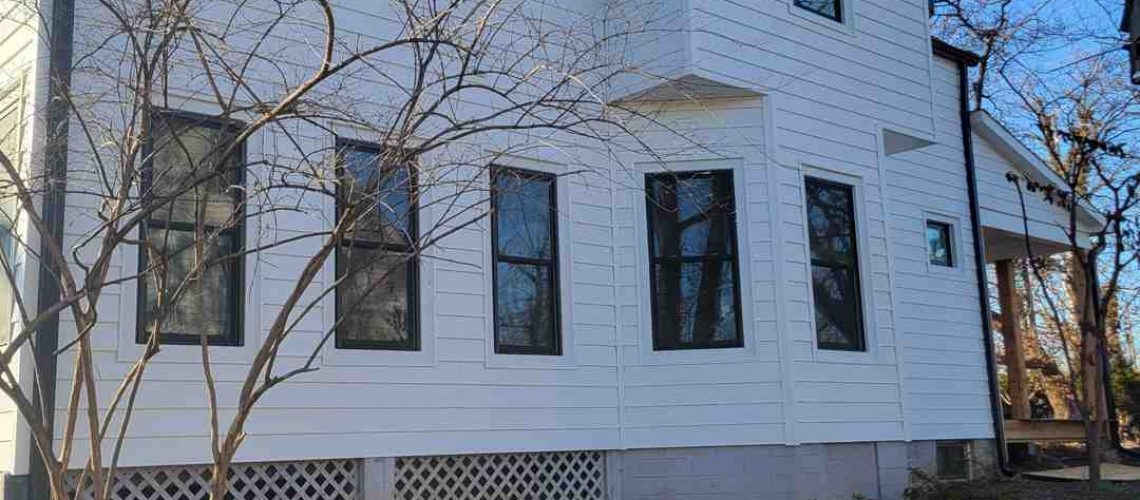
Choose House Windows That Fit Your Home, Budget, and Climate
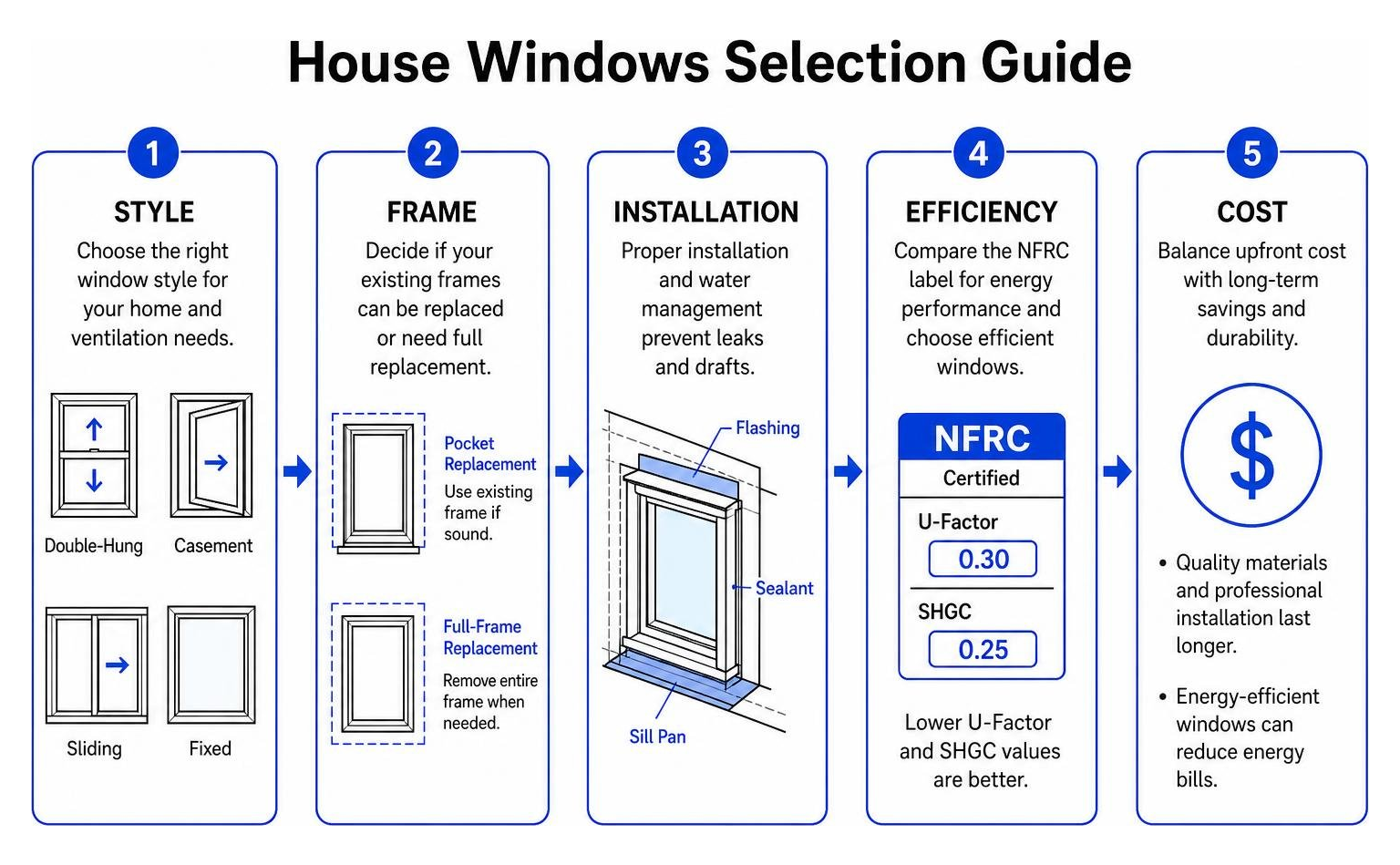
The best house windows match your home’s opening, ventilation needs, and energy goals. Start by choosing a style – such as double-hung, casement, sliding, or fixed – then decide whether your existing frames are sound enough for pocket replacements or need full-frame installation. Compare the NFRC label for U-factor and SHGC, and choose durable frames and professional flashing to prevent drafts and water leaks.
New Energy Star certified windows can reduce the average home’s energy bills by about 13%, especially when replacing old single-pane units. But a window is only as good as its fit and installation, so correct measuring and water management matter as much as glass and frame material.
I am John Martin of Martin & Sons, a family-owned company with more than 35 years of industry experience helping homeowners make confident decisions about house windows and major exterior projects. This guide breaks down the practical choices, costs, and details that protect your home for the long term.
Popular Styles of House Windows and Their Pros and Cons
Every home has unique architectural requirements, and understanding the benefits of replacing the windows on your home starts with matching the right window operating style to the right room. Selecting window styles involves balancing natural ventilation, exterior aesthetics, ease of cleaning, and air infiltration resistance.
Double-Hung and Single-Hung Styles
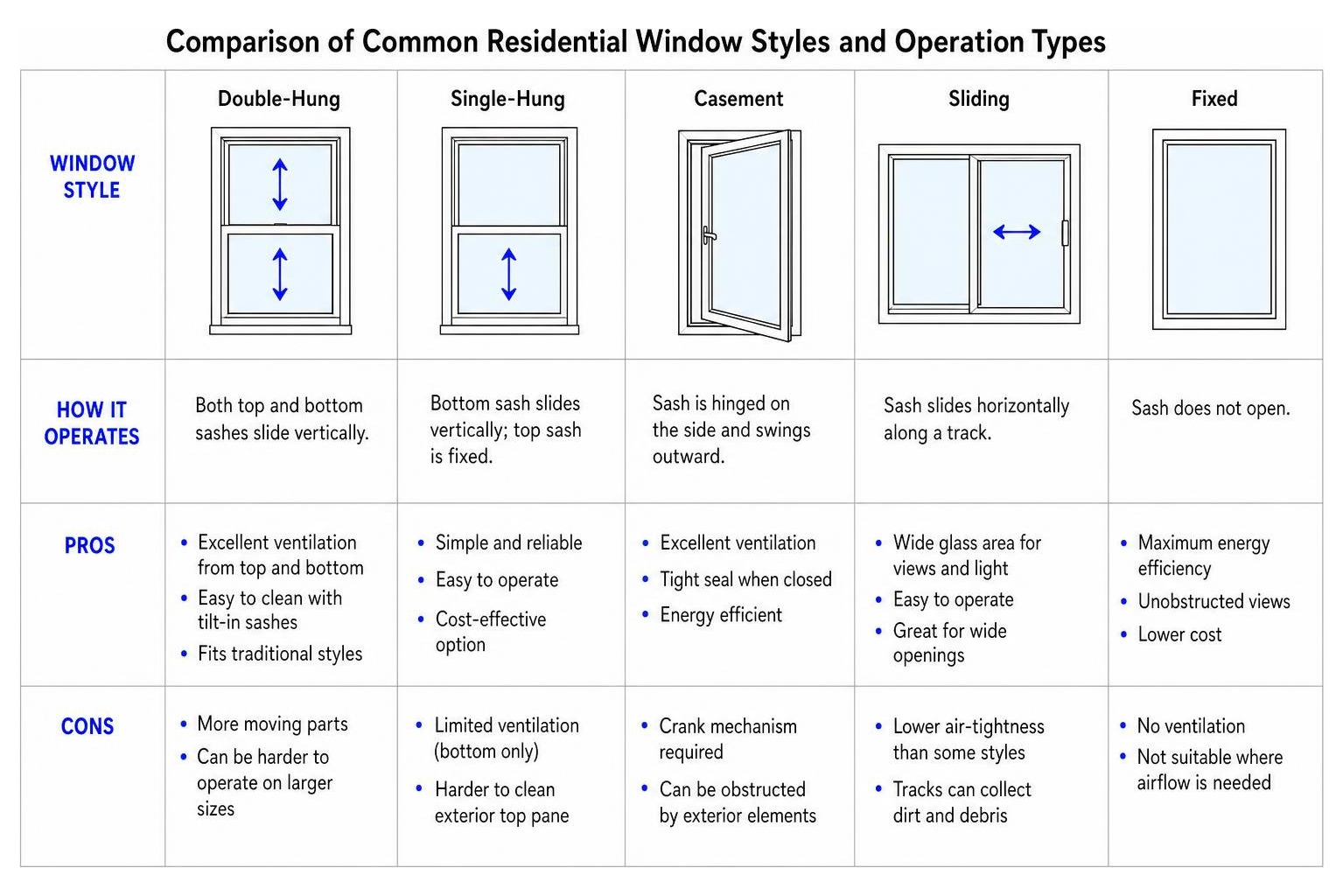
Double-hung and single-hung styles represent the most common residential window designs in America. In a single-hung window, only the bottom sash moves up and down while the top sash remains fixed in place. A double-hung window features upper and lower operating sashes, allowing you to open the top to let rising warm air escape while opening the bottom to draw in cool breezes.
- Pros: Highly versatile design that complements traditional, colonial, and craftsman architecture. Modern double-hung units feature tilt-in wash mechanisms that let you clean the exterior glass from inside your living room—a huge advantage for second-story rooms. Options like a clad-wood double-hung window with Low-E glass give you classic interior aesthetics with a weather-shielded exterior.
- Cons: Because the sashes slide along vertical tracks, they rely on flexible brush or vinyl weatherstripping rather than a mechanical compression seal. Over decades of heavy use, vertical tracks can experience friction or minor air infiltration if not properly maintained.
Casement and Awning Styles
Casement windows are hinged at the side and swing outward like a door when operated with an interior hand crank. Awning windows operate on a similar mechanical scissor-arm hinge but are hinged along the top frame, pushing outward from the bottom edge.
- Pros: Outstanding thermal performance. When you crank a casement or awning window shut, the single multi-point locking mechanism pulls the sash tightly against a continuous rubber gasket, creating a compression seal that prevents air and water leaks even under high wind pressure. Awning units also allow you to keep windows open during light rain because the top-hinged glass acts as an awning, deflecting moisture outward.
- Cons: Projecting sashes cannot accommodate standard exterior insect screens (screens must be mounted on the interior). Hand cranks and mechanical gears require occasional lubrication, and exterior pathways must remain clear so opening sashes do not bump into walkways, patios, or landscaping shrubs.
Sliding and Fixed House Windows for Panoramic Views
Horizontal sliding windows glide left or right along horizontal tracks within the frame, functioning like a sideways double-hung unit. Fixed picture windows, on the other hand, are completely stationary and do not open at all.
- Pros: Horizontal sliders are ideal for wide openings where tall vertical windows would look out of scale, such as contemporary ranch-style homes or basement egress openings. Vinyl fixed picture windows provide maximum structural integrity, expansive daylighting, superior sound dampening against urban traffic noise, and unbeatable airtightness because they feature zero mechanical seams or moving parts.
- Cons: Sliders feature lower sill tracks that collect dust, dirt, and pet hair, requiring regular vacuuming to ensure the nylon rollers glide smoothly. Fixed windows provide no natural airflow and must be paired with operable units if a room requires cross-ventilation or secondary emergency egress.
Comparing Frame Materials: Durability, Maintenance, and Performance
Choosing the right window frame material directly impacts your home’s thermal insulation, routine maintenance schedule, structural durability, and upfront renovation budget.
| Frame Material | Average Price Range | Expected Lifespan | Maintenance Level | Thermal Insulation |
|---|---|---|---|---|
| Vinyl (uPVC) | $300 – $900 | 20 – 30 Years | Low (Wash with soap & water) | Excellent (Multi-chambered) |
| Fiberglass | $600 – $1,500 | 30 – 50 Years | Low (Optional painting) | Outstanding (Minimal expansion) |
| Wood / Clad-Wood | $800 – $3,000 | 30 – 40+ Years | High to Moderate (Staining/painting) | Very Good (Natural insulator) |
| Aluminum | $400 – $1,200 | 20 – 30 Years | Low to Moderate (Check anodizing) | Fair (Requires thermal break) |
Vinyl and Fiberglass Options
Vinyl (extruded unplasticized polyvinyl chloride or uPVC) remains the most widely installed window frame material in residential renovations. Modern vinyl frames feature internal multi-chambered honeycombs that trap dead air to slow thermal transfer while providing robust resistance to moisture, rot, and insect damage. Homeowners exploring long-term upgrades can review the complete guide to vinyl windows to see why vinyl offers such exceptional cost-to-performance efficiency.
Fiberglass frames represent a premium composite material constructed from dense glass fibers embedded in thermoset resin. Because fiberglass is composed primarily of glass, it expands and contracts at virtually the exact same microscopic rate as the insulated glass unit itself. This structural stability prevents seal failures, warping, or air gaps under extreme freeze-thaw cycles, offering exceptional durability and high tensile strength.
Wood and Aluminum Options
Traditional solid wood frames—typically manufactured with ponderosa pine or fir cores—offer timeless architectural elegance, natural insulating value, and historic authenticity for older homes. However, all-wood exterior frames demand regular scraping, priming, painting, or staining every three to five years to prevent moisture rot and peeling. Clad-wood units resolve this issue by wrapping the exterior in heavy-gauge extruded aluminum or durable vinyl while preserving the natural wood interior.
Aluminum frames provide sleek, ultra-slim profiles that maximize glass surface area, making them popular in modern and mid-century architecture. While untreated metal conducts heat rapidly, modern residential aluminum windows integrate an internal polyamide structural thermal break to separate the exterior and interior frame surfaces, reducing winter condensation and heat loss.
Understanding Replacement vs. New-Construction Installations
When planning your project, you must determine whether your home requires pocket replacement windows or full-frame new-construction units. If your existing frames show structural sagging, moisture rot, or chronic leaks, reviewing the signs that it is time to consider a new window installation will help you make the right call.

- Pocket (Insert) Replacement Windows: In a pocket installation, the contractor removes only the old sashes, stops, and balancing hardware, leaving the original exterior trim, interior casing, and outer master wood frame intact. The new insert window unit slides directly into the existing opening. This method preserves interior woodwork, costs less in labor, and minimizes disruption to indoor living spaces.
- New-Construction (Full-Frame) Windows: Full-frame installations require removing the entire window structure down to the rough structural studs. These units include an integrated exterior nailing fin secured to the home’s exterior sheathing before being integrated with the weather-resistive barrier (house wrap). Full-frame replacement is required if the existing wood frame has rotted, if you want to alter the opening size, or when doing major siding renovations.
How to Measure House Windows for Pocket Replacement
To ensure a seamless fit for a pocket replacement window, always record your measurements in inches using a reliable steel tape measure:
- Measure Width in Three Locations: Measure the horizontal distance inside the existing frame between the jamb faces (not the interior trim stops). Measure across the bottom sill, the center, and the top header. Write down the smallest of the three measurements.
- Measure Height in Three Locations: Measure the vertical distance from the high point of the bottom sill (closest to the interior stool) to the top head jamb. Measure on the left side, the center, and the right side. Write down the smallest of the three measurements.
- Check Depth and Squareness: Verify that the existing frame pocket has at least 3-1/4 inches of clean jamb depth to accept the replacement insert. Next, measure diagonally from top-left to bottom-right, then from top-right to bottom-left. If the two diagonal measurements differ by more than 1/4 inch, the existing frame is out-of-square and will require shim adjustments during installation.
Installation Best Practices to Prevent Air and Water Leaks
Proper installation separates a high-performing window from an expensive draft generator. Reviewing the ultimate guide to window installation services reinforces the technical precision needed during every phase of installation:
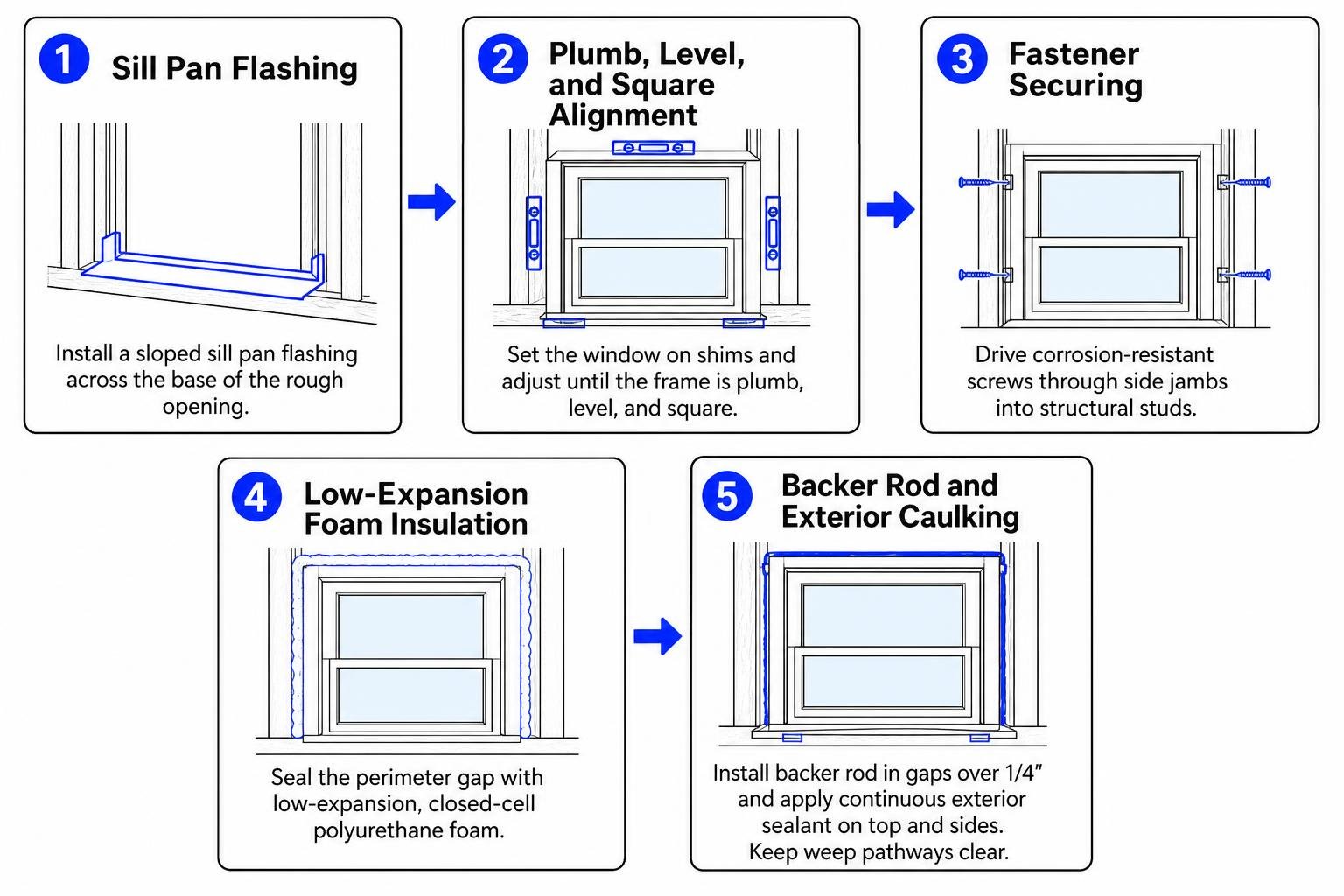
- Sill Pan Flashing: Install a sloped sill pan flashing or flexible butyl self-adhering flashing tape across the base of the rough opening to direct incidental moisture toward the exterior drainage plane.
- Plumb, Level, and Square Alignment: Set the window on synthetic shims, adjusting side jambs until the frame is plumb (vertical), level (horizontal), and square, ensuring uniform reveals around all operating sashes.
- Fastener Securing: Drive corrosion-resistant installation screws through pre-drilled side jamb holes into structural studs, taking care not to over-tighten and bow the side jambs.
- Low-Expansion Foam Insulation: Seal the perimeter gap between the window frame and framing studs using closed-cell, low-expansion polyurethane foam specifically formulated for windows and doors. Never use high-expansion foam, which can bow frames and bind operating sashes.
- Backer Rod and Exterior Caulking: Install closed-cell foam backer rod in exterior perimeter gaps wider than 1/4 inch, followed by a continuous bead of elastomeric or polyurethane sealant along the top header and side jambs, leaving weep pathways clear at the bottom sill.
Energy Efficiency Ratings, Glass Packages, and Features
Modern windows rely on advanced glazing technology and precision glass engineering to keep homes comfortable through Midwest summer heatwaves and sub-zero winter cold snaps. Understanding how energy efficient windows help you save starts with decoding the performance metrics on the National Fenestration Rating Council (NFRC) label.
- U-Factor: Measures the rate of non-solar heat transfer through the entire window assembly. U-factor ratings typically range from 0.20 to 1.20. The lower the U-factor, the better the window insulates against winter heat loss.
- Solar Heat Gain Coefficient (SHGC): Measures the fraction of solar radiation admitted through the glass, scored from 0 to 1. In climate zones with hot summers, a lower SHGC (between 0.20 and 0.30) blocks radiant heat from baking your interior rooms.
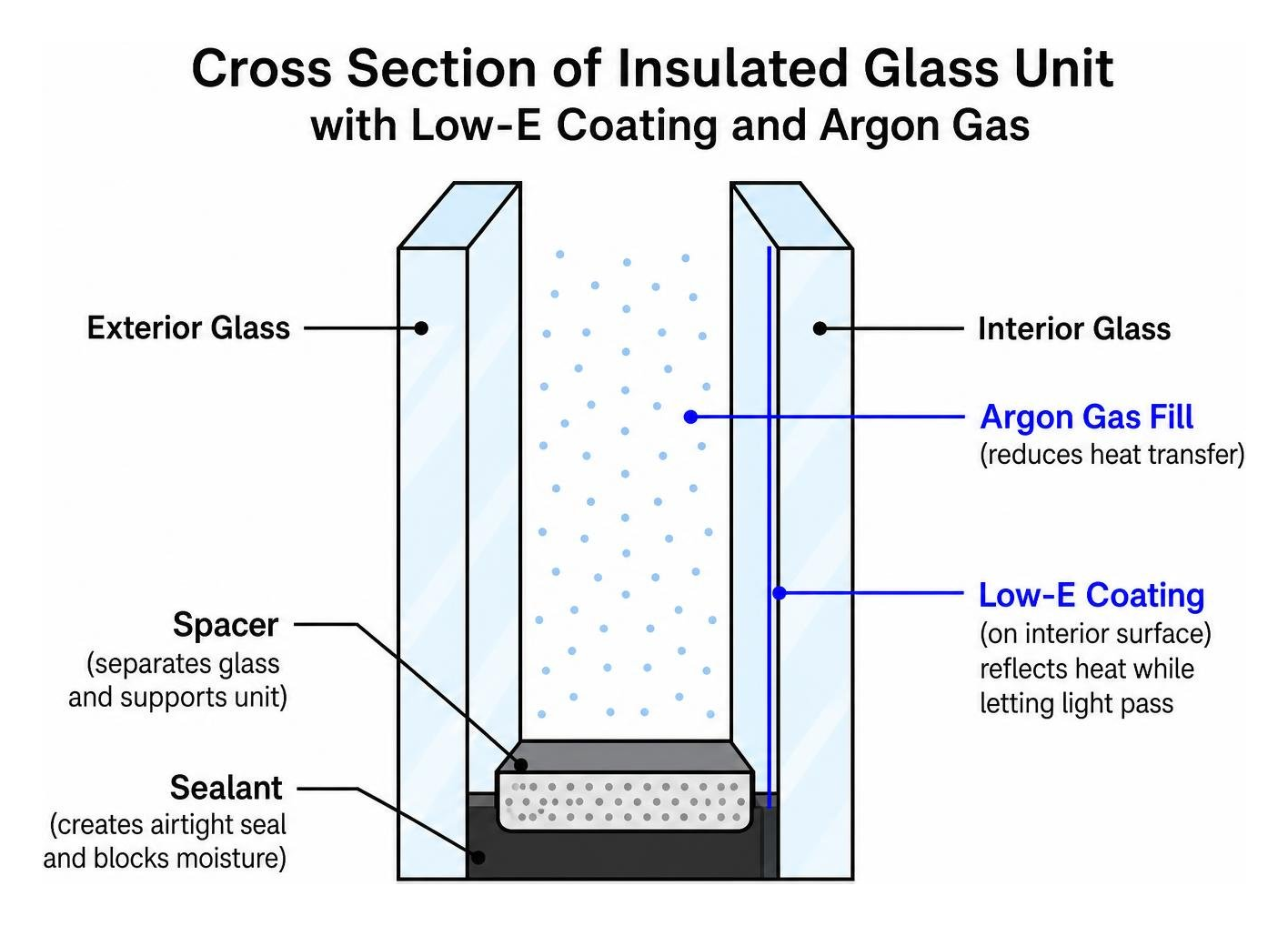
- Low-Emissivity (Low-E) Coatings: Microscopically thin, transparent layers of silver or metallic oxide applied to internal glass surfaces. Low-E coatings reflect long-wave infrared heat back into your home during winter and bounce solar heat back outdoors in summer while letting visible light pass through.
- Argon Gas Fills: Replacing the standard air between glass panes with non-toxic, odorless argon gas significantly slows convective thermal transfer, boosting overall insulating performance.
- Energy Star Ratings and Savings: Installing Energy Star certified windows saves the average homeowner approximately 13 percent on annual heating and cooling bills. In EPA Northern and North-Central heating zones, replacing 10 drafty single-pane windows with modern double-pane units delivers an average savings of $568 per year. Homeowners can also take advantage of a 30 percent federal tax credit (up to $600) on qualifying Energy Star Most Efficient installations through the end of 2025.
Window Replacement Costs, ROI, and Warranty Essentials
Understanding the full financial picture helps you budget realistically for your exterior remodeling project. A comprehensive breakdown in the ultimate guide to window replacement cost highlights how materials, structural prep, and labor shape total pricing.

- Installed Pricing: Across the nation, homeowners pay an average of $800 per window fully installed, with broad project ranges extending from $300 for basic off-the-shelf vinyl inserts to $3,000+ for large, custom architectural wood or storm-impact units. Professional installation labor typically accounts for $100 to $300 per window, depending on story height, accessibility, and trim restoration.
- Resale Return on Investment (ROI): Window upgrades consistently rank among the highest-yielding home improvement projects. On average, homeowners recoup 67 percent of vinyl window replacement costs and 63 percent of wood window replacement costs in added home resale value.
- Warranty Protection: A standard manufacturer product warranty typically covers non-glass hardware for 10 years and insulated glass seal failure for 20 years. However, product warranties do not cover installation errors, air leaks, or water intrusion. That is why choosing a contractor that provides a dedicated, long-term workmanship warranty is essential to protect your investment.
Frequently Asked Questions About Window Upgrades
What is the typical cost to replace a single window?
The national average price to have a single window professionally replaced is around $800, with typical costs ranging from $300 to $3,000 based on frame material, glass specifications, and window size. Professional installation labor accounts for $100 to $300 of that total per unit.
How much can Energy Star certified windows save on energy bills?
Installing Energy Star certified windows reduces household energy bills by an average of 13 percent. In cold northern heating zones, upgrading 10 old single-pane windows to energy-efficient models saves homeowners an average of $568 every year in utility costs.
What is the difference between a pocket window and a full-frame window?
A pocket (insert) window fits directly inside your existing, structurally sound window frame, leaving interior casing and exterior siding undisturbed. A full-frame window installation removes the entire frame, sill, and trim down to the rough structural wall studs to attach a new-construction window using an integrated nailing fin.
Conclusion
Upgrading your house windows is one of the most effective investments you can make to lower monthly energy bills, eliminate uncomfortable interior drafts, and boost your home’s curb appeal. Whether you opt for low-maintenance vinyl double-hung units, high-efficiency casements, or expansive fixed picture windows, achieving maximum performance relies on pairing quality materials with flawless, water-managed installation.
At Martin & Sons, we believe homeowners deserve complete peace of mind throughout every stage of their exterior renovation. That is why we operate with no upfront deposits—you only pay when your project is 100% complete and you are fully satisfied. We provide the best upfront pricing and back our craftsmanship with industry-leading lifetime labor warranties across St. Louis MO, St. Peters MO, St. Charles MO, Florissant MO, Chesterfield MO, Creve Coeur MO, Maryland Heights MO, and O’Fallon MO.
Beyond premium window replacement, our experienced team provides comprehensive roofing and siding solutions. Please note that Martin & Sons only provides gutter services when performing a roofing project, as we are not a standalone gutter company.
When you are ready to enhance your home’s comfort and beauty, turn to our local team for expert window replacement in St. Louis and experience the difference that 35+ years of family-owned integrity delivers.