Why Vinyl Windows Dominate the Residential Window Market
Vinyl windows are the most popular window choice in the U.S. — and for good reason. Here’s a quick snapshot of what you need to know:
- What they are: Window frames made from PVC (polyvinyl chloride), a durable plastic material
- Market share: Account for roughly 70% of all residential windows sold in the U.S.
- Energy savings: Double-pane vinyl windows can cut energy costs by 15–20% compared to single-pane windows
- Maintenance: Never need painting, staining, or refinishing
- Lifespan: Typically 20–40 years with minimal upkeep
- Cost: Generally less expensive than wood or fiberglass alternatives
- Best for: Homeowners who want energy efficiency, low maintenance, and long-term value
If you’re a St. Louis homeowner weighing your window options — especially after storm damage or a major renovation — understanding what vinyl windows offer (and where they fall short) can save you thousands of dollars and years of headaches.
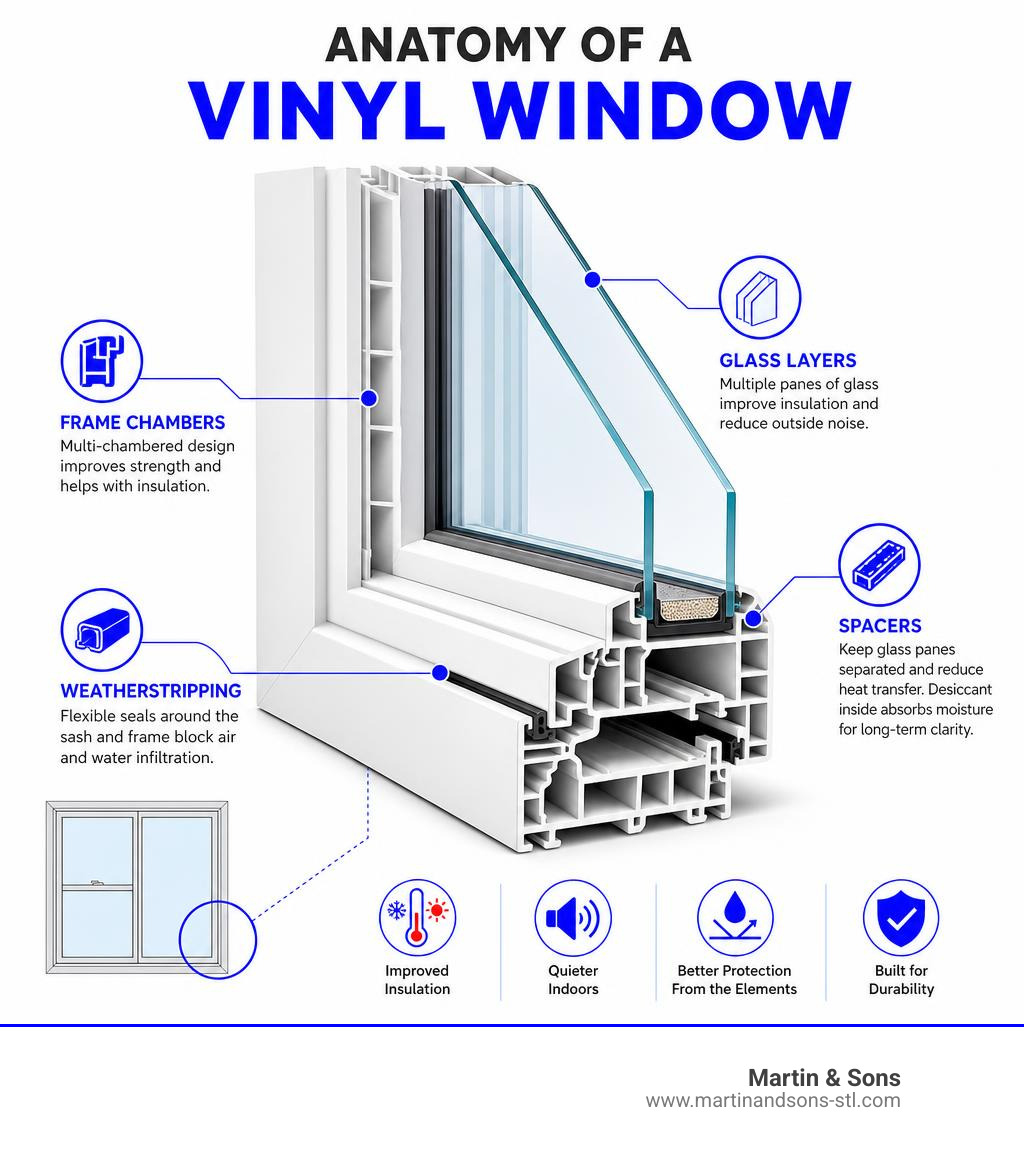
Vinyl has grown from a budget alternative into the industry standard. Modern vinyl frames are engineered with multi-chambered profiles, fusion-welded corners, and high-performance glass packages that rival far more expensive materials. The difference between a cheap vinyl window and a quality one is significant, and knowing what to look for matters.
I’m John Martin, and at Martin & Sons, my family has been installing vinyl windows and other home improvement products across the St. Louis area since 1953 — giving us over 35 years of hands-on experience with what works and what doesn’t. In this guide, I’ll walk you through everything you need to make a confident, informed decision.
What Are Vinyl Windows and How Do They Compare?

To understand why vinyl windows have captured roughly 70% of the residential market, it helps to understand what they are made of. The frames are extruded from Polyvinyl Chloride (PVC) combined with specific additives. These additives include stabilizers to prevent the plastic from breaking down under heat, and titanium dioxide, which protects the material from yellowing under relentless UV rays.
When comparing window materials, homeowners generally choose between vinyl, wood, aluminum, and fiberglass. Each material has distinct characteristics:
- Wood: Beautiful and traditional, but highly susceptible to rotting, warping, and insect damage. Wood requires scraping, painting, or staining every few years.
- Aluminum: Extremely strong and lightweight, but a terrible insulator. Aluminum conducts heat and cold rapidly, making it highly inefficient for climates with extreme temperature swings.
- Fiberglass: Strong and thermally stable, but significantly more expensive than vinyl and harder to source in a wide variety of styles.
- Vinyl: Striking the perfect middle ground, vinyl is highly insulative, requires virtually zero maintenance, and is incredibly cost-effective.
To see how these materials stack up side-by-side, take a look at our comparison table below:
| Feature | Vinyl Windows | Wood Windows | Aluminum Windows | Fiberglass Windows |
|---|---|---|---|---|
| Average Cost | Low to Moderate | High | Moderate | High |
| Maintenance | Low (None required) | High (Painting/Staining) | Low to Moderate | Low |
| Lifespan | 20–40 Years | 30+ Years (With care) | 20–30 Years | 30–50 Years |
| Energy Efficiency | High | High | Low | Very High |
| Rot/Insect Resistance | Excellent | Poor | Excellent | Excellent |
It is clear that vinyl remains the go-to standard for everyday homeowners. To dive deeper into the specific trade-offs, check out our detailed breakdown of vinyl windows what are the pros and cons of this material.
Material Differences and Climate Performance
St. Louis weather is notoriously unpredictable. We experience freezing, snow-filled winters followed by hot, humid summers that make you feel like you’re living in a swamp. These rapid temperature swings cause materials to expand and contract.
In cheap windows, this thermal expansion can cause the frame to pull away from the glass, breaking the airtight seal. High-quality vinyl windows are manufactured using pure virgin vinyl compounds that are specifically formulated to handle these extreme cycles without cracking or warping. Unlike wood, vinyl is completely impervious to rot, mold, and wood-boring insects. This makes it an incredibly resilient choice for our local climate, ensuring regional designs are built to withstand Midwestern weather.
Lifespan and Durability of Vinyl Windows
A quality vinyl window easily lasts between 20 and 40 years. However, the lifespan depends heavily on how the window is constructed.
When shopping for windows, look for fusion-welded corners. Cheap vinyl windows are often held together with screws and brackets at the corners, which can loosen and leak over time. Fusion welding melts the vinyl pieces together into a single, continuous piece of plastic that will never pull apart.
Additionally, look inside the frame. High-quality vinyl frames feature multi-chambered designs. These internal chambers act as mini pocket-insulators while adding structural rigidity to prevent sagging. Advanced compounding brands, such as SunShield vinyl, ensure the frame retains its color and structural integrity without chipping, peeling, or pitting, even after decades of exposure to direct sunlight.
The Key Benefits of Choosing Vinyl Windows
If you are tired of spending your weekends scraping old paint off wood sashes, vinyl is going to feel like a miracle. The benefits go far beyond just escaping tedious chores:
- Low Maintenance: You will never have to paint, sand, or stain your window frames again. An occasional wipe-down with soapy water is all it takes to keep them looking brand new.
- Noise Reduction: Multi-chambered vinyl frames combined with double- or triple-pane insulated glass act as an exceptional sound barrier, keeping street noise out of your living room.
- Cost-Effectiveness: Vinyl offers the lowest upfront cost of almost any window material while delivering some of the highest energy savings, resulting in a fantastic return on investment.
Upgrading your home’s exterior envelope is one of the smartest investments you can make. If you are planning a remodel, reading about the benefits of replacing the windows on your home can help you prioritize your budget.
Energy Efficiency and Cost Savings
Did you know that air leaks through drafty windows can account for 25% to 40% of your home’s total heating and cooling energy loss, according to the U.S. Department of Energy? In the dead of winter or the height of summer, those drafts force your HVAC system to work overtime, driving up your utility bills and wearing out your furnace and air conditioner.
Upgrading to double-pane vinyl windows can reduce your heating and cooling costs by up to 15–20%. By trapping a layer of insulating gas between two panes of glass, these windows block thermal transfer. This keeps your conditioned air inside where it belongs. To learn more about how these savings stack up, explore how energy efficient windows help you save and see how new windows and doors can increase your homes energy efficiency.
Styles, Customization, and Selection Factors
Gone are the days when vinyl windows only came in one style: “basic white plastic.” Today’s manufacturing technology allows for incredible customization. You can choose from a wide array of exterior frame colors—including trendy dark bronze and black—as well as interior woodgrain finishes that mimic the warmth of real wood without any of the maintenance.
You can also customize your hardware finishes, grid patterns, and glass styles to match your home’s architecture to see what fits your home’s aesthetic.
Popular Styles of Vinyl Windows
Different rooms in your home require different types of ventilation and light. Here are the most popular vinyl window styles:
- Double-Hung: The classic American window. Both the top and bottom sashes slide vertically, and they tilt inward for incredibly easy cleaning from inside your house.
- Casement: These windows hinge on the side and crank outward. They offer a tight seal when closed and excellent ventilation when open.
- Sliding: These glide horizontally along a track, making them perfect for wide openings or walls with limited vertical space.
- Picture: Fixed windows that do not open. They are designed to let in maximum light and frame beautiful outdoor views.
- Awning: Hinged at the top, these open outward from the bottom, allowing you to let fresh air in even during a light rain shower.
If you love the look of real wood on the inside of your home but still want the maintenance-free benefits of vinyl on the outside, a hybrid option is the way to go. Check out the best of both worlds a guide to vinyl clad wood windows to see how this compromise works.
Glass Options and Energy Ratings
When selecting your windows, the glass package is just as important as the frame. Since windows are roughly 80% glass, this is where your energy efficiency is won or lost. Look for these key features:
- Low-E Glass: A microscopic metal oxide coating applied to the glass that reflects infrared heat while letting visible light pass through. In the summer, it bounces solar heat away; in the winter, it reflects your furnace’s warmth back inside.
- Argon Gas Fill: A safe, odorless, non-toxic gas that is denser than air. It is sealed between the glass panes to slow down heat transfer.
- U-Factor: Measures the window’s resistance to heat flow. The lower the U-Factor, the better the window insulates.
- SHGC (Solar Heat Gain Coefficient): Measures how much solar radiation passes through the window. In St. Louis, a lower SHGC helps keep your home cool during our blazing summers.
- Triple-Pane Glass: Features three layers of glass and two gas-filled spaces. This option can cut heat loss by up to 50% compared to standard single-pane glass.
- Super Spacer: A non-metal, structural foam spacer system that holds the glass panes apart. Unlike metal spacers, foam does not conduct cold or heat, which drastically reduces condensation at the edges of your window.
Cost Factors and Price Comparisons
When planning a home improvement project, budget is always a primary consideration. While vinyl is highly affordable compared to wood or fiberglass, prices can vary wildly depending on the options you choose.
To help you plan, we have put together a guide on the top 8 factors that affect replacement window prices.
What Influences the Price of Vinyl Windows?
The final cost of your window project depends on several key variables:
- Window Size and Shape: Standard sizes are highly affordable. Custom shapes, transoms, or extra-large sizes require specialized manufacturing, which increases the price.
- Glazing Type: Moving from double-pane to triple-pane glass will increase your upfront cost, though it provides superior insulation and noise reduction.
- Custom Colors and Finishes: Standard white or tan frames are the most budget-friendly. Opting for painted exterior colors, capstock finishes, or interior woodgrains adds to the total.
- Local Sourcing and Materials: Sourcing your products through established regional networks can streamline delivery and material costs.
- Architectural Guidelines: If you live in a historic area or a managed community, you may have specific design constraints. For example, when planning a window and door replacement in Chesterfield, you might need to select specific grid styles or frame colors to match local architectural standards.
Installation Considerations: DIY vs. Professional
Many homeowners wonder if they can tackle window installation as a weekend DIY project. While installing a single window might seem straightforward, it is a highly precise job. If a window is even slightly out of level, it won’t operate smoothly. More importantly, improper flashing and sealing will lead to water leaks behind your drywall, causing hidden mold and structural rot.
When replacing windows, you have two primary installation methods:
- Full-Frame Replacement: The entire old window, including the frame and trim, is removed down to the rough stud opening. This allows installers to inspect for rot, add insulation, and apply proper waterproofing. It is the best option for long-term performance.
- Pocket (Insert) Installation: The new window frame is slid directly into the existing wood frame. This is quicker and less disruptive, but it only works if your existing frame is completely structurally sound and free of rot.
To ensure your investment is protected, it is always best to work with the best vinyl window installers for a maintenance free life. Doing so guarantees that your windows are installed to strict manufacturer specifications, protecting your lifetime warranty.
Choosing the Right Retailer and Installer
Finding a trustworthy installer can feel overwhelming. You want a team that is certified, experienced, and stands behind their work.
If you are researching local options, it is important to find a team that understands the specific needs of homes in St. Peters or Creve Coeur.
If you live in the northern part of the county, we highly recommend checking out our comprehensive window replacement in florissant mo your essential guide and reviewing our curated list of the top 10 window door installers in florissant to compare installation standards in your area.
Frequently Asked Questions about Vinyl Windows
We hear a lot of the same questions from homeowners when they are trying to decide if vinyl is the right material for their home. Here are our honest answers to the most common concerns.
How long do vinyl windows typically last?
A high-quality vinyl window will easily last between 20 and 40 years. Its actual lifespan depends on the quality of the raw vinyl compound used, whether the corners are fusion-welded, and how well the window was installed. Keeping the tracks free of dirt and occasionally cleaning the frames will maximize their lifespan.
Can vinyl windows be painted if I want to change the color?
We strongly advise against painting your vinyl windows. Standard paint does not adhere well to PVC, meaning it will likely bubble, peel, and flake off within a year. Furthermore, painting your frames dark colors can cause them to absorb excess heat, which can warp the vinyl and void your manufacturer’s warranty. If you want a specific color, it is always best to order them with a factory-applied paint or co-extruded finish from the start.
Do vinyl windows warp in extreme summer heat?
In the early days of vinyl (decades ago), warping was a valid concern. However, modern high-quality vinyl windows are formulated with organic stabilizers and titanium dioxide. These ingredients prevent the PVC from breaking down or softening in the sun. As long as you choose a reputable brand with fusion-welded corners and multi-chambered frames, warping is not an issue in our St. Louis summers.
Conclusion
Upgrading to vinyl windows is one of the most practical, cost-effective ways to improve your home’s comfort, curb appeal, and energy efficiency. By choosing the right frame design, glass package, and installation method, you can enjoy a quieter, draft-free home for decades to come.
At Martin & Sons, we have been serving our neighbors across the Greater St. Louis area—including St. Louis, St. Peters, St. Charles, Florissant, Chesterfield, Creve Coeur, Maryland Heights, and O’Fallon—since 1953. We do things a little differently than most home improvement companies. We believe in earning your trust first, which is why we require no upfront deposits—you only pay us when the job is 100% complete and you are completely satisfied. Plus, we back our work with lifetime labor warranties and offer our best prices upfront.
Whether you need window replacement or are looking for the top rated roofing services st louis homeowners trust, our family is here to help. If you’re ready to take the next step, check out our guide on vinyl windows what are the pros and cons of this material or stop by our office at 8460 N. Lindbergh Blvd. Suite 11, Florissant, MO 63031 to chat about your project!