
Why Proper Gutter Aprons Matter for Your Home
A gutter apron installation service protects your home from water damage by directing rainwater from your roof edge directly into your gutters—not behind them where it can rot your fascia, damage your siding, or compromise your foundation.
What You Need to Know:
- What it is: A metal flashing bent at an angle and installed under your roof shingles and over the fascia board
- What it does: Creates a continuous barrier that guides water into gutters using surface tension
- Cost range: $3–$10 per linear foot for materials, plus $45–$75 per hour for professional installation
- Best time to install: During new roof installation, gutter replacement, or as a retrofit if you’re experiencing water damage
- Why professionals matter: Incorrect installation can cause leaks, detachment, and costly water damage to your home’s structure
If you’re dealing with water stains on your fascia, overflowing gutters, or moisture in your attic, a gutter apron might be the missing piece in your home’s water management system. This often-overlooked component works silently to prevent the kind of water infiltration that leads to rot, mold, and foundation problems—issues that cost far more to fix than prevention.
In St. Louis, where heavy rainstorms and freeze-thaw cycles are common, proper roof edge protection isn’t just nice to have. It’s essential for protecting your investment and avoiding the headaches that come with water damage and insurance claims.
What is a Gutter Apron and Why Does Your Home Need One?
When we talk about roofing, most people think about the shingles or the gutters themselves. But there is a “middleman” that does a lot of the heavy lifting: the gutter apron. A gutter apron is a specialized type of metal flashing designed to bridge the gap between your roof’s edge and the gutter trough.
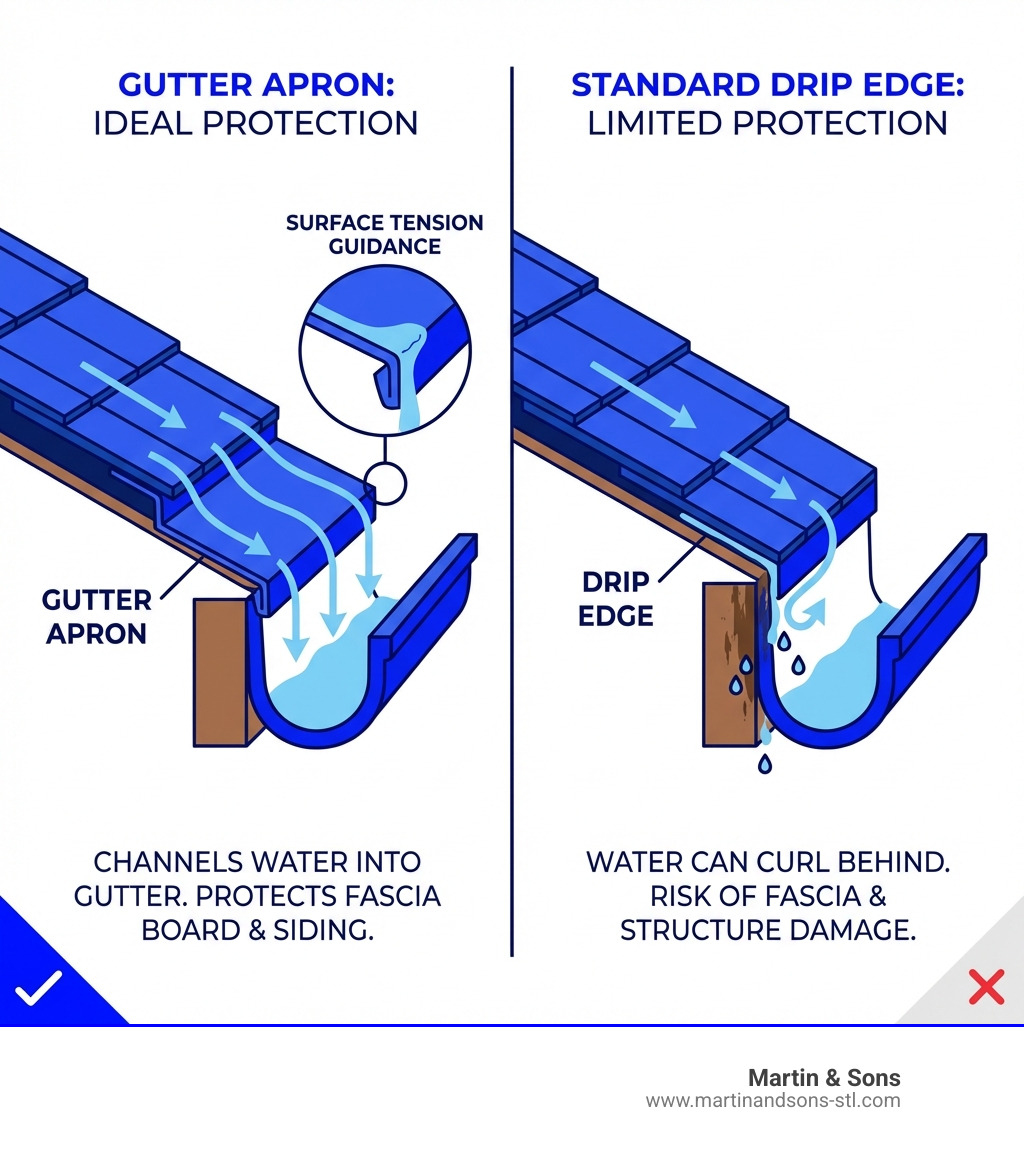
Without a gutter apron installation service, water doesn’t always behave the way we want it to. Thanks to a phenomenon called surface tension, rainwater often clings to the edge of your shingles and “curls” back toward your house. Instead of falling cleanly into the gutter, it runs down your fascia board and behind the gutter system. Over time, this constant moisture leads to wood rot, peeling paint, and eventually, the structural failure of your roof’s edge.
If you want to dive deeper into the science, surface tension is a well-documented property of water that explains why it can cling and “wrap” around edges rather than dropping straight down. Learn more here: Surface tension (Wikipedia).
We often perform a roof inspection to prevent damage only to find that the fascia boards are soft and crumbling because a simple piece of flashing was missing. By installing a gutter apron, we create a physical barrier that forces water to drop into the gutter, protecting the “bones” of your home.
Beyond just protecting the wood, gutter aprons are a critical line of defense for your foundation. When water leaks behind gutters, it pools at the base of your home. In areas like St. Charles or Florissant, where soil can shift, this excess moisture can lead to basement leaks or foundation cracks. Recognizing the signs of roof damage to never ignore early-like water stains on the underside of your eaves-can save you from these massive repairs.
Water is persistent. If it finds a way in, it will take it. This is why we see so many major problems from leaky roofs in St. Peters, MO, ranging from attic mold to ruined insulation. A gutter apron is the unsung hero that keeps the water outside where it belongs.
Drip Edge vs. Gutter Apron: Choosing the Right Protection
One of the most common questions we get at Martin & Sons is, “What’s the difference between a drip edge and a gutter apron?” It’s a great question because they look similar and serve related purposes, but they aren’t identical.
A drip edge is typically L-shaped or T-shaped. It is designed to protect the very edge of the roof deck and the fascia. While a drip edge is fantastic for roofs without gutters or for the “rakes” (the sloped sides of the roof), it doesn’t always extend far enough to handle the specific needs of a gutter-equipped home.
A gutter apron, on the other hand, is bent at a wider angle. It has a longer “apron” or tail that extends down into the gutter. This ensures that even in a heavy St. Louis downpour, the water is physically guided into the trough.
| Feature | Drip Edge | Gutter Apron |
|---|---|---|
| Shape | L-Shaped or T-Shaped | Bent at an angle (usually >90°) |
| Primary Goal | Protect roof deck/fascia | Direct water into gutters |
| Best For | Rakes and gutterless edges | Eaves with gutters |
| Material Cost | $3–$15 per linear foot | $3–$10 per linear foot |
| Installation | Over or under underlayment | Always under underlayment |
Choosing between them often depends on your roof pitch and current building codes. Many modern codes in Missouri now require some form of metal flashing at the roof edge. If your roof has a steep pitch, a standard drip edge might suffice. However, for most residential homes with standard K-style gutters, a gutter apron installation service provides superior protection against “back-flow” and ice dams.
The Professional Gutter Apron Installation Service Process
Installing a gutter apron isn’t just about nailing down some metal. It requires a precise integration with your existing roofing layers. When we perform a gutter apron installation service, we ensure the metal is tucked securely under the roofing underlayment (like felt paper or synthetic wrap) but over the fascia board.
This layering is vital. If the apron is placed on top of the underlayment, water can still seep underneath the metal and rot the roof deck. We use high-quality materials, such as 24-gauge steel or heavy-duty aluminum, to ensure the flashing doesn’t warp or rust over time.
If your fascia is already showing signs of wear, we may recommend a professional fascia replacement before the apron goes on. There’s no point in attaching a high-quality gutter apron to rotten wood; it won’t hold the nails, and the rot will only continue to spread.
Step-by-Step Gutter Apron Installation Service
When our crews arrive at your home in Maryland Heights or Creve Coeur, we follow a strict process to ensure a watertight seal:
- Roof Preparation: We carefully lift the first row of shingles. This must be done gently to avoid cracking older shingles, especially in colder weather.
- Measuring and Precision Bending: Every home is slightly different. We measure the eaves and use a professional brake to bend the metal to the exact angle needed for your roof pitch.
- Integration: The apron is slid under the underlayment and the ice and water shield.
- Securing: We use roofing nails or screws to fasten the apron. We prefer using hidden hangers for the gutters themselves, as they provide a cleaner look and more secure mounting.
- Sealing: We apply high-grade tripolymer sealants (which can last 25–50 years) at any joints or overlaps to ensure no water can sneak through.
We also discuss the benefits of installing gutter guards during this process. Gutter guards and aprons work together; the apron gets the water into the gutter, and the guards keep the debris out, preventing the overflows that lead to apron damage.
When to Schedule Your Gutter Apron Installation Service
Timing is everything. The absolute best time to install a gutter apron is during a new roof installation. This allows us to lay the flashing perfectly with the new underlayment and shingles. You can learn more about how this fits into your budget by checking roof installation costs.
However, you don’t have to wait for a whole new roof. We can retrofit gutter aprons onto existing systems. This is particularly common after Chesterfield storm damage, where high winds might have pulled existing flashing away or where homeowners realized their old system wasn’t handling heavy rains well.
If you live in O’Fallon or St. Peters, you know about ice dams. Gutter aprons are a key component in preventing ice dam damage. By sealing the gap between the roof and the gutter, they prevent melting ice from “backing up” into your soffits and walls.
Materials and Costs for Your Gutter Project
The materials you choose for your gutter apron installation service will impact both the price and the longevity of the system.
- Aluminum: The most popular choice. It’s lightweight, rust-proof, and lasts about 25 years. It comes in various colors to match your home’s trim.
- Galvanized Steel: Extremely strong and less prone to denting from ladders or hail. However, it can eventually rust if the coating is damaged.
- Copper: The “gold standard.” Copper gutter aprons develop a beautiful patina over time and can last 50+ years. They are more expensive but offer unparalleled curb appeal.
In terms of costs, you can expect to pay between $3 and $10 per linear foot for materials. Professional labor typically ranges from $45 to $75 per hour. For an average-sized home in the St. Louis area, a full professional gutter and apron installation usually falls between $1,000 and $5,000, depending on the complexity of the roofline and the materials selected.
If you’re wondering, “Is roof damage covered by insurance?“, the answer often depends on the cause. If a storm damaged your gutters and flashing, your homeowner’s insurance might cover the replacement. We are happy to help you navigate that process.
Frequently Asked Questions about Gutter Aprons
What happens if I don’t install a gutter apron or drip edge?
Without a gutter apron or drip edge, water will almost certainly find its way behind your gutters. This leads to “fascia rot,” where the wood behind your gutters becomes soft and eventually fails. It can also lead to water entering your attic space, damaging your siding, and causing soil erosion around your foundation. In many areas, building codes now mandate these installations because the damage from omitting them is so predictable and costly.
Do gutter guards go over or under the gutter apron?
In a proper installation, the gutter apron should be tucked under the shingles and underlayment, and the gutter guards should be installed so that the apron directs water onto the guard (or into the gutter beneath it). Usually, the guard sits under the “kick” of the apron. This ensures a seamless flow of water from the roof, over the apron, and into the protected gutter.
Why do my gutters overflow during heavy rain?
Overflowing gutters are usually caused by one of four things:
- Clogs: Leaves and debris blocking the flow.
- Undersized Gutters: Standard 5-inch gutters might not be enough for a large roof area in a heavy storm; 6-inch gutters are often better for Missouri rains.
- Incorrect Slope: If the gutters aren’t angled toward the downspouts, water will pool and spill over.
- Lack of Gutter Apron: Sometimes it looks like an overflow, but the water is actually just running behind the gutter because there’s no apron to guide it in!
Conclusion
Your home’s exterior is a system, and like any system, it’s only as strong as its weakest link. A gutter apron installation service ensures that the critical junction between your roof and your gutters is secure, watertight, and built to last.
At Martin & Sons, we’ve spent years serving our neighbors in St. Louis, St. Charles, Florissant, and across the region. We believe in doing the job right the first time, which is why we offer no upfront deposits and a lifetime labor warranty. You only pay when you are 100% satisfied with the work.
Whether you’re looking to maintain home exterior aesthetic appeal or you need to schedule professional roofing maintenance after a big storm, we are here to help. From Chesterfield to O’Fallon, we provide the best prices upfront and the peace of mind that your roof truly has a better edge.
Ready to protect your fascia and foundation? Contact us today for an estimate on your gutter apron installation service.