
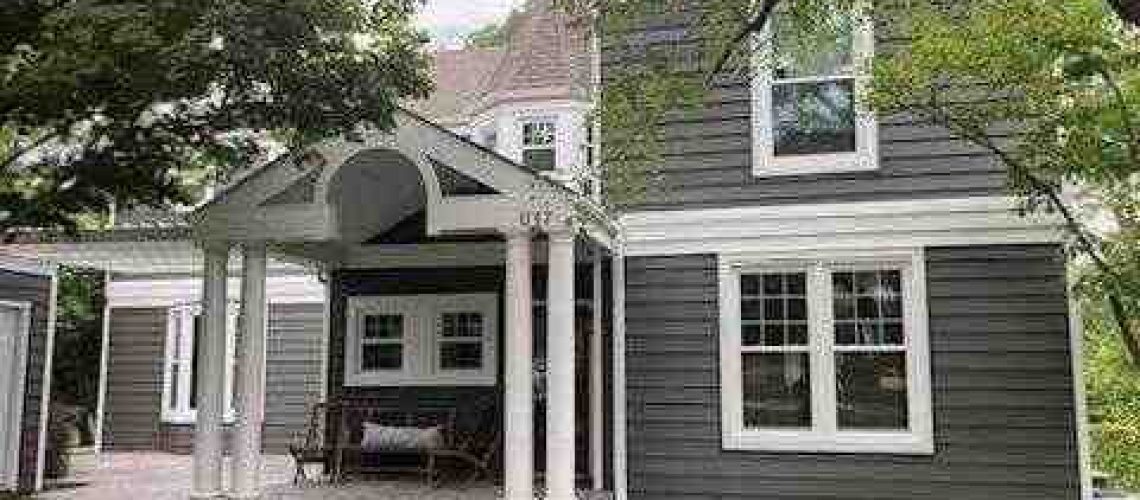
What Does Vinyl Siding Replacement Actually Cost?
The average cost for vinyl siding replacement falls between $7,000 and $18,000 for most U.S. homeowners in 2026, depending on home size, siding grade, and where you live.
Here’s a quick snapshot so you can estimate your budget right now:
| Home Size | Typical Cost Range |
|---|---|
| 1,000 sq ft | $3,500 – $8,500 |
| 1,500 sq ft | $6,500 – $13,000 |
| 2,000 sq ft | $9,000 – $17,000 |
| 2,500 sq ft | $11,000 – $21,000 |
Cost per square foot installed: $3.50 – $12.00 (national average: ~$7.32 – $12.51)
- Economy/builder-grade vinyl: $3.50 – $5.50 per sq ft
- Standard residential vinyl: $4.50 – $7.00 per sq ft
- Premium or insulated vinyl: $7.00 – $13.00 per sq ft
These numbers include both materials and labor. They do not always include old siding removal, permits, or sheathing repairs — costs that catch a lot of homeowners off guard.
Replacing your home’s siding is one of the bigger exterior projects you’ll tackle. It protects your home from moisture and pests, improves energy efficiency, and dramatically boosts curb appeal. But the price range is wide, and the final number depends on more variables than most people expect.
This guide breaks it all down clearly — no fluff, no surprises.
I’m John Martin of Martin & Sons, a family-owned contractor serving the St. Louis area since 1953, with over 35 years of personal experience helping homeowners understand the average cost for vinyl siding replacement and make confident, informed decisions. We’ll walk you through everything you need to know before you get your first quote.
What is the Average Cost for Vinyl Siding Replacement in 2026?
When planning an exterior remodel in 2026, understanding how your project’s total is calculated prevents sticker shock. The average cost for vinyl siding replacement typically lands around $12,221 nationally. However, we see most complete residential projects in the Greater St. Louis area range from $9,000 to $17,000 for a standard 2,000-square-foot home, including the tear-off and disposal of your old siding.
To understand where your money goes, it helps to look at the material versus labor split. Generally, labor accounts for 40% to 45% of the total invoice. Siding installation is highly specialized work; a professional crew has to ensure panels are perfectly level, properly locked, and hung loosely enough to expand and contract during our freezing St. Louis winters and humid summers.
Let’s look at how home size and siding quality intersect. A smaller 1,500-square-foot home using standard residential vinyl might cost around $8,250, whereas a larger 2,500-square-foot home upgraded with premium insulated panels can easily reach $20,000 or more.
Learn more about vinyl siding prices to see how different styles fit your budget.
Below is a detailed breakdown comparing estimated replacement costs by home size and siding grade:
| Home Exterior Wall Area | Economy Grade ($3.50 – $5.50/sq ft) | Standard Grade ($4.50 – $7.00/sq ft) | Premium / Insulated ($7.00 – $13.00/sq ft) |
|---|---|---|---|
| 1,200 sq ft | $4,200 – $6,600 | $5,400 – $8,400 | $8,400 – $15,600 |
| 1,500 sq ft | $5,250 – $8,250 | $6,750 – $10,500 | $10,500 – $19,500 |
| 2,000 sq ft | $7,000 – $11,000 | $9,000 – $14,000 | $14,000 – $26,000 |
| 2,500 sq ft | $8,750 – $13,750 | $11,250 – $17,500 | $17,500 – $32,500 |
Note: Wall area refers to the actual square footage of your exterior walls, not the interior living space of your home. A two-story home with 2,000 square feet of living space often has closer to 2,500 square feet of exterior wall area once you subtract windows and doors and add a 10% to 15% waste factor for custom cuts.
Key Factors That Influence Your Siding Replacement Budget
No two homes are identical, which is why we don’t give “one-size-fits-all” estimates. Several architectural and structural elements dictate how much time and material your project will require.
- Home Design & Architectural Complexity: A simple, rectangular ranch-style home is much faster to side than a multi-level Tudor with complex bump-outs, dormers, and cross-gables. Every corner, window trim, and transition requires custom flashing and J-channel fitting, which increases both material waste and labor hours.
- Number of Stories: Working on a two- or three-story home in St. Peters or Chesterfield requires scaffolding, ladders, and specialized safety equipment. This extra setup time increases labor costs by 15% to 25% compared to a single-story ranch.
- Wall Area vs. Living Space: Homeowners often confuse their home’s interior square footage with its exterior wall square footage. To find your actual wall area, we measure the perimeter of your home, multiply it by the height of the walls, and then add a 10% to 15% waste factor to cover diagonal cuts along gables.
How Siding Grade and Thickness Impact the Average Cost for Vinyl Siding Replacement
The thickness of a vinyl panel—often referred to as its gauge—is the single most important factor in determining its durability, lifespan, and overall cost. Cheap vinyl looks cheap because it is thin, making it prone to sagging, cracking, and rattling in high winds.
- Economy Grade (.040″ thickness): Often used by builders to keep initial construction costs low. While highly affordable at $3.50 to $5.50 per square foot installed, it has a shorter lifespan of 15 to 20 years and is highly susceptible to hail damage or cracking from stray lawnmower rocks.
- Standard Residential (.044″ thickness): The sweet spot for most homeowners. It offers excellent rigidity, resists fading, and typically carries a 25- to 30-year warranty. At $4.50 to $7.00 per square foot installed, it looks great and holds up beautifully against Midwestern storms.
- Premium Insulated (.046″ – .052″ thickness): This top-tier option features a contoured foam backing fused directly to the vinyl panel. It boosts your home’s wall R-value by 2.0 to 2.7 points, saving you money on utility bills. It also acts as a sound barrier and is incredibly impact-resistant. Expect to pay $7.00 to $13.00 per square foot installed for this lifetime product.
Explore durable vinyl siding options to see which thickness and style best fit your home’s long-term needs.
Siding Removal, Sheathing Repairs, and Hidden Installation Costs
When budgeting, it is vital to check if your contractor’s quote includes “tear-off and disposal.” Some budget-grade quotes look incredibly cheap because they plan to nail the new vinyl right over your old, failing wood or aluminum siding.
At Martin & Sons, we strongly advise against this. Full removal is the only way to inspect the structural integrity of your home.
- Siding Removal & Disposal: Tearing off old vinyl or wood siding typically adds $0.50 to $1.50 per square foot to your budget. If your home was built before 1978, we must also test for lead paint and follow strict EPA safety guidelines, which can increase labor costs.
- Sheathing & Framing Repairs: Once the old siding is off, we inspect the wood sheathing underneath. If we find water rot or termite damage, replacing those OSB or plywood sheets costs roughly $2.00 to $5.00 per square foot for materials and labor. This is the most common cause of mid-project change orders in older homes in Florissant and Creve Coeur.
- House Wrap & Moisture Barriers: Installing a high-quality weather-resistive barrier (like Tyvek house wrap) is essential to prevent moisture from rotting your walls. This costs between $0.50 and $1.00 per square foot but is non-negotiable for a long-lasting installation.
- Permits & Trim Work: Local building permits in St. Louis County generally run $100 to $500. Additionally, wrapping your wooden fascia, soffits, and window casings in matching aluminum trim will add to your final project cost but ensures a completely maintenance-free exterior.
To make sure you aren’t surprised by these line items, you can understand local siding installation costs and how to protect your budget.
Regional Labor Rates and the Average Cost for Vinyl Siding Replacement
Where you live plays a massive role in what you will pay. Siding labor rates are heavily tied to local cost-of-living indexes and regional labor supply. For instance, homeowners on the West Coast or in the Northeast pay a 15% to 25% premium over the national average.
Fortunately, the Midwest offers some of the most stable and reasonable siding installation rates in the country. To see how Missouri compares to other states, you can compare siding costs by state. Locally, our market remains highly competitive, keeping quality installations within reach for average families.
Timing Your Project for Extra Savings
Did you know that the season you choose to replace your siding can affect your bottom line? Siding demand peaks from late spring through early autumn. During this rush, contractors are fully booked, and material supply chains are tight.
If you schedule your replacement during the late fall or early winter (November through February), you can often secure a 10% to 15% discount on labor. Modern vinyl can become brittle and crack if handled in temperatures below 40 degrees Fahrenheit, but experienced local crews know how to store materials in heated trailers and use cold-weather installation techniques safely.
If you want to maximize your savings, discover how to beat local siding prices with smart scheduling and material choices.
Comparing Vinyl Siding Costs to Alternative Materials
While vinyl remains the most popular choice in the United States due to its unmatched affordability and low maintenance, it is helpful to see how it stacks up against other popular materials.
- Fiber Cement (James Hardie): This premium material is made from a blend of cement, sand, and cellulose fibers. It is completely fireproof, rot-proof, and mimics the look of real wood beautifully. However, it is heavy and requires specialized cutting tools and installation techniques. Fiber cement typically costs $7.00 to $14.50 per square foot installed—roughly double the cost of vinyl.
- LP SmartSide (Engineered Wood): Made from treated wood strands bound with resin and wax, LP SmartSide is lighter and easier to install than fiber cement. It offers great impact resistance but must be painted regularly to prevent moisture damage. It usually runs $6.00 to $11.00 per square foot installed.
- Natural Cedar: For a rustic, high-end look, real wood is gorgeous but incredibly high-maintenance. It requires staining or painting every 3 to 5 years to prevent rot, insects, and warping. Cedar costs $9.00 to $15.00+ per square foot installed and has a high lifetime ownership cost.
- Aluminum Siding: Highly durable and recyclable, aluminum won’t rot or burn. However, it dents easily (think St. Louis hail storms) and the paint can fade or chalk over time. It sits in a similar price bracket to standard vinyl at $5.00 to $9.00 per square foot installed.
To help you decide which material aligns with your long-term goals, check out affordable siding and window options that balance upfront costs with lifetime durability.
Frequently Asked Questions About Vinyl Siding Replacement
We hear many of the same questions from homeowners in O’Fallon, Maryland Heights, and across the metro area. Here are the straight answers to help you plan your project.
Can you install new vinyl siding over existing siding?
Technically, yes—but it is rarely a good idea. Installing new vinyl over old wood, stucco, or aluminum is called a “recover” or “re-side.” While it can save you $1,500 to $3,000 upfront in labor and disposal fees, it introduces serious long-term risks:
- Trapped Moisture: If your old siding has active leaks or rot, covering it up traps moisture against your home’s framing, leading to mold, mildew, and structural wood rot.
- Voided Warranties: Most premium vinyl siding manufacturers will void their product warranties if the panels are not installed over a flat, smooth, approved underlayment.
- Warped Appearance: New vinyl mirrors the surface beneath it. If your old siding is warped, buckled, or uneven, your brand-new siding will look wavy and uneven too.
We always recommend a full tear-off down to the original sheathing to ensure your home’s structure is dry, solid, and properly wrapped.
How long does a typical vinyl siding replacement project take?
For an average 2,000-square-foot home, a professional crew of 3 to 4 installers can complete a full siding replacement in 3 to 5 working days.
Here is what the typical schedule looks like:
- Day 1: Tear-off of old siding, debris cleanup, and initial sheathing inspection.
- Day 2: Structural repairs (if needed), installation of house wrap, flashing, and window/door prep.
- Days 3-4: Hanging the new vinyl panels, installing soffits, fascia, and custom trim wrapping.
- Day 5: Final detailing, checking seams, cleaning up the yard with magnetic sweeps for stray nails, and final inspection.
Weather delays (such as heavy rain or extreme winter cold) can extend this timeline, but we work efficiently to minimize disruption to your daily routine.
What is the typical ROI or resale value recovery for vinyl siding?
According to national remodeling data, a vinyl siding replacement is one of the smartest investments you can make in your home, consistently recouping 67% to 97% of its cost at resale.
This high return on investment is driven by three main factors:
- Instant Curb Appeal: First impressions matter. New, clean siding in a modern color instantly elevates your home’s market value and attracts buyers.
- Low Maintenance: Buyers love hearing that they won’t have to paint or scrape their home’s exterior for the next 25+ years.
- Energy Efficiency: If you choose premium insulated vinyl, the reduced heating and cooling costs are a major selling point in our volatile Midwest climate.
Plan Your Siding Project with Confidence
Upgrading your home’s exterior shouldn’t be a stressful process filled with hidden fees, pushy salespeople, and massive down payments. At Martin & Sons, we have spent more than 70 years building our reputation on honesty, quality craftsmanship, and unmatched customer service across St. Louis, St. Charles, Florissant, Chesterfield, Creve Coeur, Maryland Heights, and O’Fallon.
We do things differently to protect you and your hard-earned money:
- No Upfront Deposits: We do not ask for a single dime until all materials are delivered and the job is underway.
- Pay on 100% Completion: You only pay us when the project is fully finished and you are completely satisfied with our work.
- Lifetime Labor Warranties: We stand behind our craftsmanship for life. If there is ever an installation issue, we will fix it.
- Best Prices Upfront: No pricing games, no high-pressure sales pitches—just honest, transparent pricing from the start.
Before you sign a contract with anyone, we encourage you to use our checklist for hiring siding contractors to ensure you are working with a licensed, insured, and certified professional.
Ready to see how much your project will cost? You can calculate the lifetime cost of your vinyl siding installation or contact us today for a free, no-obligation on-site estimate. Let us help you transform your home with beautiful, durable new siding!