
That Foggy Window Isn’t Just an Eyesore — It’s Costing You Money
A broken window seal is one of the most common window problems homeowners face — and one of the most misunderstood. Here’s a quick answer if you’re trying to figure out what’s going on:
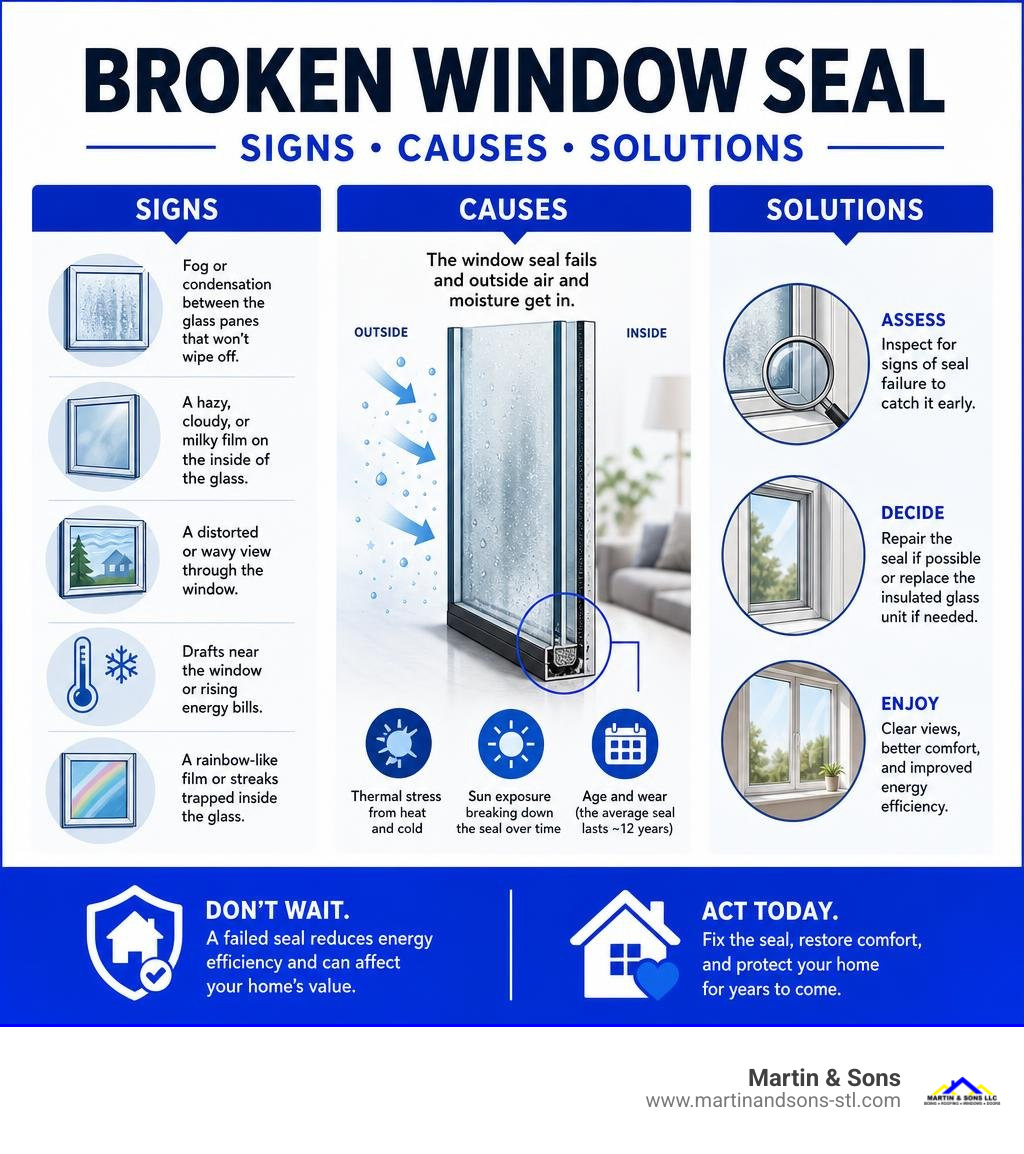
How to tell if you have a broken window seal:
- Fog or condensation between the glass panes that won’t wipe off
- A hazy, cloudy, or milky film on the inside of the glass
- A distorted or wavy view through the window
- Drafts near the window or rising energy bills
- A rainbow-like film or streaks trapped inside the glass
Once a seal fails, the insulating gas inside the window escapes — and humid outside air rushes in. That trapped moisture is what causes the fog you can’t clean off, no matter how hard you try.
The average window seal lasts around 12 years. After that, thermal stress, sun exposure, and age start working against you. South- and west-facing windows — the ones that take the most direct sunlight — often go first.
The good news: a broken seal doesn’t always mean you need to replace the entire window. But it does mean you need to act. Left alone, a failed seal reduces your home’s energy efficiency and can affect your home’s value.
I’m John Martin, and along with my family, I’ve been helping St. Louis homeowners diagnose and fix broken window seal problems for over 35 years. In that time, we’ve seen just about every failure type imaginable — and we’ll walk you through exactly what to look for and what to do about it.
Broken window seal basics:
What is a Window Seal and How Does It Work?
To understand why a seal fails, we first have to look at how modern windows are built. The single-pane glass windows of the past did very little to keep the St. Louis weather out of your living room. Today, we use what the industry calls an Insulated Glass Unit (IGU).
An IGU consists of two or three panes of glass separated by a spacer. This spacer is filled with a desiccant (moisture-absorbing material) to keep the air inside dry. The entire perimeter is then sealed with a heavy-duty, rubbery elastic sealant—usually a primary seal of polyisobutylene and a secondary seal of silicone or polyurethane.
The magic happens in the space between those panes. During manufacturing, the ambient air is vacuumed out and replaced with an inert gas, typically argon or krypton. These gases are much denser than regular air, meaning they are incredibly efficient at slowing down heat transfer.
This creates a highly effective thermal barrier. In the dead of a freezing St. Louis winter, the gas prevents heat from escaping your home. In the middle of July 2026, when the humidity is soaring and your air conditioner is working overtime, the gas keeps the outdoor heat from seeping inside.
To learn more about how this multi-pane technology protects your home, check out The Clear Choice A Complete Guide to Double Glazing Glass.
When a broken window seal occurs, that airtight barrier is breached. The pressurized argon or krypton gas escapes into the atmosphere, and ordinary, moisture-laden outdoor air takes its place. Once the gas is gone, the window loses a massive portion of its insulating value, and your HVAC system has to work much harder to keep your home comfortable.
How to Diagnose a Broken Window Seal
Diagnosing a failed window seal is usually straightforward, but it helps to know exactly what you are looking for. Sometimes, a window is just dirty on the outside, leading homeowners to fear the worst when all they need is a bottle of glass cleaner.
Here is a simple, step-by-step physical inspection process to determine if you are dealing with a failed seal:
- The Clean Test: Thoroughly clean both the interior and exterior surfaces of the glass. Use a high-quality glass cleaner and a microfiber cloth. If the fog, haze, or spots remain completely unchanged after a vigorous cleaning, the moisture is officially trapped inside the unit.
- Look for Trapped Condensation: This is the most common sign. You will see water droplets, fog, or a misty film between the panes of glass. This condensation often changes with the weather—it might look worse in the cool morning air and seem to disappear when the sun heats the window up later in the day.
- Check for Glass Distortion: When the insulating gas leaks out of an IGU, a partial vacuum can form inside the unit. This causes the two panes of glass to collapse inward toward each other. If you look at the reflection of the sky or trees in your window and notice it looks warped, wavy, or distorted, your seal has failed. In extreme cases, the two panes can touch in the center, creating a permanent circular smudge or rainbow-like ring.
- Inspect for Mineral Deposits: Over time, as moisture repeatedly enters and evaporates from the space between the panes, it leaves behind mineral deposits. This shows up as a white, cloudy, or rainbow-colored film that won’t wipe off.

If you are noticing any of these signs on your property, you can find a deeper dive into identification techniques in Broken Window Seals? Here’s How to Identify and Repair Them – Bob Vila.
Why Do Window Seals Fail?
Window seals do not fail because of dirty glass or bad luck. They fail due to physical forces, environmental conditions, and sometimes, human error.
The primary natural cause of seal failure is a phenomenon known as solar pumping (or thermal expansion and contraction). Every single day, your windows are subjected to a brutal cycle:
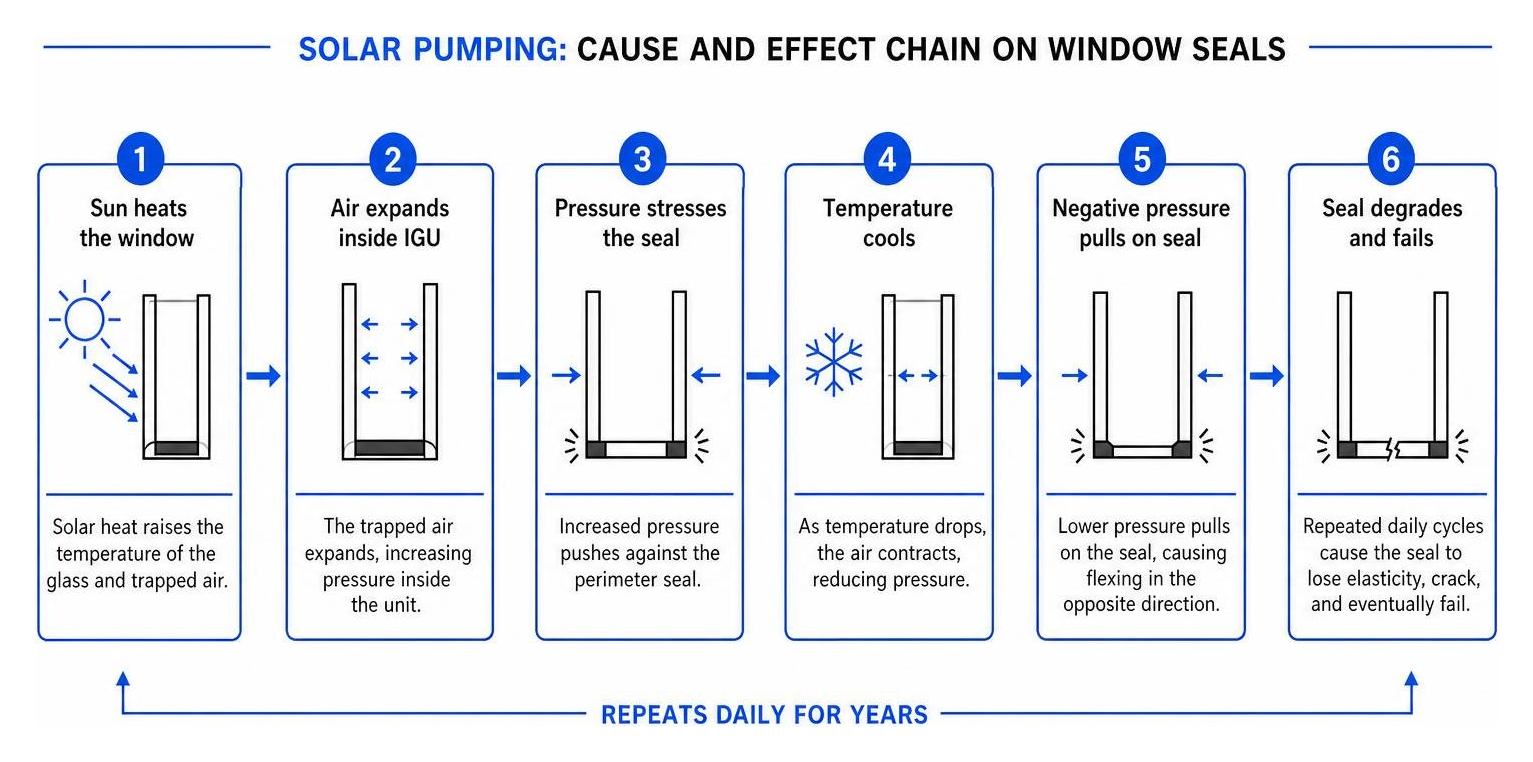
This constant daily movement puts immense physical stress on the rubberized perimeter seal. Over 10 to 20 years, the sealant eventually loses its elasticity, develops tiny hairline fractures, and fails.
The St. Louis Climate Factor
Here in the St. Louis area—from Florissant to Chesterfield—our climate accelerates this process. We experience dramatic seasonal temperature swings. Our winters bring freezing temperatures, while our summers are notoriously hot and humid. This wide temperature range causes more aggressive solar pumping than you would find in milder climates. Furthermore, the high humidity in Missouri means that once a seal develops even a microscopic tear, moisture-heavy air immediately floods the unit, making the failure visible almost instantly.
Residential vs. Commercial Durability
Homeowners often wonder why their residential windows fail after 10 to 12 years, while the windows in their commercial office buildings seem to last 20 to 30 years without a hint of fog. The difference lies in construction. Commercial windows are built with much heavier, pressure-equalized aluminum framing, thicker glass, and commercial-grade structural glazing silicones designed to withstand extreme wind loads and high-altitude pressure changes. Residential windows, while highly efficient, use lighter vinyl or wood frames and thinner glass units designed for affordability and residential aesthetics.
External Culprits: Pressure Washers and Window Tints
While natural aging is the most common cause, two major external factors can cause a window seal to blow out prematurely:
- High-Pressure Washing: Directing a high-pressure stream of water from a pressure washer at the edges of your windows is a recipe for disaster. The intense force can easily slice through or dislodge the exterior caulking and the rubberized seal of the IGU, causing immediate failure. We always recommend gentle soft-washing techniques near windows.
- Aftermarket Window Tints: Applying DIY reflective window films to the inside of your double-pane windows can void your manufacturer warranty. These films trap heat between the glass panes, drastically increasing the internal temperature of the IGU. This extreme thermal buildup causes rapid solar pumping and can literally rupture the seal.
To understand more about how regional weather patterns and environmental stress impact your home’s thermal boundaries, read Broken Thermal Seal on Window: What KC Homeowners Need to Know.
Repair vs. Replacement: What Are Your Options?
Once a broken window seal has been diagnosed, you have a few different paths forward. It is important to know that a true thermal seal cannot be “repaired” or resealed in the field to restore the original insulating gas. Once the gas escapes, it is gone for good. However, you do have options depending on your budget, the age of the window, and the condition of the frame.
If your window frames are still in excellent, sturdy condition—especially if you have high-quality vinyl or wood frames—you don’t need to replace the entire window. Instead, you can opt for IGU replacement (also known as glass-only replacement). A professional glazier will measure your existing window sash, order a custom-sized, factory-sealed IGU, pop out the old glass, and install the new unit into your existing frame. This restores your window’s energy efficiency and clarity at a fraction of the cost of a full replacement.
However, if your window frames are rotting, warped, drafty, or more than 15 to 20 years old, investing in IGU replacement is often throwing good money after bad. In these cases, a full window replacement is the smartest long-term solution.
If you are trying to find trusted professionals in the St. Louis area to evaluate your glass, you can read our guide on How to Choose the Best Home Window Glass Repair Shops Near Me.
Temporary Fixes for a Broken Window Seal
Some homeowners look into commercial defogging services as a budget-friendly alternative. During a defogging service, a technician drills tiny holes directly into the outer pane of glass. They spray a series of cleaning and drying chemicals through the holes to wash away the interior fog and mineral deposits. Finally, they install tiny, one-way micro-vents over the holes to allow trapped moisture to escape in the future.
This service typically runs between $60 and $100 per window.
While defogging can successfully remove the ugly white haze and restore your clear view, it is strictly a cosmetic, temporary fix. Defogging does not repair the broken seal, nor does it replace the lost argon or krypton gas. Your window will remain thermally compromised, meaning you will continue to pay higher heating and cooling bills. Additionally, because the seal remains broken, the interior glass may begin to fog up again within a few seasons once the drying chemicals wear off.
IGU Replacement vs. Full Window Replacement
When deciding between replacing just the glass unit (IGU) or replacing the entire window structure, it helps to compare the two approaches side-by-side:
| Factor | IGU (Glass-Only) Replacement | Full Window Replacement |
|---|---|---|
| What is replaced? | Only the double-pane glass unit inside the sash. | The glass, sash, mainframe, and interior/exterior trim. |
| Frame Condition Required | Must be structurally sound, square, and free of rot/warping. | Can be done regardless of frame condition (even if completely rotted). |
| Energy Efficiency Impact | Restores glass efficiency, but won’t fix drafts coming through the frame. | Maximizes energy efficiency by sealing both the glass and the frame. |
| Cosmetic Customization | Keeps the exact same look, color, and style of your existing windows. | Allows you to completely change your window style, color, and material. |
| Typical Lifespan | 10 to 15 years (depending on the remaining life of the frame). | 20 to 25+ years (when professionally installed). |
| Cost | Much lower upfront cost (typically 50% less than full replacement). | Higher upfront investment, but offers better long-term ROI. |
If you decide that your frames are past their prime and you want to explore the financial side of a full upgrade, read our comprehensive resource, The Ultimate Guide to Window Replacement Cost.
The Cost of Replacing a Broken Window Seal
Let’s talk numbers. The cost to address a broken window seal varies heavily based on the size of the window, the type of glass, and whether you are replacing the glass or the entire window.
- IGU Replacement Costs: The cost of a replacement IGU can run anywhere from $100 to $600 or more, depending on the size, thickness, and quality of the glass (such as Low-E coatings or triple-panes). Labor charges for a professional glazier to install the IGU typically add an additional $150 to $500.
- Full Window Replacement Costs: A brand-new replacement window runs from $175 to $650 or much more for high-end wood or custom sizes. Professional labor to install a replacement window typically runs $200 to $400 per window.
While full replacement has a higher upfront cost, it is often the most economical choice for older homes. If you want to see a step-by-step breakdown of how a professional crew handles a full installation, check out Out with the Old Step-by-Step Vinyl Window Replacement.
Lifespan, Warranties, and Prevention Tips
While the average lifespan of a window seal is 12 years, some fail in as little as three, while others remain crystal clear for 20. How can you extend the life of your seals and protect your investment?
First, be realistic about warranties. Many manufacturers advertise “lifetime warranties” on their windows. However, if you read the fine print, you will often find that the warranty on the thermal seal itself is limited to 3 to 15 years. If your seal fails within that window, the manufacturer will often ship you a replacement IGU for free, but you will still be responsible for hiring a contractor to install it.
To maximize the lifespan of your window seals, keep these practical prevention tips in mind:
- Avoid Pressure Washers: When cleaning your home’s siding or brick, keep the high-pressure spray far away from your window frames. Stick to low-pressure soft-washing.
- Inspect and Caulk Annually: Before the freezing St. Louis winter sets in, do a quick walk-around of your home. Inspect the caulking where the glass meets the window sash. If you see gaps or peeling, clean the area and apply a fresh bead of high-quality exterior silicone caulk to keep water from pooling near the seal.
- Say No to Heavy DIY Tints: Avoid applying dark, heat-absorbing aftermarket films to your double-pane windows. If you need sun protection, opt for exterior screens, awnings, or professional-grade window films that are certified not to void your window’s warranty.
- Choose High-Quality Vinyl: Modern, high-quality vinyl frames offer excellent thermal stability, meaning they expand and contract at a rate very similar to the glass itself. This reduces the sheer stress on the perimeter seal during temperature swings. You can read more about choosing durable frames in The Complete Guide to Vinyl Windows.
Frequently Asked Questions
Why do residential window seals fail faster than commercial ones?
Residential windows are designed for residential aesthetics and affordability, utilizing lighter vinyl, wood, or composite frames and thinner glass. Commercial windows use heavy-duty, structural aluminum framing and much thicker glass units designed to withstand extreme wind loads and high-altitude pressure changes, allowing them to last twice as long.
Does a broken window seal cause drafts?
A broken seal itself doesn’t always create a physical breeze you can feel, but it does destroy the window’s insulating ability, making the glass feel very cold (or hot) to the touch and creating convective drafts in the room. However, if the seal failed because the window frame itself is warped or rotting, you will likely experience physical drafts around the edges of the sash.
Can I replace just the glass in a double-pane window?
Yes! If your window frame is still in good structural condition, a professional can remove the failed Insulated Glass Unit (IGU) and install a brand-new, factory-sealed glass unit into your existing frame. This is a highly cost-effective way to restore clarity and energy efficiency without the expense of a full window replacement.
Conclusion
A broken window seal is more than just an annoying visual smudge—it is a direct drain on your home’s comfort and your monthly energy budget. Whether you choose to replace just the glass unit or upgrade to beautiful, modern, energy-efficient windows, addressing the issue early will protect your home’s structural integrity and save you money on utility bills.
If you are dealing with foggy, drafty, or failing windows in the St. Louis area, our team at Martin & Sons is here to help. We proudly serve homeowners in St. Louis, St. Peters, St. Charles, Florissant, Chesterfield, Creve Coeur, Maryland Heights, and O’Fallon.
We do things differently than the high-pressure window companies out there. We require no upfront deposits—you only pay when the job is 100% complete and you are completely satisfied. Plus, we back our craftsmanship with our industry-leading lifetime labor warranties and always give you our best, most honest prices upfront.
Ready to restore your clear views and stop the drafts? Visit our St. Louis Window Replacement Hub to request your free, no-obligation estimate today, or stop by our office at 8460 N. Lindbergh Blvd. Suite 11 in Florissant. We’ll help you find the perfect, hassle-free solution for your home!