Why Choosing the Right Siding Matters for Your Home
House exterior siding pros include weather protection, energy efficiency improvements, increased home value, and enhanced curb appeal. The right siding material can reduce your heating and cooling costs by 5-30%, last 20-100+ years depending on the material, and provide critical protection against rain, wind, and extreme temperatures.
Quick Overview: Top Siding Benefits
- Weather Protection – Shields your home from rain, snow, and wind damage
- Energy Efficiency – Creates thermal barriers that lower utility bills by up to 20%
- Home Value – Quality siding helps homes sell faster and for higher prices
- Low Maintenance – Modern materials require minimal upkeep compared to older options
- Durability – Materials like fiber cement and metal can last 50-100+ years
- Fire Resistance – Many siding types offer fire protection up to 750+ degrees
- Pest Resistance – Prevents termite and insect damage to your home’s structure
If your home’s siding is warping, cracking, or showing signs of rot, you’re not just facing an aesthetic problem. Damaged siding can lead to rising energy bills, interior wall damage, and even mold growth. And with increasingly severe weather patterns, choosing durable siding isn’t just about looks—it’s about protecting your biggest investment.
The siding market offers more choices than ever before. From affordable vinyl at $2-4 per square foot to premium fiber cement and natural wood, each material brings its own set of advantages. Some homeowners prioritize low maintenance, while others want that authentic wood appearance or maximum fire resistance.
This guide breaks down the pros and cons of popular siding materials so you can make an informed decision for your St. Louis home. We’ll cover costs, lifespans, maintenance requirements, and how different materials perform in our Midwest climate.
Popular Materials for Your Home Exterior
When we walk through neighborhoods in St. Louis or O’Fallon, we see a vast array of textures and styles. Selecting the right material is the first step in any exterior remodel. Today’s market is filled with versatile options that can mimic almost any look, from rustic cedar to sleek modern metal.
- Vinyl Siding: By far the most popular choice in the U.S. due to its affordability and low maintenance. It typically costs between $2 and $4 per square foot for materials, making it a budget-friendly powerhouse.
- Fiber Cement: Often referred to by the brand name James Hardie, this is a mixture of cement, sand, and cellulose fibers. It is incredibly durable and can be styled to look exactly like wood.
- Engineered Wood: Products like LP SmartSide use wood fibers treated with waxes and resins. This offers the beauty of real wood but with enhanced resistance to rot and insects.
- Natural Wood: Cedar and redwood are the gold standards for aesthetics. While they offer unmatched natural beauty, they require the most upkeep, including regular staining or painting every few years.
- Metal Siding: Usually made of steel or aluminum, metal is gaining traction for its industrial-chic look and fireproof nature. It can last anywhere from 15 to over 100 years.
- Brick Veneer: While more expensive (often $10–$30 per square foot), brick is virtually fireproof, pest-resistant, and can last over a century.
- Stucco: A cement-based material applied in layers. While popular in dry climates, it requires expert installation in the Midwest to prevent cracking during our freeze-thaw cycles.
According to estimated costs for siding replacement, homeowners should also factor in removal costs for old materials, which can add $0.70 to $2.00 per square foot to the total project price.
Comparing the House Exterior Siding Pros and Cons
Choosing the right material involves balancing your upfront budget with long-term value. While some materials are cheaper to install today, they may cost you more in repairs or energy bills down the road.
| Material | Avg. Cost (per sq ft) | Lifespan | Maintenance Level |
|---|---|---|---|
| Vinyl | $2 – $4 | 20 – 40 Years | Low |
| Fiber Cement | $5 – $14 | 50+ Years | Moderate (Painting) |
| Engineered Wood | $2 – $6 | 30 Years | Moderate (Painting) |
| Metal (Steel) | $5 – $12 | 40 – 100 Years | Low |
| Natural Wood | $5 – $15 | 20 – 50 Years | High |
| Brick | $10 – $30 | 100+ Years | Low |
When looking at Metal siding cost and durability data, steel stands out for its resilience. However, in our experience at Martin & Sons, we find that many homeowners prefer the versatility of vinyl or the classic look of fiber cement for residential properties in St. Peters and St. Charles.
Vinyl House Exterior Siding Pros
Vinyl remains a top contender for house exterior siding pros because it hits the “sweet spot” of price and performance. It doesn’t rot, it never needs painting, and it’s available in hundreds of colors. Modern vinyl is also surprisingly tough; it is fire-resistant up to 750 degrees and can withstand high winds when installed with the right locking systems.
We often point our customers toward the 7 Benefits of Choosing Vinyl Siding for Your Home, which include its impressive pest resistance and the fact that it doesn’t show scratches because the color goes all the way through the material.
Fiber Cement House Exterior Siding Pros
If you want a home that can stand up to almost anything, fiber cement is the answer. It is non-combustible, which is why it has a reputation for its performance during historic wildfires. In the St. Louis area, its primary benefit is its extreme weather protection. It won’t buckle in the humidity of a Missouri summer, and it resists impact from hail much better than thin vinyl.
Performance, Energy Efficiency, and Maintenance
Your siding is more than just a “wrapper” for your house; it is a functional component of your home’s HVAC system. When we talk about performance, we focus on three main areas: thermal barriers, moisture management, and maintenance cycles.
Energy Efficiency and R-Value
Standard siding has a relatively low R-value (a measure of thermal resistance). However, by choosing insulated siding or adding a layer of rigid foam insulation during the replacement process, you can significantly boost your home’s efficiency. In fact, Siding Replacement Can Boost Energy Efficiency by creating a “thermal envelope” that prevents heat from escaping through the wooden studs of your walls (a process called thermal bridging).
Some high-end polymer or insulated vinyl options can lower your utility bills by as much as 20%. This is a massive win for homeowners in Florissant and Chesterfield who deal with both freezing winters and sweltering summers.
Moisture and Maintenance
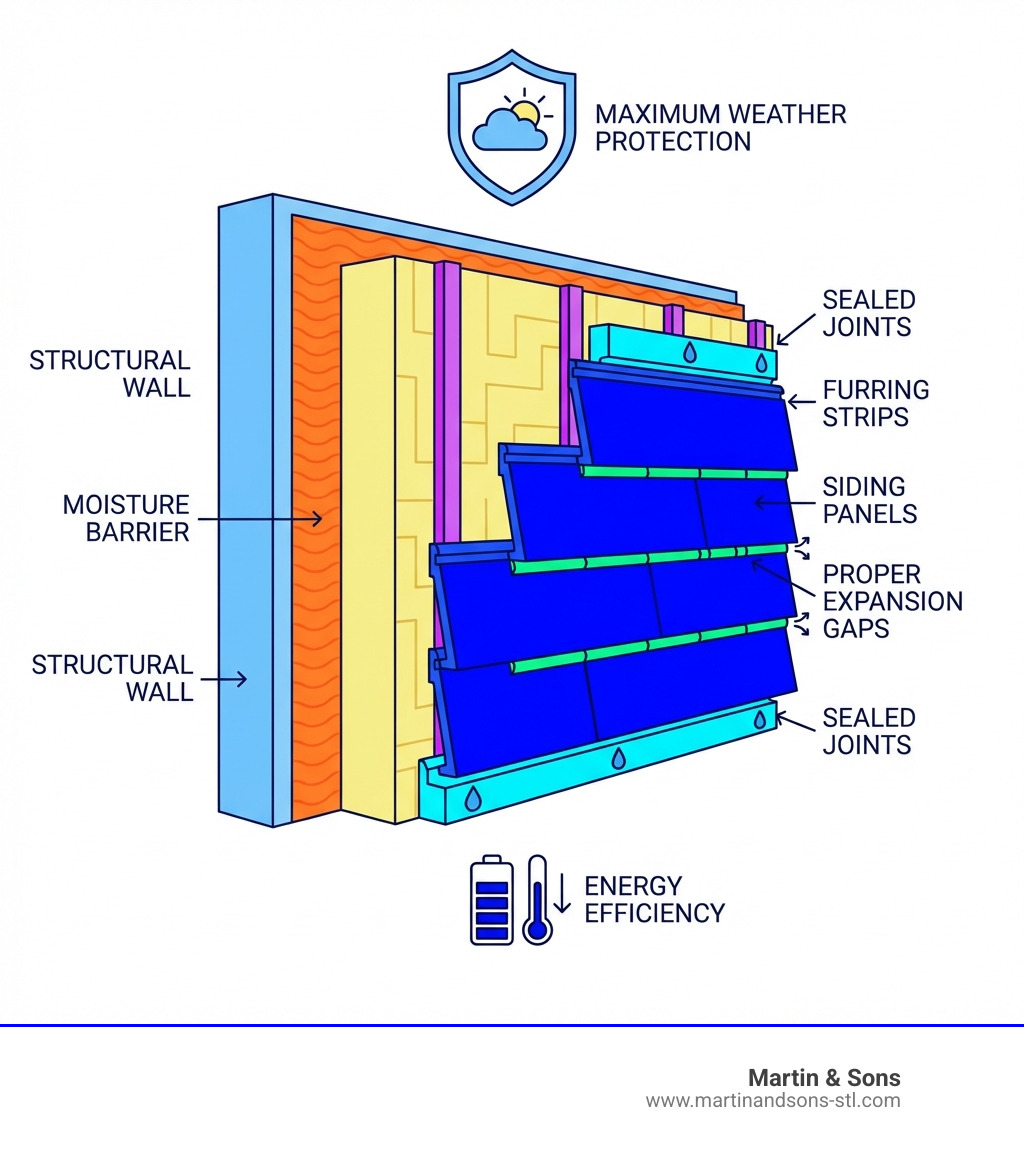
Proper moisture management is critical. Siding must “breathe” or have a designated drainage plane to prevent water from getting trapped against your home’s sheathing. Without this, you risk dry rot and mold.
Maintenance requirements vary wildly:
- Vinyl: Just needs a garden hose and some soapy water once a year.
- Wood/Fiber Cement: Requires repainting every 10–15 years to maintain its water resistance.
- Metal: Low maintenance, but you should check for scratches that could lead to rust (on steel) or oxidation.
Regional Factors and Installation Excellence
In the Midwest, our siding has to be “tough as nails.” Between the humid summers in Maryland Heights and the potential for spring hail storms in O’Fallon, the local climate dictates which materials will actually last.
For example, when performing a Vinyl Siding Replacement in O’Fallon, MO, we pay close attention to expansion gaps. Vinyl expands and contracts significantly as temperatures swing from 0°F to 100°F. If a contractor nails it too tightly, the siding will warp and buckle within a single season. A professional installation always leaves about a 1/4 inch gap at all openings and stops to allow the house to “breathe.”
Professional vs. DIY Risks
While the “DIY” route might seem tempting to save on labor costs (which typically range from $40 to $90 per hour), it often leads to expensive mistakes. Professionals have the specialized tools, ladder safety equipment, and knowledge of local building codes to ensure the job is done right. Furthermore, many manufacturer warranties are only valid if the product is installed by a certified professional. At Martin & Sons, we provide lifetime labor warranties because we believe in the quality of our craftsmanship.
When to Repair vs. Replace Your Siding
How do you know if you just need a few new panels or a total overhaul? Timing is everything. Waiting too long can turn a simple siding job into a major structural repair.
Look for these “red flags” on your home:
- Warping or Buckling: This often means the layers underneath have been compromised by moisture.
- Frequent Painting: If you have wood siding and the paint is peeling every 3 years, the wood may be too saturated to hold a bond.
- Interior Damage: If you see peeling wallpaper or mold on your inside walls, water is likely getting past your siding.
- Rising Utility Bills: This is a hidden sign that your siding’s insulation properties have failed.
- Dry Rot: Tap your siding with a screwdriver handle. If it feels soft or crumbles, you have rot.
For a deeper dive into these signs, check out our guide on How to Tell When It Is Time to Get New Siding on Your Home.
Frequently Asked Questions about Siding
Which siding material offers the best return on investment?
Generally, fiber cement and high-quality vinyl offer the best ROI. According to national remodeling data, homeowners can often recoup 75–85% of the cost of a siding replacement in added home value. Fiber cement is particularly prized by buyers for its durability and “upscale” appearance.
How long does professional siding installation typically take?
For an average-sized home in the St. Louis area, a full siding replacement usually takes between 7 and 14 days. This includes the removal of old siding, any necessary repairs to the sheathing, installing the moisture barrier, and finally, the new panels and trim. Weather conditions can occasionally extend this timeline.
What are the best siding colors for resale value?
Neutral tones are king. Shades of gray, “greige,” navy blue, and classic white tend to appeal to the widest range of buyers. Darker, bolder colors like forest green or charcoal are currently trending, but it’s always wise to consider your neighborhood’s aesthetic before making a final choice.
Conclusion
Upgrading your home’s exterior is a big decision, but you don’t have to navigate the house exterior siding pros and cons alone. Whether you’re looking for the cost-effective simplicity of vinyl or the rugged durability of fiber cement, the team at Martin & Sons is here to help homeowners across St. Louis, St. Charles, and O’Fallon.
We do things differently here. We believe in our work so much that we require no upfront deposits. You only pay when the job is 100% complete and you are totally satisfied. Plus, with our lifetime labor warranties and upfront pricing, you can rest easy knowing your home is in good hands.
Ready to boost your curb appeal and protect your home for decades to come? Schedule your Florissant siding consultation with us today and let’s get started on your home’s transformation!