
What to Do After Storm Damage to Your Home (And Who to Call)
Home repair storm damage is one of the most stressful situations a homeowner can face — and knowing your next move matters.
Here’s a quick overview of what to do right now:
- Stay safe — avoid downed power lines, gas leaks, and unstable structures
- Document everything — photos and video before any cleanup begins
- Prevent further damage — emergency tarping and board-up to stop water intrusion
- Call your insurance company — file your claim as soon as possible
- Hire a licensed local contractor — get a professional inspection and written estimate
Severe storms can strip shingles, buckle siding, shatter windows, and push water into places it was never meant to go. What looks like minor surface damage from the ground can hide rot, mold, and structural problems underneath. And in humid climates, mold can begin growing within just 24 to 48 hours of water getting inside your home.
The gap between “manageable repair” and “major reconstruction” often comes down to how fast you act.
This guide walks you through every stage of storm recovery — from the first hours after a storm through the final inspection — so you can make smart decisions without the pressure.
I’m John Martin of Martin & Sons LLC, and with over 35 years of hands-on experience in home repair storm damage restoration, I’ve seen how the right response in the first 24 hours can save homeowners thousands of dollars. We’ll cover everything you need to know to move from chaos to cleaned up.
Common Types of Storm Damage Requiring Professional Repair
When Mother Nature throws a tantrum in the St. Louis area, she doesn’t hold back. From high-velocity winds to golf-ball-sized hail, your home’s exterior takes the brunt of the beating. Recognizing the different ways storms compromise your home is the first step toward a successful recovery.
Wind Damage
You might think your roof is invincible, but severe winds can start causing damage at speeds as low as 50 mph—even though most modern asphalt shingles are technically rated to withstand up to 90 mph. Wind doesn’t hit a roof evenly; it swirls and creates uplift, targeting corners, rakes, and ridge lines. This uplift peels back shingles, breaks their adhesive seals, and leaves the underlying wooden deck completely exposed to rain.
Hail Impact
If you’ve ever heard hail hitting your roof, it sounds like a thousand golf balls being driven directly at your home. Hail damages different materials in very distinct ways. On asphalt shingles, hail knocks away the protective mineral granules, exposing the fragile asphalt substrate to rapid UV degradation. On wood shakes, hail splits the wood along the grain. On vinyl siding or metal gutters, it leaves deep dents and cracks that ruin your curb appeal and invite water leaks.
Water Intrusion and Fallen Trees
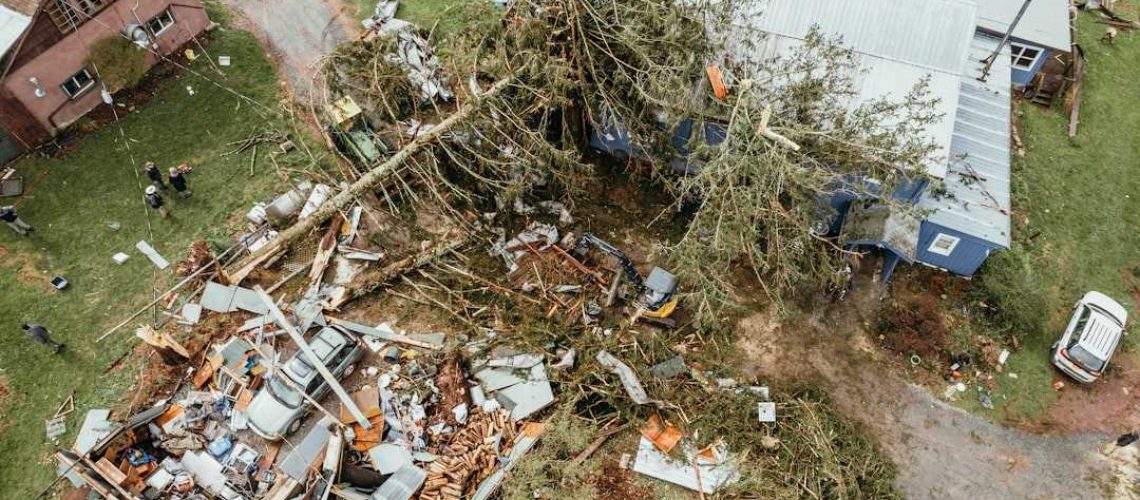
A single compromised shingle or a cracked window can allow hundreds of gallons of water to seep into your attic and walls. Worse yet, heavy storms frequently bring down saturated tree limbs. If a tree strikes your home, it can cause immediate structural compromise, shattering rafters and creating gaping holes that require emergency stabilization.
To help you figure out if your home has been compromised, you should look out for the clear Signs of roof storm damage. Whether you are dealing with wind-stripped shingles or heavy impact, acting quickly prevents a bad situation from turning into a total loss.

Identifying Hidden Home Repair Storm Damage
Not all storm damage is obvious from your driveway. In fact, some of the most destructive issues occur quietly behind your siding or deep within your attic.
- Granule Loss: Look for piles of colored sand-like granules in your gutters or at the bottom of your downspouts. This is a clear sign your shingles have suffered impact damage and are losing their protective coating.
- Shingle Bruising: If you run your hand over a hail-damaged shingle, you may feel a soft, bruised spot where the fiberglass mat underneath has fractured.
- Micro-cracks: Hail and wind can create tiny fractures in vinyl siding and window seals that are invisible from a distance but allow moisture to slowly rot your wall framing.
- Attic Leaks & Wet Insulation: Always inspect your attic with a flashlight after a storm. Look for water stains on rafters or matted, wet insulation, which loses its R-value immediately upon contact with water.
- Rapid Mold Growth: In humid Missouri summers, mold spores can colonize wet drywall and wood within 24 to 48 hours, turning a simple dry-out job into an expensive remediation project.
Immediate Steps to Take After a Storm
When the clouds clear, your priority must be safety and damage mitigation. Taking the correct immediate steps will protect your family and lay a solid foundation for your insurance claim.
1. Safety First
Before you step outside to inspect your property, look out for hazards. Watch for downed power lines, broken glass, and structurally unstable overhangs. If you smell gas or suspect a line has ruptured, shut off your main gas valve immediately and call the utility company.
2. Document the Scene
Before you touch a single piece of debris or sweep up broken glass, pull out your smartphone. Take wide-angle photos of your entire property, and then take close-up shots of specific damage. Use a coin or a tape measure in your photos to show the scale of hail dents or cracks.
3. Emergency Tarping and Board-Up
You have a legal obligation under most homeowner insurance policies to mitigate further damage. This means if you have a hole in your roof or a shattered window, you must secure it. For professional assistance, you can rely on trusted local restoration experts or check out localized assistance like the Exterior Home Repair Program in O’Fallon, MO to see what resources are available in your neighborhood.
Quick Post-Storm Safety Checklist
- Check for the smell of gas or broken water pipes and shut off utilities if necessary.
- Stay far away from any downed utility lines and report them immediately.
- Wear thick-soled shoes and work gloves to protect against nails and shattered glass.
- Take time-stamped photos and videos of all exterior and interior damage.
- Contact a reputable local contractor to install emergency tarps over exposed roof areas.
Navigating the Insurance Claims Process
Filing an insurance claim for home repair storm damage can feel like learning a completely new language. However, understanding how the process works will help you get the full payout you deserve.
Deductibles and Adjuster Meetings
Your deductible is the out-of-pocket amount you must pay before your insurance coverage kicks in. In Missouri, storm deductibles are typically a flat dollar amount (such as $1,000 or $2,500). Once you file a claim, the insurance company will send an adjuster to inspect your home. We always recommend having your trusted contractor present during this meeting. Adjusters are busy and can easily miss subtle hail bruising or secondary water damage in the attic. Having a professional advocate on-site ensures all damage is documented correctly from day one.
Understanding Xactimate and Supplements
Most insurance companies use a specialized software called Xactimate to calculate repair costs. This software estimates prices based on local labor and material rates. However, because building materials have increased by 35% to 40% globally since 2021, initial insurance estimates can sometimes fall short.
If your contractor discovers hidden damage during the tear-off process, or if local building codes require an upgrade (such as installing ice and water shield), your contractor will file a supplement. A supplement is simply a request to the insurance company for additional funds to cover these necessary, code-compliant steps. In fact, 60% to 70% of storm restoration projects require some form of supplement to be completed correctly.
Actual Cash Value (ACV) vs. Replacement Cost Value (RCV)
It is crucial to look at your policy’s declarations page to see what type of coverage you have.
| Feature | Actual Cash Value (ACV) | Replacement Cost Value (RCV) |
|---|---|---|
| How It’s Calculated | Replacement cost minus depreciation based on age | Current cost to replace the item with brand-new materials |
| Out-of-Pocket Cost | High (you pay the depreciated value difference) | Low (you only pay your deductible) |
| Payout Structure | Single check for the value of the old roof/siding | Two payments: ACV first, then the remaining balance once repairs are complete |
While regional costs vary widely depending on the storm’s severity—with coastal storm surge restoration running much higher in hurricane-prone areas—typical wind and hail restoration in the Midwest ranges from $5,000 to $35,000 depending on the size of your home and the materials required.
Essential Steps for Home Repair Storm Damage Restoration
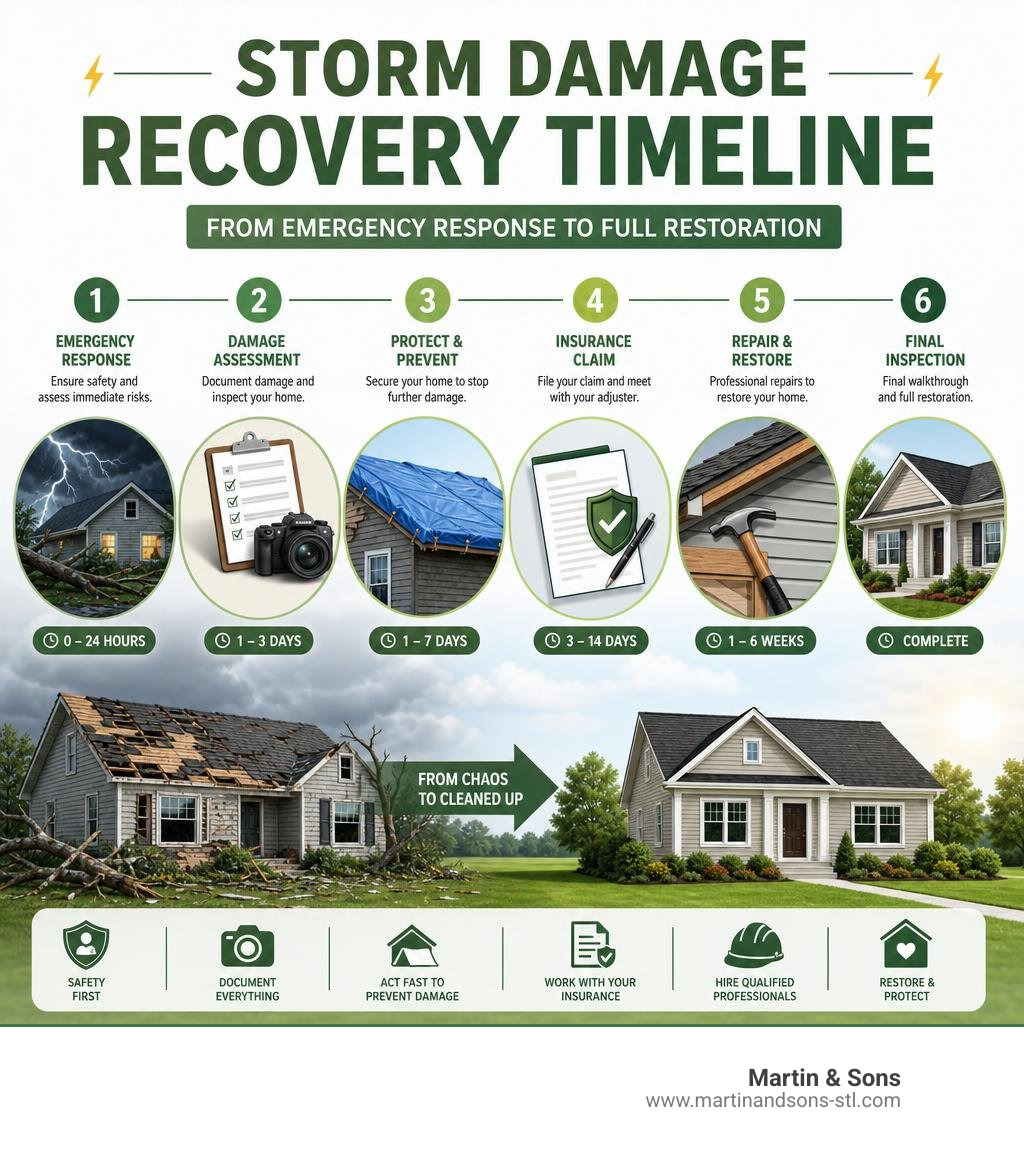
Once your insurance claim is approved, the physical restoration process begins. A complete restoration involves several key phases:
- Emergency Mitigation: Extracting standing water, setting up industrial dehumidifiers, and securing the structure from the elements.
- Debris Removal: Clearing fallen trees, ruined shingles, and damaged drywall safely from your property.
- Structural Drying: Ensuring the wood framing of your home is completely dry (below 15% moisture content) before sealing it back up.
- Reconstruction: Installing your new roof, siding, gutters, and windows.
- Code Compliance: Ensuring all repairs meet the latest local building codes, including proper ventilation and synthetic underlayments.
If you are looking for reliable local support, our team at Martin & Sons provides comprehensive St. Louis Storm Damage Services to handle everything from emergency tarping to complete exterior rebuilds.
Hiring the Right Professional for Home Repair Storm Damage
After a major storm, “storm chasers” from out of state often flood local neighborhoods. They knock on doors, offer to “wave your deductible” (which is insurance fraud!), and demand large upfront deposits. Once they get your money, they either do subpar work or disappear entirely.
To protect your home and your wallet, read our guide on How to Find Reliable Restoration Companies.
Always verify that your contractor:
- Is fully licensed, bonded, and insured in Missouri.
- Has a physical, local office address (not a P.O. Box or a hotel room).
- Offers a strong workmanship warranty.
- Never demands money upfront. At Martin & Sons, we operate on a strict no upfront deposits policy—you only pay when the job is 100% complete and you are completely satisfied.
Frequently Asked Questions About Storm Damage
How quickly should I contact a contractor after storm damage?
You should contact a professional contractor immediately—ideally within the first 24 hours. While you have a window of time to file an insurance claim, delaying emergency repairs can lead to secondary water damage, wood rot, and mold growth, which your insurance company may refuse to cover if they determine you failed to mitigate the damage.
What is the typical timeline for storm damage repairs?
The timeline depends heavily on the scale of the damage and insurance response times:
- Emergency Phase (Days 1–2): Tarping, board-up, and water extraction.
- Assessment & Claims (Weeks 1–3): Contractor inspection, adjuster meeting, and claim approval.
- Construction Phase (Weeks 4–6): Actual repairs usually take only 1 to 3 days for a standard roof or siding replacement once materials are delivered.
How much does storm damage restoration typically cost?
For standard midwestern homes, wind-only repairs can cost between $5,000 and $15,000, while a full roof replacement due to heavy hail can range from $15,000 to $30,000+. Fortunately, if you have a valid RCV insurance policy, your out-of-pocket cost should be limited strictly to your policy deductible.
Conclusion
Recovering from storm damage doesn’t have to be a nightmare. By taking quick action, documenting the damage, and working with a trustworthy local contractor, you can restore your home to better-than-pre-storm condition.
At Martin & Sons, we have spent decades helping our neighbors rebuild in St. Louis MO, St. Peters MO, St. Charles MO, Florissant MO, Chesterfield MO, Creve Coeur MO, Maryland Heights MO, and O’Fallon MO. We make the restoration process entirely stress-free with our industry-leading guarantees:
- No upfront deposits — you pay nothing until the work is completed to your satisfaction.
- Lifetime labor warranties on our craftsmanship.
- The best prices upfront without high-pressure sales tactics.
If your home has been hit by a recent storm, don’t wait for a small leak to become a massive headache. Schedule a Free Storm Damage Inspection with Martin & Sons today, and let us handle the heavy lifting from chaos to cleaned up.