

Pay for Siding Only When the Work Meets the Agreement
When hiring siding contractors, pay-on-completion arrangements provide the safest way to protect your investment. Always put payment terms in a signed contract before work starts and avoid paying the full price upfront. Instead, confirm the scope, price, materials, and final inspection standards in writing, then release the final payment only after the siding is complete and punch-list items are fixed.
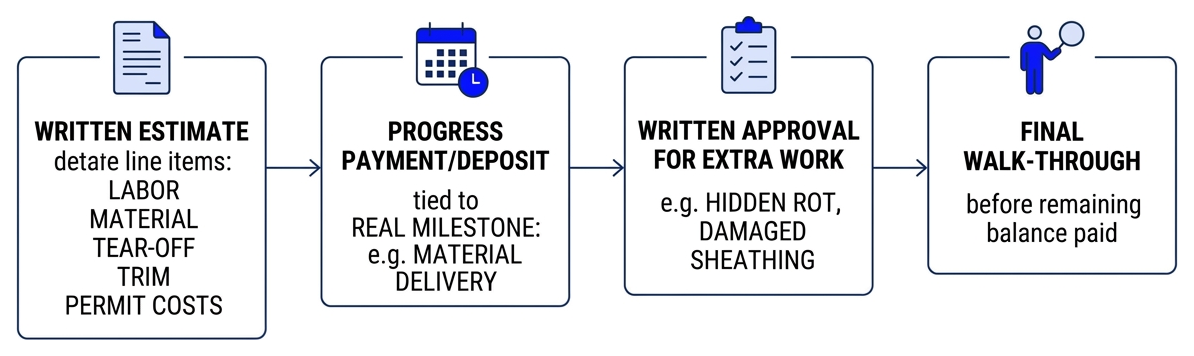
A clear plan should include:
- A written estimate with separate labor, material, tear-off, trim, and permit costs.
- Any deposit or progress payment tied to a real milestone, such as material delivery.
- Written approval for extra work, including hidden rot or damaged sheathing.
- A final walk-through before the remaining balance is paid.
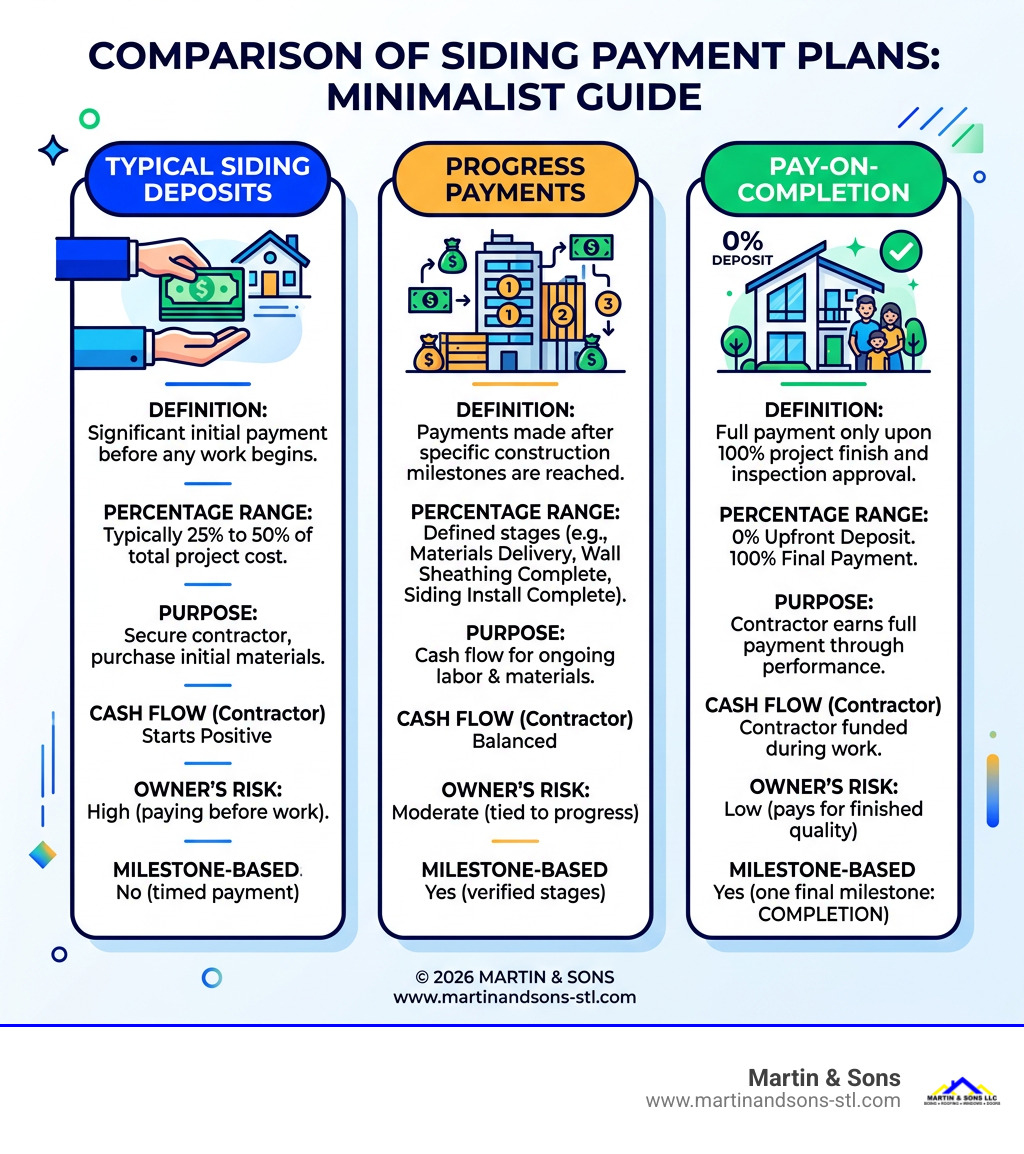
Many siding companies use deposits and mid-project draws to cover materials and labor. That can be reasonable when it is clear, documented, and tied to progress. But a no-upfront-cost model gives homeowners stronger protection: the contractor earns payment by finishing the work to the agreed standard.
At Martin & Sons, we require no upfront deposit for siding work. You pay when the project is 100% complete and you are satisfied with the result. We provide gutter services only as part of a roofing project; Martin & Sons is not a standalone gutter company.
I am John Martin of Martin & Sons LLC, a family-owned company founded in 1953, with more than 35 years of industry experience. Our approach to siding contractor pay-on-completion agreements is simple: clear expectations, quality work, and payment after completion.
Helpful siding payment and warranty resources to know:
How Siding Contractors Structure Payments and Estimates
Understanding how exterior companies price and bill jobs is essential before signing any home improvement contract. In the siding industry, contractors generally use three primary billing models: time-and-materials, flat-rate per square (a construction “square” equals 100 square feet of wall area), or a lump-sum fixed price.
Time-and-materials contracts charge for exact labor hours plus actual material costs with an added markup—typically 20% to 30% over the contractor’s wholesale cost. While this model is common for complex historic restorations, standard residential projects work best under per-square or fixed lump-sum pricing. Lump-sum bids provide clarity, but only when they are built on accurate job costing and clear line items rather than vague, single-number estimates.
Behind the scenes, labor costs are frequently calculated using piece rates paid to installation crews. To understand fair compensation benchmarks across the industry, reviewing this siding installation piece rates resource shows how labor costs reflect installation complexity. An experienced siding crew can outproduce a less skilled crew by 40% to 60% on the exact same home, meaning efficient operations can complete jobs faster while maintaining high craftsmanship standards. When partnering with seasoned house siding installation experts, job estimates will account for proper material waste factors—typically 10% to 12% for standard vinyl and 12% to 15% for fiber cement—preventing unexpected mid-project delays due to material shortages.
Material Costs and Square Footage Pricing Breakdown
Every home exterior presents unique geometry, cut-ups, and structural requirements. The overall investment depends heavily on the siding profile, accessory trim, and the daily production speed achievable by the installation crew.
| Siding Material | Installed Price (per sq. ft.) | Labor Piece Rate (per square) | 2-Person Crew Daily Production |
|---|---|---|---|
| Standard Vinyl | $4 – $8 | $40 – $60 | 6 – 10 squares/day |
| Fiber Cement (HardiePlank) | $8 – $14 | $65 – $95 | 4 – 7 squares/day |
| Engineered Wood (LP SmartSide) | $7 – $12 | $55 – $85 | 5 – 8 squares/day |
| Cedar Lap Siding | $10 – $18 | $80 – $120 | 3 – 5 squares/day |
| Metal / Steel Siding | $7 – $12 | $60 – $90 | 4 – 7 squares/day |
| Tear-Off / Disposal | $0.15 – $0.35 | $15 – $35 | Whole house in 1 – 2 days |
Fiber cement commands higher labor and material rates because it is heavier, requires dust-controlled cutting blades, and demands specific blind-nailing techniques. Conversely, vinyl is flexible, lightweight, and quicker to hang on long, uninterrupted walls. Multi-story homes also introduce difficulty multipliers, as second-story work often requires staging, scaffolding, and extra safety equipment.
Transparent Invoicing and Change Order Management
A professional exterior contract should always come with itemized invoices detailing labor, siding profiles, soffit, fascia, flashing, house wrap, and disposal fees. Clear billing practices aligned with siding invoice template standards prevent surprises by establishing clear milestones and material listings upfront.
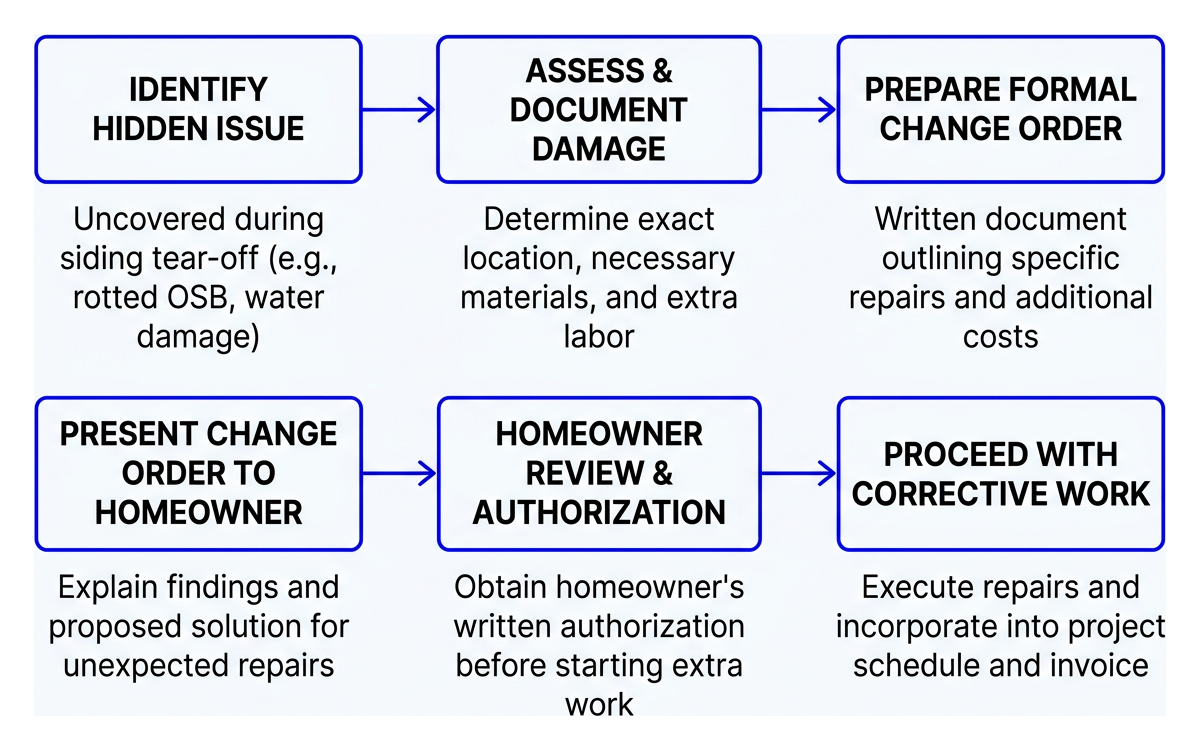
When old exterior panels are stripped away, hidden issues such as rotted OSB sheathing, damaged framing, or pest intrusion may be uncovered. Reliable contractors do not simply cover up water damage or issue surprise bills at project closeout. Instead, unexpected repairs must be handled through a formal, written change order. This document outlines the exact location of the damage, the necessary materials (such as replacement plywood sheets at an agreed rate), additional labor, and the homeowner’s written authorization before any corrective work proceeds.
Why Siding Contractors Pay Completion Models Protect Homeowners

Paying for major exterior renovations on completion gives homeowners total financial peace of mind. Construction horror stories often involve unvetted companies collecting massive upfront checks and then disappearing or abandoning projects halfway through. When a company works under a pay-on-completion model, the contractor assumes the initial financial commitment for labor coordination and materials, aligning their success directly with your satisfaction. Understanding how a siding professional protects homes involves seeing how proper weather barriers, flashings, and secure fastening protect both the structure and the client’s wallet.
Evaluating Payment Milestones vs Pay on Completion
In standard industry arrangements, contractors often ask for 35% to 50% upfront for jobs over $5,000, commonly split into a deposit at signing, a draw upon material delivery, and a final payment after sign-off. While milestone draws help smaller businesses manage cash flow, they require homeowners to track whether work corresponds accurately to the money released.
Under a true zero-down, pay-on-completion structure:
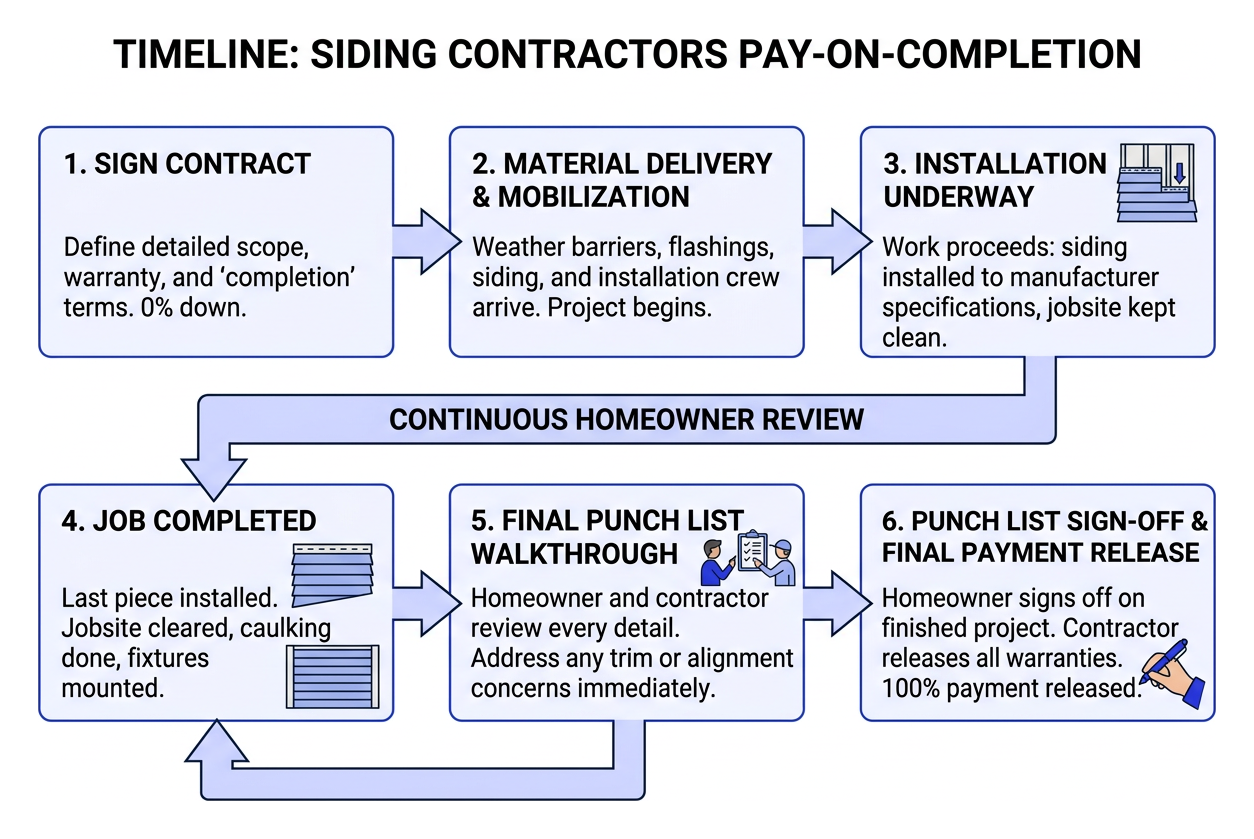
- You retain 100% of your money while the project is underway.
- The installation crew is motivated to maintain a tight schedule, install siding to manufacturer specifications, and keep the jobsite clean.
- Any concerns with trims, caulking, or panel alignment are addressed immediately, because final payment is only released once the homeowner signs off on a finished project.
Avoiding Scams and Payment Red Flags
Protecting yourself against bad actors in the home improvement industry requires knowing what red flags to watch for during the estimate stage. If a contractor demands a full cash payment upfront or asks you to pull your own building permits, treat that as a major warning sign. Always check our checklist for hiring siding replacement contractors to ensure you are vetting local track records, verified business addresses, active general liability insurance, and worker’s compensation coverage.
Legal Safeguards, Contracts, and Punch Lists
A comprehensive contract protects both the homeowner and the installation crew. Reviewing standard siding contract clauses highlights the importance of clearly defining the scope of work, warranty coverage, clean-up requirements, and explicit completion terms. Taking time to consult proven tips on picking the best local roof and siding pros will help ensure you hire established local businesses that honor their written commitments and provide lien waivers upon job completion.
Managing Pay-on-Completion Terms in Your Contract
Your written agreement should explicitly define what constitutes “completion.” It is not simply when the last piece of vinyl is nailed to the wall; completion means the jobsite is cleared of discarded materials, all trim is properly caulked, light fixtures and outlets are re-mounted into specialized mounting blocks, and all manufacturer warranty paperwork is signed and delivered. Including these stipulations in the initial contract prevents premature billing and ensures full alignment between both parties.
Resolving Workmanship Issues Before Final Payment Release
Before releasing the final balance, conduct a thorough exterior walk-through alongside the lead installer or project manager. Check the following items:
- Panel Leveling and Lapping: Siding courses should be straight, level, and overlapped away from primary sightlines or prevailing winds.
- Fastening and Movement: Vinyl siding must be hung loose enough to allow thermal expansion and contraction; nailing it tight directly against the wall causes unsightly buckling and warping under seasonal temperature swings.
- Flashing and Water Management: Check that kick-out flashing is installed where rooflines meet walls, and verify that window heads have integrated drip caps tucked behind the water-resistive barrier.
- Trim, J-Channel, and Corner Posts: Ensure clean 45-degree miter cuts around window frames and verify that corner posts have adequate expansion gaps at eaves and transitions.
- Property Clean-up: Nails and metal shavings should be thoroughly swept with a magnetic roller from flowerbeds, driveways, and lawns.
If any items are incomplete or require adjustment, document them on a formal punch list. The contractor will address these punch-list items promptly before requesting the final project payment.
Frequently Asked Questions About Siding Contractor Payments
How much should I pay upfront for a siding replacement?
While many exterior companies in the industry request deposits between 35% and 50% to secure materials and schedule dates, the most homeowner-friendly option is a 0% down payment plan. Working with a company that charges nothing upfront completely removes your financial risk and ensures you only pay after the job is completed to your satisfaction.
What is included in a final siding inspection punch list?
A final punch list covers all functional and aesthetic details of the installation. This includes verifying level courses, checking proper caulk seals around window and door trim, ensuring weep holes in starter strips are unobstructed, checking light and hose bib mounting blocks, and confirming total jobsite clean-up with no stray nails left on the property.
Do siding replacement projects require local building permits?
Yes, in most St. Louis area municipalities, full siding replacements require local building permits—particularly when structural sheathing or moisture barriers are altered. A reputable contractor will handle all permit applications, schedule required municipal building inspections, and verify local code compliance on your behalf.
Conclusion
Renovating your home’s exterior should be an exciting upgrade, not a stressful financial risk. By choosing clear payment structures tied to complete, verified craftsmanship, you protect your home, your family, and your investment.
Martin & Sons proudly provides exceptional exterior installations with zero money down, lifetime labor warranties, and transparent pricing. You only pay when the job is 100% complete and you are completely thrilled with your home’s new look. When you need trusted roofing and siding contractors near me in Florissant MO, our family-owned team is here to help. We only provide gutter services when performing a roofing project, as Martin & Sons is not a standalone gutter company. Contact our team today to schedule your complimentary exterior consultation!