Why Insulated Vinyl Siding Options Matter for Your Home
Insulated vinyl siding options give homeowners a practical way to upgrade their home’s energy efficiency, comfort, and curb appeal — all at once. Here’s a quick look at what’s available:
| Option | Key Feature | Best For |
|---|---|---|
| Alside Prodigy | 1-1/2″ thick foam, extended 16’8″ panels | Maximum insulation + modern look |
| Alside Charter Oak Energy Elite | Contoured foam, TriBeam system | Extreme weather performance |
| Royal Haven | TXL™ Lamination, Neopor® EPS backing | Impact resistance + wood aesthetics |
| Georgia-Pacific Caliber | R-value 2.8, ENERGY STAR approved | Energy savings on a traditional lap |
| Norandex Polar Wall Plus! | .046″ thick panels, BearHug lock system | Wind resistance + classic cedar look |
These products come in profiles like Dutch lap, traditional lap, and board & batten, with color palettes ranging from neutral whites to deep architectural tones.
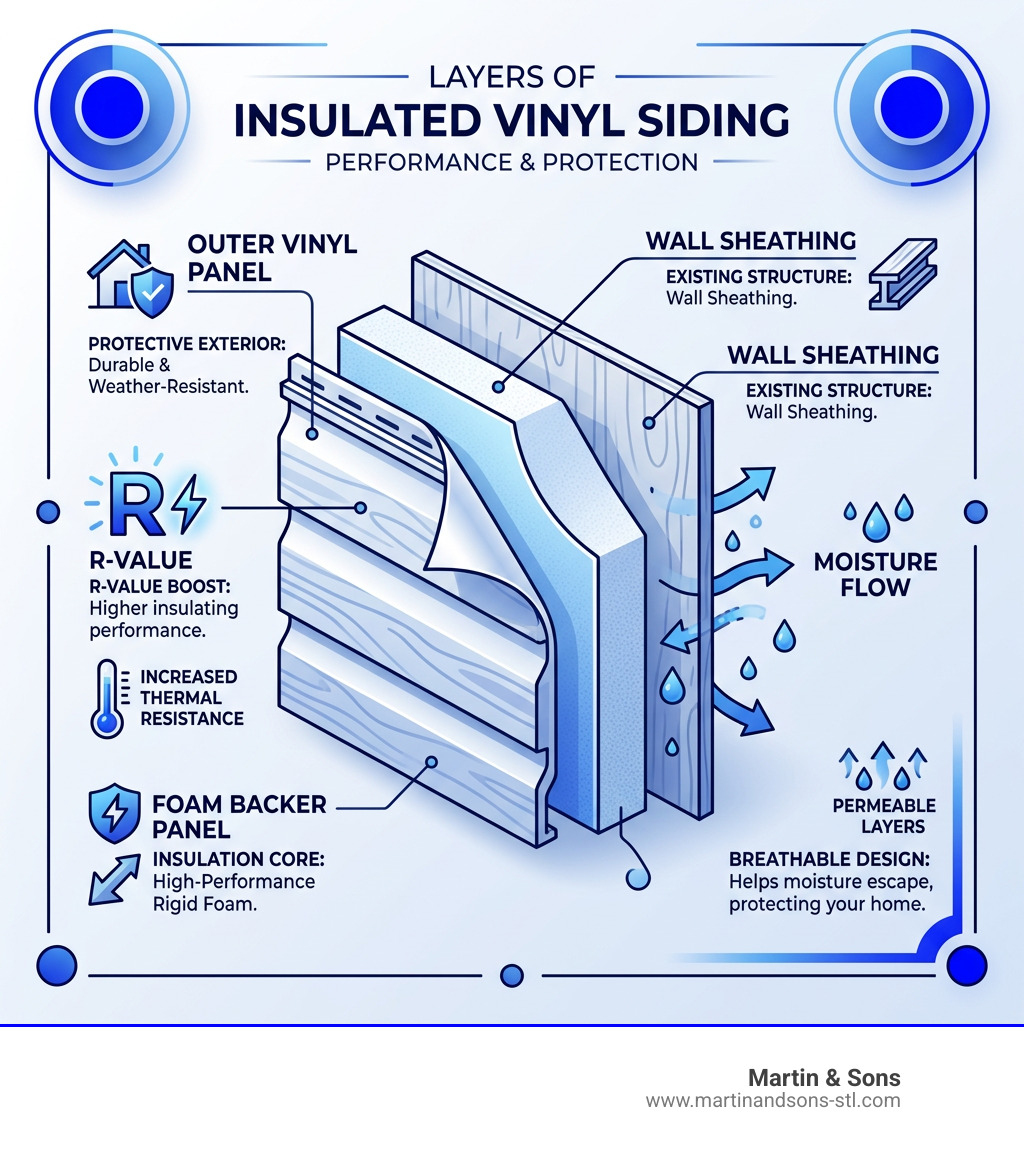
If your home is losing heat, dealing with noise, or just looking worn down, insulated vinyl siding is one of the most cost-effective upgrades you can make. It works by bonding a layer of rigid foam insulation directly to the back of each panel — reducing thermal bridging, blocking outside noise, and making your walls noticeably stronger.
One St. Louis homeowner put it simply: adding insulated siding alongside a new roof “dramatically increased the efficiency of the home.” That kind of real-world impact is exactly what this guide is designed to help you find.
I’m John Martin of Martin & Sons, and with over 35 years of hands-on experience installing and recommending insulated vinyl siding options across the St. Louis area, I’ve seen what separates a great siding investment from a costly mistake. In this guide, I’ll walk you through everything you need to make a confident, well-informed decision.
Easy insulated vinyl siding options word list:
Understanding Insulated Vinyl Siding vs. Traditional Options
When we talk to homeowners in Florissant or O’Fallon, the first question is usually: “What’s the real difference?” Traditional vinyl siding is essentially a thin plastic exterior skin. While it looks great and protects against rain, it has a hollow space behind it. Insulated vinyl siding fills that “void” with a custom-contoured foam backing that is permanently adhered to the vinyl panel.
This structural difference changes everything. Traditional vinyl can sometimes rattle in high winds or feel “bouncy” if you lean against it. In contrast, insulated panels are rigid and solid, mimicking the feel of real wood. More importantly, this foam backing addresses a major flaw in home construction: thermal bridging. Most homes lose a significant amount of heat through the wooden studs in the walls. Because the insulation in your attic or wall cavities sits between the studs, the studs themselves act as a bridge for heat to escape. Insulated siding acts like a thermal blanket, wrapping the entire exterior of your home in a continuous layer of protection.
By choosing these high-performance materials, you are meeting modern Energy Star standards and significantly improving the structural integrity of your home’s exterior. There are at least 7 benefits of choosing vinyl siding for your home, but the added “solid core” of insulated options takes those benefits to the next level.
Key Benefits of Insulated Vinyl Siding Options
The decision to upgrade to insulated siding isn’t just about looks—it’s about performance. In the St. Louis climate, where we swing from humid, 100-degree summers to freezing winters, these benefits are felt immediately.
- Energy Savings: The primary draw is the R-value. Standard vinyl has an R-value of less than 1.0. High-performance insulated vinyl siding options like Alside Prodigy or Georgia-Pacific Caliber can reach R-values up to 3.5. This helps lower utility bills year-round. We often tell our customers that siding replacement can boost energy efficiency more than almost any other exterior project.
- Noise Reduction: If you live near a busy road in Maryland Heights or Creve Coeur, you’ll appreciate the sound-dampening qualities of the foam core. It acts as a buffer, significantly reducing the amount of exterior noise that enters your living space.
- Impact Resistance: Have kids playing ball in the yard? Or maybe you’re worried about the next Missouri hailstorm? Products like Royal Haven offer impact resistance up to 240% greater than fiber cement. The foam acts as a shock absorber, preventing the vinyl from denting or cracking.
- Pest Protection: Many modern foam backings are treated with safe insecticides (like borates) that deter termites and carpenter ants from nesting behind your siding.
- Moisture Management: A common myth is that insulated siding traps moisture. In reality, premium products feature a high “perm rating” (often up to 5.0). This allows water vapor from inside your home to escape, preventing mold and mildew growth while keeping the wall assembly dry.
Advanced Insulation Technology and Performance Ratings
The “magic” of these insulated vinyl siding options lies in the engineering of the foam. It’s not just “Styrofoam” glued to plastic; it’s a sophisticated system designed to last for decades.
One of the leading technologies is Neopor®, a graphite-enhanced expanded polystyrene (EPS). The graphite particles reflect radiant heat, giving it a higher R-value than standard foam of the same thickness. You’ll find this in Alside’s Charter Oak line and Royal’s Haven products.
Another breakthrough is TXL™ Lamination Technology. This creates a bond between the siding and the foam that is 200% stronger than traditional methods. This ensures that the two layers never separate, even under the stress of extreme temperature changes.
Performance is verified through rigorous ASTM C163 testing, ensuring that the R-value claims are accurate. When we discuss the benefits of vinyl siding installation with our clients, we emphasize that these ratings aren’t just marketing—they are proven metrics of how well the material resists heat flow and wind pressure.
Design Aesthetics and Customization
Gone are the days when vinyl siding looked like “plastic.” Today’s insulated vinyl siding options offer stunning woodgrain aesthetics and deep shadow lines that make it nearly impossible to distinguish from real cedar from the curb.
Manufacturers use advanced polymers like ChromaTrue® to ensure that colors stay vibrant even after years of exposure to harsh UV rays. Because the foam backing provides a flat, rigid surface, the siding panels hang straighter and flatter on your home, eliminating the “wavy” look sometimes seen with cheaper materials.
To help you choose, many brands offer visualizer tools where you can upload a photo of your home and “try on” different colors and styles. This is a great way to explore vinyl siding color trends you won’t want to miss before making a final commitment.
Popular Profiles in Insulated Vinyl Siding Options
The “profile” refers to the shape and width of the siding panels. Common choices include:
- Traditional Lap: The classic horizontal look, available in Single 7-inch or Double 6-inch widths.
- Dutch Lap: Features a decorative groove at the top of each panel, creating deeper shadow lines for a more historic look.
- Board and Batten: A vertical profile that is perfect for farmhouse styles or as an accent on gables.
Color and Texture Insulated Vinyl Siding Options
Whether you want a classic “White” or “Beige” or a bold “Midnight Surf” or “Ironstone,” the color palettes are extensive. Most manufacturers offer:
- Standard Collections: Time-tested neutrals.
- Architectural/Premium Palettes: Deep, rich colors that used to be prone to fading but are now protected by UV-resistant technology.
- Cedar Grain Textures: Finely milled textures that mimic the look of rough-sawn wood.
Choosing the right combination can significantly boost curb appeal with vinyl siding, making your home the envy of the neighborhood.
Maintenance and Long-Term Value Comparison
One of the biggest selling points for our customers in St. Louis and St. Charles is the low maintenance. Unlike wood, which needs painting every few years, or fiber cement, which can require recaulking, insulated vinyl is virtually “set it and forget it.”
| Feature | Insulated Vinyl | Fiber Cement | Natural Wood |
|---|---|---|---|
| Painting Required? | Never | Every 10-15 years | Every 3-5 years |
| Impact Resistance | Very High | Moderate | High |
| R-Value | Up to 3.5 | ~0.5 | ~1.0 |
| Maintenance | Low (Hose wash) | Moderate | High |
| Moisture Risk | Low (Breathable) | Moderate | High (Rot) |
When you are calculating the lifetime cost of vinyl siding installation, repairs, and maintenance, insulated vinyl often comes out as the most economical choice over 20+ years. Most premium products come with a Limited Lifetime Transferable Warranty, which even covers things like hail damage and color fading. You can find more information on product warranties and claims through the manufacturer’s specific portals, but we always help our customers navigate this paperwork.
Frequently Asked Questions about Insulated Siding
What is the typical R-value of insulated vinyl siding?
Most high-quality insulated vinyl siding options offer an R-value between 2.0 and 3.5. For example, Georgia-Pacific Caliber adds approximately 2.8 to your wall assembly, while Alside Prodigy can reach higher levels due to its 1-1/2″ thick foam.
Does insulated siding cause moisture or mold problems?
No, provided it is high-quality and installed correctly. Premium insulated siding has a “perm rating” of around 5.0, which means it is highly breathable. It allows the 4-6 gallons of water vapor produced daily by an average household to escape through the walls rather than getting trapped.
How does the cost of insulated siding compare to standard vinyl?
Insulated siding does have a higher upfront material cost than standard vinyl. However, when you factor in the energy savings (up to 20% on utility bills in some cases), the increased home value, and the superior durability, the “payback period” is often much shorter than homeowners expect.
Conclusion
Choosing the right insulated vinyl siding options is a major step toward a more comfortable, beautiful, and efficient home. Whether you are in Chesterfield, Maryland Heights, or right here with us in Florissant, the benefits of a solid-core exterior are hard to beat.
At Martin & Sons, we believe in making this process as stress-free as possible. That’s why we offer no upfront deposits—you only pay when the job is 100% complete and you are totally satisfied. We back our work with lifetime labor warranties and ensure you get the best prices upfront without the “sales games.”
If you’re ready to see how insulated siding can transform your home, we’re here to help. From navigating color trends to expert installation, we’ve got you covered. Check out our services for vinyl siding near me in Florissant, MO and the surrounding St. Louis areas to get started.