Fast, Reliable Hardie Board Repair in St. Louis
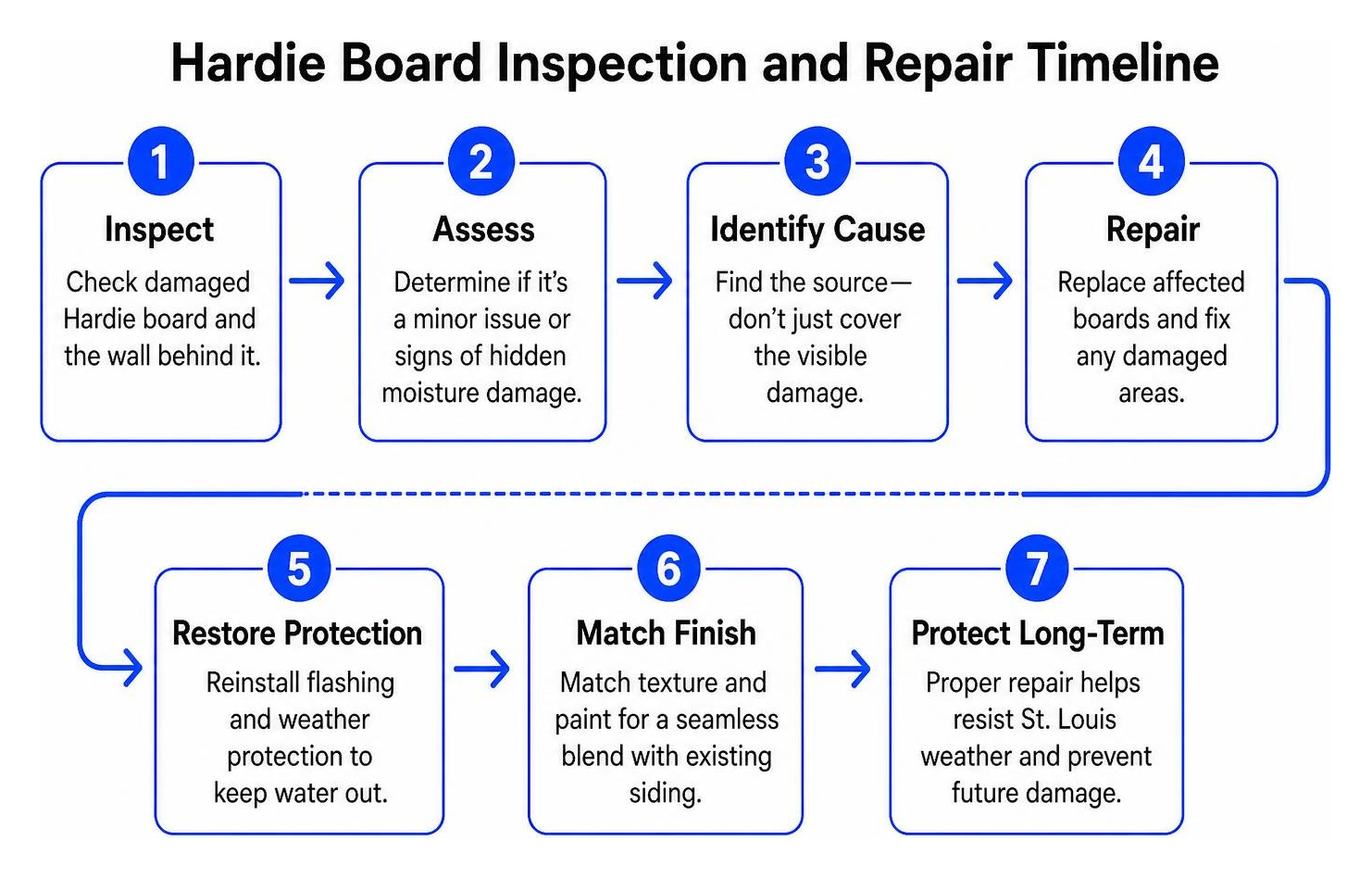
For hardie board repair st louis homeowners can trust, start with a close inspection of the damaged area and the wall behind it. Small cracks, chips, loose planks, or failed caulk may only need a targeted repair. But soft sheathing, stains, swelling, repeated cracking, or gaps around windows can signal hidden moisture damage that needs a broader fix.
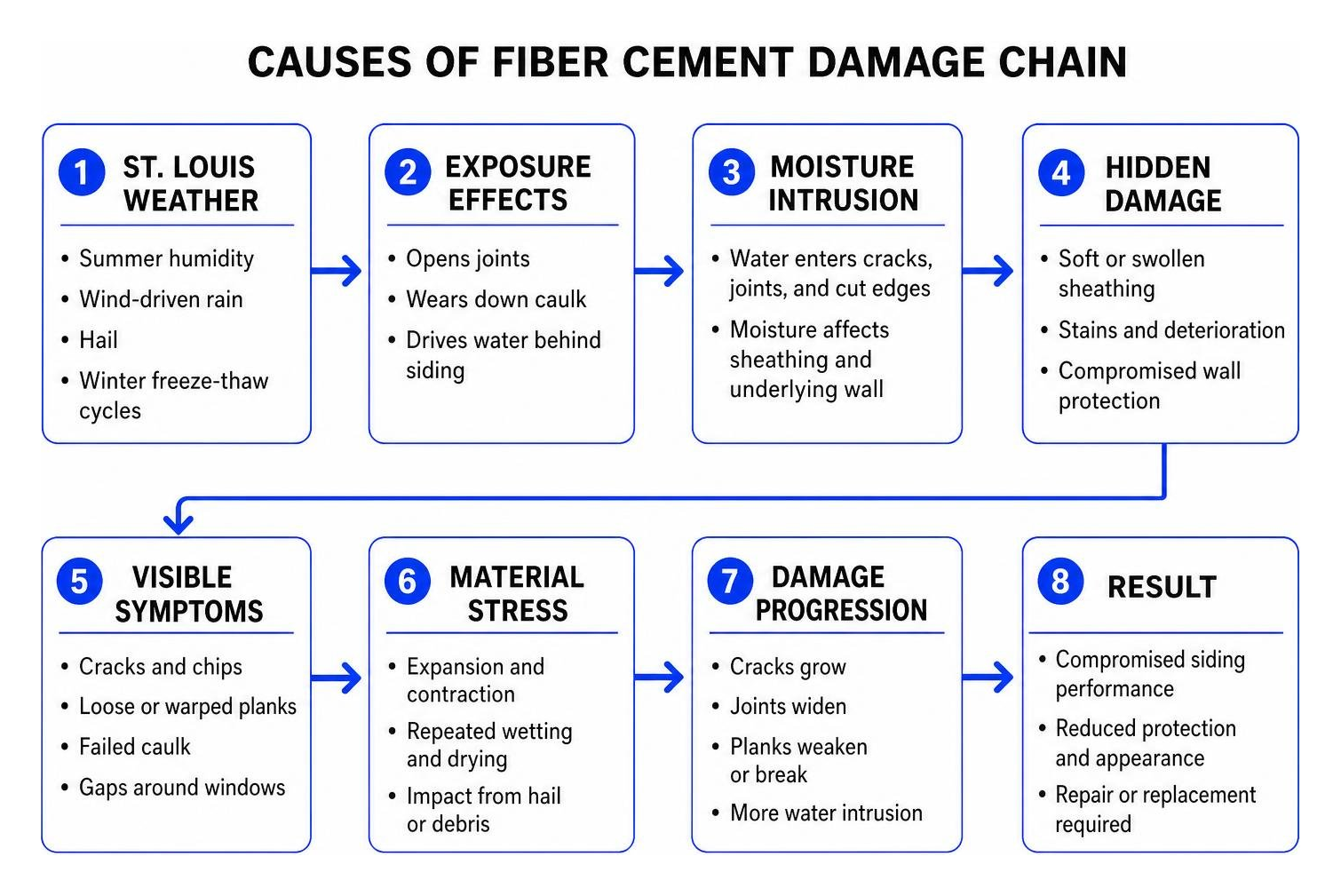
St. Louis weather can be tough on fiber-cement siding. Summer humidity, wind-driven rain, hail, and winter freeze-thaw cycles can open joints, wear down caulk, and allow water behind the siding. A qualified repair contractor should identify the cause first – not just cover the visible damage – then replace affected boards, restore flashing and weather protection, and match the finish as closely as possible. For more on how fiber cement compares with other materials, see this overview of fiber cement siding.
I am John Martin of Martin & Sons, a family-owned company founded in 1953, with more than 35 years of industry experience. We bring a practical, quality-focused approach to hardie board repair st louis homeowners need when siding damage threatens their home’s appearance or protection.
Quick look at hardie board repair st louis:
Understanding Hardie Board Repair in St. Louis and Common Siding Damage
James Hardie fiber cement stands as the #1 brand of siding in North America, trusted by more than 10 million homeowners across the country. Engineered from a blend of Portland cement, sand, cellulose fibers, and water, it delivers outstanding fire resistance, pest resistance, and dimensional stability. However, even the most resilient siding is not entirely indestructible.

When problems arise, they generally trace back to structural settling, blunt force impacts, or moisture penetration resulting from improper installation clearances. Because fiber cement behaves differently than vinyl or natural wood, repairing it requires an understanding of its material composition and structural mechanics.
How St. Louis Weather and Humidity Impact Siding
The climate across the greater St. Louis area—from Florissant and Chesterfield to Creve Coeur and Maryland Heights—presents distinct challenges for exterior building envelopes.
- Intense Freeze-Thaw Cycles: St. Louis winters routinely oscillate across the freezing mark. When moisture enters hairline cracks or unsealed cut edges, it expands as it freezes, turning minor fissures into significant fractures.
- High Summer Humidity: Prolonged summer humidity creates continuous vapor drive against exterior walls. If weather-resistive barriers or flashing assemblies are compromised, moisture can become trapped behind the planks.
- Severe Convective Storms: Spring and summer thunderstorms frequently bring hail and high wind gusts that throw tree limbs and yard debris against exterior walls, causing localized impact chips or cracks.
- Thermal Expansion and Caulking Degradation: Seasonal temperature swings cause exterior framing and wall assemblies to expand and contract. Over time, low-grade exterior caulk hardens, cracks, and pulls away from plank joints, leaving gaps exposed to wind-driven rain.
Crucial Signs You Need Hardie Board Repair in St. Louis
Identifying early warning signs allows you to address localized issues before they evolve into extensive structural repairs:
- Plank Cracking and Spalling: Visible cracks running horizontally or radiating from nail heads often point to improper fastening tension or structural movement.
- Loose or Rattling Boards: Fasteners that have pulled free from wall studs leave siding loose, creating an entry point for wind-driven moisture.
- Joint Separation and Missing Flashing: Butt joints where flashing has slipped or caulking has failed leave the underlying substrate vulnerable.
- Hidden Substrate Rot: Soft spots, persistent musty odors indoors, or discoloration along the bottom edges of siding planks suggest that moisture has breached the weather barrier.
When these symptoms appear, scheduling timely professional siding repair services prevents water intrusion from reaching your home’s structural framing.
Repair vs. Replacement: Evaluating Costs, Longevity, and Efficiency
Deciding whether to perform targeted spot repairs or invest in a broader siding replacement depends on the overall age of the installation, the extent of the damage, and the condition of the moisture barrier behind the walls. Our comprehensive fiber cement siding guide explores how these systems perform over decades of exposure.
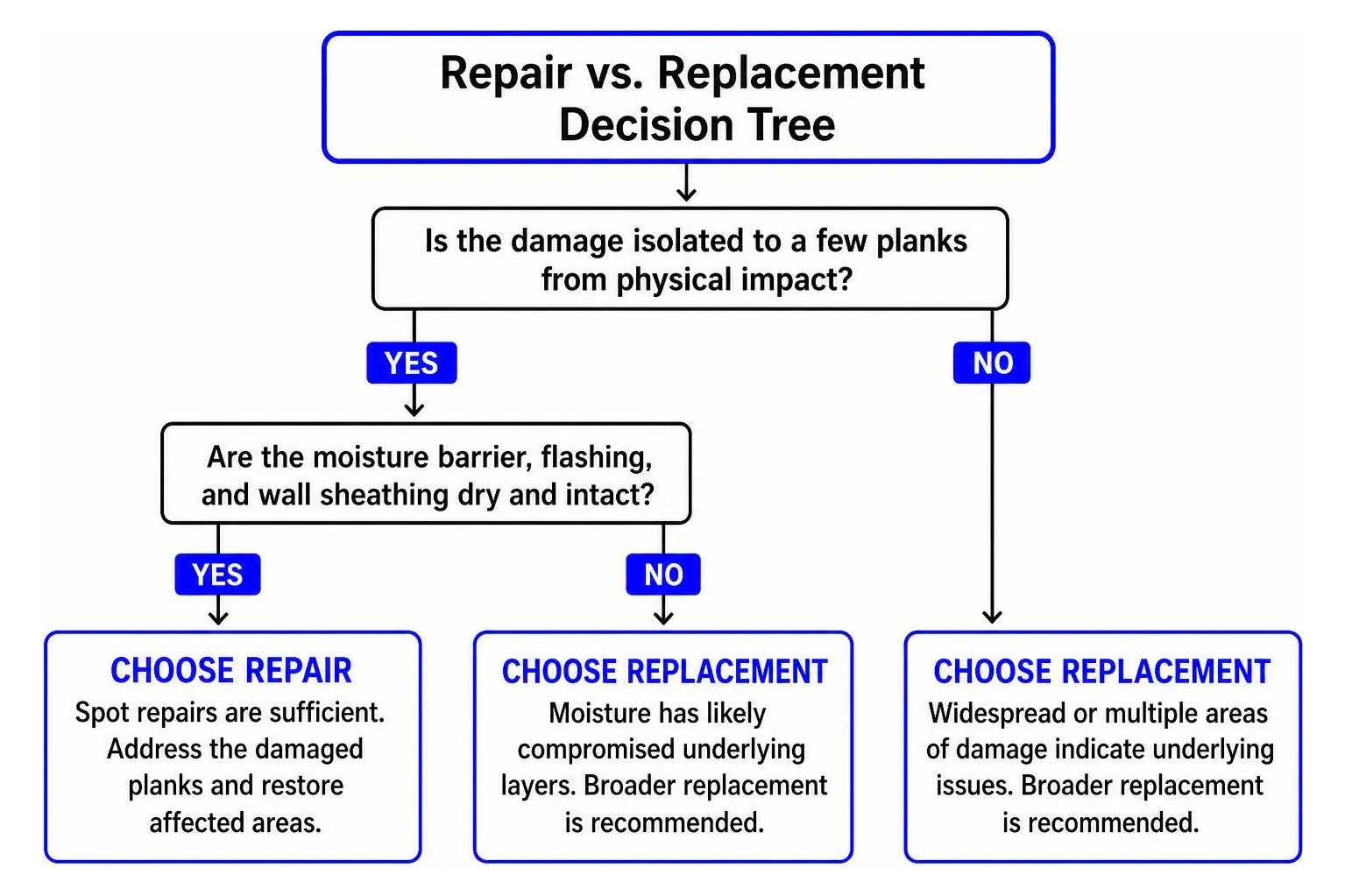
When Spot Repairs Are Sufficient for Fiber Cement
Isolated damage does not automatically warrant an entire siding overhaul. Spot repairs are the ideal solution when:
- Damage is confined to a few planks caused by isolated physical impact (such as lawnmower debris or a fallen branch).
- The water-resistive barrier, flashing, and wall sheathing behind the planks remain dry and intact.
- The siding system is relatively new, allowing for an exact color and texture match.
- Caulk failure is localized to a single elevation or specific trim junctions.
Spot repairs save thousands of dollars while fully restoring the protective shell and visual appeal of your home.
Evaluating Full Replacement for Aging Exteriors
If damage is widespread across multiple elevations, or if water has compromised the sheathing over large areas due to widespread installation errors, full replacement becomes the more sensible long-term investment.
| Consideration Factor | Spot Hardie Board Repair | Full Siding Replacement |
|---|---|---|
| Project Scope | 1 to 5 damaged planks, isolated trim, or localized re-caulking | Complete tear-off of exterior elevations down to sheathing |
| Disruption Time | Usually completed within 1 to 2 business days | Typically requires 4 to 7 business days depending on home size |
| Cost Profile | Lower immediate cost focused on problem areas | Larger initial investment with long-term property value return |
| Substrate Access | Limited to the immediate repair area | Complete access to inspect and upgrade house wrap and insulation |
| Energy Efficiency | Restores original barrier integrity locally | Allows whole-home continuous insulation and weather-barrier upgrades |
When reviewing your project scope, comparing fiber cement siding cost considerations helps clarify the financial differences between frequent piecemeal repairs and a full exterior upgrade. Furthermore, learning how siding replacement boosts energy efficiency can help determine if an aging system is costing you money on heating and cooling bills.
The Step-by-Step Fiber Cement Repair Process and St. Louis Building Codes
Repairing fiber cement is a precise trade craft. Unlike vinyl siding, which can be snapped into place, fiber cement requires specialized cutting tools, corrosion-resistant fasteners, and strict adherence to moisture management standards.
Best Practices for Hardie Board Repair in St. Louis Workmanship
To guarantee longevity and uphold factory standards, our technicians adhere to rigid installation practices:
- Fastener Placement and Depth: Nails must be driven straight and flush into wall studs—never overdriven, which can crush the fiber core, or underdriven, which prevents the overlapping plank from laying flat.
- Mandatory Clearances: Fiber cement must maintain a minimum 6-inch clearance from finished grade and a 2-inch clearance above hard surfaces like driveways, decks, and rooflines to prevent capillary water absorption.
- Edge Priming: Every single cut made on the job site exposes raw cellulose fibers. These field cuts must be coated with manufacturer-approved acrylic primer or paint before installation.
- Butt-Joint Flashing: Modern installation standards require metal joint flashing behind butt joints rather than relying purely on caulk, preventing moisture from finding paths through seam gaps as materials naturally expand and contract.
Getting competitive St. Louis siding repair quotes from experienced contractors ensures these technical details are never skipped.
St. Louis County Permits, Building Codes, and Compliance
Whether you live in Florissant, St. Peters, St. Charles, Chesterfield, or O’Fallon, exterior alterations must adhere to local municipal building codes derived from the International Residential Code (IRC).
- Permit Thresholds: While minor spot repairs (replacing a single board) may not always trigger a formal building permit, substantial repairs involving structural sheathing, multiple squares of siding, or altered wall assemblies require proper municipal permits.
- Weather-Resistive Barriers (WRB): Code mandates a continuous water-resistive barrier behind all fiber cement installations, properly integrated with window and door flashings.
- Contractor Accountability: A legitimate exterior contractor handles all permit applications, schedules required municipal inspections, and ensures all repairs comply fully with local wind-load and fire-safety standards.
Hiring Qualified Contractors and Alliance Tier Verification
Fiber cement repair requires specialized tools, including dust-reducing shears, diamond-tipped circular saw blades, and pneumatic nailers calibrated for specific penetration depths. Hiring a general handyman or an unvetted contractor often leads to improper fastening, unsealed cuts, and recurring moisture leaks. Reviewing a guide to certified James Hardie plank installers helps you identify teams that possess the required training and tooling.
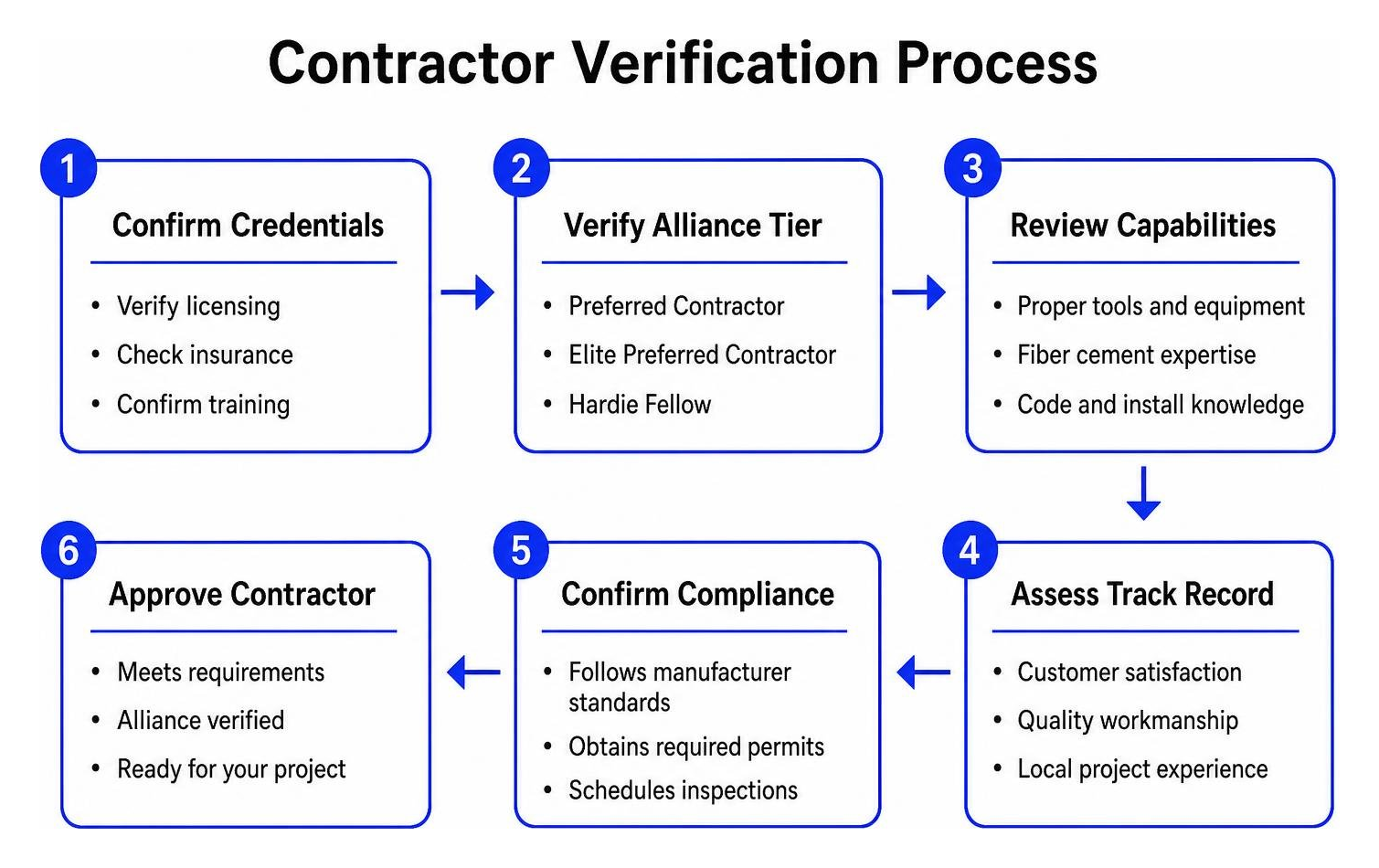
Understanding James Hardie Alliance Program Tiers
The James Hardie ALLIANCE™ program differentiates exterior contractors based on their demonstrated craftsmanship, training, and ongoing compliance with strict manufacturer standards:
- Preferred Contractors: These professionals have met baseline requirements for training, licensing, insurance coverage, and customer satisfaction ratings.
- Elite Contractors: Representing the upper echelon of the program, Elite tier members maintain an average affiliation with James Hardie of over 10 years, demonstrating mastery across complex architectural installations and repair methodologies.
Hiring a contractor recognized within these tiers guarantees that the technicians working on your home understand the precise installation manuals, clearance mandates, and fastening schedules required by the manufacturer.
Risks of Non-Specialized Labor and Warranty Protection
Entrusting fiber cement repair to inexperienced labor carries measurable risks:
- Voided Warranties: James Hardie provides robust 30-year non-prorated product warranties on siding planks, alongside 15-year limited finish warranties on ColorPlus® Technology. However, these protections do not cover failures resulting from improper installation, incorrect nail placement, or unsealed field cuts.
- Sheathing and Structural Damage: Incorrectly installed siding can channel water inward toward the home’s framing rather than outward down the drainage plane, causing structural rot that remains hidden for years.
- Mismatched Aesthetics: Siding planks must be carefully blended to match the existing exposure, texture, and color profile. Inexperienced installers often leave uneven lap reveals or glaring paint mismatches.
Frequently Asked Questions About Hardie Board Repair
How long does a typical fiber cement siding repair take?
Most spot repairs—such as replacing a damaged section of siding or fixing isolated trim—take between half a day and two days to complete. The exact timeline depends on the number of planks involved, whether structural sheathing requires remediation, and the drying time needed for exterior primers and high-performance sealants.
Will repairing individual boards void the James Hardie warranty?
No. Repairing individual planks does not void the manufacturer warranty on the rest of your siding, provided the replacement boards are authentic James Hardie materials and are installed strictly according to the manufacturer’s published installation specifications. Working with an experienced contractor ensures that all repairs uphold the integrity of your existing warranties.
How do I prevent moisture damage behind repaired siding?
Preventing hidden moisture intrusion requires a complete, layered drainage system:
- Ensuring the underlying house wrap or weather barrier is seamlessly patched and taped behind the repaired area.
- Installing corrosion-resistant metal flashing behind all butt joints and above window and door heads.
- Maintaining the required 2-inch clearance between siding edges and roof shingles or horizontal ledges.
- Keeping ground vegetation trimmed away from exterior walls to allow natural airflow and drying.
Conclusion
Your home’s siding is its first line of defense against severe weather, high humidity, and seasonal freeze-thaw cycles. Addressing cracked, loose, or improperly installed fiber cement promptly protects your home’s structural framing, preserves its energy efficiency, and keeps your exterior looking pristine.
At Martin & Sons, we believe homeowners deserve complete peace of mind. We take pride in our transparent approach: we require no upfront deposits, allowing you to pay only upon 100% completion and satisfaction with the work. Backed by our lifetime labor warranties, our team delivers the craftsmanship your property deserves across St. Louis, St. Peters, St. Charles, Chesterfield, Creve Coeur, Maryland Heights, and O’Fallon.
Please note that while Martin & Sons provides comprehensive roofing and siding solutions, we are not a dedicated gutter company; we provide gutter services exclusively in conjunction with complete roof replacements.
If you are noticing cracked boards, loose seams, or caulking separation, turn to our trusted roofing and siding contractors in Florissant and St. Louis. Contact us today at our Florissant office (8460 N. Lindbergh Blvd. Suite 11) to schedule an exterior inspection and secure a straightforward, upfront quote.