
Comparing Approaches for Vinyl Window Replacement
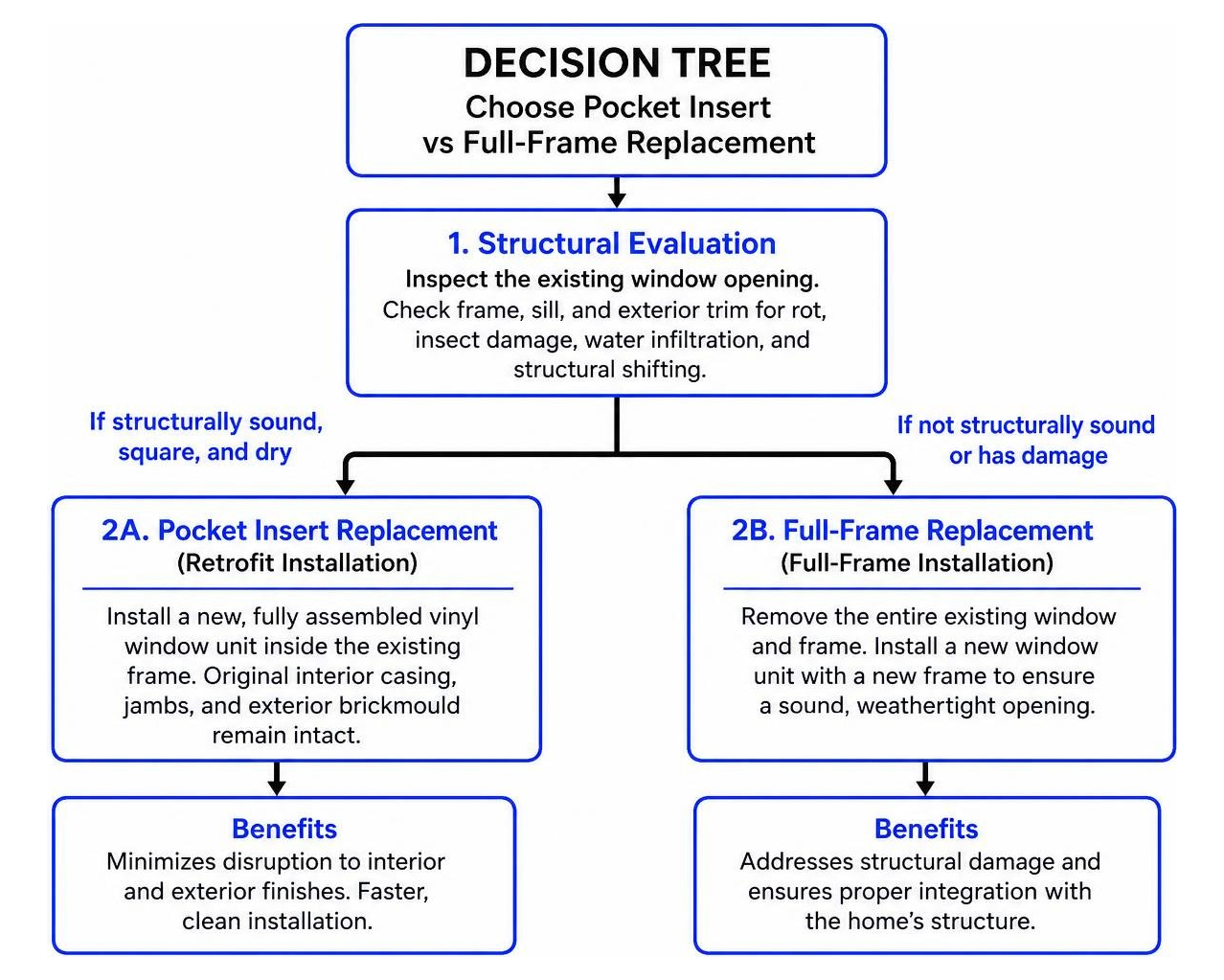
When planning a vinyl window replacement project, the first major decision is determining how the new unit will integrate with your home’s structure. That requires a thorough structural evaluation of the existing window opening.
Before ordering materials, inspect the existing frame, sill, and exterior trim for signs of rot, insect damage, water infiltration, and structural shifting. If the wood surrounding your current window is structurally sound, square, and dry, you have the flexibility to choose between two primary installation methods: pocket insert or full-frame replacement.
Maintaining the building envelope’s moisture barrier is critical. An improper installation style can trap water behind siding or leave gaps where conditioned air escapes. Additionally, preserving exterior siding, brickmould, and interior casing helps control the scope of the project. If you are balancing renovation priorities, understanding vinyl window replacement costs helps you decide which method delivers the greatest return on investment for your home.
Pocket Insert Vinyl Window Replacement Process
A pocket insert replacement (often referred to as a retrofit installation) involves installing a new, fully assembled vinyl window unit directly inside the existing master wood or aluminum frame.
Because the original interior casing, jambs, and exterior brickmould remain intact, this method minimizes disruption to interior paint, wallpaper, and exterior siding materials. Pocket replacements slide into place against the original exterior blind stop moldings, making the installation fast and clean.
The basic retrofit installation process follows these key steps:
- Carefully remove the existing interior stop moldings and old upper and lower window sashes.
- Remove old balance systems, pulleys, or sash weights, and insulate any empty weight pockets with fiberglass or low-expansion foam.
- Clean and prepare the existing sill, ensuring the sill angle matches the replacement insert or utilizing a sill angle adapter.
- Set the new vinyl insert into the opening, using shims at the pre-drilled installation holes to adjust for level, plumb, and square.
- Fasten the unit securely through the side jambs into the existing wooden framing.
- Apply low-expansion closed-cell polyurethane foam around the perimeter gap to seal against air infiltration.
- Reinstall or replace interior stops and apply high-grade exterior sealant along the outside perimeter joint.
Homeowners who want to learn every mechanical detail can review our step-by-step vinyl window replacement guide for additional trade insights.
Full-Frame Vinyl Window Replacement Considerations
Full-frame replacement involves stripping the entire window assembly down to the rough stud opening. This method is necessary when the existing wooden frame has sustained water damage, rot, or structural bowing, or when you want to change the size or shape of the opening.
During a full-frame project, installers remove the interior casing, jamb extensions, sills, and exterior brickmould. This provides complete access to the rough structural opening, allowing contractors to:
- Inspect and replace rotted rough framing, cripple studs, or headers.
- Install integrated nailing fins directly to the exterior sheathing.
- Apply self-adhering flashing tape in a proper weatherboard shingle fashion over the sill and jambs.
- Pack dense insulation directly between the framing studs and window buck.
- Install brand-new interior trim, stool, and apron moldings for a completely refreshed look.
While full-frame replacements require more labor and finish carpentry, they maximize the glass viewing area (since pocket frames slightly reduce visible glass width and height) and ensure the wall cavity is sealed against drafts. When tackling extensive exterior remodels, hiring professional window installers ensures that complex flashing details and nail fins are installed according to manufacturer specifications to protect your structural framing.
Comparing Window Tiers: Standard, Premium, and Elite Models
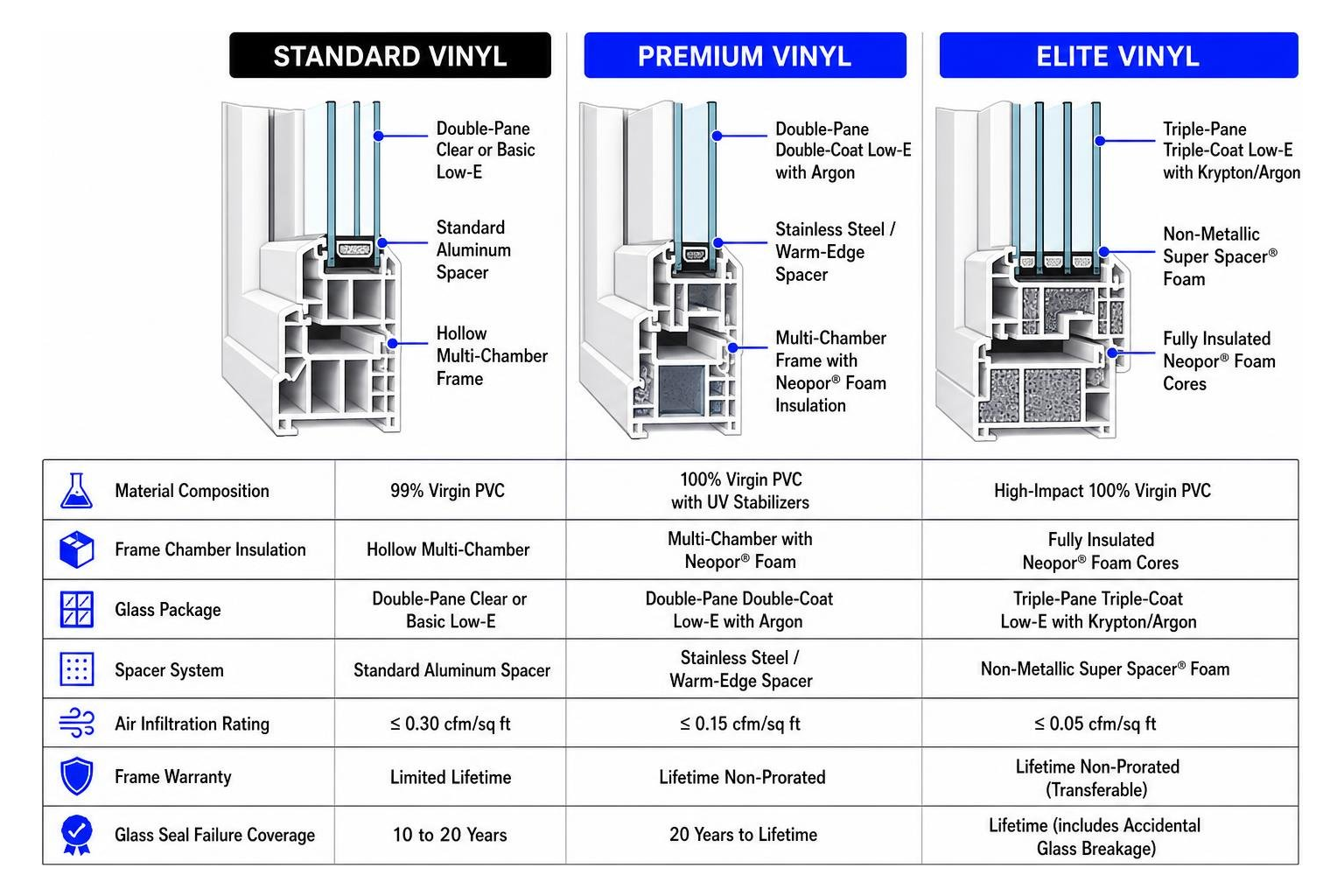
Vinyl windows are manufactured across several performance tiers. High-grade units are extruded using 100% virgin PVC plastic compound formulated with titanium dioxide stabilizers to resist UV degradation, chalking, and thermal warping. Economy models, by contrast, may incorporate recycled plastics that can become brittle over years of exposure to seasonal temperature swings.
Premium and elite vinyl profiles feature multi-chambered internal extrusions that trap dead air to slow thermal transfer. Higher-tier models often incorporate graphite-enhanced Neopor® foam insulation directly injected into the vinyl frame chambers, boosting the frame’s overall insulating R-value by up to 30% compared to standard hollow extrusions.
| Specification / Feature | Standard Vinyl | Premium Vinyl | Elite Vinyl |
|---|---|---|---|
| Material Composition | 99% Virgin PVC | 100% Virgin PVC with UV Stabilizers | High-Impact 100% Virgin PVC |
| Frame Chamber Insulation | Hollow Multi-Chamber | Multi-Chamber with Neopor® Foam | Fully Insulated Neopor® Foam Cores |
| Glass Package | Double-Pane Clear or Basic Low-E | Double-Pane Double-Coat Low-E with Argon | Triple-Pane Triple-Coat Low-E with Krypton/Argon |
| Spacer System | Standard Aluminum Spacer | Stainless Steel / Warm-Edge Spacer | Non-Metallic Super Spacer® Foam |
| Air Infiltration Rating | ≤ 0.30 cfm/sq ft | ≤ 0.15 cfm/sq ft | ≤ 0.05 cfm/sq ft |
| Frame Warranty | Limited Lifetime | Lifetime Non-Prorated | Lifetime Non-Prorated (Transferable) |
| Glass Seal Failure Coverage | 10 to 20 Years | 20 Years to Lifetime | Lifetime (includes Accidental Glass Breakage) |
For horizontal openings, sliding units provide heavy-duty Delrin® composite rollers and dual-point locking mechanisms to ensure smooth operation across wide spans.
Frame Materials, Multi-Chamber Profiles, and Hardware
The longevity and performance of a vinyl window depend heavily on how the sash and master frame corners are joined. Superior windows feature fully fusion-welded corners where the vinyl is heated to over 450°F and fused under pressure into a single, watertight structural unit. Mechanically fastened (screwed) corners can loosen over time, allowing moisture and drafts to penetrate the joints.
Quality vinyl windows also incorporate engineered drainage channels and weep hole baffles in the sill. These systems direct wind-driven rain away from the interior track while preventing insect entry and backdrafts.
Heavy-duty hardware completes the assembly. Look for cam-action sash locks that draw sashes tightly together against interlocking meeting rails, compressing bulb weatherstripping seals to block drafts. High-performance models feature multi-point weatherstripping barriers, integral lift rails, and stainless steel constant force balance systems that eliminate sash drift.
Energy-Efficient Glass Packages and Ratings
The glass package accounts for roughly 80% of a window’s total surface area, making it the most critical factor in thermal performance. When comparing replacement windows, two primary National Fenestration Rating Council (NFRC) performance metrics govern energy efficiency:
- U-Factor (0.15 – 0.30): Measures the rate of non-solar heat flow through the window assembly. A lower U-factor indicates greater resistance to heat loss during freezing winters.
- Solar Heat Gain Coefficient / SHGC (0.18 – 0.40): Measures the fraction of solar radiation admitted through the glass. In warmer climates or sun-drenched elevations, a lower SHGC reduces air conditioning loads by blocking unwanted solar heat.
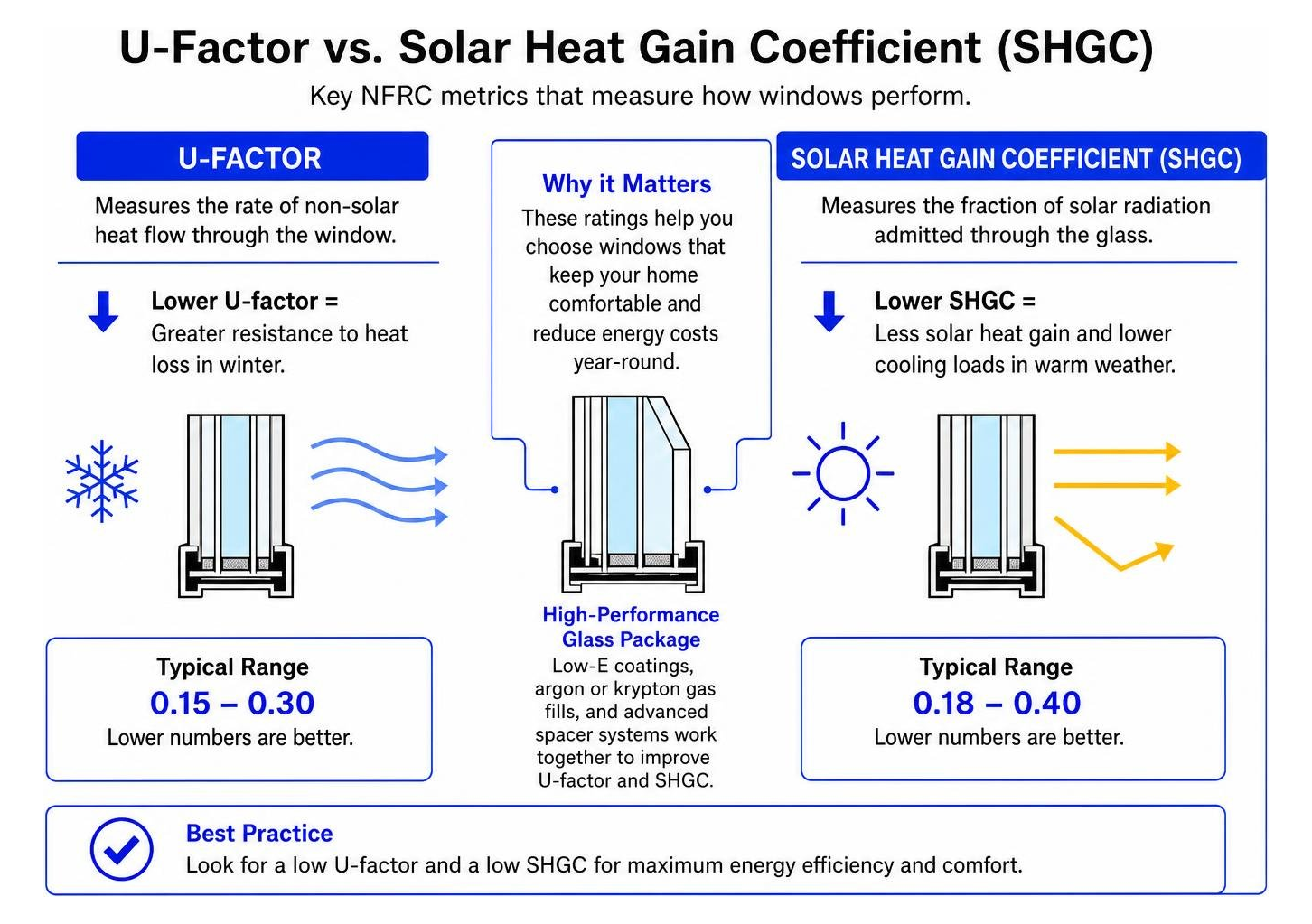
Modern high-performance windows utilize microscopically thin metallic oxide Low-E (low-emissivity) coatings applied to internal glass surfaces to reflect radiant infrared energy while transmitting clear natural light. The spaces between glass lites are filled with dense, inert gases such as argon or krypton, which insulate significantly better than plain air.
Exploring advancements in double-glazed insulated glass helps homeowners select the right spacer and glass thickness combinations. Selecting the appropriate thermal performance ratings ensures your energy-efficient windows reduce utility bills through every season of the year.
Measuring for Replacement Windows
Accurate measurements are the single most critical step in a successful vinyl window replacement. Vinyl insert units are custom-manufactured to the exact sixteenth of an inch; once fabricated, a frame that is too large cannot be shaved down on-site.
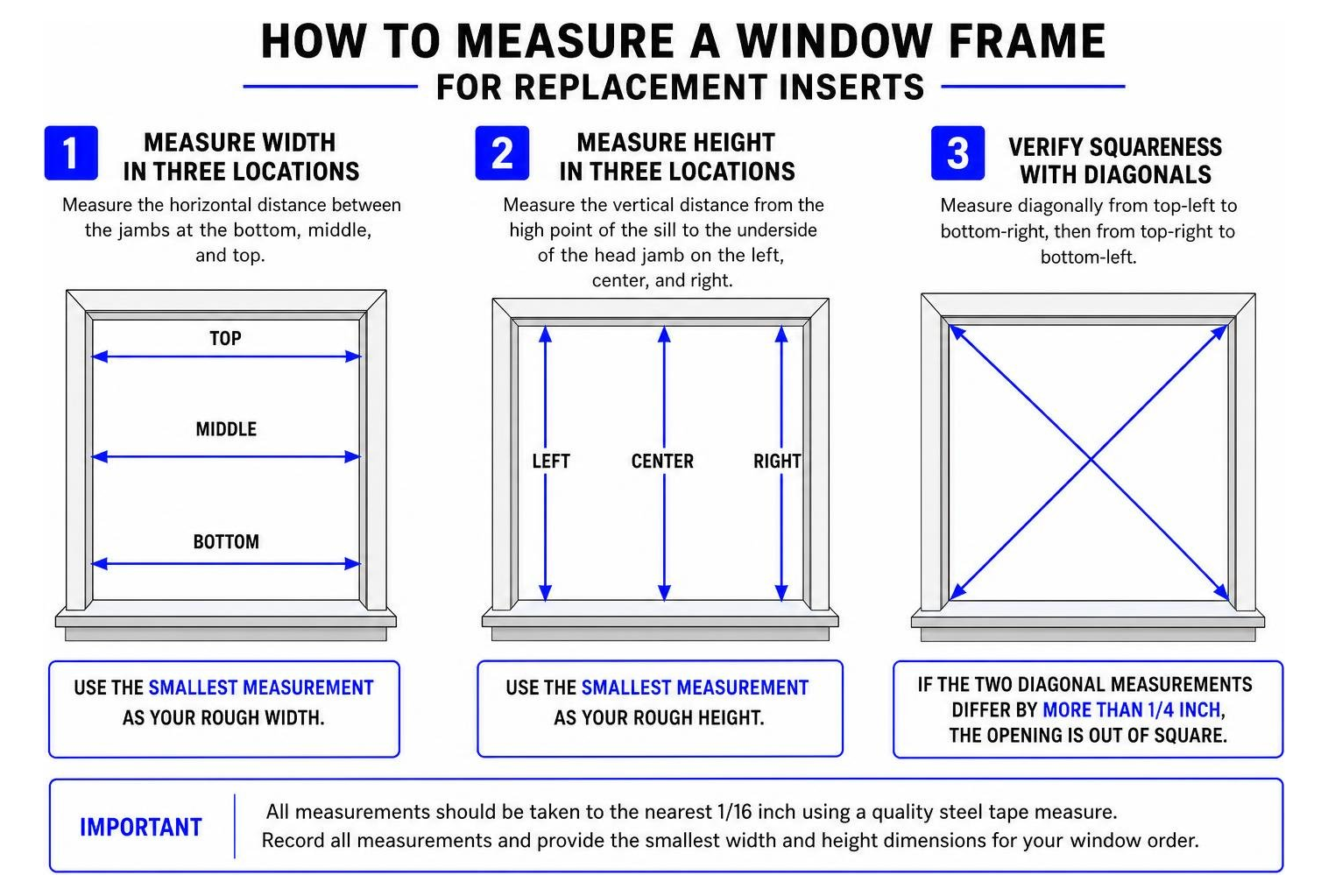
Follow this standardized three-point measuring protocol using a quality steel tape measure:
- Measure Width in Three Locations: Measure the horizontal distance between the jambs (the inside face of the side frames) at the bottom (just above the sill), at the middle, and at the top (near the head jamb). Record all three numbers. Use the smallest measurement as your rough width dimension.
- Measure Height in Three Locations: Measure the vertical distance from the high point of the sill (closest to the interior stool) to the underside of the head jamb. Take this measurement on the far left, in the center, and on the far right. Use the smallest measurement as your rough height dimension.
- Verify Squareness with Diagonal Measurements: Measure diagonally from the top-left corner to the bottom-right corner, then from the top-right corner to the bottom-left corner. If the two diagonal dimensions differ by more than 1/4 inch, the existing opening is out of square.
- Apply Manufacturing Deductions: When ordering pocket inserts, deduct 1/4 inch to 3/8 inch from the smallest recorded width and height to provide an installation clearance gap around the perimeter for squaring, shimming, and expanding foam insulation.
Troubleshooting, Cleaning, and Long-Term Maintenance
One of the main advantages of vinyl windows is their minimal maintenance requirements. Unlike wood frames, vinyl never requires scraping, sanding, priming, or repainting. However, routine cleaning and seasonal inspections preserve hardware operation and weatherstripping integrity.
- Cleaning Vinyl Frames: Wash frames twice a year using a soft sponge and a mild solution of liquid dish soap and warm water. Avoid abrasive cleaning powders, scouring pads, acetone, petroleum solvents, or bleach, which can etch the virgin PVC surface, strip protective UV inhibitors, and void manufacturer warranties.
- Cleaning Glass Surfaces: Use a 50/50 mix of distilled water and white vinegar or a professional streak-free glass cleaner applied with clean microfiber cloths. Never clean glass in direct, intense sunlight, as the cleaner can dry prematurely and leave mineral streaks.
- Clearing Weep Channels: Periodically inspect the exterior sill weep holes. Clear out accumulated pollen, leaves, insect nests, and debris using a small nylon bottle brush or compressed air to ensure rainwater drains away freely.
- Lubricating Moving Hardware: Spray pivot points, track rails, roller wheels, and lock mechanisms annually with a dry silicone or PTFE spray lubricant. Avoid thick petroleum-based grease or WD-40, which attract dust, sand, and grit into the gears.
- Troubleshooting Condensation & Fogging: Surface condensation that forms on the interior room-side glass during freezing weather indicates high indoor relative humidity, which can be mitigated with bathroom exhaust fans and dehumidifiers. However, if permanent fog, moisture droplets, or calcium haze develop between the two sealed panes of glass, the insulated glass unit (IGU) seal has failed. In this case, the glass sash or IGU must be replaced under warranty.
Frequently Asked Questions About Vinyl Windows
How long do vinyl replacement windows typically last?
Quality vinyl replacement windows constructed from virgin PVC typically last between 20 and 30 years. Their real-world lifespan depends on climate extremes, sun exposure, and the quality of the initial installation. High-tier models paired with warm-edge non-metallic spacers and robust balance hardware frequently exceed three decades of service while maintaining structural rigidity, easy sash operation, and draft-free sealing.
What is the difference between U-factor and SHGC when choosing glass?
U-factor measures how well a window prevents heat from escaping your home, making lower numbers ideal for cold weather conditions. Solar Heat Gain Coefficient (SHGC) measures how effectively the window blocks heat from solar radiation. In heating-dominated climates, a moderate SHGC helps capture free solar warmth during winter, whereas in warm or mixed climates, a lower SHGC keeps living areas comfortable and lowers summer cooling costs.
Conclusion
Choosing the right vinyl window replacement comes down to assessing your existing frames, matching the glass package to your regional climate, and ensuring precision measurements. Whether you opt for the non-invasive efficiency of pocket insert windows or the comprehensive structural overhaul of full-frame replacements, upgrading to modern vinyl frames significantly improves indoor comfort, eliminates tedious exterior painting, and stabilizes seasonal utility costs.
At Martin & Sons, we believe every home renovation should be completely stress-free. We proudly stand behind our unique customer-first model: we require no upfront deposits, meaning you only pay upon 100% project completion and total satisfaction. With over 35 years of serving homeowners, we provide industry-leading materials backed by lifetime labor warranties and upfront pricing.
Ready to eliminate drafts and transform your home’s exterior? Explore our complete vinyl window guide to learn more, or contact the Martin & Sons team today to schedule your complimentary, pressure-free window consultation.