
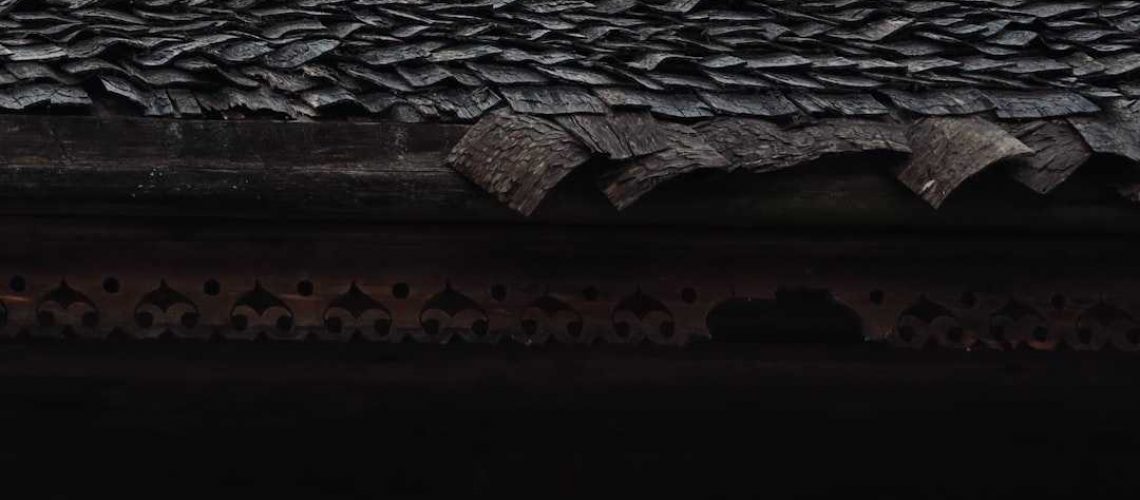
What Is Wind Damage to Roof Shingles — and Should You Be Worried?
Wind damage to roof shingles is any physical harm caused by wind forces — including missing tabs, lifted edges, creases, torn sections, or broken adhesive seals — and it can begin with gusts as low as 45 mph.
Here’s a quick breakdown of what to look for:
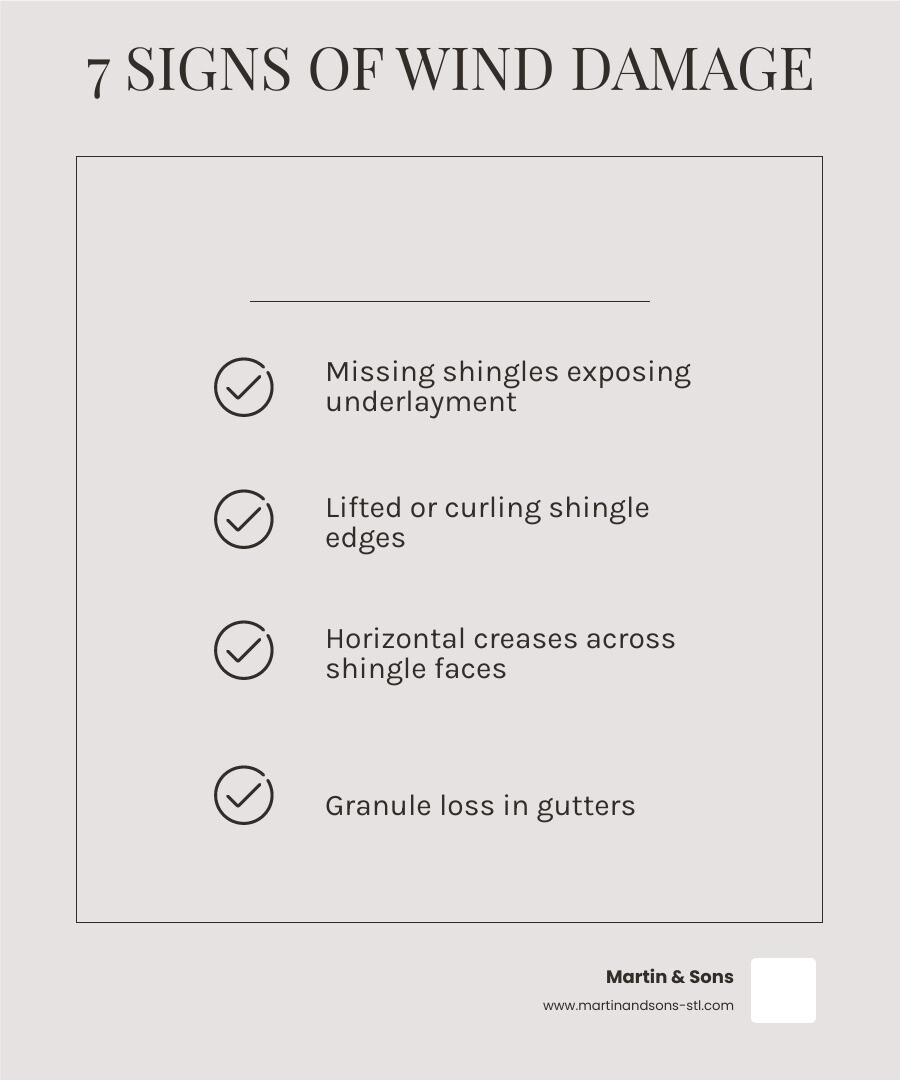
| Sign | What It Looks Like | Risk Level |
|---|---|---|
| Missing shingles | Bare patches of underlayment exposed | High |
| Lifted or curling edges | Shingle corners bent upward | High |
| Horizontal creases | Fold lines across the shingle face | Medium-High |
| Granule loss | Gritty buildup in gutters | Medium |
| Damaged flashing | Bent or pulled-away metal at vents/chimney | High |
| Unsealed tabs | Shingles that slide or lift by hand | Medium |
| Interior water stains | Ceiling spots or attic moisture | High |
The tricky part? Most wind damage doesn’t announce itself. There’s no dramatic collapse. Instead, a single lifted shingle quietly breaks its seal — and weeks later, you’re dealing with a leak, warped decking, or a denied insurance claim.
In St. Louis, severe thunderstorms regularly produce gusts above 58 mph, and strong spring systems can push well past that. April 2026 has already seen its share of high-wind events across the metro area. If your roof took a hit, acting quickly matters — both for your home’s protection and your insurance claim.
I’m John Martin, and with over 35 years of hands-on roofing experience, I’ve inspected hundreds of St. Louis homes after wind events and seen how wind damage to roof shingles ranges from a few loose tabs to widespread structural failure. This guide will help you know exactly what you’re dealing with — and what to do next.
How Wind Damage to Roof Shingles Occurs
To understand why your roof looks like a deck of cards after a storm, we need to look at the physics of air. Wind doesn’t just “blow” against a house; it interacts with the roof’s shape in complex ways, creating a tug-of-war between positive and negative pressure.
Uplift and Suction Pressure
When wind hits the side of your home in Chesterfield or Creve Coeur, it is forced upward. As it rushes over the peak, it creates a vacuum effect known as negative pressure or suction. This is based on Bernoulli’s principle—the same science that allows airplanes to fly. The air moving over the roof travels faster than the air inside your attic, creating an upward pull.
This suction is most intense at the edges, corners, and ridge lines of your roof. These areas experience the highest uplift forces, which can exceed 150 pounds per square foot during severe gusts. If a shingle edge is even slightly loose, the wind gets underneath it, creating a “zipper effect” where one shingle lifts, then the next, leading to a chain reaction of failure. You can learn more about these mechanical failures in our guide on Signs of Roof Damage You Should Never Ignore.
Vulnerability at the Edges
The “rake” (the sloping edge of a gable roof) and the “eaves” (the horizontal lower edges) are the front lines of defense. If the starter strips weren’t installed correctly or if the shingles have aged and lost their flexibility, the wind will peel them back like the lid of a tin can. Ridge caps are also high-risk targets because they sit at the very point where wind turbulence is most chaotic. For a deeper dive into the mechanics, check out this resource on Wind Damage to Roof Shingles: Causes, Signs, Repair and Prevention.

Identifying the Signs of Wind Damage to Roof Shingles
Identifying wind damage to roof shingles is part science and part detective work. While a giant hole is obvious, most damage is subtle.
Common Visual Indicators of Wind Damage to Roof Shingles
If you’re walking your property in Florissant or St. Peters after a storm, keep an eye out for these red flags:
- Horizontal Creases: This is a classic sign. When wind lifts a shingle but doesn’t tear it off, the shingle flaps up and down. This creates a permanent crease or “fold line” across the middle of the shingle where the fiberglass mat has been broken. Even if the shingle lays back down, it is functionally dead.
- Missing Tabs: On older 3-tab roofs, you’ll often see “missing teeth” where individual sections have snapped off. Laminated or architectural shingles might show torn corners.
- Exposed Underlayment: If you see black felt paper or synthetic wrap, you have a roofing emergency. Your primary water barrier is gone.
- Granule Loss: While some granule loss is normal as roofs age, a sudden “scouring” from wind-driven debris or the physical flexing of shingles will dump piles of grit into your gutters.
For more local insights, see our post on Florissant Roof Repair: 5 Signs Your Roof Needs Attention and this expert breakdown on What is considered wind damage to shingles?.
Subtle and Hidden Wind Damage to Roof Shingles
Not all damage is visible from the driveway. Sometimes, the most dangerous issues are the ones you can’t see without a ladder.
- Sealant Strip Failure: Shingles are held together by a factory-applied adhesive strip. Over time—usually after 4 to 5 years—this bond can weaken. Wind can “unseal” these shingles without creasing them. If you can easily slide your hand under a shingle, the wind has won.
- Thermal Cycling vs. Wind Lift: It’s important to distinguish between shingles that never sealed (often due to cold-weather installation) and those broken by wind. Forensic experts look for patterns; wind damage usually follows the direction of the storm, whereas installation errors are often scattered.
- Attic Clues: If you suspect damage, grab a flashlight and head to the attic during the day. Look for “pinpricks” of daylight or water stains on the rafters. If you see light, water will follow.
If your shingles are curling but you aren’t sure if it’s wind or age, read Top 5 Reasons Why Your Roof Shingles Are Curling. You can also browse our Category: Roof Damage for more examples. For those in Maryland Heights, we have specific resources for Maryland Heights Storm Damage and general Signs Your Home Needs Immediate Roof Storm Damage Repair.
Assessing Severity: Repair vs. Full Replacement
One of the most common questions we get at Martin & Sons is: “Can I just fix the few shingles that blew off, or do I need a whole new roof?” The answer depends on the 25% Rule and the age of your materials.
The 25% Rule
In many building codes, including those used around St. Louis, if more than 25% of a roof slope is damaged, the entire slope must be replaced. This ensures structural integrity and prevents a “patchwork” roof that will likely fail during the next storm.
| Repair Type | Scope | Estimated Cost (2026) | When to Choose |
|---|---|---|---|
| Spot Repair | 1–15 shingles | $150 – $600 | New roof, localized damage, matching shingles available. |
| Sectional Replacement | One full slope or facet | $600 – $2,500 | Damage limited to one side, older roof but deck is sound. |
| Full Replacement | Entire roof surface | $5,000 – $20,000+ | Widespread seal failure, roof >15 years old, >25% damage. |
The Age Factor and Shingle Matching
If your roof is over 15 years old, the shingles have likely become brittle. Trying to repair a small area often causes “collateral damage” because the surrounding shingles will crack when we try to lift them to reach the nails. Furthermore, shingles are like wallpaper—manufacturers change colors and styles frequently. If your shingles are discontinued, a spot repair will look like a permanent scar on your home, which can even lead to insurance companies covering a full replacement to maintain “uniformity.”
Check our Repair vs Replace: How Do I Know Which Route to Take for My Roof guide for help, or see The Homeowners Guide to Shingle Roof Repair for more details.
Navigating Insurance Claims for Wind Damage to Roof Shingles
Dealing with insurance adjusters can feel like a full-time job. Most policies cover wind damage to roof shingles, but the “devil is in the details.”
Why Insurers Deny Wind Damage to Roof Shingles Claims
Insurance companies are for-profit entities. They often try to minimize payouts by using these common arguments:
- Wear and Tear: They’ll claim the shingles were already old and brittle, and the wind just “helped them along.”
- Installation Errors: If they find shingles with “high nailing” (nails placed above the designated strip), they may deny the claim, blaming the original roofer instead of the storm. Research shows that up to 10 out of 11 examined roofs had fastening errors—don’t let this be your “get out of jail free” card for the insurer.
- Cosmetic vs. Functional: Some adjusters will argue that a creased shingle is just “cosmetic” and hasn’t actually failed. Expert Tip: A crease is a structural failure of the shingle’s mat and should always be covered.
For more on this, read Is Roof Damage Covered by Insurance and our specific advice for St. Charles Storm Damage and Chesterfield Storm Damage. We also share tips on how to Dont Let Wind Damage Roofing St Louis Blow Your Budget.
Steps to Document and Appeal a Denial
If your claim is denied or underpaid, don’t panic. You have rights.
- Photo Evidence: Take high-resolution photos of shingles in your yard and creases on the roof (if safe to do so).
- Weather Reports: We use NOAA data to prove that wind speeds in your specific ZIP code (like O’Fallon or St. Louis) exceeded damage thresholds on the date of the storm.
- Request a Reinspection: You can ask for a different adjuster. It’s always best to have a Martin & Sons representative present during this meeting to point out the subtle damage the adjuster might “miss.”
Follow our regional guides for St. Louis Storm Damage and O’Fallon Storm Damage to see how we help neighbors navigate these hurdles.
Preventing Future Damage with High-Rated Materials
If you’re replacing your roof in 2026, you have the opportunity to build back better. Modern technology has made shingles significantly more wind-resistant.
Look for the Ratings
When choosing materials, check the packaging for these two standards:
- ASTM D3161 (Class F): This means the shingles have been tested to withstand 110 mph winds.
- ASTM D7158 (Class H): This is the “gold standard,” certifying the roof can handle gusts up to 150 mph.
Proper Installation Matters
Even the best shingle will blow away if it’s installed poorly.
- 6-Nail Pattern: In high-wind areas, we use six nails per shingle instead of the standard four. This significantly increases the “pull-through” resistance.
- Starter Strips: We ensure heavy-duty starter shingles are used at all eaves and rakes to prevent the wind from getting a “toe-hold.”
- Attic Ventilation: Believe it or not, a well-ventilated attic reduces the pressure differential between the inside and outside of your home, which can actually lower the suction force on your shingles.
Don’t forget maintenance! Trim tree branches so they are at least 6 to 10 feet away from your roof. During a storm, a “whipping” branch can scrape off granules or physically lift shingles, giving the wind an easy entry point. Residents in Florissant Storm Damage and Creve Coeur Storm Damage areas should be particularly mindful of mature tree growth.
Frequently Asked Questions about Wind Damage
What wind speed typically causes shingle damage?
While many modern shingles are rated for 60–130 mph, real-world damage often starts much lower. Gusts as low as 45–47 mph can loosen shingles on older roofs or those with existing wear. By the time you hit 58 mph (the threshold for a “severe” thunderstorm), significant damage is likely on any roof with installation flaws or aged sealant.
Can I ignore a few lifted shingles if they aren’t leaking?
Absolutely not. A lifted shingle has a broken adhesive seal. It will no longer shed water correctly during a “wind-driven rain,” and it acts as a lever that helps the wind peel up the shingles around it. What is a $200 repair today could easily become a $20,000 replacement after the next big storm.
How do I prove wind damage to my insurance company?
Evidence is key. Collect physical shingles that blew into your yard, take time-stamped photos immediately after the storm, and obtain a professional inspection report. A detailed report from a trusted local contractor that correlates the physical damage (creases, unsealed tabs) with local weather data is your strongest tool in a claim dispute.
Conclusion
Wind damage to roof shingles is a “sneaky” problem. It starts with a gust, continues with a broken seal, and ends with a bucket in your living room. Whether you are in St. Louis, St. Peters, or O’Fallon, the key is to act while the evidence is fresh and the damage is manageable.
At Martin & Sons, we’ve built our reputation on being the most transparent roofing company in the Midwest. We don’t believe in high-pressure sales or “storm chasing.” That’s why we offer:
- No Upfront Deposits: You don’t pay a dime until the job is done.
- 100% Satisfaction Guarantee: We only collect payment when you are completely happy.
- Lifetime Labor Warranties: We stand by our work for as long as you own your home.
- Best Prices Upfront: No games, no “discounts” that aren’t real—just honest pricing.
If you’re worried about your roof after the recent April winds, don’t wait for a leak to confirm your fears. Schedule Your Professional Storm Damage Assessment with us today, and let’s make sure your home is ready for whatever Mother Nature throws at us next.