
What You Need to Know About Roof Repair Before It Gets Worse
Roof repair is one of the most urgent home maintenance tasks a homeowner can face — and one of the easiest to put off until the damage multiplies.
Here’s a quick overview of what most homeowners need to know:
| Question | Quick Answer |
|---|---|
| What does roof repair cost? | $300–$1,000 on average; up to $3,000 for major repairs |
| When should I repair instead of replace? | When damage is isolated and your roof is under 15 years old |
| What are the most common warning signs? | Water stains, missing shingles, granules in gutters, sagging areas |
| Does homeowners insurance cover it? | Usually yes, for storm damage — not for wear and tear |
| How long does a repair take? | Most jobs are done in 1–3 days |
| Should I DIY it? | No — DIY repairs often void warranties and fail quickly |
A small leak today can mean rotted decking, mold, and a full replacement bill tomorrow. The gap between a $400 repair and a $10,000 replacement often comes down to how quickly you act.
I’m John Martin of Martin & Sons — a family business my father started in 1953, and I’ve personally worked in roof repair and exterior renovation for over 35 years. If you want straight answers and no sales pressure, you’re in the right place.
How Climate and Weather Accelerate Roof Damage
Missouri weather is notoriously unpredictable. In the St. Louis metropolitan area — stretching from the historic streets of Florissant and Creve Coeur to the rapidly growing neighborhoods of O’Fallon and St. Peters — our roofs must withstand a brutal cycle of extreme weather. We experience freezing winters with heavy snow and ice, volatile spring storm seasons, and hot, humid summers.
These rapid changes subject residential roofing systems to constant environmental stress. Over time, physical processes like thermal expansion and UV degradation weaken the structural integrity of your roof, paving the way for leaks and water damage.

When high winds, heavy rain, or hail hit your home, any existing vulnerability is instantly exploited. If you suspect your home has been affected by recent storms, you can learn how to identify and repair wind damage or understand hail damage and insurance claims to protect your property before the next major weather event.
The Impact of Extreme Heat and UV Radiation
During our midwestern summers, temperatures regularly climb into the 90s, sending roof surface temperatures soaring well past 140°F. This intense heat paired with bright sunlight triggers UV degradation, which slowly breaks down the protective asphalt chemistry in standard shingles.
This extreme heat cycle leads to several common problems:
- Thermal Shock: The rapid transition from blazing afternoon heat to a sudden, cool evening downpour causes roofing materials to expand and contract violently. This thermal shock weakens sealants, loosens fasteners, and cracks protective coatings.
- Shingle Curling and Cupping: As shingles dry out from continuous UV exposure, their edges begin to curl upward or cup downward, making them highly vulnerable to blow-offs during high winds.
- Arid Winds and Material Wear: Dry, hot winds carry airborne dust and debris that act like sandpaper, slowly eroding the protective mineral granules off your shingles.
- Tile Cracking: While less common in our region than asphalt, specialized concrete or clay tile roofs can crack under the stress of shifting temperatures if not professionally maintained.
Wind, Hail, and Storm Damage Challenges
Severe thunderstorms and spring monsoons in the St. Louis basin present immediate physical threats to your roof. High winds can easily lift, tear, or completely blow away aged shingles, exposing the sensitive underlayment beneath.
Hail is another major culprit. Even small hailstones can fracture the fiberglass mat inside an asphalt shingle, causing immediate granule loss and creating soft spots that eventually turn into active leaks.
When storm damage occurs, fast action is vital. We prioritize emergency tarping to seal active leaks and prevent water from ruining your ceilings, insulation, and electrical systems. Because storm damage isn’t always obvious from the ground, it is smart to identify damage early with a professional roof inspection after any major weather event.
Key Factors That Influence the Cost of Roof Repair
When faced with a roofing issue, the first question on every homeowner’s mind is: How much is this going to cost?
The cost of roof repair depends on several key variables, including the size and slope of your roof, the specific materials used, and local labor rates. While minor repairs can keep your budget in check, letting problems linger can force you into an early, expensive roof replacement.
| Roofing Material | Average Repair Cost | Average Replacement Cost | Lifespan | Cost per Sq. Ft. |
|---|---|---|---|---|
| Asphalt Shingles | $300 – $1,000 | $5,000 – $10,000 | 12 – 30 Years | $1 – $4 |
| Clay / Concrete Tile | $600 – $1,800 | $10,000 – $20,000 | 50 – 100 Years | $10 – $20 |
| Metal Roofing | $500 – $1,500 | $8,000 – $16,000 | 30 – 50 Years | $8 – $16 |
| Wood Shingles / Shakes | $450 – $1,200 | $7,000 – $14,000 | 20 – 30 Years | $4 – $14 |
To ensure you are getting certified, high-quality workmanship that keeps these costs in check, you can find certified local contractors through GAF who are trained in the latest industry standards.
How to Identify When You Need Shingle Roof Repair
Identifying damage early is the best way to keep your repair costs on the lower end of the spectrum. Homeowners should regularly perform visual checks from the safety of the ground.
Look out for these common warning signs:
- Water Stains: Dark, spreading spots on your interior ceilings or attic rafters are clear indicators of an active leak.
- Missing or Damaged Shingles: Shingles that are cracked, buckled, or entirely missing leave your roof’s decking completely exposed to rain.
- Granule Loss: Finding a heavy buildup of dark, sand-like granules in your gutters or at the base of your downspouts means your shingles are reaching the end of their functional life.
For a step-by-step breakdown of how to evaluate and address these issues, you can read our comprehensive shingle repair guide.
Repair vs. Replacement: The 25% Rule
How do you know when it is time to stop patching your roof and invest in a full replacement? Industry professionals often rely on the 25% rule. This rule states that if more than 25% of your total roof surface is damaged, a complete replacement is generally more cost-effective than attempting multiple, scattered repairs.
Other factors to consider include:
- Roof Age: If your asphalt shingle roof is approaching 15 to 20 years of age, its materials are likely brittle. Making repairs to one area may simply cause adjacent, fragile shingles to break.
- Structural Integrity: If water has penetrated the underlayment and caused widespread wood rot in the roof decking, a simple repair won’t cut it. The compromised decking must be replaced.
- Repeated Leaks: If you have paid for multiple repairs on the same leak over the past few years, it is a sign of systemic failure.
To make an informed decision, it is highly recommended to work with a verified professional. You can check local roofing contractor ratings on the BBB to find a reputable team in the Saint Peters and Greater St. Louis area.
Material Vulnerabilities and the Professional Repair Process
Different roofing materials fail in different ways, requiring highly specialized repair techniques:
- Asphalt Shingles: The most common material in St. Louis. Repairs usually involve carefully breaking the sealant bond on damaged shingles, removing the roofing nails, slipping in a matching replacement shingle, and securing it with new nails and hand-applied asphalt plastic cement.
- Clay and Concrete Tile: Though highly durable, these tiles can crack if walked on incorrectly or struck by heavy debris. Repairs involve carefully sliding out the broken tile, replacing the underlying felt or membrane (which is often the actual source of the leak), and installing a new tile secured with specialty tile adhesive or wire ties.
- Metal Roofing: Known for long lifespans, metal roofs are prone to leaks around fasteners as rubber washers degrade over time. Repairs involve tightening or replacing screws, applying specialized elastomeric sealants, or patching larger areas with matching metal sheets.
- Flashing Failures: Flashing is the thin metal installed around roof penetrations, valleys, and walls. Flashing failures are the single most common cause of roof leaks. Over time, caulk dries out, and metal rusts or pulls away from chimneys and dormers. To prevent major water damage, read our specialized guide to chimney and flashing repair.
What to Expect During a Professional Roof Repair Process
A professional roof repair is a structured process designed to identify and fix the root cause of a leak, rather than just patching the symptoms:
- Inspection & Root Cause Diagnosis: A technician will climb onto your roof to trace the leak. Because water follows gravity, the entry point on your roof is rarely directly above the stain on your ceiling.
- Estimation & Transparent Pricing: You should receive a detailed, written estimate outlining the scope of work, materials required, and total cost before any work begins.
- Preparation & Property Protection: Before tools are unpacked, the crew should protect your landscaping, deck, and driveway from falling debris.
- Execution & Material Matching: The damaged materials are removed, the underlying decking is inspected for wood rot, and new underlayment and shingles (carefully matched to your existing roof color) are installed.
- Final Cleanup & Inspection: The crew performs a thorough cleanup, including a magnetic sweep to collect loose nails, followed by a final quality inspection.
If you are dealing with an active water intrusion right now, don’t panic. Take a look at our emergency guide for a fast roof leak fix and consult our emergency roofing repair guide for 2026 for immediate steps to protect your home.
Navigating Homeowners Insurance and Warranties
If your roof was damaged by a sudden, accidental event — like a severe windstorm, a fallen tree limb, or a hailstorm — your homeowners insurance policy will typically cover the cost of repairs or replacement. However, insurance companies do not cover damage caused by neglect, lack of maintenance, or normal wear and tear.
When filing a claim, documentation is everything. Take clear photos of the damage immediately after the storm and keep copies of all repair estimates.
It is also important to understand your warranties. A quality roofing project is backed by two distinct warranties:
- Manufacturer Warranty: This covers defects in the roofing materials themselves (such as shingles cracking prematurely).
- Workmanship Warranty: This is provided by your contractor and covers installation errors. While the industry standard is often just one year, premium contractors offer significantly longer coverage to give you peace of mind.
Frequently Asked Questions about Roof Maintenance
How long do professional roof repairs typically last?
A high-quality, professional repair completed by a certified contractor using premium materials should last for the remaining lifespan of the surrounding roof. For example, if we patch a localized wind-damaged area on a 10-year-old asphalt roof, that repaired section should easily last another 10 to 15 years. Always ask your contractor for a written workmanship warranty on their repairs to ensure they stand behind their work.
Can I repair a roof leak myself?
While a DIY approach might seem like a great way to save a few dollars, it is highly discouraged for several reasons.
First, walking on a sloped, high-altitude surface is incredibly dangerous, especially if the roof is wet or damaged.
Second, DIY repairs often void manufacturer warranties. Major shingle manufacturers allow certified contractors to make repairs, but uncertified work can nullify your coverage.
Finally, most DIY fixes rely on temporary caulking or hardware-store patches that fail quickly, often trapping moisture underneath and accelerating wood rot.
What are the risks of delaying a roof repair?
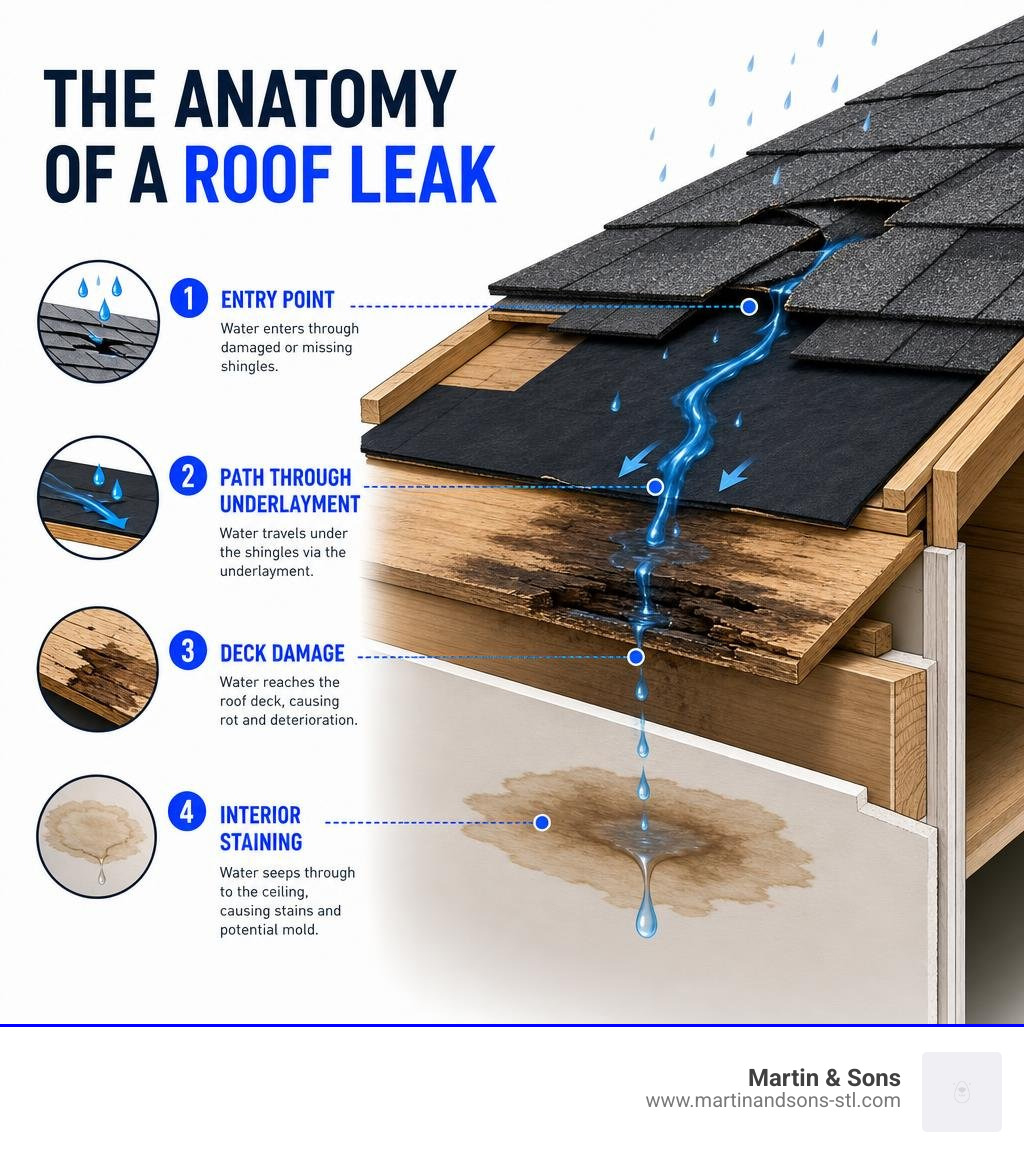
Delaying a repair is a recipe for financial disaster. Even a minor leak can rot your roof’s plywood decking, ruin fiberglass insulation, and create a breeding ground for toxic mold in your attic within just 24 to 48 hours. Over time, water will migrate down your interior walls, damaging drywall, peeling paint, and even compromising your home’s structural framing.
The smartest way to avoid these compounding costs is to invest in regular maintenance. Keeping your gutters clean and scheduling annual inspections ensures small issues are caught before they turn into emergencies. To learn more about protecting your investment, read about why prevention beats cure in roof maintenance.
Conclusion
Your roof is the most important protective barrier your home has. When it shows signs of wear, wind damage, or active leaks, acting quickly is the single best way to protect your family and your bank account.
For reliable, high-quality roofing services in St. Louis, St. Charles, Florissant, and the surrounding areas, trust the team at Martin & Sons. We do things differently to make the process completely stress-free:
- No Upfront Deposits: You don’t pay a single penny until the job is 100% complete and you are completely satisfied.
- Lifetime Labor Warranties: We stand behind our craftsmanship for the long haul.
- Best Prices Upfront: No hidden fees, no high-pressure sales tactics — just honest, transparent pricing.
If you are ready to experience the peace of mind that comes with a professionally repaired roof, schedule your professional roof repair service today. You can also reach our team directly at our Florissant office, located at 8460 N. Lindbergh Blvd. Suite 11, Florissant, MO 63031. We look forward to working with you!