Why St. Louis Homeowners Can’t Afford to Ignore Chimney and Flashing Problems
Chimney roof repair in St. Louis is one of the most common — and most urgent — home repairs local homeowners face. Here’s a quick summary of what you need to know:
Quick Answer: Chimney Roof Repair in St. Louis
| Issue | Common Cause | Typical Cost |
|---|---|---|
| Flashing repair | Sealant failure, wind damage | $150–$500 |
| Tuckpointing / repointing mortar | Freeze-thaw deterioration | $400–$2,500 |
| Chimney cap repair | Storm damage, rust | $75–$1,000 |
| Crown repair / replacement | Cracking, water intrusion | $100–$3,000 |
| Flue liner repair | Age, heat damage | $200–$7,000 |
St. Louis gets more rainfall every year than the national average. Add freezing rain, sleet, and hard winters to that, and your chimney takes a serious beating. The junction where your chimney meets your roof is especially vulnerable. When flashing fails or mortar cracks, water finds its way in — and once moisture gets inside your home’s structure, the damage escalates fast.
Freeze-thaw cycles are a big part of the problem. Water seeps into tiny cracks, freezes, expands, and makes those cracks bigger. Over one or two winters, a hairline crack in a chimney crown can open up into a major leak. Most homeowners don’t notice until there are water stains on the ceiling or visible damage inside.
The good news: caught early, most chimney and flashing repairs are straightforward and affordable.
I’m John Martin of Martin & Sons LLC, a family-owned contractor serving the St. Louis area since 1953 with over 35 years of personal hands-on experience in chimney roof repair in St. Louis and surrounding communities. In this guide, I’ll walk you through everything you need to know — from spotting early warning signs to understanding your repair options and costs.
Chimney roof repair st louis definitions:
Common Signs You Need Chimney Roof Repair in St. Louis
Living in the Gateway City means dealing with humidity in the summer and biting frost in the winter. This environmental “tug-of-war” is brutal on masonry. If you aren’t looking for the Signs of Roof Damage You Should Never Ignore, a small drip can quickly turn into a structural nightmare.
One of the first red flags we see during a St. Louis Roofing Repair call is water staining on the attic ceiling or the walls surrounding the fireplace. If you see brown rings or bubbling drywall near your chimney stack, water is likely bypassing the flashing.
Other signs include:
- Spalling Bricks: This is when the face of the brick literally pops off. It happens because bricks are porous; they soak up St. Louis rain, and when that water freezes, it expands and shatters the brick surface.
- Crumbling Mortar: If you can poke the mortar between your bricks with a finger and it falls out like sand, your chimney is losing its structural integrity.
- Efflorescence: Have you noticed a white, powdery substance on your chimney? That’s salt being pushed out of the brick by moisture. It’s a “cry for help” from your masonry. This phenomenon, known as efflorescence, is a clear indicator that moisture is penetrating your chimney’s structure.
- Cracked Chimney Crowns: The crown is the concrete slab at the very top. If it has hairline fractures, water will settle in those cracks, freeze, and eventually destroy the top of your chimney.
- Rusted Flashing: Metal flashing should be smooth and intact. If you see orange rust streaks or gaps where the metal meets the brick, your waterproof seal is gone.
If you notice any of these, it’s time to consult the Roof Damage Category of your home maintenance checklist and call in the pros.
Identifying Storm Damage to Your Chimney Roof Repair in St. Louis
St. Louis is famous for its unpredictable weather. From Missouri “supercells” to sudden hailstorms, your roof is on the front lines. St. Louis Storm Damage often manifests as lifting shingles or missing granules, which often accumulate in your gutters.
High winds are particularly dangerous for chimneys. Wind can get underneath the flashing, prying it away from the roofline and breaking the watertight seal. According to Martin & Sons LLC’s Guide to Common Roofing Problems, even shingles rated for 90mph can suffer damage at 50mph if the wind hits the ridge or chimney corners just right.
If a storm has recently rolled through O’Fallon or St. Charles, check for:
- Dents in the chimney cap or flashing from hail.
- Shingles that look “curled” or “lifted” near the chimney base.
- Debris or fallen branches that may have cracked the chimney crown.
Homeowners often wonder, Is Roof Damage Covered by Insurance? In many cases, if the damage is caused by a sudden storm event (like wind or hail), your homeowner’s policy may cover the repair. We always recommend getting a professional assessment before calling your adjuster to ensure you have a clear picture of the damage.
Why Chimney Flashing is Critical for Leak Prevention
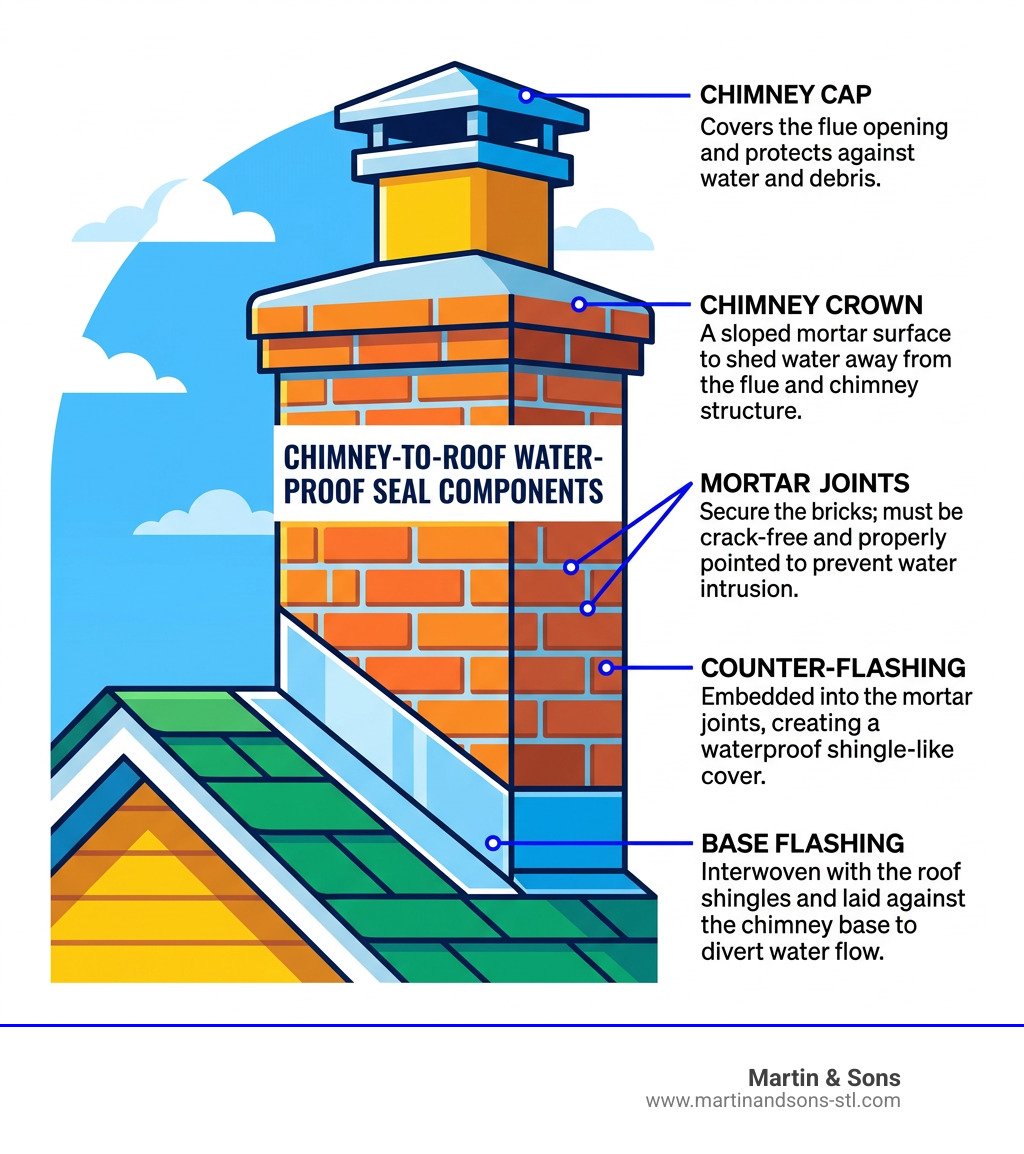
Think of chimney flashing as the “bridge” between two very different materials: your shingled roof and your masonry chimney. These two structures expand and contract at different rates as the temperature changes. Without a flexible, waterproof barrier, that gap would be a highway for rainwater.
Professional flashing isn’t just one piece of metal; it’s a system. It typically involves:
- Base (Step) Flashing: L-shaped pieces of metal that woven into the shingle layers.
- Counter-Flashing: Metal that is actually embedded into the mortar joints of the chimney and folds down over the base flashing.
- Sealant: High-grade waterproof caulking that closes the tiny gaps.
In the St. Louis climate, we often see sealant deterioration after just a few years of UV exposure and temperature swings. If your flashing was installed using “tar” instead of proper metal counter-flashing, it will likely fail prematurely. We prefer using galvanized steel or copper for long-lasting protection.
In some cases, especially where the chimney sits on a slope, we may recommend a Kick-Out Flashing Installation. This helps direct water away from the siding and into the gutter, preventing wood rot at the roof-wall intersection. If you’re dealing with a wide chimney, you might also need to look into the Best Practices for Installing a Roof Cricket: Essential Guide to prevent water from pooling behind the stack.
The Role of Roof Crickets in Chimney Roof Repair in St. Louis
A “cricket” (or saddle) is a small peaked structure built behind the chimney on the upslope side of the roof. Its job is simple: divert water around the chimney so it doesn’t pool against the masonry.
If your chimney is wider than 30 inches, most local building codes in areas like St. Peters and Florissant require a cricket. Without one, water builds up “head pressure” against the back of the chimney. This can lead to Major Problems Caused by a Leaky Roof in St. Peters, MO, including rotted roof decking and mold in the attic.
When we perform a chimney roof repair in St. Louis, we evaluate the “saddle flashing” to ensure it’s properly sloped. If you’re constantly dealing with leaks at the back of your chimney, a missing or poorly designed cricket is often the culprit. You can find more details on these structural fixes in our Roof Repair Category.
Professional Solutions for Chimney Roof Repair in St. Louis
When it comes to St. Louis Roofing, a “one-size-fits-all” patch rarely works for chimneys. We utilize a variety of specialized masonry and roofing techniques to ensure your home stays dry.
| Service | Benefit | When You Need It |
|---|---|---|
| Tuckpointing | Restores structural stability | Mortar is crumbling or missing |
| Crown Repair | Prevents top-down leaks | Visible cracks in the concrete top |
| Waterproofing | Stops masonry absorption | Bricks are spalling or damp |
| Flashing Repair | Seals the roof-chimney gap | Water is leaking into the attic |
| Chimney Caps | Keeps out rain and animals | Flue is open to the elements |
For masonry protection, we often recommend products like ChimneySaver. This professional-grade water repellent is 99.9% effective and allows the brick to “breathe” while keeping liquid water out. This is essential for preventing the freeze-thaw damage so common in Maryland Heights and Creve Coeur.
If you have a prefabricated (metal) chimney, we focus on stainless steel chase covers. Unlike the cheap factory covers that rust and allow water to drip onto the firebox, stainless steel provides a lifetime of protection. If you’re facing a sudden leak during a midnight downpour, be sure to check our Emergency Roofing Repair Guide for immediate steps to take.
The Importance of Tuckpointing for Masonry Integrity
Tuckpointing is the process of removing old, deteriorated mortar from the joints and replacing it with fresh, color-matched mortar. In chimney roof repair in St. Louis, this is the most critical maintenance task for brick chimneys.
When mortar joints fail, they act like a sponge, soaking up moisture that eventually travels into your home’s framing. This leads to wood rot and structural shifting. Deciding between Repair vs. Replace: How Do I Know Which Route to Take for My Roof? often comes down to the state of your masonry. If the bricks are still sound, tuckpointing can save you from a full chimney rebuild.
If you are searching for a Roofing Contractor Near Me in St. Louis, MO, ensure they understand the specific mortar types required for historic St. Louis homes. Using the wrong “hard” mortar on “soft” old bricks can actually cause the bricks to crack.
Frequently Asked Questions about Chimney and Roof Maintenance
How much does chimney flashing repair cost in St. Louis?
Most minor chimney flashing repairs in the St. Louis metro area range from $150 to $500. This usually covers replacing the sealant and fixing loose “steps.” However, if the flashing is rusted through or missing entirely, a full replacement using high-quality galvanized steel or copper can cost more.
Ignoring these small costs can lead to much bigger headaches. For instance, if water leaks from the flashing and rots the roof deck, you might start seeing the Top 5 Reasons Why Your Roof Shingles Are Curling, which could signal the need for a much larger roof repair.
Should I attempt DIY chimney flashing or crown repairs?
We generally advise against DIY chimney work for three reasons: safety, tools, and warranties. Climbing onto a steep roof in Chesterfield or Florissant is dangerous without professional fall-protection gear. Furthermore, sealing flashing requires specialized metal-bending tools and high-grade sealants not usually found at big-box hardware stores.
There are many reasons Why Hire Roof Contractors?, but the biggest is the warranty. At Martin & Sons, we provide lifetime labor warranties. If you do it yourself and it leaks next month, you’re back at square one. If we do it, we stand behind the work for as long as you own the home. You can learn more about our local service standards on our St. Louis page.
What certifications should I look for in a repair contractor?
When hiring for chimney roof repair in St. Louis, look for technicians with CSIA (Chimney Safety Institute of America) certification. This ensures they understand the fire safety aspects of your chimney, not just the roofing side.
You should also verify that the contractor is fully licensed and insured in the state of Missouri. Check local resources like the St. Louis Category of the Better Business Bureau or look for companies with a long history in the community. A company that has been around for decades is more likely to be there if you have a warranty claim five years from now.
Conclusion
Your chimney is more than just a decorative feature; it’s a complex ventilation system that requires a perfect seal to protect your home. From the harsh freeze-thaw cycles of a Missouri winter to the torrential rains of spring, your chimney roof repair in St. Louis needs to be handled by experts who understand the local climate.
At Martin & Sons, we believe in making home improvement stress-free. That’s why we offer a unique promise: no upfront deposits. You only pay when the job is 100% complete and you are totally satisfied with the results. We back our work with lifetime labor warranties and provide our best prices upfront, so there’s no haggling or hidden fees.
Whether you’re in Florissant, St. Peters, or the heart of St. Louis, don’t let a small leak turn into a major disaster. If you suspect your chimney or flashing is failing, contact us today for a professional evaluation. We’ll help you keep your home “Bone Dry” and protected for years to come.
Ready to get started? Visit our St. Louis Roofing Repair page to schedule your free estimate and join the thousands of satisfied St. Louis homeowners who trust Martin & Sons for their roofing and chimney needs.