Choosing the Best St. Louis Windows for Climate and Historic Architecture

The best St. Louis windows combine energy-efficient double-pane Low-E glass with durable frames suited to your home’s style—typically vinyl, fiberglass, or architectural wood. These options handle our dramatic seasonal swings, from winter lows around 20°F to muggy summer heat exceeding 90°F, without overworking your HVAC unit.
Beyond our climate, local architecture plays a massive role in choosing replacement windows. From historic red-brick homes in the city to suburban developments across St. Peters, Florissant, Chesterfield, and Creve Coeur, every property requires a tailored approach. Selecting the right replacement involves balancing energy efficiency with architectural integrity, making sure any new additions comply with local building permits and historic preservation standards.
How Local Weather and Architecture Impact St. Louis Windows
St. Louis enjoys an average of 202 sunny days per year. While those bright afternoons brighten our neighborhoods, uncontrolled sunlight brings intense solar heat. Modern glass engineered with Low-E (low-emissivity) coatings reflects unwanted thermal energy away in the summer while trapping indoor heat during freezing winter snaps.
Architectural considerations are equally vital. According to the U.S. Census Bureau, approximately 68% of homes in the St. Louis metro area were built before 1980. Many of these properties still feature outdated single-pane glass set into historic brick veneer frames. If your home sits in a recognized historic district, local preservation guidelines often dictate exterior grid patterns, visible frame widths, and exterior materials.
| Performance Feature | Single-Pane (Aging Standard) | Double-Pane with Low-E Glass | Seasonal Benefit for St. Louis |
|---|---|---|---|
| Winter Insulation (20°F) | Poor; high heat transfer, drafty edges | High; argon gas barriers trap indoor warmth | Prevents cold spots and lowers furnace demand |
| Summer Heat Rejection (90°F) | Minimal; lets radiant heat penetrate freely | Excellent; Low-E reflects infrared heat | Lowers air conditioning strain on humid days |
| Sound Dampening | Low; outside street noise penetrates easily | Moderate to High; dual glass buffers sound | Creates a noticeably quieter home interior |
| Moisture Resistance | Prone to heavy interior condensation | Insulated spacer prevents edge sweating | Protects sills and walls from rot and peeling |
Comparing Frame Materials and Styles for St. Louis Windows
Selecting the right frame material ensures your windows hold up against seasonal expansion, summer humidity, and freezing winter temperatures.
- Vinyl Frames: A popular and budget-friendly option. Modern vinyl resists moisture, never requires painting, and offers internal chambers that boost thermal insulation. Homeowners seeking durable performance can explore our comprehensive guide to vinyl window options.
- Fiberglass Frames: Incredibly strong and stable. Fiberglass expands and contracts at virtually the same rate as glass, ensuring airtight perimeter seals even during extreme weather shifts.
- Traditional Wood Frames: Outstanding natural insulation and unmatched historic aesthetics. Wood requires ongoing maintenance to prevent rot, making it ideal for restoration work where historic preservation codes apply.
When it comes to operating styles, double-hung windows remain the classic choice for easy ventilation and cleaning, while casement windows crank tightly shut against weatherstripping for superior draft resistance. Once your new windows are secured, pairing them with stylish local interior treatments helps optimize natural lighting and daily privacy.
Identifying When Your Home Needs a Window Upgrade
Windows rarely fail overnight; instead, they slowly degrade over years of exposure to Midwest weather. Watching for clear warning signs helps you address problems before water damage spreads to your interior framing.

Keep an eye out for these common issues:
- Persistent Drafts: Feeling air currents while standing near a closed sash indicates failing weatherstripping or warped frames.
- Fog Between Panes: Condensation trapped between double-pane glass means the perimeter seal has failed, letting insulating gas escape.
- Sticky Operation: Sashes that are difficult to open, close, or lock usually suffer from frame warping or shifting home foundations.
- Decay and Moisture Damage: Peeling exterior paint, soft wood along sills, or mildew indicates long-term moisture intrusion.
Recognizing these signs that indicate your windows need attention ensures you can upgrade before drafty units lead to higher energy expenses.
Complete Guide to Replacement Costs, Installation, and Contractor Selection
Investing in new windows provides both immediate living comfort and lasting financial returns. Understanding the financial breakdown, energy savings, and installation details ensures your project goes smoothly from start to finish.
Average Replacement Costs, ROI, and Energy Efficiency Savings
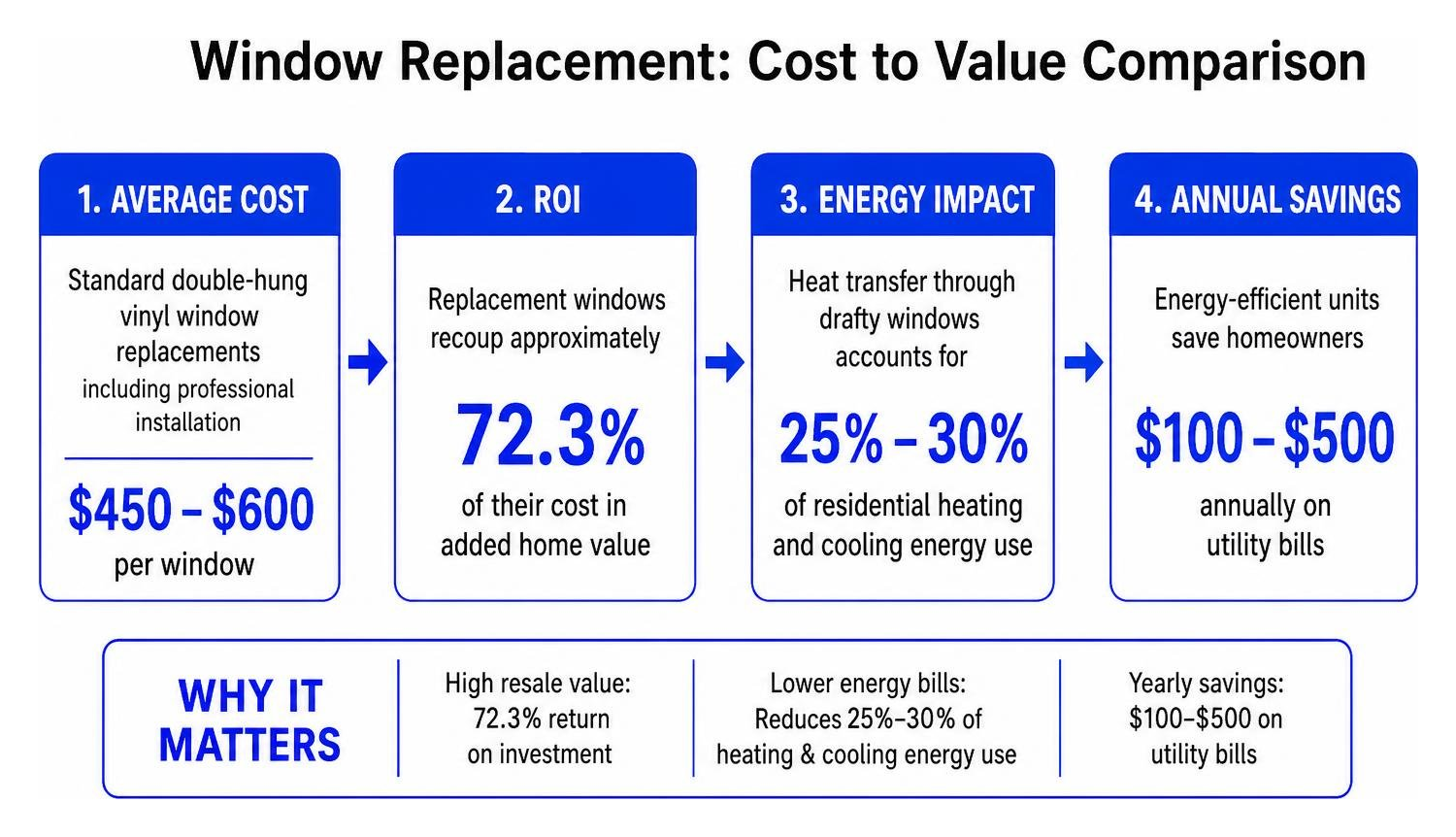
In the St. Louis area, standard double-hung vinyl window replacements generally range from $450 to $600 per window, including professional installation. Final costs vary depending on structural prep work, custom sizing, glass coatings, and whether your home requires full-frame or insert replacement.
Upgrading your home delivers tangible returns across multiple fronts:
- High Resale Value: Replacement windows recoup approximately 72.3% of their cost in added home value, making them one of the most reliable exterior remodeling investments.
- Lower Energy Bills: The U.S. Department of Energy estimates that heat transfer through drafty windows accounts for 25% to 30% of residential heating and cooling energy use.
- Yearly Savings: Energy-efficient units save homeowners between $100 and $500 annually on utility bills. In a 2022 survey, 78% of local homeowners cited energy efficiency as their primary motivation for replacing windows.
Reviewing a detailed breakdown of window replacement costs will help you budget effectively before upgrading to energy efficient windows.
Selecting Trusted Local Installers and Securing Lifetime Value
Even top-tier windows underperform if installed incorrectly. Gaps, missing insulation, or unlevel sills create draft points and moisture leaks that shorten the product’s lifespan.
When vetting local contractors across St. Louis, St. Charles, O’Fallon, and Maryland Heights, prioritize these standards:
- Clear Licensing and Insurance: Ensure the contractor holds active local credentials and full liability coverage.
- Transparent, Upfront Pricing: Look for straightforward quotes that clearly list labor, cleanup, and materials without surprise fees.
- Customer-First Payment Terms: Reputable installers do not demand massive upfront deposits before materials arrive or work begins.
- Labor Warranties: Select companies that back their workmanship with robust labor guarantees alongside standard manufacturer coverage.
When you are ready to start planning, explore reliable St. Louis window replacement services to transform your home. At Martin & Sons, we have spent decades helping homeowners improve comfort and curb appeal with zero upfront deposits—you only pay once your project is 100% complete and fully satisfied. With our lifetime labor warranties, upfront pricing, and experienced local team, you get peace of mind and long-lasting quality for your home.