Why Energy Efficient Replacement Windows Matter
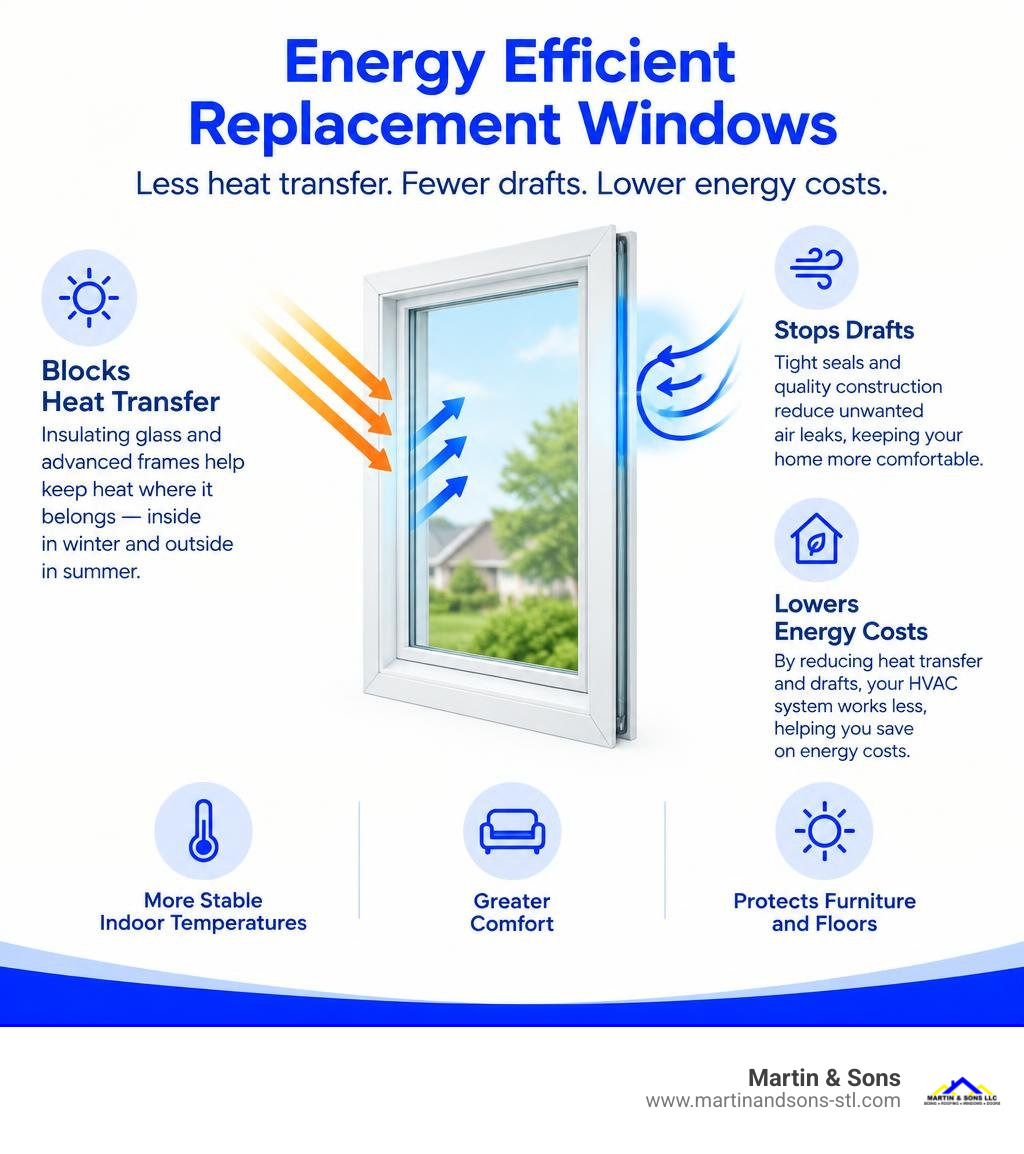
Energy efficient replacement windows can lower heating and cooling costs, reduce drafts, and make rooms more comfortable. Start by choosing windows certified for your climate, then compare their insulation and solar heat ratings. Proper installation matters just as much as the window itself. Replacing single-pane windows with ENERGY STAR certified models can cut heating and cooling bills by an average of up to 13%.
Heat moving through windows accounts for about 25% to 30% of a home’s heating and cooling energy use. Better windows can also help protect furniture and floors from fading. This guide will help you weigh the ratings, costs, and installation choices that matter for a St. Louis home.
I’m John Martin of Martin & Sons. I bring more than 35 years of home improvement experience to helping homeowners make sound choices about energy efficient replacement windows.
Energy efficient replacement windows definitions:
Key Factors in Selecting Energy Efficient Replacement Windows
When upgrading your home’s exterior, exploring the top reasons to upgrade to energy efficient windows goes well beyond simple cosmetic updates. Your windows serve as a critical part of your home’s thermal envelope. Understanding how energy efficient windows help you save comes down to stopping air infiltration, minimizing radiant heat transfer, and balancing solar radiation.
An inefficient window allows conditioned indoor air to leak out while outdoor temperatures seep in. In fact, cumulative hidden air leaks across an average home can equal a hole the size of an entire open window. By stopping drafts and regulating solar heat, high-performance replacements reduce strain on your HVAC system, maintain consistent room temperatures, and protect your interior decor.
Reading Performance Ratings on Energy Efficient Replacement Windows
To evaluate how well a window performs, you need to read the National Fenestration Rating Council (NFRC) label. As outlined in the Window Buying Guide – NFRC Consumer Guide to Windows, independent laboratory testing provides standardized metrics to compare different window assemblies:
| Metric | Typical Range | What It Measures | Ideal Target |
|---|---|---|---|
| U-Factor | 0.10 – 2.00 | Rate of non-solar heat transfer and heat loss | Lower is better (≤ 0.25 to 0.30) |
| SHGC | 0.00 – 1.00 | Fraction of solar radiation admitted through the glass | Climate dependent (Lower blocks heat; higher captures winter warmth) |
| Visible Transmittance (VT) | 0.00 – 1.00 | Amount of natural daylight passing through | Higher allows more natural light (0.50+ recommended) |
| Air Leakage (AL) | ≤ 0.30 | Volume of air passing through window joints | Lower indicates a tighter seal (≤ 0.30 required for ENERGY STAR) |
| Condensation Resistance (CR) | 1 – 100 | Ability to resist moisture accumulation on glass | Higher score means better resistance to interior condensation |
Checking these metrics ensures you select an assembly certified to perform reliably throughout changing weather conditions.
Comparing Frame Materials and Glazing Technologies
Your choice of window framing material directly impacts thermal conductivity, maintenance schedules, and budget. Understanding why choosing vinyl windows vs fiberglass impacts long-term home comfort allows you to balance cost and structural stability.
According to independent testing in Choosing Replacement Windows – Consumer Reports, higher price tags or traditional wood materials do not automatically guarantee superior thermal insulation. High-quality vinyl frames deliver excellent thermal breaks at a fraction of the cost.
| Frame Material | Insulating Ability | Maintenance Needs | Relative Price |
|---|---|---|---|
| Vinyl | High (Multi-chambered, insulated hollows) | Very Low (No painting or staining) | Budget-Friendly / High Value |
| Fiberglass | Excellent (Extremely low thermal expansion) | Very Low (Durable finish) | Moderate to High |
| Wood / Clad | High (Natural insulator) | Moderate to High (Requires sealing/maintenance) | Premium |
| Composite | High (Blended wood fiber and polymers) | Low (Rot and decay resistant) | Moderate to Premium |
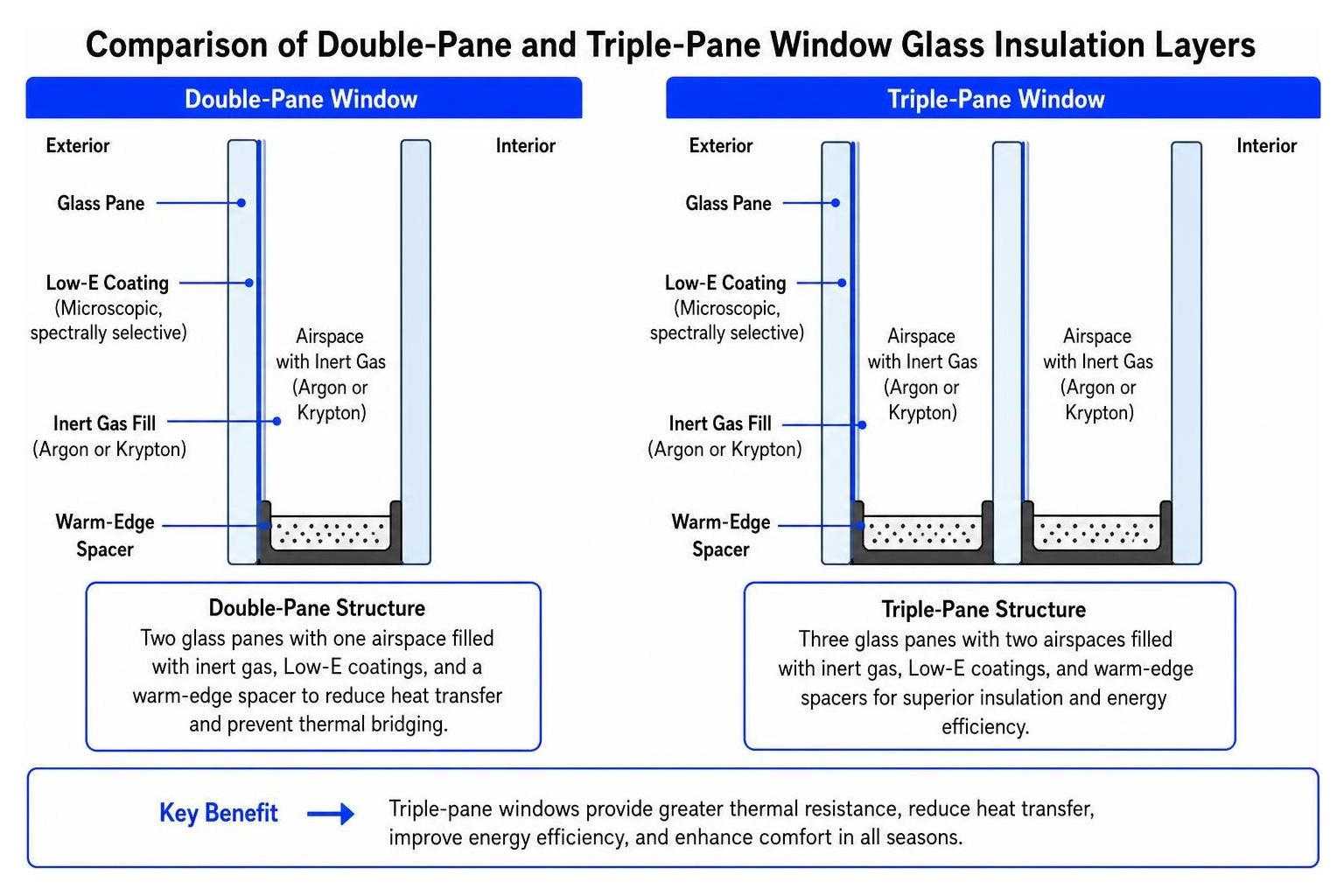
Modern glass units rely on specialized glazing engineering. Microscopic, spectrally selective Low-E (low-emissivity) metallic coatings reflect infrared heat while letting visible light pass through. A standard double-pane window allows approximately 75% of solar heat into your home; adding Low-E coatings cuts that heat gain significantly while reducing UV fading on furniture, flooring, and draperies by up to 75%.
Between the panes, non-toxic inert gases like argon or krypton replace standard air to slow conductive heat transfer. Combined with warm-edge composite spacers that separate the glass panes without conducting cold temperatures, modern multi-pane units prevent thermal bridging.
Operating style also influences air sealing:
- Casement and awning windows utilize a compression seal where the sash presses firmly against the weatherstripping when cranked shut.
- Double-hung and sliding windows rely on sliding weatherstripping seals, making quality manufacturing critical to prevent draftiness.
Climate Zones and Directional Window Orientation Strategies
The EPA divides the country into distinct climate zones with specific performance criteria, as detailed by Residential Windows, Doors, & Skylights | ENERGY STAR and procurement guidelines from Purchasing Energy-Efficient Residential Windows, Doors, and Skylights | Department of Energy:
- Northern Zone: U-Factor ≤ 0.30 (prescriptive) with any SHGC to maximize heat retention.
- North-Central Zone: U-Factor ≤ 0.30 and SHGC ≤ 0.40.
- South-Central Zone: U-Factor ≤ 0.35 and SHGC ≤ 0.30.
- Southern Zone: U-Factor ≤ 0.40 and SHGC ≤ 0.25 to block heavy solar heat.
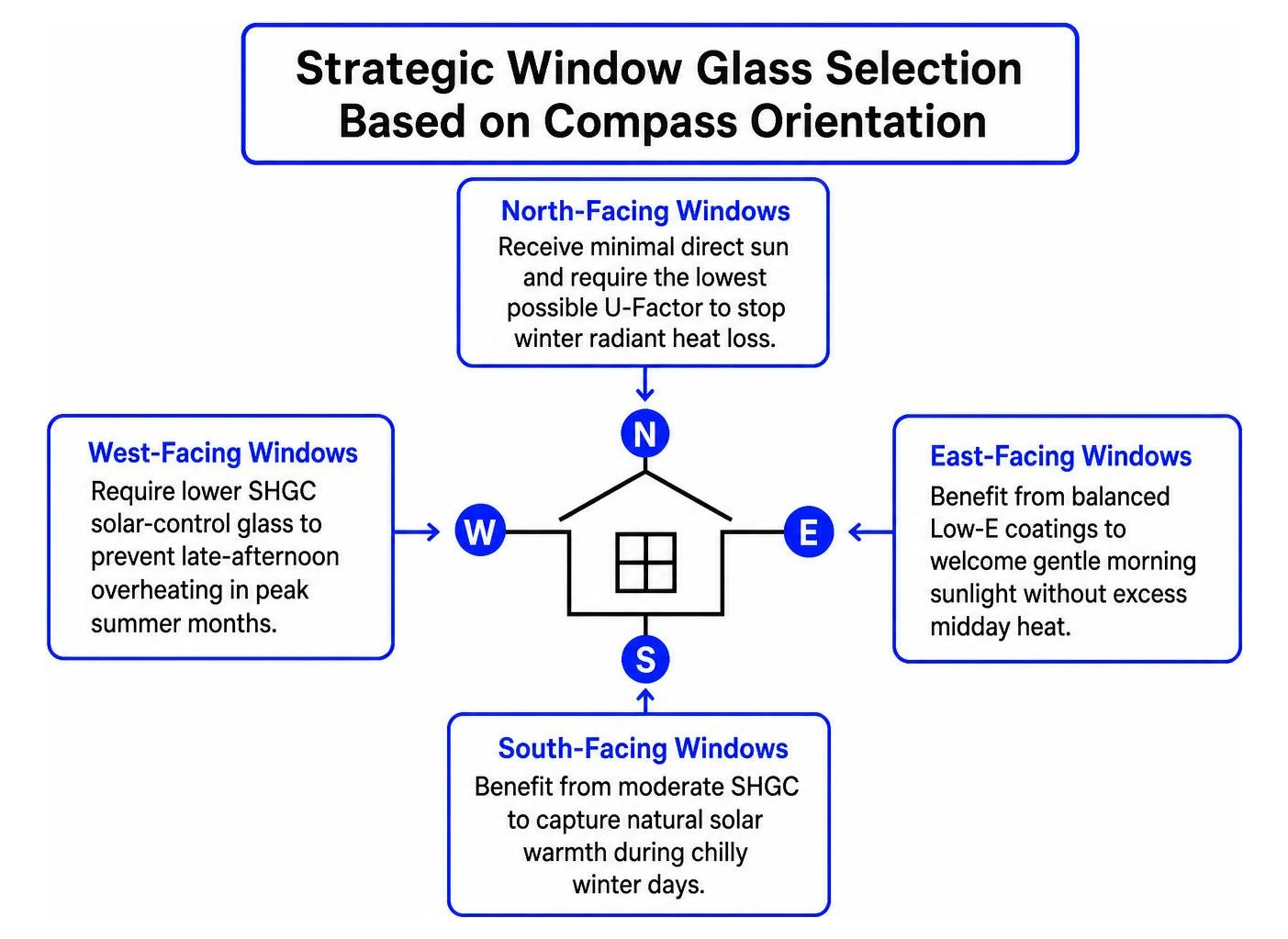
In transition areas like Greater St. Louis, window orientation is equally important:
- South-Facing Windows: Benefit from moderate SHGC to capture natural solar warmth during chilly winter days.
- West-Facing Windows: Require lower SHGC solar-control glass to prevent late-afternoon overheating in peak summer months.
- North-Facing Windows: Receive minimal direct sun and require the lowest possible U-Factor to stop winter radiant heat loss.
- East-Facing Windows: Benefit from balanced Low-E coatings to welcome gentle morning sunlight without excess midday heat.
Window Costs, Professional Installation, and Long-Term Savings
Investing in high-efficiency windows enhances daily indoor comfort while yielding predictable utility savings and strong property value appreciation.
Pocket vs. Full-Frame Installation for Energy Efficient Replacement Windows
Choosing the right installation method depends on the condition of your existing frames. Reviewing the signs for window installation in Greater St. Louis MO helps determine whether pocket insert or full-frame replacement is required:
- Pocket (Insert) Replacement: Fits directly inside the existing sound window frame and trim. It preserves interior molding, minimizes labor costs, and installs quickly when the existing jambs and sills are structurally sound.
- Full-Frame (New Construction) Replacement: Involves removing the entire existing window frame, sill, and exterior trim down to the rough stud opening. This method is required if the original frame shows signs of wood rot, water intrusion, or out-of-square settling.
During installation, insulating the gap between the window frame and the rough opening with low-expansion foam prevents air infiltration and stops interior condensation around perimeter drywall.
Upfront Replacement Costs, Financial Incentives, and Lifetime ROI
Understanding window replacement cost allows you to budget effectively. Nationally, professional window replacement averages around $800 per window (typically ranging between $300 and $3,000 depending on dimensions, frame materials, and glass packages), with labor generally accounting for $100 to $300 per unit.
Upgrading provides substantial financial returns:
- Resale Return: Homeowners recoup approximately 67% of vinyl window replacement costs at resale.
- Utility Reductions: Upgrading from single-pane glass saves homeowners between 7% and 15% annually on heating and cooling bills ($71 to $501 per year). Replacing 10 single-pane windows in cold climates saves an average of $568 annually.
- Life-Cycle Value: Federal Energy Management Program (FEMP) data confirms high-efficiency windows save an average of $2 to $4 per square foot over baseline models over their operating lifespan.
- Rebates and Incentives: Local electric and gas utility rebates frequently provide cash-back incentives for certified installations.
Finding Qualified Installers and Maintaining Weather-Tight Seals
Even top-tier windows fail if installed incorrectly. Adherence to ASTM E 2112 installation standards ensures proper flashing, water drainage, and perimeter air sealing. For homes built before 1978, EPA Lead-Safe Certification is legally mandated to contain hazardous lead dust during sill removal.
To maximize window performance over time:
- Always engage sash locks fully to draw weatherstripping tightly together and stop air infiltration.
- Vent moisture by running bathroom and kitchen exhaust fans for 20 minutes after use to control indoor relative humidity.
- Ensure your installation contractor provides itemized quotes clearly distinguishing labor from materials.
At Martin & Sons, we serve homeowners across St. Louis, St. Charles, Florissant, Chesterfield, Creve Coeur, Maryland Heights, St. Peters, and O’Fallon. We eliminate renovation stress with our no upfront deposit policy—you pay only upon 100% completion and satisfaction—backed by upfront pricing and our lifetime labor warranty. Explore our full line of Martin & Sons replacement window solutions to schedule your home consultation today.