
Why Double Glazing Glass Is the Standard for Modern Home Comfort

Double glazing glass is now the go-to choice for homeowners who want better insulation, lower energy bills, and a quieter home — and for good reason.
Quick answer: What is double glazing glass?
- Two panes of glass sealed together with a gap (air or gas) between them
- The gap acts as a thermal barrier, cutting heat loss roughly in half compared to single-pane windows
- Available with upgrades like Low-E coatings, argon gas fills, and warm-edge spacers for even better performance
- Standard double-glazed units reach R-values of 2 to 5.5 depending on configuration
- Typical lifespan is 20–25 years with proper installation and maintenance
If your windows are fogging up, letting in cold drafts, or driving up your heating bills, the glass unit itself is often the problem — not the frame.
That’s something I’ve seen firsthand. I’m John Martin, and at Martin & Sons we’ve been helping St. Louis homeowners solve problems like these for over 35 years — including replacing failed double glazing glass units in everything from historic homes to modern builds. If you want the full picture before making a decision, this guide covers everything you need to know.
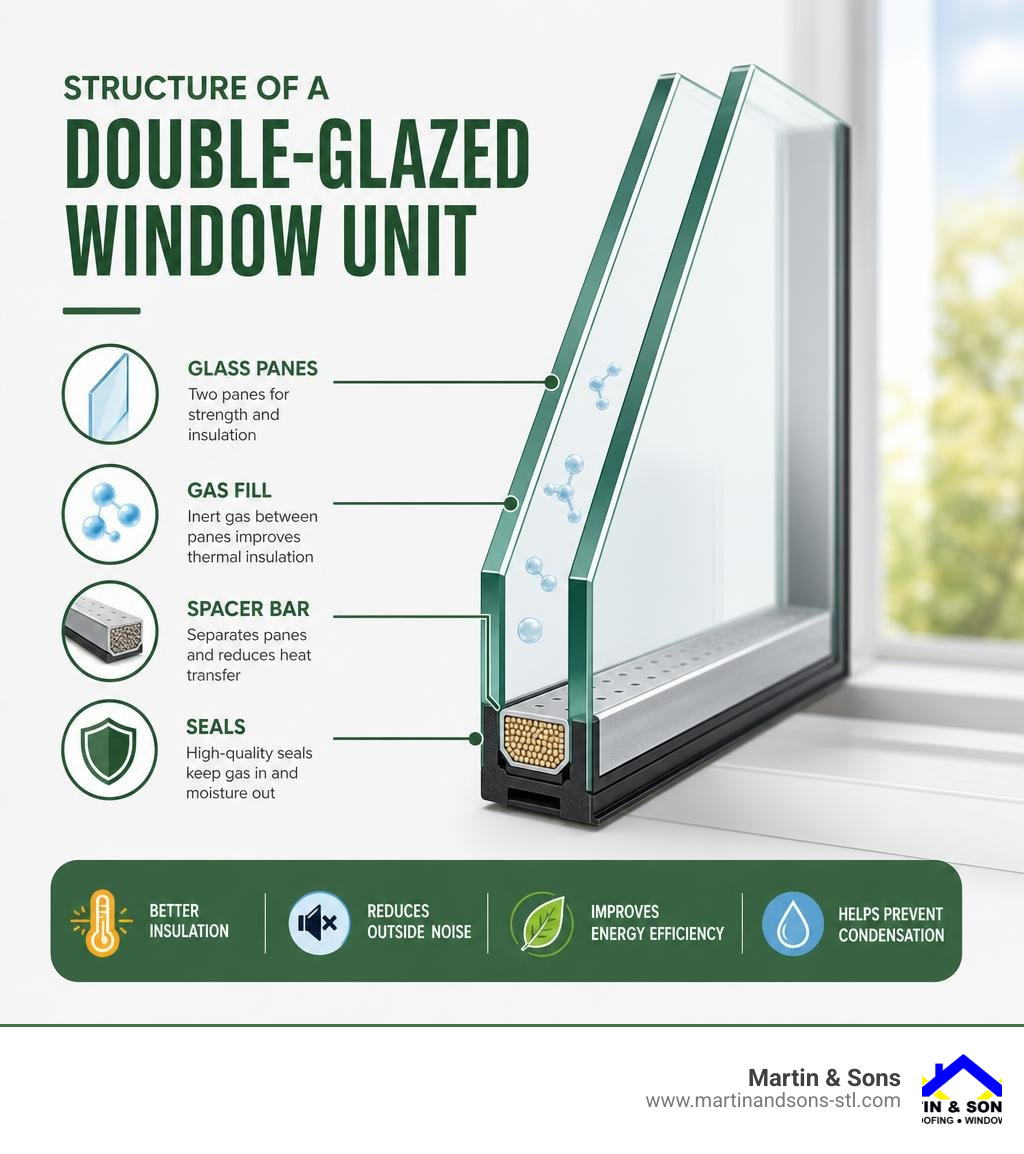
Double glazing glass terms at a glance:
What is Double Glazing Glass and How Does It Work?
To understand why double glazing glass is so effective, it helps to look at how traditional single-pane windows fail us. A single sheet of glass is an incredibly poor insulator. In the dead of a St. Louis winter, heat from your furnace rushes straight through single-pane glass to the freezing outdoors. In the summer, the heavy humidity and heat do the exact opposite, forcing your air conditioner to work double-time.

Double glazing solves this by creating a thermal barrier. Instead of one pane, it uses two sheets of glass separated by a sealed space. This space disrupts the three primary ways heat moves:
- Conduction: Heat struggles to travel directly through the air or gas pocket because gases are far less conductive than solid glass.
- Convection: The narrow gap restricts air movement, meaning warm air cannot easily circulate and transfer its energy to the colder outer pane.
- Radiation: When paired with modern coatings, the glass reflects heat energy back to its source rather than absorbing and radiating it away.
The Anatomy of an Insulating Glass Unit (IGU)
A professionally manufactured double-glazed panel is technically known as an Insulating Glass Unit (IGU). It is a highly engineered, hermetically sealed sandwich of materials:
- The Glass Panes: Standard units typically feature two 4mm clear glass lites.
- The Spacer Bar: A continuous frame that keeps the glass panes a precise distance apart (usually 1/2 inch or 12mm to 16mm).
- The Desiccant: Highly absorbent silica gel beads tucked inside the hollow spacer bar to soak up any trace of residual moisture.
- The Primary Seal: Typically made of polyisobutylene (PIB), this sticky seal wraps the spacer to block moisture from sneaking in and gas from leaking out.
- The Secondary Seal: A robust outer layer of structural silicone or polyurethane that holds the entire unit together and protects it from physical stress.
How Double Glazing Glass Prevents Heat Transfer
The magic of double glazing glass lies in its ability to cut heat loss in half compared to single glazing. Air has a thermal conductivity of just 0.024 W/mK, whereas glass is around 1.05 W/mK. By trapping a thin pocket of low-conductivity air (or specialized gas) between the panes, we create a highly effective buffer.
This trapped pocket keeps the interior pane of glass much closer to your home’s indoor temperature. When the glass stays warm, you don’t get that “chilly window” draft sensation, and your HVAC system doesn’t have to cycle constantly to keep you comfortable. Upgrading to these units is one of the top reasons to upgrade to energy efficient windows for long-term savings.
Key Benefits: Energy Efficiency, Comfort, and Soundproofing
Making the switch to double glazing glass transforms how your home feels on a daily basis.
Beyond just looking great, installing new windows can provide a massive boost to your property. Understanding the benefits of replacing the windows on your home helps put the initial investment into perspective.
Slashing Energy Bills and Carbon Footprint
The most immediate financial benefit of double glazing is the reduction in your monthly utility costs. Single-pane windows have an R-value (resistance to heat flow) of just 0.9. A standard double-pane window with a 1/2-inch air gap jumps to an R-value of 2.08. Upgrade that unit with argon gas and a Low-E coating, and you can achieve an R-value of nearly 5.5.
By preventing heat from escaping in winter and keeping solar heat out in summer, you dramatically lower your HVAC system’s workload. Over time, this leads to substantial savings on heating and cooling, while also reducing your household’s carbon footprint. It is well-documented that new windows and doors can increase your home’s energy efficiency far better than adding insulation to walls alone.
Noise Reduction and Home Comfort
If you live near a busy road in Florissant or Chesterfield, or close to a construction zone in St. Charles, you know how exhausting constant noise pollution can be. Double glazing acts as an excellent acoustic barrier.
Standard single-pane glass vibrates easily in response to external sound waves, transmitting that noise straight into your living room. A double-glazed unit breaks up these sound waves. For maximum acoustic performance, we often recommend using glass panes of different thicknesses (for example, a 4mm outer pane and a 6mm inner pane). This structural difference prevents acoustic resonance, stopping sound waves from passing through at the same frequency and dropping indoor noise levels by up to 31 decibels.
Glass Types, Low-E Coatings, and Gas Fills
Not all double glazing glass is created equal. The performance of your windows depends heavily on the specific glass types, coatings, and gases used inside the unit.
Low-E Coatings and Tinted Double Glazing Glass
Low-Emissivity (Low-E) coatings are microscopically thin, transparent metal oxide layers applied to the glass surface. They reflect infrared heat while letting visible light pass through.
In the winter, a Low-E coating reflects warm indoor heat back into your rooms. In the summer, it rejects the sun’s harsh infrared rays. High-performance options like SGG Planitherm Total+ DIGI-FINAL can achieve incredibly low U-values (as low as 1.2 W/m²K in a standard double-glazed unit filled with argon) while maintaining superb clarity and light transmission.
For areas where privacy is key, such as bathrooms or street-facing entryways, decorative options like Laurel™ Double Glazed Units | Premium Level 2 Privacy Glass offer a beautiful, organic pattern that diffuses light while maintaining modern thermal efficiency.
If solar heat gain is your main concern, tinted glass is another option. While tinted glass reduces visible light transmission and solar heat gain, keep in mind that it does not significantly improve the window’s overall U-value (insulation rating) on its own. Bronze and gray tints will reduce light transmission more than green or blue options.
Gas Fills: Air vs. Argon vs. Krypton
While air-filled units are common and offer a longer seal life because they don’t experience gas migration, upgrading the cavity fill can yield much higher performance:
- Air: Affordable and reliable, but has a higher thermal conductivity (0.024).
- Argon: The most common upgrade. With a thermal conductivity of 0.016, argon is denser than air and slows down heat transfer significantly.
- Krypton: Even denser and more insulating than argon, but substantially more expensive. It is typically reserved for ultra-high-performance projects or very thin window profiles.
Over time, double-pane windows may require professional maintenance or repair to address seal degradation. Working with an experienced local window specialist ensures that any issues with gas retention or seal failure are addressed promptly to maintain your home’s energy efficiency.
Spacer Bars and Warm-Edge Technology
Traditional double-glazed units used aluminum spacer bars. However, because aluminum is highly conductive, it creates a “thermal bridge” around the edge of the glass, leading to cold spots and condensation.
Modern high-efficiency windows utilize warm-edge spacers made of composite polymer materials. These spacers keep the edges of the glass warm, drastically reducing the risk of interior condensation. For instance, premium units like the Canterbury™ Opal Double Glazed Units | Premium Level 5 Privacy Glass combine maximum Level 5 privacy with warm-edge spacers to ensure your bathroom stays warm, private, and free of mold-inducing condensation.
Comparing Double Glazing, Triple Glazing, and Vacuum Glass
As window technology advances, homeowners now have more choices than ever. Here is how standard double glazing stacks up against triple glazing and state-of-the-art vacuum-insulated glass:
| Glazing Type | Typical U-Value (W/m²K) | Sound Insulation | Expected Lifespan | Best For |
|---|---|---|---|---|
| Standard Double Glazing (Air) | 2.80 | 28–30 dB | 20–25 Years | Budget-conscious replacements |
| High-Performance Double Glazing (Argon + Low-E) | 1.10–1.20 | 31 dB | 20–25 Years | Standard modern homes |
| Triple Glazing (Argon + Low-E) | 0.70 | 33 dB | 30 Years | Cold climates & high-noise areas |
| Vacuum-Insulated Glass (e.g., BENGglas) | 0.40 | 36–41 dB | 50 Years | Historic restorations & ultra-low energy builds |
Innovations like BENGglas Double Coated | BENGglas showcase the incredible leap in vacuum technology, delivering triple-glazing performance in a profile thin enough to fit into historic single-pane wood frames.
Triple Glazing: Is the Extra Pane Worth It?
Triple glazing adds a third pane of glass, creating two insulating gas cavities. This pushes R-values even higher, but it comes with a few trade-offs. Triple-glazed units are significantly heavier and more expensive than double glazing.
For most homes in the St. Louis region, high-quality double glazing with argon gas and Low-E coatings provides the perfect balance of cost and performance. However, if you are looking for maximum noise reduction or building an ultra-efficient home, triple glazing is worth exploring. You can learn more about frame options and materials in the complete guide to vinyl windows.
Vacuum-Insulated Glass (VIG): The Future of Glazing
Vacuum-insulated glass removes the air from the cavity entirely, creating a vacuum. Because heat cannot travel through a vacuum, VIG achieves mind-blowing insulation values (U-values of 0.40 W/m²K) at a fraction of the thickness of double or triple glazing. This makes VIG the holy grail for historic home renovations where you want to keep the original, thin wooden frames but demand modern thermal performance.
Measuring, Maintenance, and Troubleshooting Double-Glazed Units
Even the highest-quality double glazing glass will fail if it isn’t measured, installed, and maintained correctly.
How to Measure for Replacement Units
If you plan to replace a broken or misted double-glazed unit, getting the measurements right is critical. You must measure:
- Width & Height: Measure the visible glass plus the portion hidden inside the window frame (the rebate). Always measure in millimeters for precision.
- Overall Thickness: Measure the depth of the entire glass sandwich (panes + spacer). Common thicknesses for modern vinyl windows are 24mm or 28mm.
- Safety Glass Requirements: If the window is within 18 inches of the floor or close to a door, local building codes require tempered safety glass.
For a deeper dive into the costs of these projects, check out our beginners guide to window replacement cost.
Common Issues: Fogging, Condensation, and Seal Failure
The most common issue with older double glazing is “blown” or failed seals. When the perimeter seal degrades, moist air penetrates the cavity. The desiccant inside the spacer bar eventually becomes saturated, leading to permanent fogging or condensation between the panes of glass.
Once a seal fails, the insulating gas escapes, and the window loses its energy efficiency. Regular inspections are key to identifying these issues early. Read our guide on window inspection to protect your home to spot failed seals before they cause water damage to your walls.
Professional vs. DIY Double Glazing
While some handy homeowners might want to attempt a DIY double glazing project, creating a lasting hermetic seal is incredibly difficult without industrial equipment.
Standard hardware store silicone is highly gas-permeable — in fact, silicone has roughly 400 times the gas permeability of the specialized butyl rubbers used by professional manufacturers. A DIY unit built with standard silicone will inevitably fail and fog up within a few seasons. Investing in professional units backed by a solid warranty is always the most cost-effective path. For a clear breakdown of what to expect financially, read the ultimate guide to window replacement cost.
Frequently Asked Questions about Double Glazing
How long does double glazing glass last?
A professionally manufactured and installed double-glazed unit typically lasts 20 to 25 years. However, factors like extreme weather exposure, poor frame drainage, and low-quality seals can shorten this lifespan. For tips on maximizing your windows’ longevity, check out our window replacement tips for your next home project.
Can you replace just the glass in a double-glazed window?
Yes! If your window frames are still in good structural shape, you do not need to replace the entire window. We can easily swap out the failed or broken glass unit for a brand-new, high-efficiency double-glazed unit, saving you a substantial amount of money. If you’re unsure whether you need a full replacement, look out for these signs that it is time to consider a new window installation.
Why do double-glazed windows fog up inside?
If condensation forms between the two panes of glass, it means the hermetic seal has failed, allowing moisture to seep into the unit. If the fogging is on the room-side of the glass, it simply means your home has high indoor humidity and needs better ventilation.
Conclusion
Upgrading to high-quality double glazing glass is one of the smartest investments you can make for your home’s comfort, value, and energy efficiency.
At Martin & Sons, we have been serving the St. Louis, St. Peters, St. Charles, Florissant, Chesterfield, Creve Coeur, Maryland Heights, and O’Fallon communities for over 35 years. We believe in doing business the right way: no upfront deposits, payment only upon 100% completion and satisfaction, lifetime labor warranties, and our best prices upfront.
If you are ready to banish cold drafts, eliminate foggy glass, and lower your energy bills, we are here to help. Explore Martin & Sons Window Services today and request a free, no-pressure estimate for your home.