Key Commercial Roofing Materials and Their Lifespans
Choosing the right roofing material is one of the most critical decisions you will make for your commercial property. Unlike residential roofs, which heavily utilize pitched asphalt shingles, commercial structures often feature low-slope or flat roof designs that demand specialized weatherproofing technology.
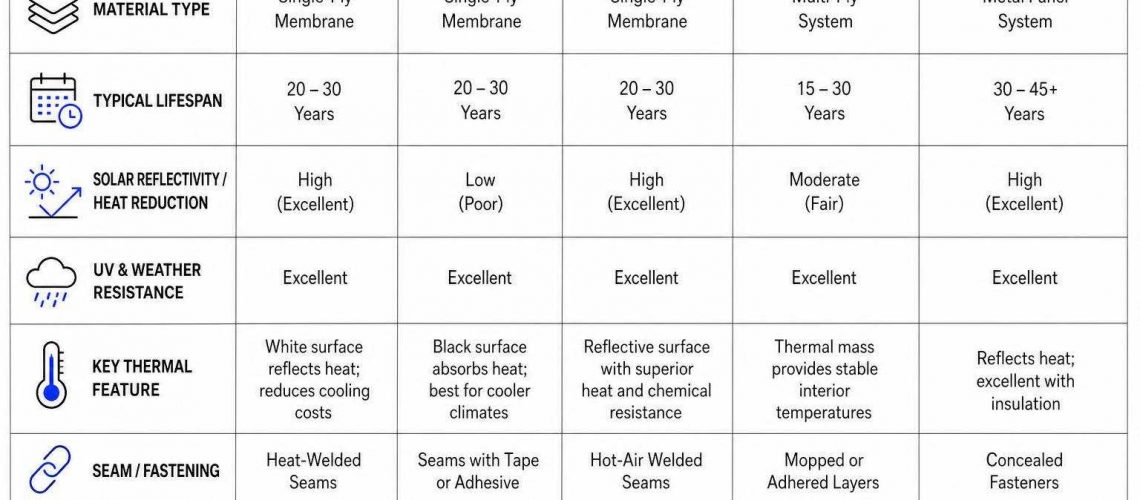
Commercial roofing systems generally last between 10 and 40 years, depending on the material selected, local weather conditions, structural maintenance, and installation quality. Here is an overview of the primary commercial membrane and sheet options available today:
- TPO (Thermoplastic Polyolefin): A popular single-ply white membrane known for excellent solar reflectivity, UV resistance, and heat-welded seams. TPO typically lasts 20 to 30 years and helps significantly reduce interior cooling costs.
- EPDM (Ethylene Propylene Diene Monomer): A durable synthetic rubber membrane commonly installed in black. EPDM is highly flexible, withstands thermal expansion and contraction, and delivers a dependable service life of 20 to 30 years.
- PVC (Polyvinyl Chloride): A high-performance single-ply membrane engineered for superior chemical resistance, grease endurance, and fire safety. PVC seams are hot-air welded, forming a continuous bond stronger than the membrane itself, lasting 20 to 30 years.
- Built-Up Roofing (BUR): One of the oldest multi-ply commercial systems, BUR uses alternating layers of bitumen (tar or asphalt) and reinforcing fabrics topped with gravel or mineral cap sheets. BUR roofs last 15 to 30 years and provide exceptional puncture resistance against heavy foot traffic.
- Standing Seam Metal Roofing: Built from steel, aluminum, or copper panels with concealed fasteners. Metal roofs are highly durable, weather-resistant, and can last 30 to 45+ years with minimal maintenance.
Comparing TPO, EPDM, and Metal Roof Systems
When searching for commercial roof installation near me, most commercial property owners narrow their choices down to TPO, EPDM, or metal roofing systems. Understanding the thermal performance, durability, and cost metrics of each helps you choose the best fit for your facility.
TPO membrane systems are celebrated for solar reflectivity. By deflecting solar radiation away from flat roofs during hot summers, TPO reduces thermal load on heating, ventilation, and air conditioning (HVAC) units. Heat-welded seams eliminate the reliance on adhesives or tapes, providing high seam strength.
EPDM single-ply rubber, while absorbative of solar radiation in its standard black formulation, excels in flexibility across extreme freeze-thaw cycles. It resists impacts and structural shifts smoothly, though EPDM seams usually rely on specialized adhesive tapes.
Standing seam metal roofs provide the longest overall service life. Concealed fastener systems eliminate exposed penetrations across the roof plane, dramatically reducing potential leak points over decades of operation.
| Roofing Material | Expected Lifespan | Typical Cost Range (per sq. ft.) | Key Advantages | Primary Best Use Case |
|---|---|---|---|---|
| TPO Single-Ply | 20 – 30 Years | $5.00 – $10.00 | High solar reflectivity, heat-welded seams, energy efficiency | Retail centers, offices, distribution hubs |
| EPDM Rubber | 20 – 30 Years | $5.00 – $9.00 | Highly flexible, impact-resistant, reliable in cold weather | Warehouses, low-slope utility buildings |
| PVC Membrane | 20 – 30 Years | $7.00 – $12.00 | Chemical and grease resistance, fire-retardant seams | Restaurants, food processing, industrial plants |
| Standing Seam Metal | 30 – 45+ Years | $10.00 – $18.00 | Exceptional durability, minimal maintenance, long life | Manufacturing facilities, municipal buildings |
Evaluating Your Building Requirements for Commercial Roof Installation Near Me
Selecting the right commercial material isn’t just about initial pricing—it requires analyzing your building’s everyday operational environment:
- Roof Slope and Drainage Layout: Flat or low-slope structures need single-ply membranes (TPO, EPDM, PVC) or modified bitumen that prevent water intrusion. Steeper slopes on multi-family or office complexes benefit from standing seam metal or heavy-duty asphalt shingles.
- Rooftop Exhaust and Chemical Exposure: Facilities like restaurants or industrial production facilities emit grease, oils, or chemicals onto the roof. PVC membranes resist chemical breakdown far better than standard EPDM or TPO.
- Foot Traffic and Equipment Maintenance: If service technicians frequently walk on your roof to maintain HVAC units or solar panels, thick multi-ply BUR or high-mil (60-mil or 80-mil) single-ply membranes prevent scuffs and accidental punctures.
For a deeper dive into preparation and system mechanics, review our Cheat Sheet to Roofing Installation.
Commercial Roof Installation Costs and Project Timelines
Understanding the financial investment and disruption timeline helps property managers plan effectively. On average, most commercial roof replacements range between $5 and $12 per square foot, though complex architectural profiles, high insulation requirements, and structural repairs can adjust this rate.

Commercial roof installation projects typically take between one and four weeks from initial staging to final inspection. Factors influencing your total cost and project timeline include:
- Overall Square Footage: Larger surface areas increase material quantities but often benefit from lower per-square-foot labor efficiency rates.
- Tear-Off vs. Recover: Removing existing roofing layers requires labor, disposal equipment, and landfill fees. Re-roofing over an existing single layer saves time and labor expenses.
- Insulation Requirements (R-Value): Upgrading Polyiso (polyisocyanurate) insulation layers to meet current energy codes impacts material costs upfront while delivering long-term utility savings.
- Decking Condition and Repairs: Structural repairs to rusted steel decking or rotted wood plywood underneath add time and material charges.
- Penetrations and Flashings: Rooftop skylights, HVAC curb flashings, drains, and wall terminations require careful hand detailing, which increases labor time.
To understand pricing variables in detail, explore our guide on Roof Installation Costs: Key Factors That Affect Pricing.
Re-Roofing Overlay vs Full Tear-Off
When planning a commercial roof installation, one big question is whether you need a complete tear-off or if a re-roofing overlay (recover layer) is possible.
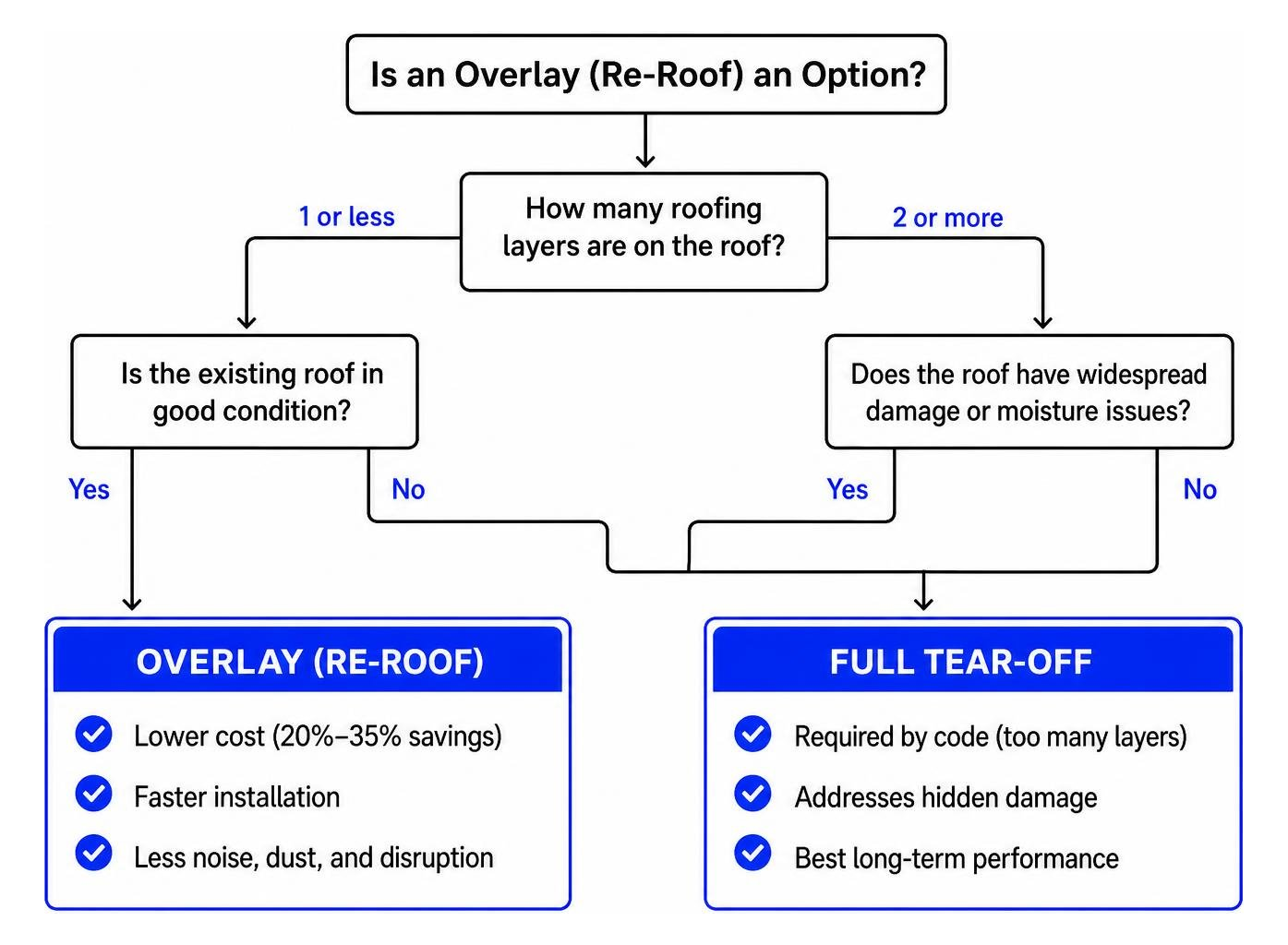
A re-roofing overlay involves laying a new single-ply membrane directly over the existing roof system. Building codes generally allow up to two total roofing layers on a commercial structure.
- Cost Savings: Installing an overlay saves approximately 20% to 35% compared to a complete tear-off because it eliminates tear-off labor and landfill disposal fees.
- Operational Continuity: Overlays create less noise, dust, and exposure risk for building occupants during installation.
However, an overlay is only viable if the existing insulation and decking are dry and structurally sound. Before approving an overlay, we perform moisture testing, such as infrared scans or core cut sampling. If wet insulation is trapped beneath a new overlay, moisture remains trapped, leading to mold, deck corrosion, and premature failure. If more than 25% of the existing insulation is saturated, a full tear-off is necessary.
Regional contractors specializing in commercial roof replacement services emphasize that full tear-offs provide a clean slate, allowing installers to inspect decking, upgrade thermal insulation, and ensure long-term integrity.
When to Replace vs Repair Your Commercial Building Roof
Deciding whether to patch an active leak or invest in a full roof replacement requires evaluating roof age, damage extent, and ongoing repair expenditures.

Common warning signs indicating your commercial roof needs replacement include:
- Ponding Water: Standing water that remains on flat membrane roofs longer than 48 hours after rainfall accelerates membrane degradation and indicates compromised drainage pitch.
- Membrane Blistering and Seam Separation: Widespread cracking, seam uplifting, or blistering lets water seep into insulation layers beneath.
- Saturated Insulation: Spongy roof sections underfoot indicate trapped water within underlying polyiso board insulation, reducing thermal performance and increasing energy bills.
- Recurring Leak Patterns: If your maintenance team is calling for repairs in the same areas every season, localized fixes are no longer cost-effective.
A standard rule of thumb: If cumulative repair costs approach 25% to 30% of full replacement value, a full replacement or restoration coating pencils out better financially.
For temporary life extension on intact membranes, a high-solids silicone roof restoration coating can cost as little as 25% of a full tear-off while extending system life by 10 to 15 years. To keep your current roof operating smoothly, read our 5 Best Practices for Commercial Roofing Maintenance.
Choosing the Best Local Contractor for Commercial Roof Installation Near Me
Selecting the right commercial roofing team protects your property investment. Commercial installations involve complex structural considerations, mechanical curb detailing, safety protocols, and strict municipal building codes.
When researching commercial roof installation near me, verify these key qualifications:
- Licensing and Insurance: Ensure the contractor holds full commercial liability insurance and worker’s compensation coverage tailored to commercial height and machinery risks.
- Permitting and Code Compliance: Commercial projects require municipal permits and strict adherence to structural snow-load, wind uplift, and fire rating requirements. Your contractor should handle all permit applications and inspection scheduling directly.
- Safety Protocol Standards: Look for crews compliant with OSHA safety standards, utilizing certified fall protection systems and safety monitoring on every job site.
- Manufacturer Certifications: Top-tier manufacturers issue No Dollar Limit (NDL) single-source warranties only when installed by certified, vetted contractors.
When reviewing regional specialists offering certified commercial roof installation services, look for detailed project proposals outlining precise material specifications, flashing techniques, and closeout inspection steps. If you own properties across regional sectors, verifying commercial flat and low-slope installation capabilities ensures consistent service across multi-state portfolios.
Locally, finding professional roofing services near me is easier than you think when you partner with established local leaders who prioritize honest pricing and customer satisfaction.
What to Look for During a Free Commercial Roof Inspection
A thorough, professional roof evaluation goes far beyond a visual glance from a ladder. During a free commercial inspection, your contractor should perform:
- Structural Deck and Drainage Checks: Evaluating roof drains, scuppers, gutters, and pitch to prevent standing water accumulation.
- Core Sampling and Moisture Scans: Taking core cuts or utilizing thermal scans to verify whether insulation boards beneath the membrane are dry or saturated.
- Flashing and Penetration Checks: Inspecting perimeter parapet walls, expansion joints, pipe boots, and HVAC curb flashing where over 80% of commercial leaks originate.
- Detailed Written Proposals: Delivering itemized bids outlining project timelines, material options, waste removal plans, and clear payment terms.
Be cautious of contractors requiring large upfront cash deposits before materials arrive or work begins. At Martin & Sons, we operate on a strict no upfront deposit policy—you pay only upon 100% project completion and total satisfaction.
Frequently Asked Questions About Commercial Roof Installation
How long does a commercial roof installation near me take?
Most commercial roof installations take between one and four weeks, depending on total roof square footage, system type, weather conditions, rooftop equipment density, and whether the project is a re-roofing overlay or a complete tear-off. Low-slope single-ply flat roofs (TPO/EPDM) on wide open warehouse layouts are installed faster than complex steep-slope multi-family buildings with multiple penetrations.
Can a new commercial roof be installed over an existing system?
Yes, provided local building codes permit it (most codes allow up to two total roofing layers) and an infrared moisture test confirms the existing insulation and structural decking are completely dry. An overlay saves between 20% and 35% on installation costs compared to a tear-off. However, if moisture is trapped within existing layers, a full tear-off is mandatory to protect structural integrity. Specialized regional project evaluations, such as those conducted for custom commercial roof installations, help determine whether an overlay fits structural load-bearing limits.
What warranties protect a new commercial roof?
Commercial roofing projects are backed by two main warranty types:
- Manufacturer Material Warranties: Cover defects in single-ply membranes, metal panels, or asphalt products, often ranging from 10 to 30 years. Premium No Dollar Limit (NDL) warranties cover both material and repair labor without caps if installed by certified contractors.
- Contractor Workmanship Warranties: Cover installation labor, seam flashing execution, and craftsmanship. While standard industry warranties run 2 to 5 years, Martin & Sons backs our commercial installations with our signature lifetime labor warranty for ultimate peace of mind.
Conclusion
Investing in a high-performance commercial roof installation near me safeguards your commercial property, shields internal equipment, enhances energy efficiency, and protects your long-term business continuity. Whether upgrading an aging retail center with heat-welded TPO or replacing a complex commercial roof deck, choosing the right material and certified local installer ensures maximum return on your investment.
At Martin & Sons, we have proudly served local business owners and property managers across St. Louis, St. Peters, St. Charles, Florissant, Chesterfield, Creve Coeur, Maryland Heights, and O’Fallon since 1953. Our family-owned approach offers:
- Zero Upfront Deposits: You pay nothing until your commercial project is 100% complete and you are totally satisfied.
- Lifetime Labor Warranties: Unmatched workmanship protection backed by over 35 years of industry experience.
- Direct Owner Involvement: Fair, upfront pricing without pushy sales tactics or hidden fees.
Note on exterior maintenance: When evaluating roof drainage systems during installation, please keep in mind that Martin & Sons only provides gutter services when performing a complete roofing project. Martin & Sons is not a standalone gutter company.
Protect your business investment with confidence. Contact Martin & Sons today or visit our Roofing Installation in St. Louis page to schedule your no-cost commercial roof evaluation!