

A Small Change That Makes a Big Difference: Cabinet Handle Installation
Cabinet handle installation is one of the fastest ways to refresh the look of your kitchen or bathroom — no full remodel required.
Here’s a quick overview of how to install cabinet handles:
- Choose your hardware — Pick knobs or pulls sized to 1/3 the height of your cabinet doors or 1/3 the width of your drawers.
- Mark your holes — Use a template or jig to mark drill points accurately. Place pulls 2–3 inches from the bottom edge of cabinet doors.
- Tape the drill points — Apply masking tape over your marks to prevent wood from splintering.
- Drill your holes — Use a 3/16-inch drill bit and drill from front to back.
- Attach the hardware — Insert screws from inside the cabinet and hand-tighten. Do not overtighten.
It sounds simple — and it mostly is. But there are a few details that trip people up: wrong hole spacing, crooked pulls, or stripped screws. One slightly off-center handle can bother you every single time you walk into the room.
This guide walks you through every step, from picking the right size hardware to drilling clean, accurate holes across every cabinet in the room.
I’m John Martin, and with over 35 years of hands-on experience at Martin & Sons, cabinet handle installation is the kind of detail work we’ve refined on hundreds of home improvement projects. Let’s make sure you get it right the first time.
Cabinet handle installation further reading:
Planning Your Cabinet Handle Installation: Costs, Sizes, and Styles

Before you pick up a drill, you need to decide on the look and layout of your hardware. The choices you make now will dictate your entire installation process.
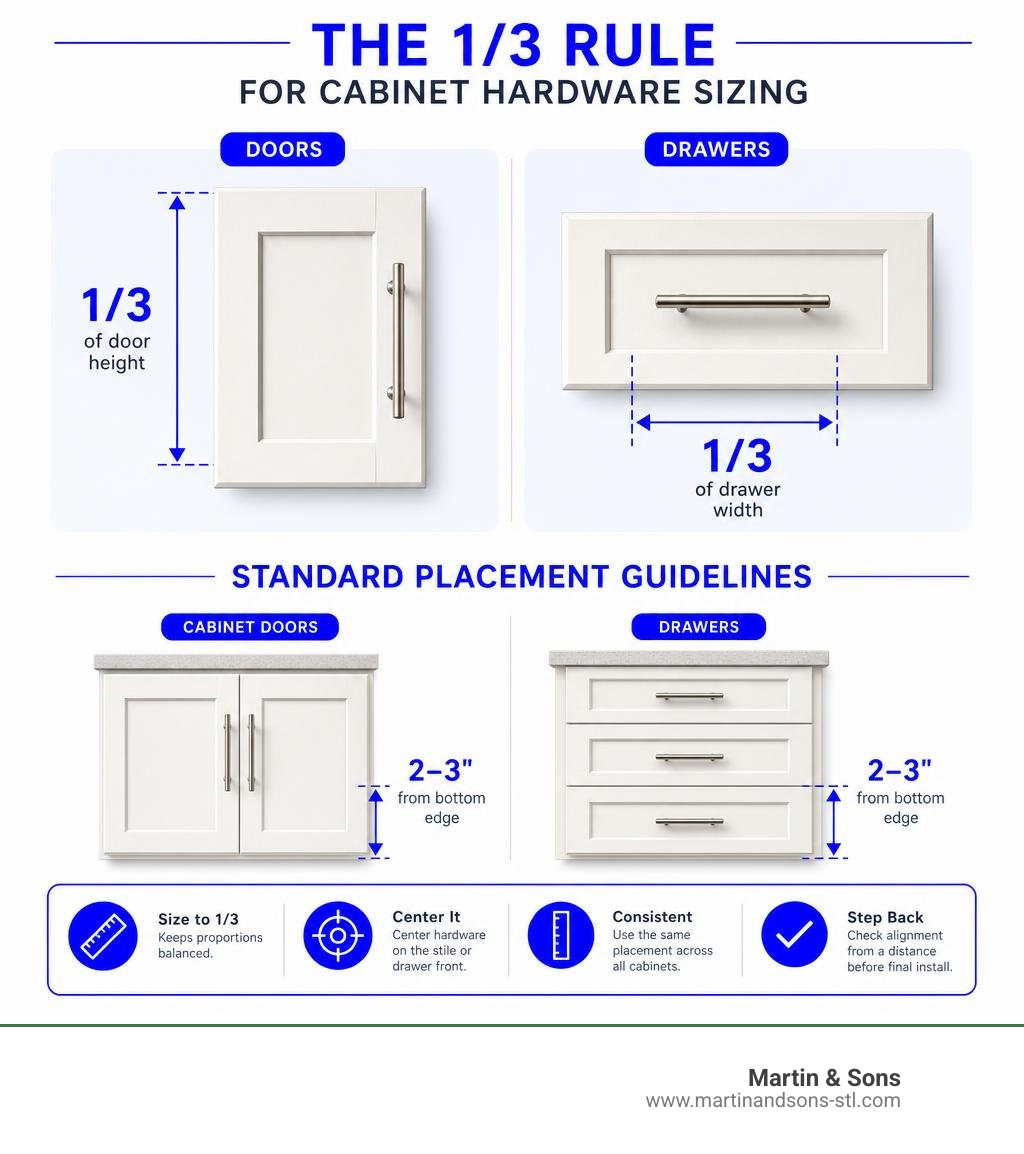
One of the most reliable guidelines for choosing hardware is the 1/3 rule. This rule suggests selecting cabinet pulls that are approximately 1/3 the height of your cabinet doors and 1/3 the width of your cabinet drawers. Following this rule ensures that your hardware looks visually balanced—neither tiny and lost on a large door, nor overwhelmingly bulky.
When deciding between knobs and pulls, consider both style and function:
| Hardware Type | Best For | Typical Placement | Visual Effect |
|---|---|---|---|
| Knobs | Cabinet doors, small drawers (under 16″ wide) | Corner of doors, center of drawers | Traditional, classic, and subtle |
| Pulls (Handles) | Large drawers, heavy pantry doors, modern cabinets | Vertically on doors, horizontally on drawers | Modern, transitional, and highly functional |
While traditional designs often lean heavily on knobs for doors and pulls for drawers, modern styles often utilize sleek pulls of varying lengths across both doors and drawers to create clean, continuous lines.
Choosing the Right Hardware for Your Cabinet Handle Installation
When shopping for handles (often called pulls), pay close attention to the center-to-center measurement. This is the exact distance from the center of one screw hole to the center of the other.
The most common cabinet pull size is 3-3/4 inches center-to-center, but sizes can range from a compact 2-1/2 inches up to 12 inches or more for large pantry doors. If you are replacing existing handles and do not want to drill new holes, you must find new hardware that matches your existing center-to-center spacing perfectly.
Additionally, cabinet doors and drawer fronts come in varying thicknesses. Most hardware comes with standard 1-inch screws, but drawer fronts (which often have a drawer box panel behind the decorative front panel) require longer screws. To make this easier, look for breakaway screws which feature notches that allow you to easily cut or snap them to the exact length needed. For more details on choosing the perfect style for your home’s aesthetic, check out the How to Choose Cabinet Hardware | Bob Vila guide.
Estimating the Cost of Cabinet Hardware Projects
How much does a cabinet handle installation project cost? The total price depends on whether you choose to do it yourself or hire a professional, as well as the quality of the hardware you select.
- Project Range: Overall costs typically range from $100 to $10,000, with a national average of around $300 for a standard-sized kitchen.
- Hardware Costs: Individual knobs and pulls average between $2 and $50 each. For an average-sized kitchen (100 to 200 square feet), you will typically need between 20 and 40 pieces of hardware. This means materials alone can run anywhere from $40 to $2,000+.
- Labor Costs: If you hire a professional kitchen installer, expect to pay between $5 and $30 per piece. Alternatively, a local handyperson will typically charge between $50 and $100 per hour.
- DIY Savings: Tackling this project yourself can save you between $130 and $275 in basic labor fees, making it a highly rewarding weekend DIY project.
For a deeper dive into budgeting and labor rates, refer to the Cabinet Hardware Installation Cost | HomeAdvisor breakdown.
Standard Placement and Measuring Guidelines
To make sure your kitchen looks cohesive, your hardware needs to be installed in the exact same relative position on every single door and drawer.
On cabinet doors, pulls are installed vertically on the side opposite the hinges. The standard rule of thumb is to place the bottom hole of a door pull (or the center of a knob) between 1 and 4 inches (typically 2 to 3 inches) from the bottom edge of the door. For upper wall cabinets, the hardware is placed 2 to 3 inches from the top edge of the door so it is within easy reach.
On drawer fronts, hardware is placed horizontally. How you place it depends largely on the size of the drawer:
- Drawers under 24 inches wide: Center a single knob or pull both horizontally and vertically on the drawer front.
- Drawers 24 inches wide or greater: These require either a single, large oversized pull (covering 1/3 to 2/3 of the drawer width) or two separate pulls or knobs. If using two pulls, apply the rule of thirds: divide the drawer front into three equal horizontal sections and center a pull in the middle of both the left and right sections.
- Drawers taller than 12 inches: If a drawer is exceptionally deep, placing the hardware dead-center can make it awkward to pull. Instead, place the hardware slightly toward the top rail of the drawer front.
Measuring and Marking Without Mistakes
The old adage “measure twice, cut once” is the golden rule of cabinet handle installation. A single millimeter of error will make a handle look noticeably crooked.
When measuring, always use a high-quality tape measure or steel ruler. Mark your drill points with a sharp pencil. First, find the vertical center of your door stile (the vertical frame piece of the cabinet door) or the center of your drawer front. Next, measure and mark your vertical placement height.
If you are installing pulls, find the center point of your placement, then divide your center-to-center hardware measurement by two. Mark that exact distance both above and below your center mark. For example, if your pull is 3 inches center-to-center, you will mark exactly 1.5 inches above and 1.5 inches below your center line. For a detailed reference on measuring and swapping out handles, review Replacing Your Drawer or Cabinet Door Handles.
Using Templates and Jigs for Perfect Alignment
Measuring every single door and drawer individually is not only exhausting, but it also increases the risk of human error. The best way to ensure perfect, repeatable accuracy is to use a hardware template or a commercial cabinet jig.
- DIY Cardboard Templates: You can easily make your own template out of a stiff piece of cardboard or scrap wood. Cut it to fit snugly over the corner of your cabinet doors, mark and poke holes at your desired measurements, and simply hold it against each door to mark your drill points.
- Commercial Jigs: If you have dozens of cabinets to do, investing in an adjustable aluminum or heavy plastic cabinet hardware jig is highly recommended. These jigs feature adjustable guides and metal bushings that lock into place, allowing you to slide the jig onto a door or drawer, press it flush, and drill directly through the guide holes without marking.
For step-by-step instructions on utilizing templates to speed up your project, check out How to Install Cabinet Handles and Knobs | Family Handyman.
Essential Tools and Materials for the Job
Having the right tools on hand will keep your installation running smoothly and prevent damage to your cabinet doors. Here is what you will need:
- Cordless Drill: A reliable drill is essential for making clean holes.
- 3/16-inch Drill Bit: This is the standard drill bit size for almost all standard 8/32 cabinet screws. Make sure the bit is sharp; a dull bit will tear and splinter the wood.
- Screwdriver: Always use a manual Phillips-head screwdriver to tighten your cabinet screws. Avoid using your cordless drill to tighten the screws, as the high torque can easily snap the screw heads, strip the threads, or crack the cabinet wood.
- Masking Tape or Painter’s Tape: Applying tape over your drill marks prevents the wood or laminate face from chipping and splintering as the drill bit enters.
- Thread-locking Compound (e.g., Blue Loctite): Cabinet doors and drawers are opened and closed thousands of times. Applying a tiny drop of blue Loctite to the end of your cabinet screws before tightening will prevent them from wiggling loose over time.
- Safety Glasses: Always protect your eyes from flying wood shavings.
How to Install Cabinet Hardware: A Step-by-Step Guide
Now that you have gathered your tools, selected your hardware, and planned your measurements, it is time to begin drilling.
One of the most important professional techniques to keep in mind is front-to-back drilling. Always place your drill bit on the front (finished) side of the cabinet door and drill straight through to the back. When a drill bit exits wood, it naturally pushes the wood fibers outward, which can cause minor splintering. By drilling front-to-back, any minor splintering will be hidden on the inside of the cabinet door, covered up by the screw head.
For a visual guide and additional tips, you can refer to the How to Install Kitchen Cabinet Door Handles- A Step-by-Step Guide – KRC article.
Step-by-Step Guide to a Successful Cabinet Handle Installation
Follow these clear, actionable steps to install your new hardware flawlessly:
- Clean and Prep: Wipe down your cabinet fronts to remove any grease or dust.
- Apply Masking Tape: Place a strip of masking tape or painter’s tape over the general area where your hardware will go. This protects the wood and gives you an easy surface to write on.
- Mark the Holes: Using your template, jig, or manual measurements, mark the exact drilling locations on top of the tape using a sharp pencil. Double-check your marks with a tape measure to ensure they are level and properly spaced.
- Brace the Door: Open the cabinet door slightly or brace it with a folded towel so you do not accidentally drill straight into the cabinet frame or shelf behind the door.
- Drill the Holes: Hold your drill perfectly perpendicular (at a 90-degree angle) to the cabinet face. Apply light, steady pressure and drill straight through the marked points from front to back. Let the speed of the drill do the work—do not force it.
- Remove the Tape: Gently peel away the masking tape to reveal clean, splinter-free holes.
- Install the Screws: Push the cabinet screws through the holes from the inside of the cabinet door.
- Secure the Hardware: Align your pull or knob with the screws on the front of the door. Hold the hardware steady with one hand while using a manual screwdriver to tighten the screws from the back. Tighten until snug, but do not overtighten.
Replacing Old Hardware and Patching Holes
If you are updating your kitchen by replacing old hardware, the process is slightly different. If your new handles have the exact same center-to-center measurement as your old ones, you are in luck—simply unscrew the old hardware and screw in the new pieces.
However, if you are switching from knobs to pulls, or if your new pulls have a different hole spacing, you will need to patch the old holes:
- Remove Old Hardware: Unscrew and remove all existing knobs or pulls.
- Fill the Holes: Use a high-quality wood putty or wood filler to fill the old holes. Press the putty firmly into the holes from both the front and back of the door.
- Sand Smooth: Once the putty is completely dry, gently sand the area flat using fine-grit sandpaper (220-grit is ideal) until it is perfectly flush with the surrounding wood.
- Paint or Refinish: Touch up the sanded areas with matching cabinet paint or stain. If your cabinets are older, you may want to take this opportunity to refinish or paint the entire cabinet face for a seamless, factory-fresh look.
- Drill New Holes: Once the paint is dry, follow the standard measuring and drilling steps to install your new hardware.
Common Mistakes to Avoid During Installation
While cabinet handle installation is a highly approachable DIY project, avoiding these common pitfalls will save you time, frustration, and ruined cabinet doors:
- Rushing the Process: Take your time. Double-check every single measurement before pulling the trigger on your drill.
- Using Cheap Plastic Jigs: Cheap plastic templates can flex or warp, leading to inconsistent hole placement across your kitchen. Invest in a sturdy, rigid aluminum jig for the best results.
- Overtightening Screws: Using a power drill to tighten the final screws can easily strip the threads inside the hardware or crack the wood around the screw hole. Always finish the job by hand with a screwdriver.
- Forgetting the Tape: Skipping the masking tape can lead to ugly wood splintering or laminate chipping around your drill holes.
- Not Checking for Level: Even if your measurements are technically correct, cabinet doors can sometimes hang slightly unevenly. Always step back and use a level to verify that your marked holes look straight relative to the room before drilling.
Frequently Asked Questions about Cabinet Hardware
What is the 1/3 rule for cabinet hardware?
The 1/3 rule states that your cabinet pulls should be roughly 1/3 the height of your cabinet doors or 1/3 the width of your drawers. This ensures that the hardware is proportionally balanced with the size of your cabinetry.
How do I prevent cabinet handles from loosening over time?
To keep your cabinet handles from wiggling loose, apply a tiny drop of blue thread-locking compound (such as Loctite) to the tip of the screw threads before hand-tightening them into the hardware. Avoid using lock washers, which can gouge the inside of your cabinet wood.
What size drill bit do I need for cabinet handles?
A standard 3/16-inch drill bit is the ideal size for most cabinet hardware installation projects, as it perfectly accommodates standard 8/32 cabinet screws. Always check your hardware packaging to see if the manufacturer recommends a specific bit size.
Conclusion
Updating your cabinet hardware is a simple, cost-effective project that yields massive visual rewards. By taking your time to plan your layout, measure accurately, and use the right tools, you can easily achieve professional-grade results on your own.
If you are looking to take your home’s aesthetic upgrade a step further, we can help. At Martin & Sons, we specialize in high-quality exterior and interior home improvements throughout the St. Louis metro area—including St. Peters, St. Charles, Florissant, Chesterfield, Creve Coeur, Maryland Heights, and O’Fallon. We are proud to offer our customers our unique peace-of-mind guarantee: no upfront deposits, pay only upon 100% completion and satisfaction, lifetime labor warranties, and our best prices upfront.
Ready to elevate your home’s entryways next? Read our comprehensive guide on Choosing the Best Doors for Your Home to find the perfect fit for your style and budget, or reach out to us today to schedule a consultation!