Is Steel Roofing Worth Installing? Here’s What You Need to Know First
The installation of steel roofing is one of the smartest long-term investments you can make for your home. Here’s a quick summary before we dive in:
How to install steel roofing — quick overview:
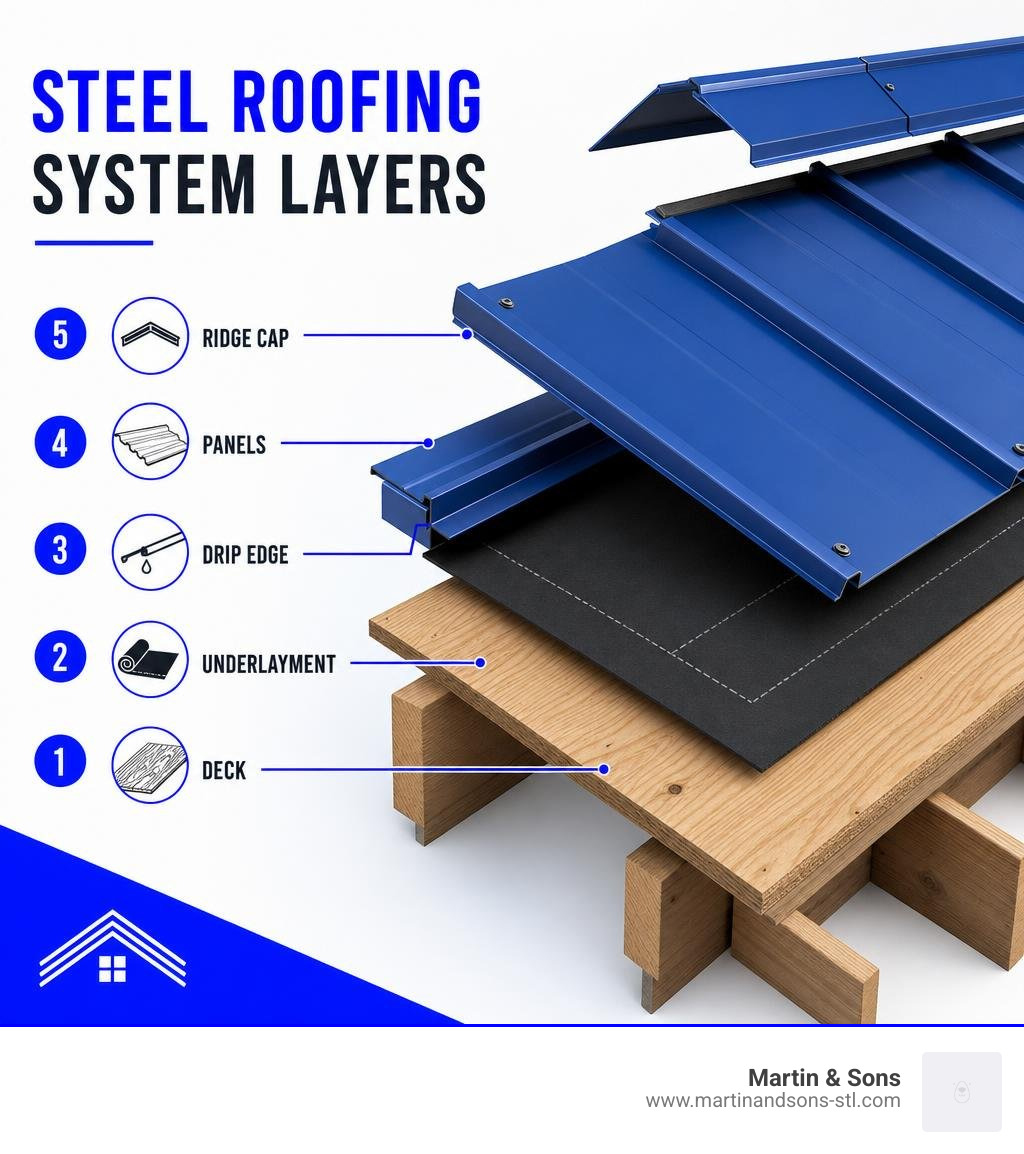
- Prepare the roof deck — inspect for damage, apply underlayment, install drip edge flashing
- Measure and cut panels — order 10% extra material, cut with snips or shears (never abrasive saws)
- Install panels — start square, work away from prevailing wind, fasten with rubber-washer screws
- Add trim and ridge cap — seal all edges with butyl tape, foam closures, and sealant
- Final inspection — check all fasteners, clean up metal shavings, verify watertight seals
Steel roofing lasts 50 to 70 years — roughly three to four times longer than standard asphalt shingles. It resists fire, wind, hail, mold, and moss. And unlike asphalt, it reflects heat instead of absorbing it, which can meaningfully cut your summer cooling bills.
That said, it costs two to three times more upfront than asphalt. Installation also requires the right tools, careful panel alignment, and attention to detail — small mistakes can lead to leaks or premature rust.
This guide walks you through every step, from choosing the right panel type to driving the final ridge cap screw.
I’m John Martin, and with over 35 years of hands-on experience in roofing — including the installation of steel roofing on homes throughout the St. Louis area — I’ve seen what works and what doesn’t. Whether you’re planning a DIY project or just want to understand the process before hiring a contractor, this guide gives you the full picture.
Steel vs. Asphalt Shingles: Longevity, Cost, and Performance
When it’s time for a new roof, many homeowners in St. Louis, O’Fallon, and Chesterfield find themselves at a crossroads: do they stick with traditional asphalt shingles, or do they make the jump to steel?
To help you make an informed decision, let’s break down how these two materials compare across the most critical categories.
| Feature | Steel Roofing | Traditional Asphalt Shingles |
|---|---|---|
| Lifespan | 50 to 70 years | 15 to 20 years |
| Upfront Cost | 2 to 3 times higher than asphalt | Lower upfront cost |
| Maintenance | Minimal (occasional debris removal) | Moderate (susceptible to wind, moss, algae) |
| Energy Efficiency | High (reflects solar heat; lowers cooling costs) | Low (absorbs heat into the attic) |
| Wind & Weather Resistance | Exceptional (high wind and hail ratings) | Moderate (can tear or blow off in storms) |
| Weight | Lightweight (reduces structural stress) | Heavy (adds load to the roof deck) |
Lifespan and Durability
As we discuss in our guide on Understanding the Lifespan of Your Home’s Roofing, the longevity of your roof determines its true long-term value. A metal roof is built to last with an expected lifetime of 50 to 70 years. Compare that to asphalt shingles, which typically require replacement every 15 to 20 years.
In our unpredictable Missouri climate—where we experience everything from heavy spring hail in Florissant to blazing hot summers in Creve Coeur—steel provides unmatched durability. It won’t curl, rot, split, or host unsightly green algae.
Upfront Costs vs. Long-Term Value
There is no sugarcoating it: you should expect to pay two to three times the price of asphalt for metal roofing. For a breakdown of how these material choices impact your budget, check out our resource on Roof Installation Costs: Key Factors That Affect Pricing.
However, because a steel roof lasts up to three times longer, it is often the last roof you will ever buy. When you factor in the avoided cost of two future shingle replacements, steel easily pays for itself over time.
Maintenance and Energy Efficiency
Asphalt shingles require semi-regular maintenance to replace blown-off pieces or treat moss growth. Steel, on the other hand, is virtually maintenance-free.
Even better, steel roofs can drastically reduce your cooling costs by reflecting solar radiation away from your home. Instead of acting like a giant sponge that bakes your attic, a coated steel roof acts like a mirror, keeping your home cooler and lowering your summer energy bills.
Essential Tools and Materials for the Installation of Steel Roofing
Before you begin the installation of steel roofing, you must gather the proper gear. Trying to improvise with standard woodworking tools will only lead to ruined panels, rusted edges, and a lot of frustration.

Required Tools:
- Tin Snips / Aviation Snips: For making precise, small cuts in the metal.
- Power Shears or Nibblers: Highly recommended for long straight cuts. Never use an abrasive saw blade, as the heat will destroy the protective Galvalume coating and cause the edges to rust.
- Cordless Drill / Impact Driver: Equipped with a magnetic hex-head bit.
- Hand Seamer / Panning Tool: For bending and folding panel edges at the eaves and gables.
- Chalk Line: Essential for establishing straight reference lines.
- Tape Measure & T-Square: For accurate layout measurements.
- Safety Harness & Fall Protection: Non-negotiable for working on sloped surfaces.
- Heavy Gloves & Safety Glasses: Steel edges are razor-sharp, and metal shavings can cause serious eye injuries.
Required Materials:
- Steel Roofing Panels: Ordered to the exact length of your roof slope plus 10% extra for waste.
- High-Quality Underlayment: A synthetic underlayment or a self-healing ice-and-water barrier.
- Drip Edge & Gable Flashing: To direct water away from the roof edges.
- Butyl Tape & Color-Matched Sealant: For sealing overlaps, seams, and trim joints.
- Metal Roofing Screws: Equipped with EPDM rubber washers (avoid standard neoprene washers, which degrade faster under intense UV exposure).
- Foam Closure Strips (Inside & Outside): To block wind, rain, insects, and birds from nesting under the panel ribs.
For a deeper dive into material specifications, standards, and engineering loads, you can refer to this comprehensive steel roofing manual.
Main Types of Steel Roofing Panels
Not all steel roofs are built the same. The profile you choose dictates the installation method, cost, and overall aesthetic of your home.
1. Corrugated Panels
Corrugated steel is the classic, wavy profile. It is incredibly strong for its weight and is typically the most budget-friendly option. Corrugated panels use an exposed fastener system, meaning screws are driven directly through the face of the metal. While highly durable, they require careful screw placement to prevent leaks over time.
2. Ribbed / PBR Panels
Ribbed panels (often called R-panels or PBR panels) feature raised trapezoidal ribs with flat pans in between. They offer a clean, modern commercial look and are widely used on residential outbuildings, agricultural barns, and modern homes. Like corrugated panels, these are exposed fastener systems. For structural framing details on how these panels interact with purlins, you can review this steel building installation guide.
3. Standing Seam
Standing seam is the gold standard of residential steel roofing. These panels feature vertical ribs that snap together, concealing the fasteners entirely beneath the metal surface. Because there are no exposed screws in the middle of the panels, standing seam roofs offer superior water resistance and a sleek, uninterrupted aesthetic. They are more complex to install and cost more, but they provide the ultimate peace of mind.
Step-by-Step Guide to Preparing and Installing Steel Roof Panels
Proper preparation is the difference between a roof that lasts 70 years and one that leaks during the first thunderstorm.
Safety and Planning First
Before stepping onto the roof, ensure you have a secure anchoring point and are wearing a properly adjusted safety harness. Ensure the weather forecast is clear—metal panels get incredibly slippery with even a light dew or mist.
Additionally, always verify your roof pitch. Most steel roofing profiles require a minimum slope of 3:12 (3 inches of vertical rise for every 12 inches of horizontal run) to shed water properly.
Finally, check the squareness of your roof using the 3-4-5 triangle method. Measure 3 feet along the eave, 4 feet up the rake edge, and verify that the diagonal distance between those points is exactly 5 feet. If your roof is out of square, you will need to adjust your panel placement slightly as you go to keep everything looking aligned.
Preparing the Roof Deck for the Installation of Steel Roofing
A flawless finish starts with a solid foundation. Here is how to prepare your roof deck:
Step 1: Inspect the Deck and Remove Old Materials
While some building codes allow you to install metal over a single layer of existing shingles, we always recommend stripping the roof down to the bare wood deck. Inspect the plywood or OSB for rot, soft spots, or sagging. Replace any damaged wood to ensure a flat, uniform substrate.
Step 2: Apply the Underlayment
Install a high-quality, self-healing ice-and-water barrier or synthetic underlayment. Start at the bottom eave and work your way up toward the ridge, overlapping each horizontal course by at least 4 inches and end laps by 6 inches. This ensures that any moisture that gets past the metal will flow safely down the roof.
Step 3: Install the Drip Edge
Secure your eave drip edge flashing directly over the underlayment. Fasten it every 8 to 12 inches using roofing nails. When overlapping sections of drip edge, ensure they overlap by at least 3 inches, and apply a bead of sealant between the joints.
Step 4: Lay Down Inside Foam Closure Strips
Position your inside foam closure strips along the eave, roughly one inch back from the edge. These foam strips match the profile of your steel panels, sealing off the gaps created by the raised ribs to keep pests and wind-driven rain out.
Step-by-Step Guide to the Installation of Steel Roofing
Once your deck is prepped, you are ready to begin the installation of steel roofing panels.
Step 1: Establish Your Square Reference Line
Do not rely on the edge of the roof to be perfectly straight. Snap a chalk line from the ridge to the eave that is perfectly perpendicular to your eave line. This will serve as your guide for aligning your very first panel.
Step 2: Cut the Panels to Length
If you need to trim your steel panels, use power shears or nibblers. Remember: never use an abrasive saw. The heat from a saw blade melts the protective zinc-aluminum coating on the steel, leaving raw metal exposed to the elements, which will quickly lead to rust.
Step 3: Set and Align the First Panel
Place the first panel on the roof, aligning its edge with your snapped chalk line. Allow the bottom of the panel to overhang the eave drip edge by 1 to 1.5 inches. This overhang ensures that rainwater sheds cleanly into your gutters rather than running down your fascia board.
Step 4: Drive Screws with Precision
Using color-matched roofing screws with integrated EPDM washers, begin fastening the panel.
For exposed fastener systems, drive screws into the flat pans directly adjacent to the ribs (never on top of the ribs, as this can cause the metal to distort and leak). Space your screw rows every 12 to 24 inches vertically.
Crucial Tip: Drive the screws straight (perpendicular to the metal). Tighten them until the EPDM washer compresses slightly to form a flat seal. Do not over-tighten, as this will crush and split the washer, creating a direct path for water to enter.
Step 5: Overlap and Repeat
Lay down the second panel, overlapping the drainage rib of the first panel. Ensure the sidelaps face away from the prevailing wind in your area to prevent wind-driven rain from forcing its way under the seams. Apply a line of butyl tape along the overlap seam before driving screws through both panels at the overlap.
Installing Trim, Ridge Caps, and Ventilation
With the main panels secured, it is time to wrap up the edges and seal the system.
Step 1: Install Gable (Rake) Trim
Gable trim covers the exposed outer edges of the roof panels on the sides of your home. Apply butyl tape to the underside of the trim, place it over the edge of the panel, and secure it with screws spaced every 12 inches.
Step 2: Place Outside Closure Strips
Before installing the ridge cap, place outside foam closure strips across the top of the panels near the ridge. Apply a bead of sealant along the top of these strips to create an airtight, watertight barrier.
Step 3: Install the Ridge Cap
Centering the ridge cap over the peak of the roof, secure it by driving 2-inch roofing screws through the ridge cap, through the outside closure strips, and directly into the raised ribs of the underlying panels. Overlap ridge cap sections by at least 6 inches, sealing the overlaps with butyl tape.
Step 4: Incorporate Ventilation
A healthy roof needs to breathe. If you are installing a ridge vent system to keep your attic cool and dry, follow the steps outlined in our Roof Vent Installation Guide: Static vs Turbine vs Ridge to ensure proper airflow while maintaining a watertight seal.
Frequently Asked Questions About Steel Roofs
Can I install a steel roof over existing asphalt shingles?
Yes, in many cases you can. However, we generally advise against it. Installing metal over old shingles can trap moisture, make it impossible to inspect the underlying wood deck for rot, and cause the metal to telegraph (show bumps from the shingles underneath).
If you do choose this route, check your local St. Louis building codes first. You will also need to install 1×3 furring strips (strapping) over the old shingles to create a flat, ventilated plane for the new steel panels.
How do I prevent rust and leaks during installation?
Prevention starts with proper handling:
- Clean up metal shavings immediately: When you drill or cut steel panels, tiny metal filings are left behind. If left on the roof, they will rust after the first rain, staining your beautiful paint finish. Sweep or blow them off the roof daily.
- Avoid incompatible materials: Never allow your steel panels to come into contact with copper, lead, or pressure-treated lumber. The chemical reaction (galvanic corrosion) will rapidly eat through the steel.
- Use high-quality sealants: Always use premium polyurethane or silicone sealants designed specifically for metal roofing.
When should I hire a professional instead of doing it myself?
If you are roofing a simple, low-slope shed, detached garage, or a basic A-frame cabin, a DIY installation is completely doable with some patience and a couple of handy friends.
However, if your home features multiple valleys, dormers, chimneys, or a steep pitch, the complexity increases exponentially. In these cases, hiring a professional is the best way to protect your investment.
To understand why professional installation pays off, take a look at the Top Benefits of Professional Roofing Services. A pro has the specialized tools, safety gear, and experience to handle complex flashing details that keep your home completely dry.
Conclusion
The installation of steel roofing is a fantastic way to upgrade your home’s protection, boost its curb appeal, and eliminate the need for costly roof replacements every couple of decades. While it requires a higher initial investment and meticulous attention to detail during installation, the payoff is a beautiful, storm-resistant roof that will easily last into the late 21st century.
If you are located in St. Louis, Florissant, St. Charles, O’Fallon, or the surrounding areas, and you are ready to make the switch to a lifetime steel roof, we are here to help.
At Martin & Sons, we do things differently to give you complete peace of mind:
- No upfront deposits: You don’t pay a single dime until the job is 100% complete and you are completely satisfied.
- Lifetime labor warranties: We stand behind our craftsmanship for as long as you own your home.
- Best prices upfront: No high-pressure sales tactics or hidden fees—just honest, transparent pricing from day one.
Ready to explore your steel roofing options? Visit our Martin & Sons professional roof installation services page to request your free, no-obligation estimate today!