
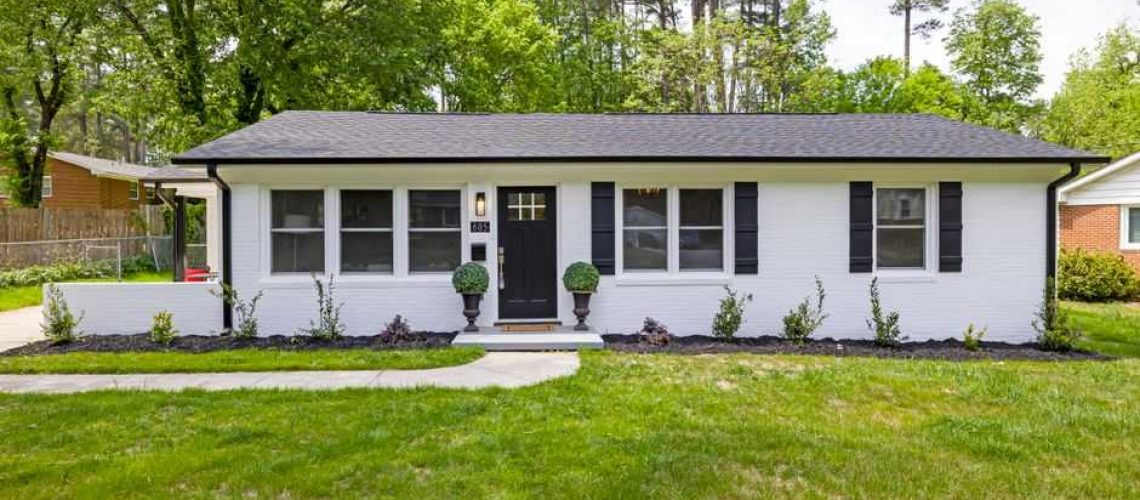
Why Choosing the Right Siding Color for Your Ranch Home Matters More Than You Think
The best siding colors for ranch homes aren’t just a matter of personal taste — they’re one of the most important curb appeal decisions you’ll make as a homeowner. Ranch homes have long, low, horizontal facades that put your siding color front and center. Unlike a two-story colonial where windows, gables, and rooflines share visual attention, a ranch home’s exterior is dominated by siding — often 70–80% of what a neighbor or buyer sees from the street.
Get the color right, and your home looks polished, modern, and welcoming. Get it wrong, and no amount of landscaping will save it.
Here are the best siding colors for ranch homes right now:
| Color Category | Top Picks | Best For |
|---|---|---|
| Greige / Warm Gray | Accessible Beige, Cobble Stone, Revere Pewter | Most ranch substyles; pairs with charcoal roofs |
| Soft White / Cream | Arctic White, White Dove, Swiss Coffee | Modern farmhouse ranch; bright, airy look |
| Cool Gray | Iron Gray, Hampshire Gray, Silver Gray | Suburban ranches; pairs with black or white trim |
| Muted Green | Sage, Clary Sage, Dried Thyme | Classic ranches with natural landscapes |
| Coastal Blue | Boothbay Blue, Rainwashed, Van Courtland Blue | Mid-century and West Coast-inspired ranches |
| Dark / Moody | Charcoal Slate, Kendall Charcoal, Deep Navy | Bold modern look; best with white trim |
A refreshed exterior isn’t just about looks either. Homes with updated exteriors can see up to 5–7% higher resale value in suburban markets — and ranch-style neighborhoods tend to benefit disproportionately from these updates.
I’m John Martin of Martin & Sons, a family-owned contractor with over 35 years of hands-on experience helping St. Louis homeowners choose and install the best siding colors for ranch homes in our region. In this guide, I’ll walk you through everything you need to know — from substyle-specific palettes to practical pitfalls — so you can make a confident decision before the first panel goes up.
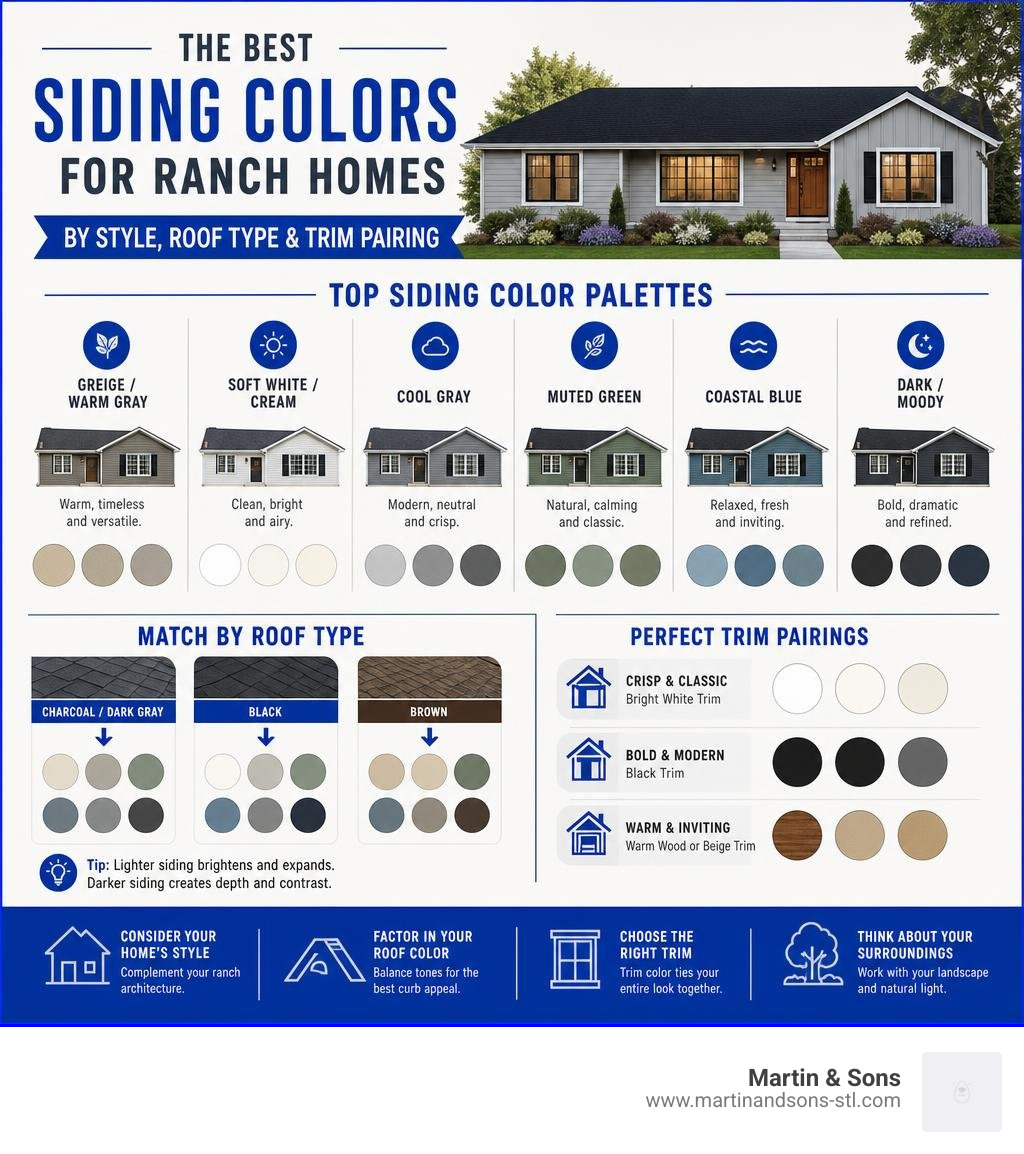
Simple guide to best siding colors for ranch homes:
Why Ranch Architecture Demands a Strategic Color Palette
Ranch architecture is uniquely American. Born in the post-WWII housing boom, these single-story, sprawling homes were designed to embrace open-concept living and connect indoor spaces with the outdoors. However, that same sprawling, horizontal profile creates a major design challenge: visual weight.
Unlike multi-story homes that naturally draw the eye upward, a ranch home keeps the eye moving horizontally. This means the street view of your home is almost entirely defined by the color of your siding. If you choose a color that is too dark and heavy without contrasting elements, your home can look like a long, sleepy bunker. If you choose a color that is too stark and bright, it can look like an endless white wall.
To create a balanced look, we have to think about how light hits the long facade throughout the day. Morning light tends to cool colors down, while the harsh afternoon sun warms them up. Because ranch homes have so much continuous surface area, subtle undertones in your siding — like a hint of pink in a beige or a touch of green in a gray — will be amplified significantly.
Before committing to any palette, it is crucial to understand how these architectural lines interact with color. For a deeper dive into how to systematically approach your home’s exterior design, check out our Step-by-Step Guide to Siding Colors for House.
Breaking Up the Long Facade Without Looking Busy
The secret to a stunning ranch exterior is breaking up the monotony of the long facade without creating visual clutter. When you have a vast expanse of wall, a single, uninterrupted siding style can look flat.
One of the most effective ways to add depth is through texture contrast rather than color contrast. Instead of painting different parts of your home different colors, keep the color uniform but switch up the siding profile. For example, you can use classic horizontal lap siding on the main body of the house and transition to vertical board-and-batten siding in the gables or on a projecting garage wall.
Another excellent option is incorporating shake siding on accent areas, such as around a recessed entryway or on a walk-out basement level. This adds architectural interest and shadows that naturally break up the long horizontal lines.
Be careful with two-tone siding color schemes. While a split-color look (like a dark blue on the bottom and white on top) can work on a two-story home, it often looks busy or vertically “chopped” on a single-story ranch. If you want to use multiple colors, stick to a three-color rule: one dominant color for the main siding (accounting for about 60-70% of the exterior), one trim color, and one bold accent color for the front door or shutters.
The Best Siding Colors for Ranch Homes by Substyle

Ranch homes are not a monolith. Over the decades, several distinct substyles emerged, each with its own architectural rules and ideal color palettes. Choosing the best siding colors for ranch homes means identifying your home’s specific substyle to ensure your new color scheme honors its design heritage.
For more inspiration on how different architectural styles pair with modern exterior palettes, read the detailed breakdown on Best Siding Colors for Ranch Homes.
Modern Grays and Greiges: The Best Siding Colors for Ranch Homes in Suburbia
If you live in a classic suburban ranch built between the 1960s and 1980s, grays and greiges (a blend of gray and beige) are your safest and most sophisticated options. These colors have surged in popularity across the Midwest, particularly in St. Louis suburbs like Chesterfield and Creve Coeur.
According to recent industry sales data, gray tones like Cobble Stone have seen a 7% increase in popularity, while deeper tones like Iron Gray are up by 6.5%. Greige siding is highly coveted because it offers the best of both worlds: the modern, clean feel of gray and the warm, welcoming vibe of beige.
Greige tones like Revere Pewter or Accessible Beige work beautifully on ranch homes because they ground the long facade. They harmonize effortlessly with natural concrete driveways, green lawns, and mature trees. When pairing these body colors, a crisp white trim adds a clean border that defines the home’s low-slung shape.
To stay on top of the latest color shifts in the home improvement world, take a look at the top Vinyl Siding Color Trends You Won’t Want to Miss.
Soft Whites and Creams for the Modern Farmhouse Ranch
The modern farmhouse trend has taken the single-story ranch by storm. It breathes new life into dated 1970s layouts, turning them into bright, airy, and welcoming spaces.
Arctic White has historically dominated siding sales, accounting for a massive 35–45% of all exterior siding purchases. However, on a sprawling ranch home, a stark, pure white can sometimes feel clinical or cause a blinding glare under the summer sun.
Instead, designers recommend warm whites and soft creams. Shades like White Dove, Swiss Coffee, or Alabaster provide that clean, modern farmhouse look while maintaining a soft, inviting warmth. When choosing a warm white, pair it with natural wood accents — such as cedar porch posts, a stained wood front door, or black metal light fixtures — to prevent the facade from looking flat.
For a closer look at how to pull off this relaxed, single-level aesthetic, check out these 22 Modern Farmhouse Ranch Exterior Colors for Relaxed One-Level Homes.
Nature-Inspired Greens and Blues for Classic Ranches
For homes nestled on wooded lots or properties with extensive landscaping, borrowing colors from nature is a foolproof way to build curb appeal.
Muted sage green (such as Clary Sage or Dried Thyme) is an incredibly graceful and elegant choice for a ranch. It blends seamlessly with surrounding greenery without disappearing entirely. Olive green tones also offer a rich, earthy look that pairs beautifully with natural stone accents and dark brown wood trim.
If you prefer cooler tones, coastal and mid-tone blues like Boothbay Blue or Rainwashed bring a relaxed, breezy vibe to ranch architecture. Blue siding looks exceptionally striking when contrasted with crisp white trim and a dark charcoal roof, giving the home a clean, tailored appearance.
Coordinating Siding with Roofs, Brick, and Stone
One of the most common mistakes homeowners make is choosing a siding color in a vacuum. Your siding must coexist with the “fixed elements” of your home — materials that are expensive or impossible to change, such as an existing brick foundation, stone accents, or a relatively new roof.
Because ranch homes have low-pitched roofs, the roof itself is highly visible from the street, often accounting for 35–40% of the home’s overall visual profile. To ensure your exterior elements don’t clash, read the Best Roof Color for a Ranch Style Home: Complete 2026 Guide.
How to Choose the Best Siding Colors for Ranch Homes with Existing Brick
Many mid-century ranches in the St. Louis area feature red or orange brick on the lower half of the facade or across an entire accent wall. If your home has brick, our professional advice is simple: do not paint the brick if you can avoid it. Brick is a low-maintenance, durable material, and painting it introduces a lifetime of paint maintenance and moisture concerns.
Instead, select a siding color that complements the natural undertones of your brick:
- Classic Red Brick: Red brick looks stunning when paired with dark gray, charcoal, or deep sage green siding. The cool tones of the siding balance the warm, fiery tones of the red brick.
- Orange or Terra Cotta Brick: Orange-toned brick pairs beautifully with warm greiges, soft creams, or muted olive greens. Avoid cool, stark blues, which can create a jarring, high-contrast look.
- Tuscan or Tan Brick: Warm beige, taupe, or chocolate brown siding colors harmonize naturally with tan and brown brickwork.
To learn more about matching cool gray tones with warm brick, check out our guide on How to Pick the Perfect Dark Gray Siding for Your Red Brick Exterior.
Matching Siding to Your Roof Color
Since approximately 70% of surviving ranch homes feature dark asphalt shingles in charcoal, black, or neutral gray, matching your siding to these roof tones is a common task.
A black or charcoal gray roof acts as a neutral anchor, allowing you to choose almost any siding color, from bright whites to rich blues and greens. However, if your roof has warm brown, weathered wood, or tan shingles, you must steer clear of cool grays and blues. A warm brown roof demands a warm siding color — think beige, cream, greige, or warm terracotta.
If you are struggling to find the right pairing for a dark roof, read our expert tips on What Color Siding Goes Well with My Home’s Black Roof.
Practical Considerations: Light vs. Dark Siding in 2026
While aesthetics are important, choosing the best siding colors for ranch homes also requires a dose of practical reality. Light and dark siding colors perform very differently over time, especially when subjected to the fluctuating weather patterns of the Midwest.
Before you make a final decision on a color family, read our guide on How to Pick the Perfect Vinyl Siding for Your House to understand how different materials and colors wear over time.
Heat Absorption and Solar Radiation
According to studies by the Department of Energy, dark colors absorb 20–30% more solar radiation on south-facing walls compared to lighter alternatives. On a sprawling, single-story ranch home, this heat absorption can translate directly into higher cooling costs during our hot, humid St. Louis summers. Lighter colors, on the other hand, reflect up to 80% of solar radiation, keeping your home’s attic and living spaces cooler.
Dust and Maintenance
If you hate washing your house, color choice is key. Dark siding colors (especially dark grays, blues, and blacks) show dust, pollen, and water spots up to twice as fast on textured vinyl siding compared to lighter alternatives. If you live near a busy road or have a lot of trees, a light-to-medium neutral like greige or taupe is highly forgiving.
Here is a practical comparison of how light and dark siding options perform:
| Feature / Metric | Light Siding (e.g., Arctic White, Soft Cream) | Dark Siding (e.g., Charcoal, Deep Navy) |
|---|---|---|
| Heat Absorption | Low (Reflects up to 80% of solar radiation) | High (Absorbs 20–30% more solar heat) |
| Dust & Pollen Visibility | Low (Blends in with light dust) | High (Shows dust and water spots quickly) |
| Fading Rates | Very Low (Fading is virtually invisible) | Moderate to High (UV rays break down dark pigments faster) |
| Visual Size Impact | Makes the home look 10–20% larger | Makes the home look smaller and more compact |
| Curb Appeal Vibe | Classic, bright, modern farmhouse | Bold, dramatic, contemporary |
Frequently Asked Questions About Ranch Siding Colors
What siding color makes a small ranch look bigger?
If you have a compact ranch home, light colors are your best friend. Colors like Arctic White, light gray, soft cream, and pale blue reflect natural light, causing the home’s boundaries to visually expand. This visual expansion can make a small ranch appear 10–20% larger from the street. To maximize this effect, keep the contrast between your siding and trim low, which prevents the home’s profile from looking segmented.
Should I use two-tone siding on a ranch home?
In most cases, we advise against using two different siding colors on a flat, continuous ranch facade. Because ranch homes lack the natural height and architectural breaks of two-story homes, splitting the body into two colors can create visual clutter and make the home look shorter.
Instead, use a single body color and introduce visual interest through texture (like mixing horizontal lap siding with vertical board-and-batten in the gables) or through natural materials like a stone or brick skirt.
How do regional climates affect ranch siding color choices?
Regional climates play a massive role in color longevity and performance. Here in the St. Louis area, we experience extreme seasonal shifts — from freezing, snowy winters to scorching, humid summers.
Because of these temperature swings, siding materials undergo significant thermal expansion and contraction. Darker colors absorb more heat, which can cause cheap vinyl siding to warp or buckle if not installed with proper clearance. Additionally, the intense summer sun can cause dark pigments to fade faster on south-facing walls. If you choose a dark color in our region, it is vital to invest in high-quality materials with advanced UV-resistant finishes, such as James Hardie fiber cement or premium vinyl.
Conclusion
Choosing the best siding colors for ranch homes doesn’t have to be a stressful experience. By identifying your home’s architectural substyle, coordinating with existing brick and roof tones, and weighing the practical pros and cons of light versus dark colors, you can select a palette that boosts your curb appeal and increases your home’s value for years to come.
At Martin & Sons, we have spent decades helping homeowners across St. Louis, St. Peters, St. Charles, Florissant, Chesterfield, Creve Coeur, Maryland Heights, and O’Fallon transform their homes. We believe in making the home improvement process as stress-free as possible, which is why we operate with no upfront deposits — you pay only when the job is completed to your 100% satisfaction. Plus, we back our craftsmanship with lifetime labor warranties and offer our best prices upfront.
If you are ready to update your ranch home’s exterior, we are here to help. Contact us today or visit our showroom at 8460 N. Lindbergh Blvd. Suite 11, Florissant, MO 63031 to explore our premium siding options. For more information on planning your upcoming exterior renovation, read our comprehensive guide on Siding a House: What You Need to Know About Your Project.