
Why Decking Repair in St. Louis Is More Urgent Than You Think
Decking repair in St. Louis is something thousands of homeowners face every year — and waiting too long can turn a simple fix into a costly replacement.
Here’s a quick summary of what you need to know:
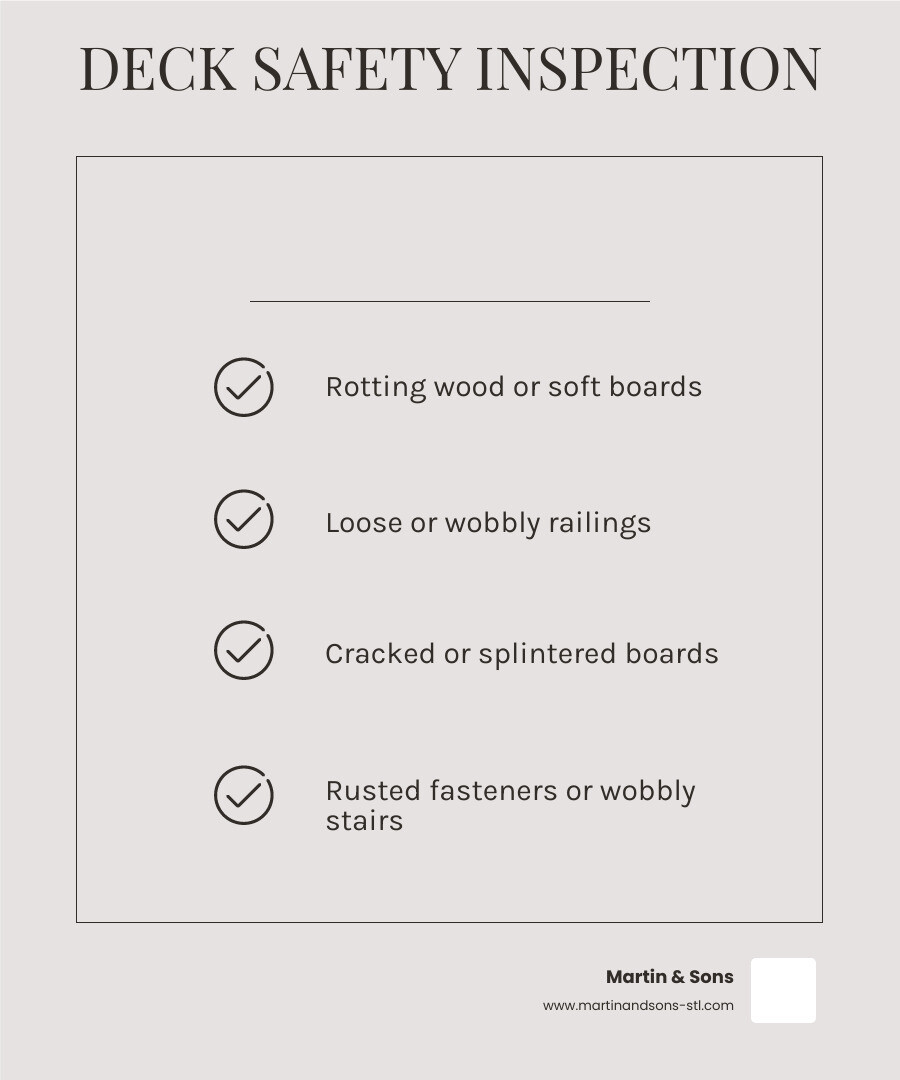
- Signs you need repair: rotting wood, loose railings, cracked boards, wobbly stairs, rusted fasteners, or a deck older than 10 years
- Repair vs. replace: If the frame is solid, repair is almost always cheaper — re-decking can save thousands
- Common causes in St. Louis: humidity, freeze-thaw cycles, UV damage, and heavy storm seasons accelerate wear faster than in milder climates
- Cost factors: size of deck, materials chosen, and extent of structural damage
- Who to hire: a licensed, insured local contractor with verified reviews and no upfront payment demands
St. Louis summers are hot and humid. Winters bring ice and snow. That combination is hard on wood — and most decks start showing serious problems between 10 and 15 years of age. A well-maintained wood deck can last up to 20 years, but only if damage is caught and fixed early.
Ignoring small problems like a popped nail or a soft board doesn’t just risk your deck. It risks the safety of everyone who uses it.
I’m John Martin, and through Martin & Sons LLC, I’ve spent over 35 years helping St. Louis homeowners handle exactly this kind of decking repair in St. Louis — from minor surface fixes to full structural rebuilds. We’ve seen what happens when repairs get delayed, and we’re here to help you avoid that.
Explore more about decking repair st louis:
Identifying Common Signs You Need Decking Repair in St. Louis
Living in the Gateway City means our outdoor spaces take a beating. From the humid river air to the sudden summer thunderstorms, your deck is under constant biological and physical attack. Identifying the need for decking repair in St. Louis early can be the difference between a weekend project and a total teardown.
Wood Rot and Structural Instability
Wood rot is the silent enemy of St. Louis decks. Because our region experiences high humidity, moisture often gets trapped between boards or at the base of support posts. If you can poke a screwdriver into a wooden beam and it feels soft or spongy, you have rot. This isn’t just an aesthetic issue; it’s a structural failure waiting to happen.
Loose Railings and Rusted Fasteners
If you lean on your railing and feel a “give,” you need immediate decking repair in St. Louis. Railings are life-safety components. Often, the wood around the bolts has decayed, or the fasteners themselves have rusted through. In our climate, standard nails can “pop” or rust, compromising the connection between the deck boards and the joists.
Cracked Boards and Wobbly Stairs
Stairs are often the first part of a deck to fail because they handle the most concentrated weight and movement. If your stairs feel bouncy or wobbly, the stringers (the diagonal supports) may be rotting at the ground level. Cracked boards are more than just splinter hazards; they allow water to penetrate deep into the wood grain, accelerating internal decay.
If you’ve recently experienced a severe weather event, it’s wise to check for St. Louis storm damage that might have loosened ledger boards or damaged your deck’s structural integrity.
The 10-Year Rule
Industry data from the North American Deck and Railing Association suggests that any deck over 10 years old should undergo a professional inspection. In St. Louis, decks often require significant intervention or replacement after 10–15 years due to our specific environmental stressors.
| Feature | Minor Wear (Repair) | Structural Failure (Replace) |
|---|---|---|
| Surface Boards | Small cracks, fading color | Extensive rot, large holes |
| Railings | Slightly loose, needs tightening | Wobbly, disconnected, or rotted posts |
| Framing/Joists | Surface mold, minor discoloration | Spongy wood, sagging beams |
| Fasteners | A few popped nails | Rusted through, ledger board pulling away |
| Stairs | Loose tread board | Rotting stringers, shaky structure |
Common Indicators for Decking Repair in St. Louis
Not every issue requires a sledgehammer. Many homeowners can extend the life of their outdoor space by catching these minor “red flags”:
- Surface Blemishes: Small splinters or deep scratches that can be sanded down.
- Popping Nails: Fasteners that have backed out due to the wood expanding and contracting.
- Localized Decay: One or two boards that look worse than the rest.
- Discoloration: Graying wood that indicates the UV protection has worn off.
- Peeling Stain: A sign that the wood is no longer waterproofed and is vulnerable to the next St. Louis rainstorm.
How the Missouri Climate Impacts Your Deck
Our local weather is a “worst-case scenario” for wood.
- Humidity Cycles: St. Louis humidity causes wood to swell, while our dry spells cause it to shrink. This constant movement loosens fasteners and creates cracks.
- UV Radiation: The intense summer sun breaks down lignin in wood cells, making them brittle.
- Snow and Ice: When snow sits on a deck, it melts and refreezes in the cracks (the freeze-thaw cycle), acting like a wedge that splits the timber.
- Ice Dams: Much like they affect roofs, ice dams can form on decks, trapping water against the house’s siding and the deck’s ledger board.
When to Repair vs. Replace Your St. Louis Deck
One of the most common questions we hear is: “Can I save this, or do I start over?” The answer almost always lies underneath the surface.
Framing Integrity: The Determining Factor
The “skeleton” of your deck—the posts, beams, and joists—is what matters most. Interestingly, the underside framing of many St. Louis decks stays in remarkably good shape because it isn’t exposed to direct UV rays and sheds water vertically. If your framing is pressure-treated and shows no signs of rot, you are a prime candidate for “re-decking.” This involves removing the old surface boards and railings and installing new ones on the existing frame.
The 15-Year Lifespan
While a well-maintained wood deck can hit the 20-year mark, the average St. Louis deck starts to become a liability between 15 and 20 years. If you find yourself paying for frequent repairs every spring, the cumulative cost will eventually exceed the price of a new installation.
Safety Hazards and Storms
Safety should always be your North Star. If a storm has caused the deck to pull away from the house (a ledger board failure), this is a critical emergency. You should look for signs of roof damage you should never ignore during your inspection, as deck and roof damage often go hand-in-hand after high-wind events in Missouri.
Cost-Benefit and Landfill Waste
Repairing a sound structure isn’t just cheaper—it’s greener. By salvaging the frame, you reduce the amount of treated lumber heading to local landfills. However, if the cost of repairs reaches 50% of the cost of a new deck, we usually recommend a full replacement to ensure you get a fresh 20-year lifespan.
Professional Restoration and Material Options
When it’s time for decking repair in St. Louis, the materials you choose will dictate how much maintenance you’ll be doing for the next decade.
Material Choices for Longevity
- Pressure-Treated Lumber: The most budget-friendly option. It’s chemically treated to resist rot and insects, making it a staple for St. Louis frames.
- Composite Decking: Brands like Trex are incredibly popular in areas like Chesterfield and O’Fallon. They don’t rot, warp, or splinter, and they never need staining. Composite can last 25–30 years in our climate.
- Steel Framing: For homeowners looking for a “forever” solution, steel framing is gaining traction. It won’t warp or rot like wood and provides a perfectly level surface for high-end composite boards.
- PVC Materials: These are entirely plastic and offer the highest resistance to moisture and mold, making them ideal for decks around pools or in heavily shaded, damp backyards.
If your deck was damaged by falling limbs or heavy debris, you might also need to check your Chesterfield storm damage options for comprehensive home repair.
The Professional Repair Process
A reputable decking repair St. Louis project follows a specific rhythm:
- On-Site Assessment: A pro will check the “bones” of the deck, specifically the ledger board and post bases.
- Permit Acquisition: Most structural repairs in St. Louis County require a permit to ensure the work meets local building codes.
- Board Replacement: Removing rotted sections and installing new, color-matched materials.
- Structural Reinforcement: Adding joist hangers or sistering beams to strengthen a sagging area.
- Refinishing: This includes power washing (carefully!), sanding to remove splinters, and applying a high-quality sealant or stain.
Choosing the Best Materials for Decking Repair in St. Louis
When selecting materials, consider heat dissipation. Dark composite boards can get very hot in the St. Louis July sun. If your deck has full sun exposure, look for lighter colors or “cool-deck” technologies.
Additionally, ensure your contractor uses fastener compatibility. Using the wrong screws on ACQ-treated lumber can lead to rapid corrosion. If you are also dealing with roofing issues, we offer specialized St. Louis Roofing Repair services to ensure your entire home exterior is sealed and secure.
Timelines
A typical decking repair in St. Louis takes between 1 and 2 weeks, depending on the scale. A simple re-decking might only take a few days, while a structural rebuild involving new concrete footings will take longer to allow for inspections and curing.
Navigating Costs and Choosing a Reliable Contractor
Pricing for decking repair in St. Louis varies wildly based on your zip code and the complexity of the project.
Factors Influencing Price
- Square Footage: Larger decks obviously require more material and labor.
- Material Pricing: Wood is cheaper upfront; composite is more expensive but saves money on maintenance over 20 years.
- Labor Rates: Specialized deck carpenters often charge more than general handymen, but they understand the nuances of load-bearing structures and local codes.
- Permit Fees: St. Louis, St. Charles, and Florissant all have different fee structures for building permits.
If your deck damage is part of a larger insurance claim, such as after a hail storm, you may want to look into St. Charles storm damage specialists who can help coordinate repairs for your siding, roof, and deck simultaneously.
How to Choose a Contractor
Don’t gamble on a “tailgate contractor.” Look for these hallmarks of reliability:
- Licensed and Insured: They should carry at least $1M–$2M in liability insurance.
- Portfolio Verification: Ask to see photos of decks they’ve repaired that are at least 3 years old.
- No Upfront Deposits: This is our policy at Martin & Sons. You should only pay when the job is 100% complete and you are satisfied.
- Warranties: Reputable companies offer labor warranties in addition to material warranties.
Questions to Ask a Deck Contractor
- Are you familiar with the building codes in my specific municipality (e.g., Maryland Heights or Creve Coeur)?
- Will you handle the permit process, or is that on me?
- Do you use hidden fasteners or face-screws?
- How do you handle hidden rot discovered after the project starts?
- Can you provide three local references from the last six months?
Frequently Asked Questions about St. Louis Deck Maintenance
Do deck repairs in St. Louis require permits?
Yes, in most cases. If you are replacing more than a few surface boards or doing any structural work (like replacing a post or railing), St. Louis County and most local municipalities require a permit. This ensures your deck won’t collapse during your next backyard BBQ.
How can I prevent future wood rot in this climate?
The best defense is a good offense. Keep your deck clear of wet leaves and debris, which trap moisture. Ensure there is at least a 1/8-inch gap between boards for airflow. Most importantly, stay on a strict staining and sealing schedule—usually every 2 to 3 years for wood decks in Missouri.
Will repairing my deck increase my home’s resale value?
Absolutely. Outdoor living spaces are a top priority for buyers in the St. Louis housing market. A rotted, graying deck is a “red flag” that suggests the rest of the home hasn’t been maintained. A freshly repaired and stained deck can provide a significant return on investment.
Conclusion
Your deck should be a place for relaxation, not a source of stress. Whether you’re in Florissant, Chesterfield, or right in the heart of St. Louis, keeping your outdoor space safe and beautiful is essential for your home’s value and your family’s safety.
At Martin & Sons, we believe in doing things differently. We specialize in exterior home improvements across the entire St. Louis metro area, including St. Peters, St. Charles, and O’Fallon. We offer:
- No upfront deposits — you don’t pay a dime until the work is done.
- 100% satisfaction guarantee — we stay until it’s right.
- Lifetime labor warranties — we stand by our craftsmanship for the long haul.
- Best prices upfront — no high-pressure sales tactics or hidden fees.
If your deck is showing signs of age, or if you’re worried about structural issues after a storm, don’t wait for a collapse. Contact Martin & Sons for St. Louis Roofing and Home Repair today for a free, honest assessment of your decking repair in St. Louis. Let’s get your outdoor space ready for the next season!