Why Roof Repair and Maintenance Could Save You Thousands
Quick answer: What does good roof repair and maintenance involve?
| Step | How Often | Why It Matters |
|---|---|---|
| Professional roof inspection | Twice a year (spring & fall) | Catches problems early, preserves warranty |
| Gutter cleaning | At least twice a year | Prevents water backup and rot |
| Post-storm checkup | After every major storm | Finds hidden damage before it spreads |
| Minor repairs (flashing, vent boots, shingles) | As needed | Stops small leaks from becoming big ones |
| Documentation | Every visit | Supports insurance claims and warranty compliance |
Staying on top of roof repair and maintenance is one of the most cost-effective things you can do as a homeowner. Yet it’s also one of the most neglected.
Here’s the hard truth: a small leak ignored for even a few weeks can quietly soak your insulation, rot your decking, and invite mold into your home. According to the National Roofing Contractors Association, roof system maintenance is the single most important factor – after proper installation – in determining how long your roof lasts and what it costs you over time.
Most homeowners only think about their roof when something goes wrong. By then, a repair that might have cost a few hundred dollars has turned into a much bigger bill.
This guide walks you through everything you need to know – from spotting early warning signs to deciding between repair and full replacement – so you can protect your home before problems get out of hand.
I’m John Martin, co-owner of Martin & Sons LLC, and with over 35 years of hands-on experience in roof repair and maintenance, I’ve seen how a little proactive care can add decades to a roof’s life. Let’s walk through exactly what that looks like in practice.
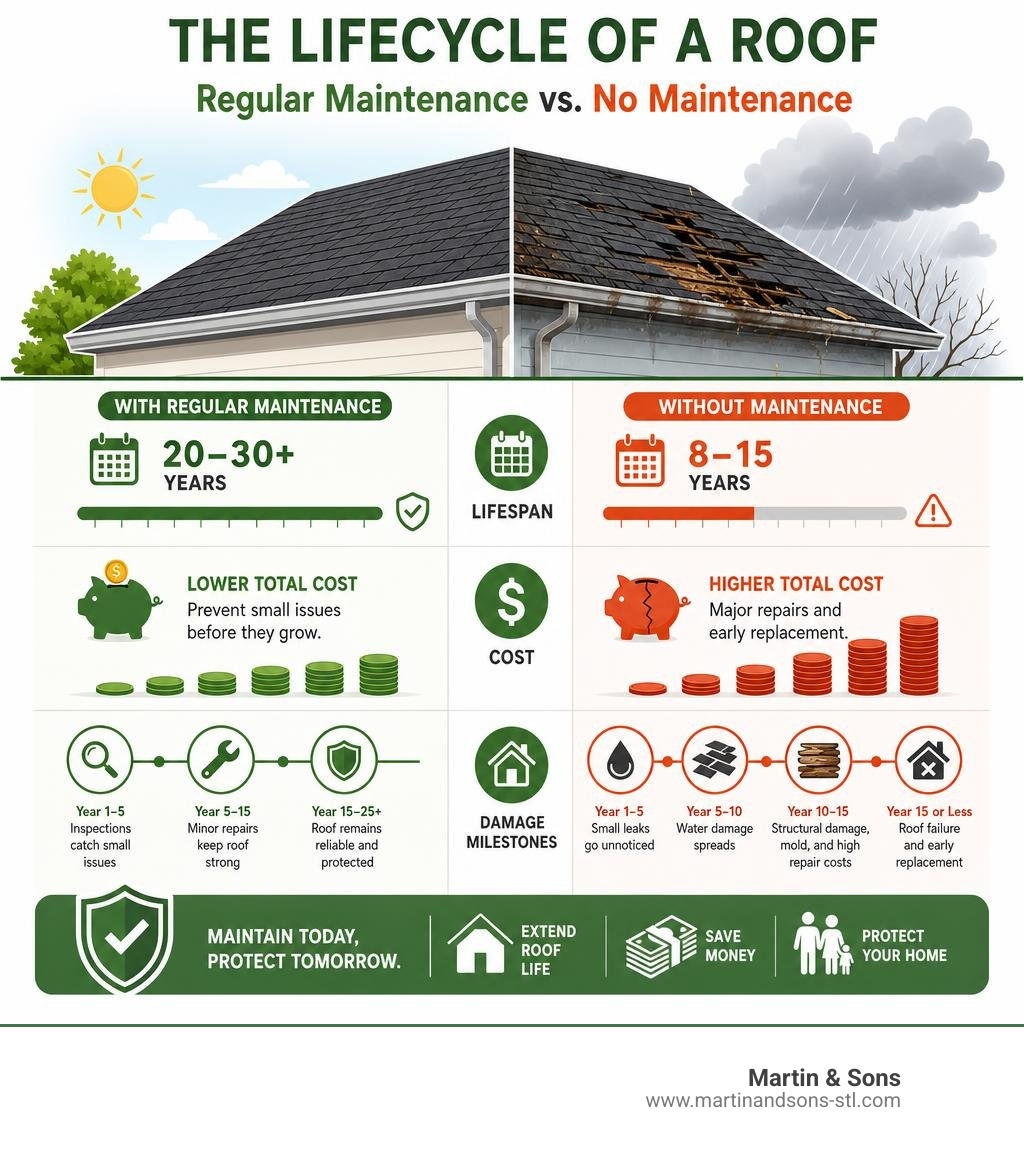
Roof repair and maintenance word roundup:
1. Roof Repair and Maintenance: Understanding the Key Differences
To protect your home effectively, it is essential to understand that “repair” and “maintenance” are not the same thing. While they both contribute to the longevity of your roof, they serve entirely different purposes in your home improvement strategy.
Think of your roof like your car. You do not wait until your engine seizes to change your oil. Oil changes are maintenance; rebuilding an engine is a repair. When you invest in a proactive roofing maintenance service, you are keeping the “engine” of your home running smoothly so you can avoid catastrophic failures down the road.
Routine Roof Maintenance: Proactive Protection
Routine roof maintenance is the scheduled, preventative care your roof receives to ensure it remains in peak condition. The primary goal of maintenance is to identify and resolve minor issues before they escalate into active leaks or structural damage.
A comprehensive maintenance routine typically includes:
- Annual or Semi-Annual Inspections: Thoroughly examining the roof surface, flashing, valleys, and penetrations to catch wear and tear.
- Gutter Cleaning and Alignment: Clearing leaves, twigs, and sediment to ensure water drains away from your home instead of backing up under your shingles.
- Debris Removal: Clearing accumulated organic matter from valleys and behind chimneys, which can trap moisture and cause premature shingle rot.
- Moss and Algae Prevention: Treating areas prone to biological growth, which can lift shingles and degrade roofing materials.
- Warranty Preservation: Most major roofing manufacturers require regular, documented inspections to keep their product warranties valid. Skipping maintenance can leave you paying out of pocket for material failures.
Roof Repair: Reactive Restoration
Roof repair, on the other hand, is reactive. It is the work performed to fix an active problem, such as a leak, physical damage, or structural failure. If maintenance is your shield, repair is your medicine.
Common roof repair scenarios include:
- Leak Patching: Locating the exact source of water infiltration and sealing it.
- Shingle Replacement: Removing wind-damaged, cracked, or missing shingles and replacing them with color-matched materials.
- Flashing Reconstruction: Repairing or replacing the metal barriers installed around chimneys, dormers, and valleys that have corroded or pulled away.
- Storm Damage Restoration: Fixing punctures from fallen tree limbs or replacing areas stripped by high winds.
- Emergency Tarping: Installing heavy-duty tarps immediately after storm damage to prevent further water infiltration before permanent repairs can be completed.
2. Warning Signs Your Roof Needs Immediate Attention
Early detection is your best defense against expensive water damage. Many homeowners do not realize their roof is leaking until they see water dripping from the living room ceiling. By that point, the water has already traveled through your decking, saturated your attic insulation, and potentially compromised your electrical wiring or drywall.
By familiarizing yourself with the signs of roof damage you should never ignore, you can catch problems while they are still simple, localized fixes.
Exterior Red Flags: Shingles, Flashing, and Gutters
Grab a pair of binoculars and step into your yard to conduct a safe, ground-level visual inspection. Look for these clear warning signs:
- Curled, Buckled, or Missing Shingles: Shingles should lay flat against your roof. If they are curling at the edges, buckling in the middle, or missing entirely, your roof is vulnerable to wind-driven rain.
- Granule Loss in Gutters: Finding a heavy accumulation of sand-like granules in your gutters is a sign that your shingles are reaching the end of their useful life and losing their protective UV coating.
- Cracked or Corroded Flashing: Flashing is the number one failure point on any roof. Inspect the metal joints around your chimney, skylights, and vents. If the sealant is cracked or the metal is rusted, water will find a way in.
- Clogged or Sagging Gutters: Gutters filled with debris force water to pool at the roof’s edge, causing wood rot along your fascia boards and roof line.
If you notice any of these signs, it is time to consult local roofing experts who understand our regional weather patterns. Homeowners across the St. Louis metro area—including St. Peters, St. Charles, Florissant, Chesterfield, and O’Fallon—can rely on a trusted local roofing company to assess the damage and provide reliable solutions.
Interior Warning Signs: Water Stains and Attic Moisture
Sometimes the clearest signs of roof trouble are found inside your home. Take a flashlight and inspect your ceilings and attic space for:
- Ceiling and Wall Stains: Dark, ringed water stains on your ceilings or walls are classic indicators of an active roof leak.
- Attic Mold or Mildew: If your attic smells musty or you see dark spots on your rafters or insulation, you have a moisture problem. This is often caused by a combination of minor leaks and poor attic ventilation.
- Peeling Paint or Sagging Drywall: Water traveling down interior walls can cause paint to blister and drywall to sag or soften.
- Wood Rot and Sagging Decking: From inside your attic, look up at the underside of your roof deck. Dark wood, rotting rafters, or sections that visibly sag indicate long-term water exposure.
3. The Ultimate Roof Repair and Maintenance Checklist
A structured seasonal maintenance routine is the easiest way to protect your roofing investment. By performing consistent checks, you ensure your roof is prepared to handle the humid summers, heavy spring rains, and freezing winter temperatures of the St. Louis area.
Reviewing the homeowner’s guide to shingle roof repair can help you master the basics of shingle care and minor maintenance.
Semi-Annual Inspections and Gutter Cleaning
We recommend scheduling your comprehensive roof maintenance twice a year: once in the late spring and once in the late fall.
- The Spring Checklist: Focuses on identifying winter damage, such as shingle cracking from freeze-thaw cycles or damage from heavy snow loads.
- The Fall Checklist: Focuses on clearing fallen leaves and preparing your roof for freezing winter weather.
- Downspout Clearance: Ensure water flows freely through your downspouts and away from your foundation. Clogged downspouts cause gutters to overflow, which can rot your soffits.
- Debris Removal: Sweep away leaves, pine needles, and branches that have gathered in your roof valleys or behind roof penetrations.
For localized, professional support, you can utilize our dedicated services across the metro area. If you live in St. Louis, you can schedule your care through St. Louis Roofing Maintenance. If you are located in Creve Coeur, you can book via Creve Coeur Roofing Maintenance, and Florissant residents can easily access Florissant Roofing Maintenance.
Addressing Common Roof Repair and Maintenance Issues
When conducting maintenance, pay close attention to these high-risk areas:
- Vent Boots: The rubber collars around your plumbing vent pipes dry out, crack, and rot under intense sun exposure. Replacing a cracked vent boot is a quick, inexpensive fix that prevents a major attic leak.
- Chimney Crickets: A cricket is a small, pointed roof structure built behind a chimney to divert water around it. Ensure this area is clear of debris and that the flashing is completely sealed.
- Valley Sealing: Roof valleys channel massive amounts of water. Ensure the shingles in your valleys are intact and properly sealed.
- Wind-Uplift Mitigation: Ensure shingles along the edges of your roof and ridge caps are securely fastened. We use a high-wind fastening pattern to prevent wind from catching and lifting shingle edges.
| Common Roof Issue | Typical Repair Complexity | Why It Happens | Estimated Cost Range |
|---|---|---|---|
| Cracked Vent Boot | Low | UV exposure degrades rubber collar | $350 – $500 |
| Damaged Shingles (Small Area) | Low | Wind damage, branch scrapes, or age | $350 – $800 |
| Leaking Chimney Flashing | Moderate | Sealant dries out or metal corrodes | $800 – $1,800 |
| Valley Leak Repair | Moderate | High water volume wears down sealants | $1,000 – $2,500 |
| Major Structural rot / Decking replacement | High | Long-term unaddressed water leaks | $2,500+ |
4. Repair vs. Replace: How to Make the Cost-Effective Choice
One of the most common questions homeowners ask us is: “How do I know when to stop repairing my roof and just replace it?” Making the wrong call can be incredibly expensive. Patching a roof that is structurally failing is a waste of money, while replacing a roof that only needs a minor flashing repair is an unnecessary capital expense.
To help you navigate this choice, read our detailed guide on repair vs replace: how do I know which route to take for my roof.
Evaluating Roof Age and Damage Extent
When we inspect a roof, we look at several key metrics to determine if a repair is viable or if a replacement is the smarter financial choice:
- The 25-Year Rule: Asphalt shingle roofs generally have a lifespan of 20 to 25 years. If your roof is approaching or has passed this age, even minor issues are signs of systemic material failure.
- The 30% Damage Threshold: If more than 25% to 30% of your roof’s surface area is damaged, missing shingles, or losing granules, a localized repair is no longer practical or cost-effective.
- Structural Integrity: If water has seeped into the roof decking, causing widespread wood rot, mold, or sagging rafters, a complete tear-off is necessary to rebuild the structural foundation.
- Material Degradation: If the shingles are brittle and break easily when touched, they can no longer hold a nail or seal properly, making repairs ineffective.
If you are facing extensive damage, it is wise to consult a reputable local provider. Homeowners in St. Louis and Maryland Heights can seek professional guidance from a trusted roofing contractor to evaluate the structural integrity of their roof and explore their options.
Financial Factors in Roof Repair and Maintenance Decisions
To make the best decision for your budget, consider these long-term financial factors:
- Budget Predictability: While a repair is cheaper upfront, a series of recurring repairs over a few years can quickly add up to the cost of a new roof, without providing the security of a new warranty.
- Insurance Claims: If your roof was damaged by a sudden storm, wind, or hail, your homeowners insurance may cover a significant portion of the replacement cost.
- Property Value: A new roof is a major selling point. If you plan to sell your home in the near future, a brand-new roof can dramatically increase your home’s curb appeal, resale value, and ease of transaction.
- Energy Efficiency: Modern roofing materials, radiant barriers, and proper attic ventilation systems can significantly lower your monthly heating and cooling bills, offering a continuous return on your investment.
Frequently Asked Questions About Roof Care
How often should I schedule a professional roof inspection?
We highly recommend scheduling a professional inspection twice a year — once in the spring and once in the fall. You should also schedule an inspection after any severe storm involving high winds or hail. For more details on why this timing matters, check out our guide on how often should I schedule a roof inspection and learn why a roof inspection is important to prevent damage.
Will minor roof repairs void my manufacturer warranty?
No, as long as the repairs are performed by a certified, licensed professional roofing contractor using manufacturer-approved materials and techniques. Major manufacturers like GAF, CertainTeed, and Owens Corning fully support repairs on their systems, provided the work is completed to their strict specifications.
What are the most common causes of roof leaks?
The most common causes of roof leaks include flashing failures around chimneys and valleys, deteriorated rubber vent boots, clogged gutters that cause water to back up, and wind or storm damage that removes shingles. If you find yourself facing a sudden leak in Creve Coeur, you can rely on our specialized team for emergency roof repair in Creve Coeur.
Conclusion
Your roof is your home’s first line of defense against the elements. Investing in regular roof repair and maintenance is the single best way to protect your property, preserve your warranty, and avoid the massive headache of unexpected water damage.
At Martin & Sons, we believe in making roof care as stress-free as possible. We are proud to serve families across St. Louis, St. Peters, St. Charles, Florissant, Chesterfield, Creve Coeur, Maryland Heights, and O’Fallon.
We do things differently to protect you:
- No upfront deposits: You do not pay a single dime until the job is 100% complete and you are entirely satisfied.
- Lifetime labor warranties: We stand behind our workmanship for the lifetime of your roof.
- Best prices upfront: No high-pressure sales tactics or hidden fees — just honest, competitive pricing from day one.
If you want to keep your home safe, dry, and secure, let us take a look. Contact us today to schedule your next service or visit us at our main office at 8460 N. Lindbergh Blvd. Suite 11 Florissant MO 63031. You can also explore our local care options directly through our Florissant Roofing Maintenance page. Let’s make sure your home stays protected for years to come!