

Essential Strategies for Flat Roof Preventative Maintenance
Flat roof preventative maintenance starts with two inspections a year, in spring and fall, plus a check after major storms. Look for blocked drains, loose seams, damaged flashing, punctures, and water stains indoors. Clear leaves and debris from drains when you can do so safely. If water remains on the roof 48 hours after rain, photograph the area and call a roofer to find the cause.
I’m John Martin of Martin & Sons, a family-owned St. Louis business started in 1953, and I have more than 35 years of industry experience. For flat roof preventative maintenance, the routine I recommend begins with these checks:
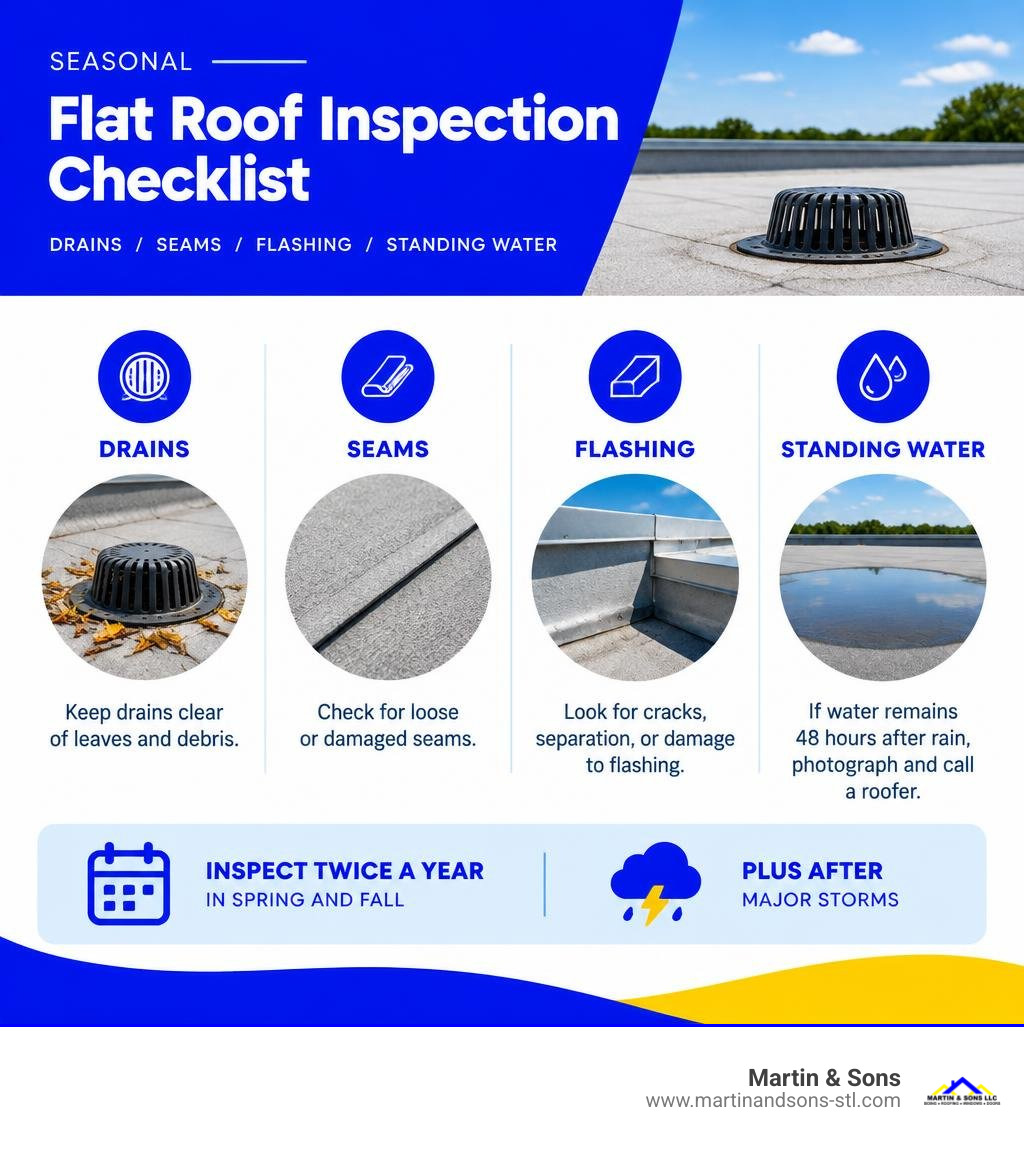
Flat roof preventative maintenance definitions:
A flat roof is never completely flat. Every system requires a slight pitch to guide runoff toward drainage outlets. When that runoff stalls, moisture will eventually find a pathway into the building deck. Taking a proactive approach roughly doubles the service life of traditional felt systems and can add 8 to 15 years to modern single-ply membranes.
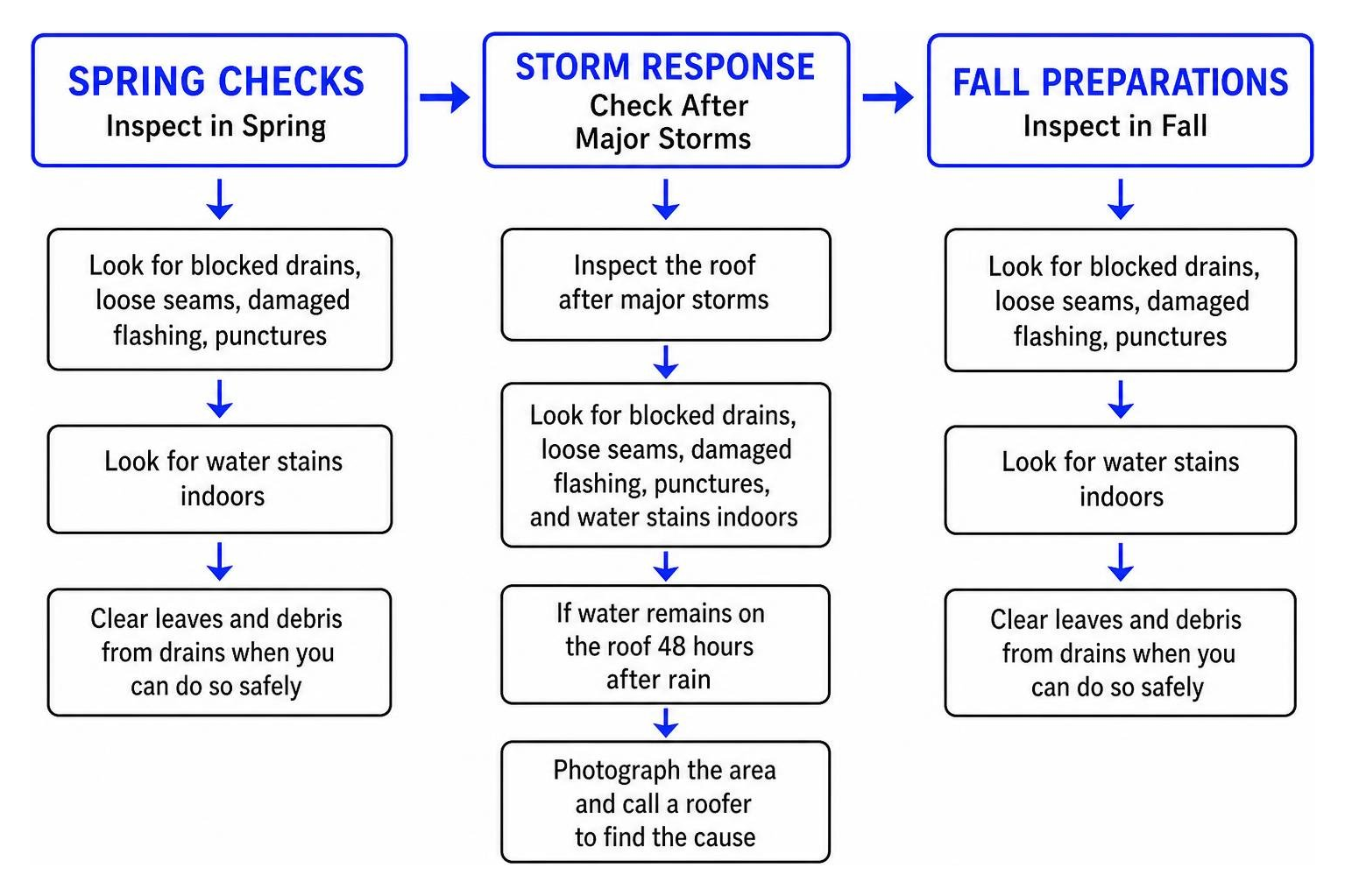
Core Inspection Protocols for Flat Roof Preventative Maintenance
To protect your building, you need a repeatable inspection routine. Start from the interior before climbing onto the deck. Water stains on ceiling tiles, peeling drywall paint, or localized dampness often indicate an exterior breach long before a visible drip appears.
When walking the roof surface, focus on high-stress zones:
- Seam Separation: Inspect every lap seam. Thermal expansion causes adhesives to degrade and heat welds to lift.
- Flashing Deterioration: Check base flashings around parapet walls, HVAC curbs, pipes, and skylights. Cracked mastic or loose termination bars are common points of water entry.
- Surface Blistering: Trapped air or moisture creates raised bubbles. Undisturbed blisters can remain stable, but punctured or cracked blisters require immediate attention.
- Punctures and Tears: Look for tears caused by dropped maintenance tools, sharp windblown branches, or heavy foot traffic.
Catching these issues early through proactive roof preventative maintenance prevents minor sealant failures from developing into structural decking rot.
Drainage Clearing and Ponding Water Mitigation
Blocked outlets cause approximately 70% of premature flat-roof failures. When organic debris blocks internal drains or perimeter scuppers, standing water accumulates rapidly.
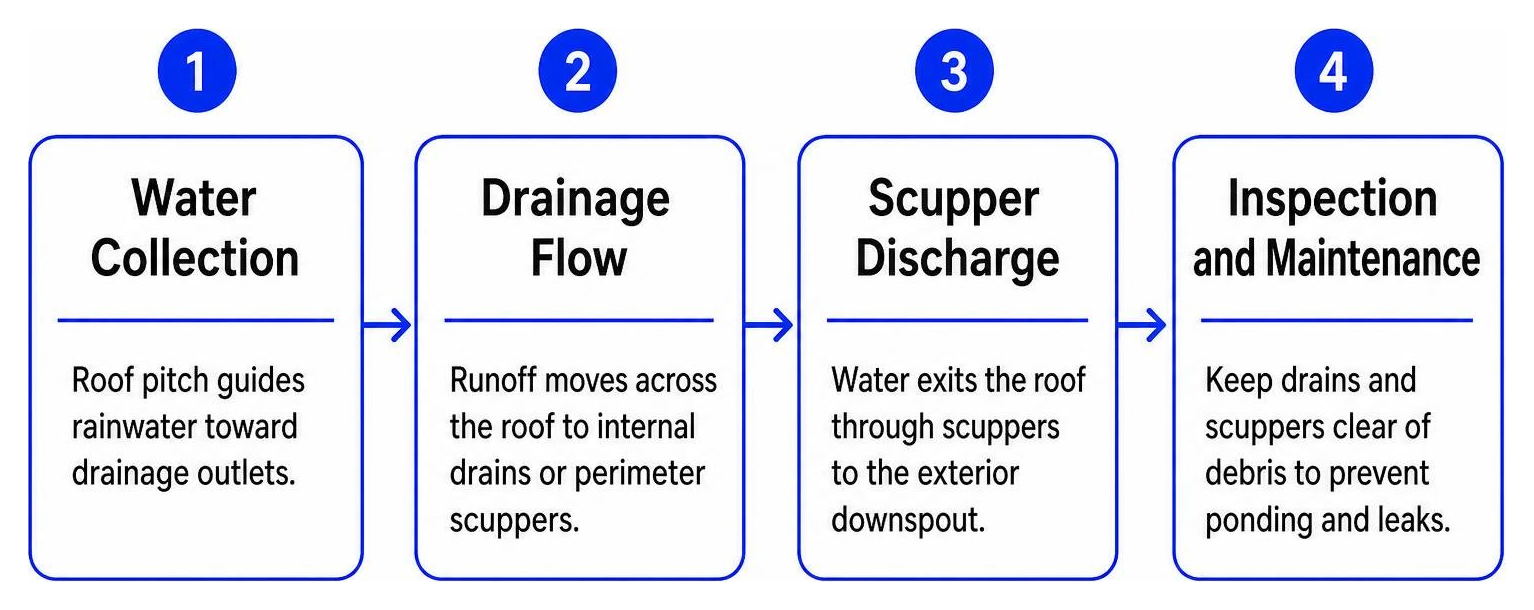
The roofing industry follows a strict standard: any water standing deeper than a quarter-inch 48 hours after rain constitutes ponding. Standing water breaks down protective UV inhibitors, stresses underlying structural joists, and accelerates seam failure.
If persistent ponding occurs despite clear drains, your building may have deck deflection (sagging joists) or insufficient original fall. Correcting these low spots often requires adding tapered rigid foam insulation boards during your next roof recovery or installation to direct runoff smoothly to the outlets.
Membrane-Specific Care and Performance Upgrades
Different roofing membranes respond differently to local weather patterns, seasonal temperature swings, and sunlight.
| Membrane Type | Primary Failure Causes | Critical Maintenance Focus | Expected Lifespan (Maintained) |
|---|---|---|---|
| TPO (Single-Ply) | Cold seam welds, surface punctures, UV erosion | Heat-weld checks, soft-broom washing, walk pad use | 20–30 Years |
| EPDM (Rubber) | Adhesive breakdown at seams, shrinkage, oil damage | Seam tape inspection, lap sealant renewal, gentle cleaning | 25–35 Years |
| Modified Bitumen / BUR | Granule loss, surface alligatoring, blister cracks | Gravel ballast redistribution, asphalt patching, reflective topcoats | 20–30 Years |
Maintenance Requirements for Single-Ply and Built-Up Membranes
Single-ply systems like TPO and PVC rely on watertight, heat-fused seams. Check all perimeter edges and weld points to confirm seams are intact, following established technical standards for membrane care. Clean these membranes using a mild pH-neutral detergent and soft-bristle push brooms. Avoid high-pressure power washers, which can gouge the membrane surface.
For EPDM rubber systems, keeping the material flexible is essential. If you want to maintain rubber roofing elasticity, protect it from petroleum runoff or air conditioning compressor lubricants, which cause rubber to soften and swell.
Traditional multi-ply asphalt systems require a different approach. When managing built-up roof surface repairs, ensure gravel ballast remains evenly distributed to shield the underlying asphalt from solar radiation and prevent alligatoring cracks.
Applying Reflective Coatings and Enhancing Thermal Protection
Direct solar radiation causes commercial and residential flat roofs to expand and contract repeatedly. Applying a fluid-applied protective coating forms a seamless barrier over existing substrates.
A high-solids silicone or elastomeric acrylic coating reflects up to 85% of solar radiation, reducing rooftop surface temperatures significantly during hot summer months. Applying a protective coating can add 10 to 15 years of serviceable life to an aging, sound membrane at a fraction of the cost of tear-off and replacement.
Long-Term Protection, DIY Boundaries, and Professional Services
Professional preventative maintenance generally costs between $4 and $13 per square foot over time, whereas emergency tear-offs and replacements average $7 to $30 per square foot. Establishing consistent commercial roofing maintenance practices protects your operating budget and keeps manufacturer warranties fully intact.
Keep a dedicated maintenance logbook containing:
- High-resolution photos from every biannual walkthrough
- Receipts and material spec sheets for all sealants used
- Invoices for HVAC servicing to track rooftop foot traffic
- Detailed notes on storm impacts and drainage inspections
Seasonal Steps for Flat-Roof Preventative Maintenance
Align your upkeep schedule with the changing seasons:
- Spring: Inspect all perimeter flashings for winter freeze-thaw damage. Clear winter silt from scuppers, strainers, and downspouts.
- Summer: Check for UV blistering and thermal split stress. Confirm air conditioning condensation lines drain directly into roof outlets rather than dumping across open membrane walkways.
- Autumn: Sweep leaves and organic debris from the surface before wet weather turns them into rotting mulch that clogs drain bowls. Trim overhanging tree limbs back at least six feet.
- Winter: Monitor snow accumulation. If heavy snow loads require manual removal, use broad plastic-edged shovels and leave a thin protective inch of snow on the surface to avoid puncturing the membrane.
DIY Repairs Versus Professional Roofing Interventions
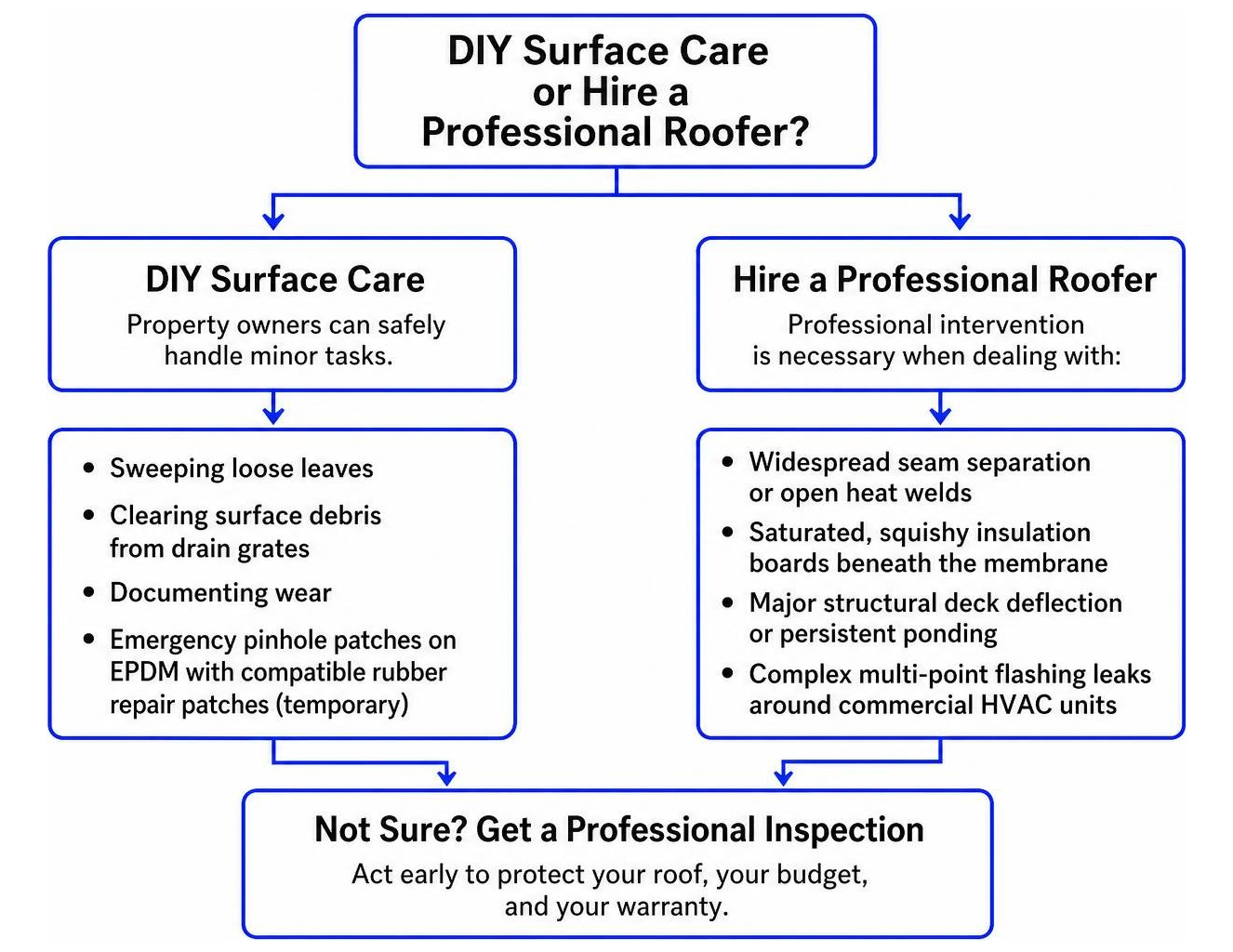
Property owners can safely handle minor tasks like sweeping loose leaves, clearing surface debris from drain grates, and documenting wear. Emergency pinhole patches on EPDM can even be addressed temporarily with compatible rubber repair patches while you wait for an inspection.
However, professional intervention is necessary when dealing with:
- Widespread seam separation or open heat welds
- Saturated, squishy insulation boards beneath the membrane
- Major structural deck deflection or persistent ponding
- Complex multi-point flashing leaks around commercial HVAC units
When you need reliable help fixing flat roof leaks, working with a qualified, local team gives you long-term security.
At Martin & Sons, we serve property owners across St. Louis, St. Peters, St. Charles, Florissant, Chesterfield, Creve Coeur, Maryland Heights, and O’Fallon. We operate with a customer-first approach: we require zero upfront deposits, you only pay upon 100% completion and satisfaction, and we back our work with lifetime labor warranties. (While we install and integrate full gutter drainage systems when replacing or repairing a roof, we focus strictly on complete roofing solutions).
Schedule your comprehensive professional roofing maintenance service today to protect your building from moisture damage and maximize the life of your flat roof.