When Your Vinyl Siding Is Discontinued — and What to Do Next
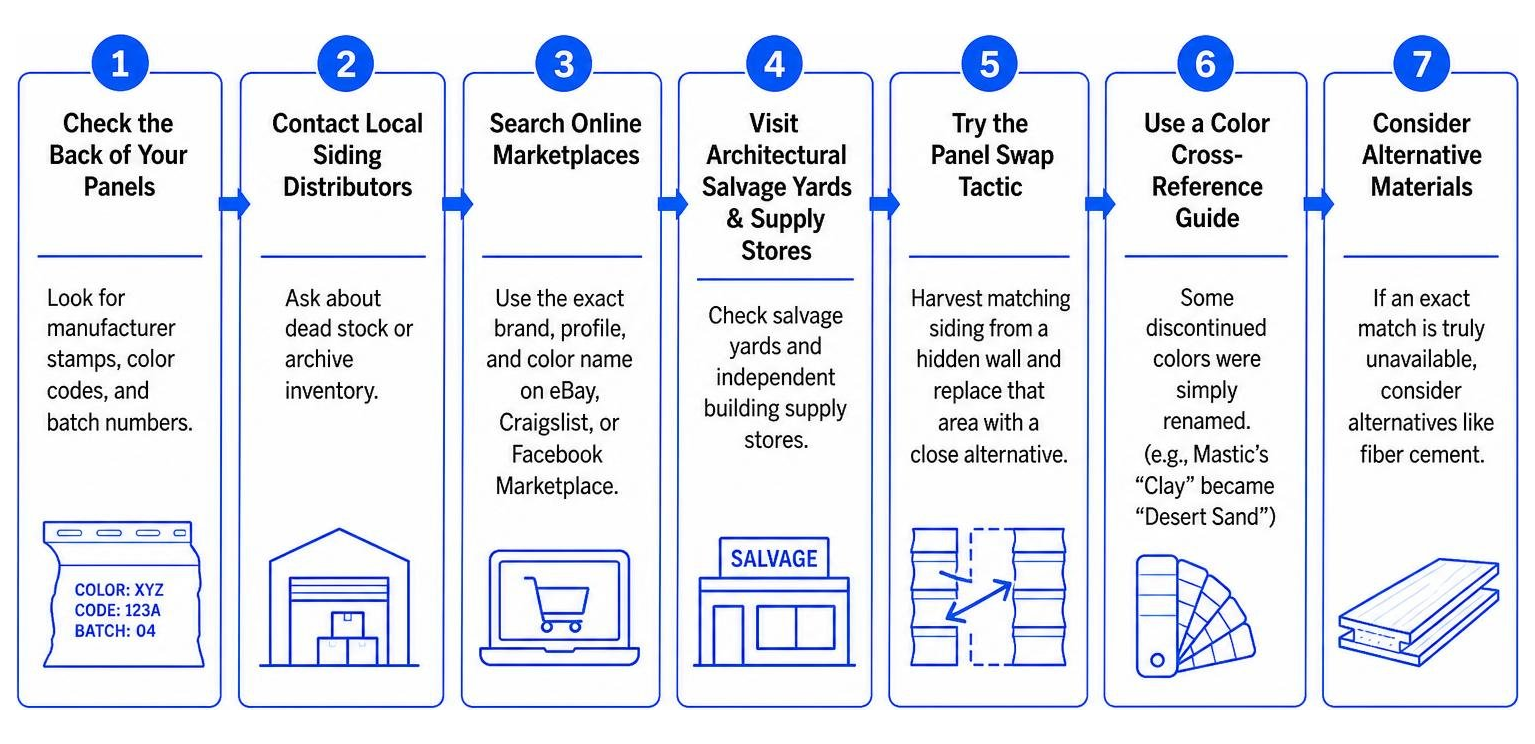
If you need vinyl siding discontinued product help, here is a quick overview of your options:
- Check the back of your panels for manufacturer stamps, color codes, and batch numbers.
- Contact local siding distributors and ask about dead stock or archive inventory.
- Search online marketplaces (eBay, Craigslist, Facebook Marketplace) using the exact brand, profile, and color name.
- Visit architectural salvage yards and independent building supply stores.
- Try the panel swap tactic — harvest matching siding from a hidden wall and replace that area with a close alternative.
- Use a color cross-reference guide — some discontinued colors were simply renamed (e.g., Mastic’s “Clay” became “Desert Sand”).
- Consider alternative materials like fiber cement if an exact match is truly unavailable.
That sickening crack when a branch hits your siding is bad enough. Finding out your siding color was discontinued years ago? That is a whole different kind of stress.
Major manufacturers like CertainTeed and Mastic have discontinued dozens of colors and profiles over the years — including entire product families. CertainTeed alone retired colors like Ivy Green, Warm Sand, and Winter Mauve across its vinyl siding lines, while Mastic discontinued all colors for its T-Lok Barkwood D4 profile in 2021. When this happens, homeowners are often left searching for panels that simply no longer exist on store shelves.
The good news: there are real, proven strategies to track down what you need — or work around it intelligently.
I’m John Martin of Martin & Sons, a family-owned contractor with over 35 years of hands-on experience helping St. Louis homeowners navigate tough repairs, including vinyl siding discontinued product help. In the sections below, I’ll walk you through exactly what to do — step by step.
How to Identify Your Existing Siding Profile and Brand
Before you can start hunting for replacement panels, you need to know exactly what you are looking for. Siding brands, styles, and colors change constantly. If you guess, you risk ordering materials that won’t lock into your existing panels or will look completely out of place.
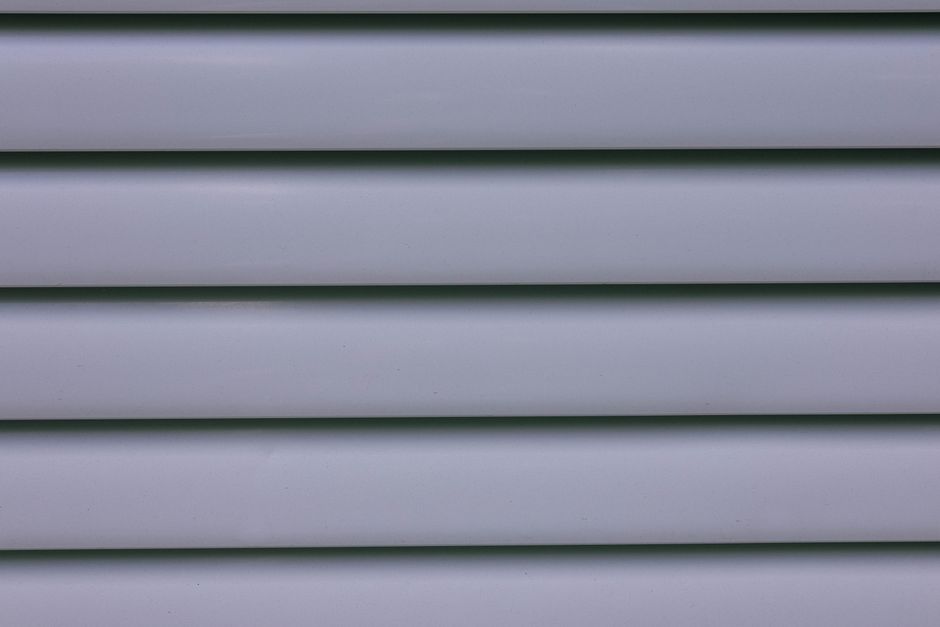
To identify your siding, you must understand its “profile.” The profile is defined by its shape and exposure. For example, “Double 4” (often abbreviated as D4) means the panel is designed to look like two 4-inch wide wood planks stacked together. “Dutch Lap” features a distinct horizontal groove at the top of each panel section to create a shadow line, while “Clapboard” (or traditional lap) is flat.
All standard vinyl siding manufactured for the North American market must comply with the ASTM D3679 standard specification for rigid PVC performance. However, lock designs, thicknesses, and butt heights vary wildly between manufacturers. Taking the time to learn how to pick the perfect vinyl siding for your house starts with understanding what is currently on your walls.
Documenting Your Siding: Photos, Measurements, and Samples
To find the perfect match, you need to build a “digital detective kit” and gather physical evidence.
- Take High-Resolution Photos: Capture your siding in multiple lighting conditions. Take photos in direct sunlight, shade, and on an overcast day. This is crucial because colors change dramatically based on the angle of the sun. For example, CertainTeed’s notorious “Winter Mauve” color is famous for looking like a neutral gray in the shade but taking on a distinct pink hue in direct sunlight.
- Measure the Exposure: Use a tape measure to determine the exact width of a single lap. Common exposures are 4 inches, 4.5 inches, and 5 inches.
- Extract a Physical Sample: Nothing beats a physical piece. Use a vinyl siding zip tool to unzip a panel from an inconspicuous area (such as behind a downspout or low near the foundation). Cut a 6-to-12-inch piece of the damaged or hidden panel. This physical sample is your golden ticket for direct matching. Having a physical sample helps you compare the thickness and structural lock system to ensure you choose durable vinyl siding options for a lifetime.
Finding Hidden Manufacturer Stamps and Batch Numbers
You don’t have to guess the brand. Siding manufacturers are required to print identifying information on their products.
Gently pry open a seam or remove a small panel to look at the reverse side. Manufacturers like CertainTeed, Mastic, and Georgia-Pacific frequently stamp their logo, product line codes, and batch or lot numbers directly onto the nail hem (the flat strip at the top of the panel where the nails go) or the back of the panel.
Additionally, check the reverse side of utility vents, dryer vents, or electrical boxes on your siding. Builders often use matching accessories from the same manufacturer, and these components frequently have intact product stickers or stamped brand names. Finding these lot numbers is vital because dye lots vary from run to run. Knowing the exact code will prevent you from mixing up similar-looking colors. It also helps you understand the 7 benefits of choosing vinyl siding for your home by knowing exactly what quality level is installed on your exterior.
Sourcing Strategies and Vinyl Siding Discontinued Product Help
Once you have identified your brand, profile, and color, the hunt begins. Finding discontinued vinyl siding requires stepping off the beaten path of big-box home improvement stores.
Online Marketplaces Offering Vinyl Siding Discontinued Product Help
The internet is a massive treasure chest for discontinued building materials, but you must navigate it carefully.
- Where to look: Check platforms like eBay, Craigslist, and Facebook Marketplace. You can also search online directories where global suppliers list overstock.
- The MOQ Challenge: Be aware of Minimum Order Quantities (MOQs). Some wholesale suppliers on B2B platforms require bulk orders of up to 1,000 meters, though specialty liquidators may sell quantities as small as 2 pieces.
- The Cost Variable: Prices for discontinued panels vary wildly. You might find bulk overstock as cheap as $0.30 to $0.40 per meter, while rare, specialized panels can cost upwards of $20.00 per square meter plus hefty shipping fees. Check the pricing carefully so you can find vinyl siding prices that won’t leave you feeling board.
- The Pitfalls of Digital Matching: Never buy discontinued siding online based on photos alone. Camera sensors, screen calibrations, and outdoor lighting distort colors. Always request a small physical sample from the seller to compare against your home’s siding.
For more secrets on navigating online spaces for old materials, you can check out this guide on how to match old siding: 7 secrets to find discontinued vinyl now on learnfast.blog.
Why Local Experts Provide the Best Vinyl Siding Discontinued Product Help
While the internet is helpful, your best resource is a local professional siding contractor or independent distributor.
At Martin & Sons, we maintain close relationships with local distributors throughout St. Louis, St. Charles, and O’Fallon. These distributors often keep “dead stock” — leftover boxes of discontinued lines from past projects — tucked away in their warehouses.
Experienced local contractors also save leftover panels from previous jobs. We know which local warehouses might still hold older lines like Mastic’s Liberty Elite or CertainTeed’s older trim pieces. If your siding is failing or damaged, we can help you determine if a repair is possible or if it is one of the 10 reasons you may need a siding replacement.
Hunting in Architectural Salvage Yards and Independent Stores
Do not underestimate local architectural salvage yards and independent, family-owned hardware stores. Unlike big-box retailers that clear out inventory every season, independent stores often keep older products in their backrooms or bargain bins for years.
When visiting salvage yards, bring your physical sample, tape measure, and your documented profile measurements. Be prepared to dig through overstock bins; finding a single matching corner post or a couple of matching double-4 panels can save you thousands of dollars in full-wall replacements.
Creative Workarounds When an Exact Match is Unavailable
What happens if you have searched everywhere and your siding is completely unavailable? In the siding industry, we have developed several highly effective workarounds to keep your home looking beautiful without forcing you to pay for a whole-house replacement.
Before giving up, check if your color was simply rebranded. For example, in the Mastic 2021 Discontinuations List, several legacy colors were transitioned to new names with identical color formulas. Mastic transitioned “Clay EL 22” directly to “Desert Sand,” and “Grey EQ 02” to “Silver Grey 02.” If your color was completely retired (like Sapphire Blue), the manufacturer often provides a recommended modern alternative (such as Natural Slate). Staying on top of these shifts is a great way to monitor vinyl siding color trends you won’t want to miss.
Below is a diagram of your strategic options when an exact match is discontinued:
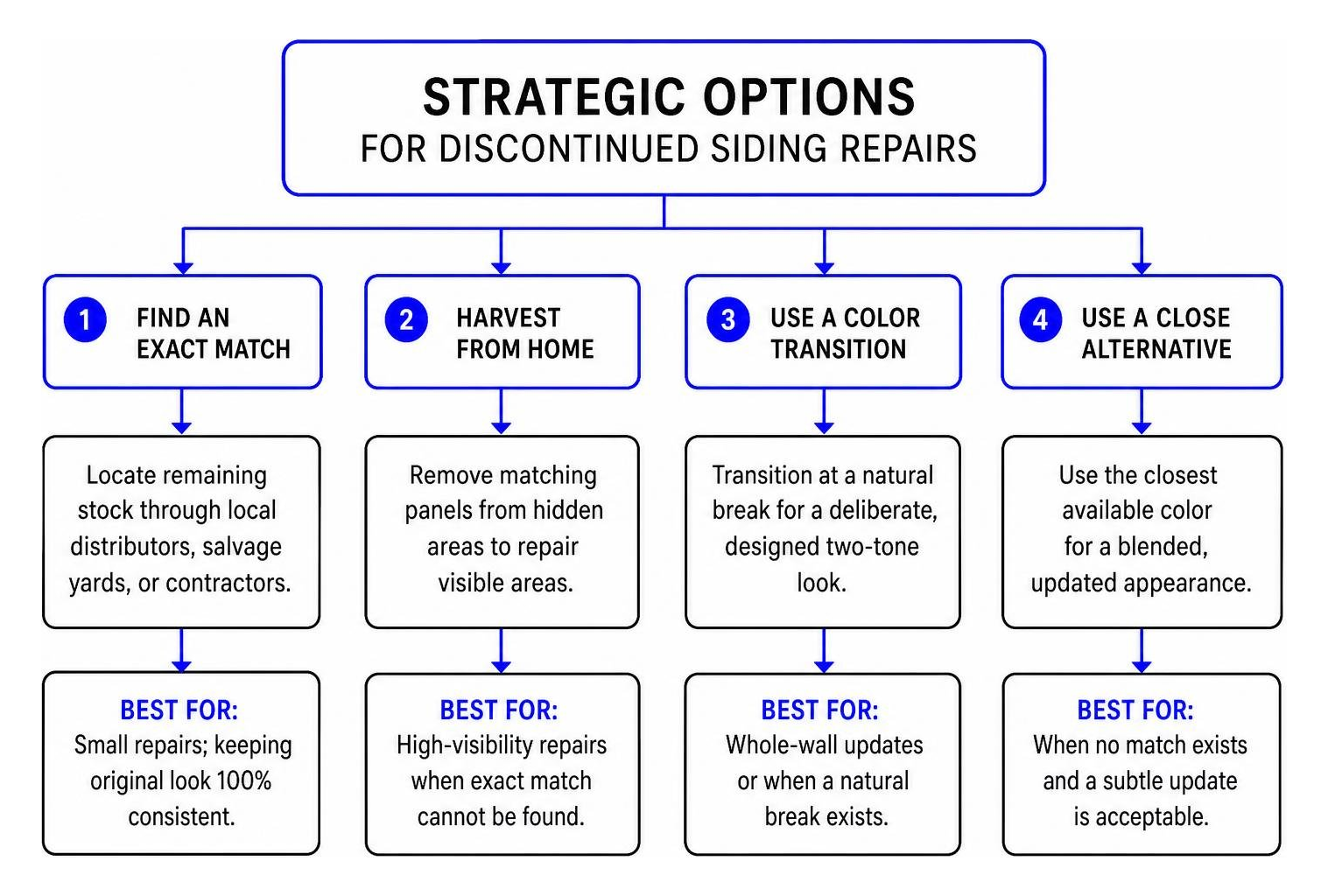
The Panel Swap Tactic: Harvesting Siding from Hidden Areas
This is the ultimate secret weapon of professional siding contractors. If you need to repair a highly visible area (like the front of your house next to the entryway), do not patch it with a mismatched panel.
Instead, “harvest” original siding from an inconspicuous part of your home, such as:
- The back of a detached garage.
- Low-lying areas hidden behind large evergreen bushes.
- High up inside a narrow gable that faces away from the street.
We carefully remove the original, weathered panels from the hidden area using a zip tool, install them in the highly visible repair zone, and then use a close-matching modern panel to reside the hidden area. Because the hidden area is out of sight, the slight color or profile mismatch won’t hurt your home’s curb appeal.
Note: When harvesting panels, always inspect the underlying house wrap and flashing to maintain the weatherproofing and structural integrity of your home.
Managing Color Mismatches and UV Fading
Even if you find “new old stock” of your exact discontinued color, it will not match your home perfectly. Why? Years of sun exposure and UV radiation cause vinyl siding to fade. A brand-new panel will look significantly brighter and more vibrant than your weathered panels.
To minimize this visual mismatch:
- Strategic Placement: Place the newer, brighter panels on shadowed walls, near inside corners, or behind downspouts where natural shadows mask the color difference.
- Blend the Sections: Avoid patching a single panel in the middle of a wall. Instead, replace an entire section from corner post to corner post. The visual break of a corner post makes subtle color differences almost invisible to the naked eye. Knowing how to handle these visual shifts is key when figuring out how to tell when it is time to get new siding on your home.
Exploring Alternative Materials and Paintable Panels
If you only need to repair a small section and cannot find any matching vinyl, you can look into alternative materials.
For small, localized repairs, Canadian brand Mitten vinyl siding is highly regarded in the industry. Mitten manufactures heavy-gauge, durable panels designed to withstand extreme cold weather, and they offer a unique color palette that often matches older, discontinued US siding brands.
Another option is to transition the damaged area into a deliberate architectural accent feature using paintable materials like fiber cement or engineered wood.
| Siding Material | Pros for Small Repairs | Cons for Small Repairs |
|---|---|---|
| Vinyl (Mitten / Specialty) | High cold-weather durability; matches older profiles well | Hard to source locally in small quantities |
| Fiber Cement (James Hardie) | Completely paintable; matches wood texture; fire-resistant | Heavy; requires specialized cutting tools; thicker than vinyl |
| Engineered Wood | Easy to cut and install; paintable to any color | Susceptible to moisture if edges aren’t sealed |
Using alternative materials can sometimes be a great compromise. To learn more about how different materials behave, read about vinyl siding pros and cons.
Frequently Asked Questions About Discontinued Siding
How do I find the brand and color of my old vinyl siding?
The most reliable way is to look at the hidden nail hem on the reverse side of a panel. Carefully unzip a panel using a zip tool to find stamped manufacturer logos, product codes, or dye lot numbers. You can also cross-reference your findings with historical manufacturer catalogs, such as the CertainTeed Siding Discontinued 2021 PDF, which lists discontinued cornerposts, lineals, and trim pieces in colors like Heritage Cream, Light Maple, and Snow.
Can I paint vinyl siding if I cannot find a matching color?
Yes, you can paint vinyl siding, but you must use a high-quality 100% acrylic latex paint formulated with “vinyl-safe” color technology. Standard dark paint absorbs too much heat from the sun, causing the vinyl panels to warp, buckle, and ruin their locking mechanisms due to thermal expansion. Be aware that painting your siding will void any remaining manufacturer warranties.
What is the panel swap or harvesting tactic for siding repairs?
The panel swap tactic involves removing original, weathered siding panels from an inconspicuous area of your home (like the back of a garage or behind landscaping) and using them to repair highly visible damage on the front of your house. You then install a close-matching modern siding profile in the hidden area where the visual mismatch won’t be noticed.
Conclusion
Dealing with discontinued vinyl siding can feel like an impossible puzzle, but you do not have to solve it alone. Whether you need to track down a rare color, perform a clever panel harvest, or replace a damaged wall, the team at Martin & Sons is here to help.
We serve homeowners across the entire St. Louis region, including St. Peters, St. Charles, Florissant, Chesterfield, Creve Coeur, Maryland Heights, and O’Fallon. We do things differently: we require absolutely no upfront deposits, you only pay when the job is 100% complete and you are totally satisfied, and we back our work with a lifetime labor warranty.
If you are struggling to match your damaged siding, let our family help yours. Contact us today or visit our office at 8460 N. Lindbergh Blvd. Suite 11, Florissant, MO 63031.