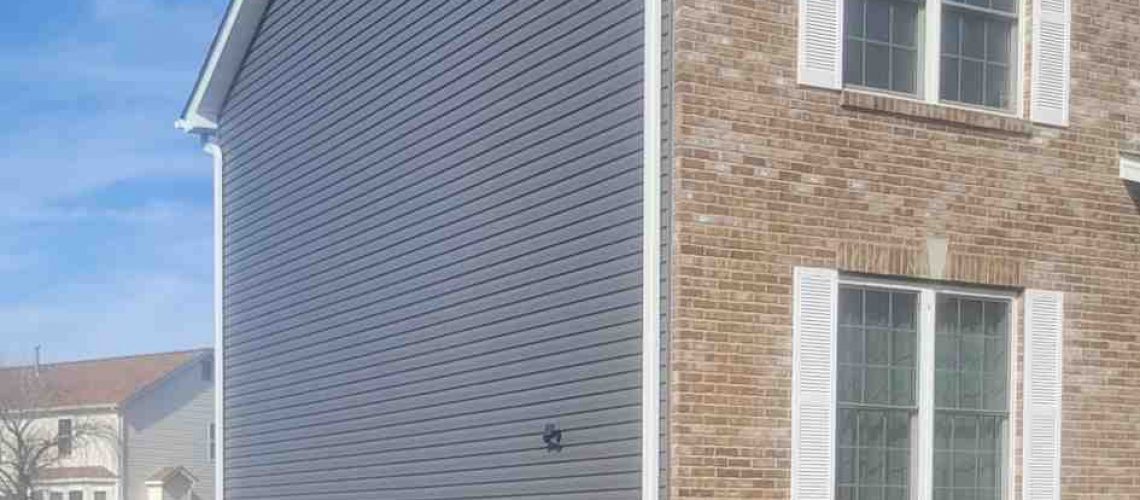
What Is Siding Repair — and Do You Need It?
Siding repair is the process of fixing damaged, cracked, or deteriorating exterior panels on your home to restore weather protection, curb appeal, and structural integrity.
Quick answers to what most homeowners want to know:
- Can I patch instead of replace? Yes — holes under 1 inch and hairline cracks can usually be patched. Larger damage typically requires panel replacement.
- How much does it cost? Minor repairs run $275–$650. Medium repairs $650–$2,400. Major repairs $2,400–$8,500.
- When should I call a pro? If more than 25% of your siding is damaged, if there’s hidden rot behind panels, or if repairs require working at height.
- What are the warning signs? Warped or buckling panels, water stains on interior walls, rising energy bills, visible cracks, or soft spots when you press on the siding.
- Does insurance cover it? Usually yes — if the damage came from a storm, falling tree, or other sudden event.
A cracked panel or a small hole might not look urgent. But left alone for even one season, that opening becomes a path for water, insects, and mold to reach the wood framing behind your walls. What starts as a cosmetic issue can quietly turn into a structural one.
I’m John Martin of Martin & Sons, a family-owned contractor serving St. Louis since 1953 with over 35 years of personal hands-on experience in siding repair and exterior restoration. In this guide, I’ll walk you through everything you need to know — from diagnosing damage to deciding whether to DIY or call a professional.
Understanding the Need for Professional Siding Repair
Your home’s exterior cladding is its primary defense against the elements. Living in the St. Louis metro area, our homes face extreme seasonal shifts. From freezing winter temperatures in St. Charles and O’Fallon to intense summer humidity in Florissant and Chesterfield, our exterior walls take a beating.

Over time, several factors contribute to the deterioration of your siding:
- Weather Exposure and Storm Damage: High winds over 60 mph, hail, and flying debris can instantly crack vinyl, dent aluminum, or chip fiber cement.
- UV Degradation: Constant exposure to the sun’s ultraviolet rays makes vinyl siding brittle over time, making it highly susceptible to cracking upon the slightest impact (like a stray baseball or a rogue tree branch).
- Moisture Infiltration and Wind-Driven Rain: During severe Midwestern storms, rain isn’t just falling down; it’s driven horizontally. If your panels have popped loose, water gets forced behind the siding, threatening the sheathing underneath.
- Insect and Pest Infestation: Wood and composite sidings are natural targets for termites, carpenter ants, and woodpeckers. Once pests find a small opening, they will quickly widen it to build nests.
Ignoring these minor issues is a gamble. A single compromised panel allows moisture to seep into the wall cavity, leading to wood rot, ruined insulation, and toxic mold growth. By addressing these issues early, you preserve your home’s structural integrity and avoid costly interior repairs. To understand how timely intervention saves your home, read more about How Home Siding Repair Can Help.
How to Assess Siding Damage: Repair vs. Replacement
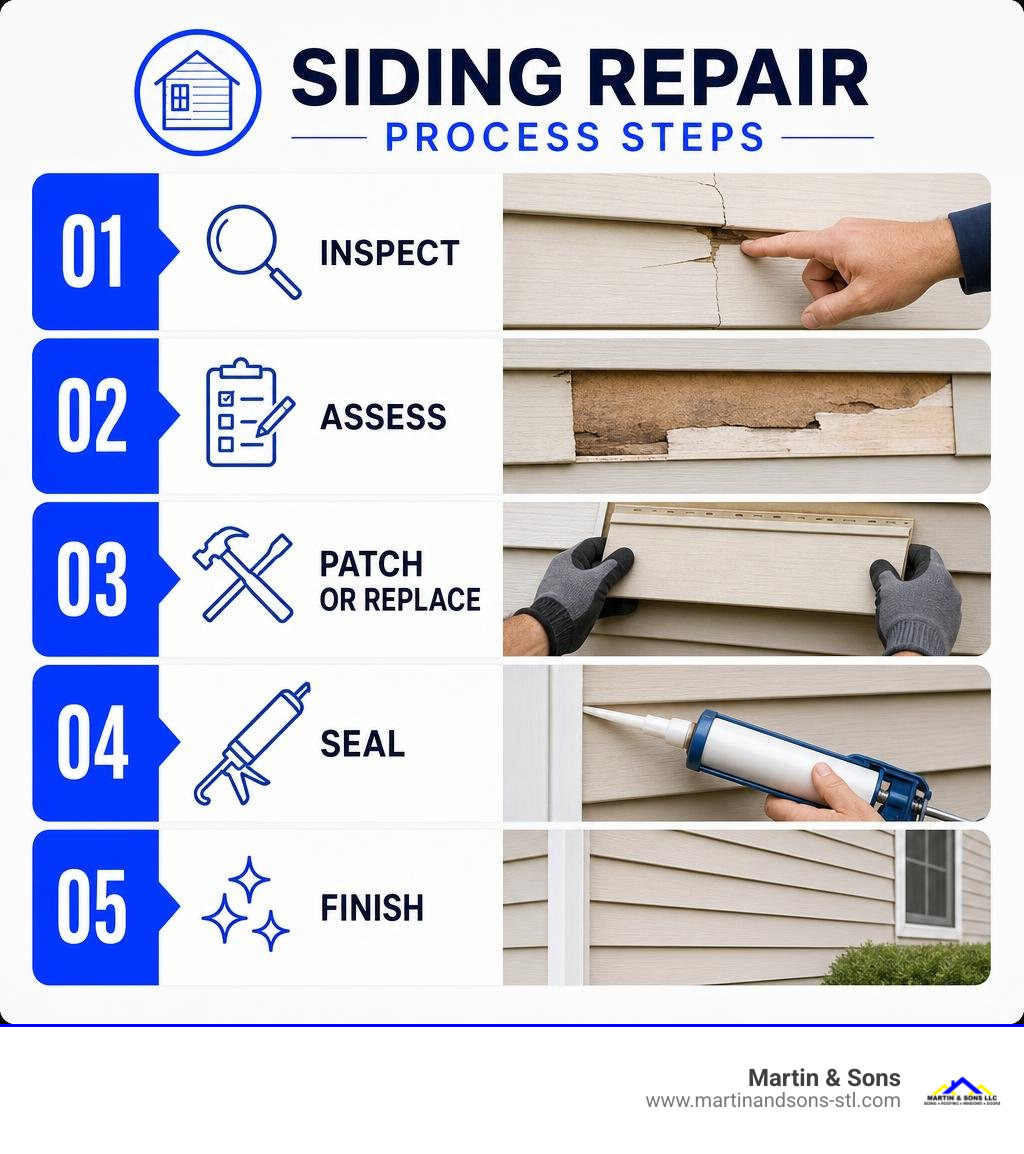
Before grabbing your tool belt or calling a contractor, you need to perform a thorough assessment of your home’s exterior. We recommend inspecting your siding twice a year—ideally in the spring and fall.
The Visual Inspection and the Probe Test
Walk around your property and look closely at the panels. Are there warped sections, cracks, or gaps? Pay close attention to transitions, such as where the siding meets windows, doors, and the roofline.
If you have wood or fiber cement siding, perform a probe test. Take a flathead screwdriver and gently press it into any discolored or suspect areas. If the material feels spongy, soft, or if the screwdriver sinks in easily, you are dealing with active wood rot.
Checking Behind the Siding
If you find loose panels, peek behind them. Check the condition of the house wrap (the weather-resistant barrier). If the house wrap is torn, degraded from UV exposure, or missing entirely, the wood framing underneath is highly vulnerable. Any damaged house wrap must be patched with specialized weather barrier seam tape before new siding is installed.
The 25% Rule: Repair vs. Full Replacement
How do you decide between a spot repair and a full replacement? We use the 25% Rule. If localized damage affects less than a quarter of your home’s exterior, targeted repairs are highly cost-effective. However, if more than 25% of your siding is compromised, warped, or reaching the end of its 15-to-40-year lifespan, a complete replacement is the smarter, more cohesive investment.
To help you weigh your options, here is a breakdown of typical costs and considerations:
| Damage Level | Typical Scope | Estimated Cost | Best Action |
|---|---|---|---|
| Minor | Small holes (under 1″), hairline cracks, single loose panel | $275 – $650 | DIY patch or quick professional fix |
| Medium | Multiple cracked panels, damaged corner post trim, small storm-damaged section | $650 – $2,400 | Targeted professional repair |
| Major | Widespread storm damage, rot discovered in sheathing, multiple warped walls | $2,400 – $8,500 | Professional restoration & rot mitigation |
| Full Replacement | Over 25% of exterior damaged, severe aging, structural issues | $8,500+ | Complete siding replacement |
If you suspect your home’s exterior is reaching the point of no return, check out our guide on 10 Reasons You May Need a Siding Replacement to make an informed decision.
Step-by-Step Guide to DIY Siding Restoration
For handy homeowners in Creve Coeur or Maryland Heights, minor siding fixes can be a satisfying weekend project. Below are step-by-step instructions for repairing the most common siding materials.
How to Patch Small Holes in Vinyl Siding
Holes under one inch in diameter (often caused by hail or stones thrown by lawnmowers) can be patched without replacing the entire panel.
- Prep the Area: Use 100-grit sandpaper to gently rough up the edges of the hole and degloss the vinyl surface. Wipe away any dust or debris.
- Apply Patching Compound: Using a putty knife, apply a high-quality exterior vinyl patching compound or a color-matched exterior caulk into the hole. Slightly overfill the area.
- Smooth and Finish: Wet your putty knife and smooth the surface flat. Let the compound cure completely according to the manufacturer’s instructions.
- Sand and Paint: Once dry, sand the patch flush with the panel using 220-grit sandpaper. Apply a coat of high-quality latex primer and exterior paint designed for vinyl.
- Pro-Tip: Never apply dark paint to light-colored vinyl siding. Dark colors absorb excess solar heat, which will cause the vinyl panels to warp and buckle.
Replacing a Damaged Panel During Siding Repair
If a vinyl panel has a large crack or hole, it must be replaced. Vinyl panels lock together using a hook-and-groove system, meaning you can’t simply pull one out without the right technique.
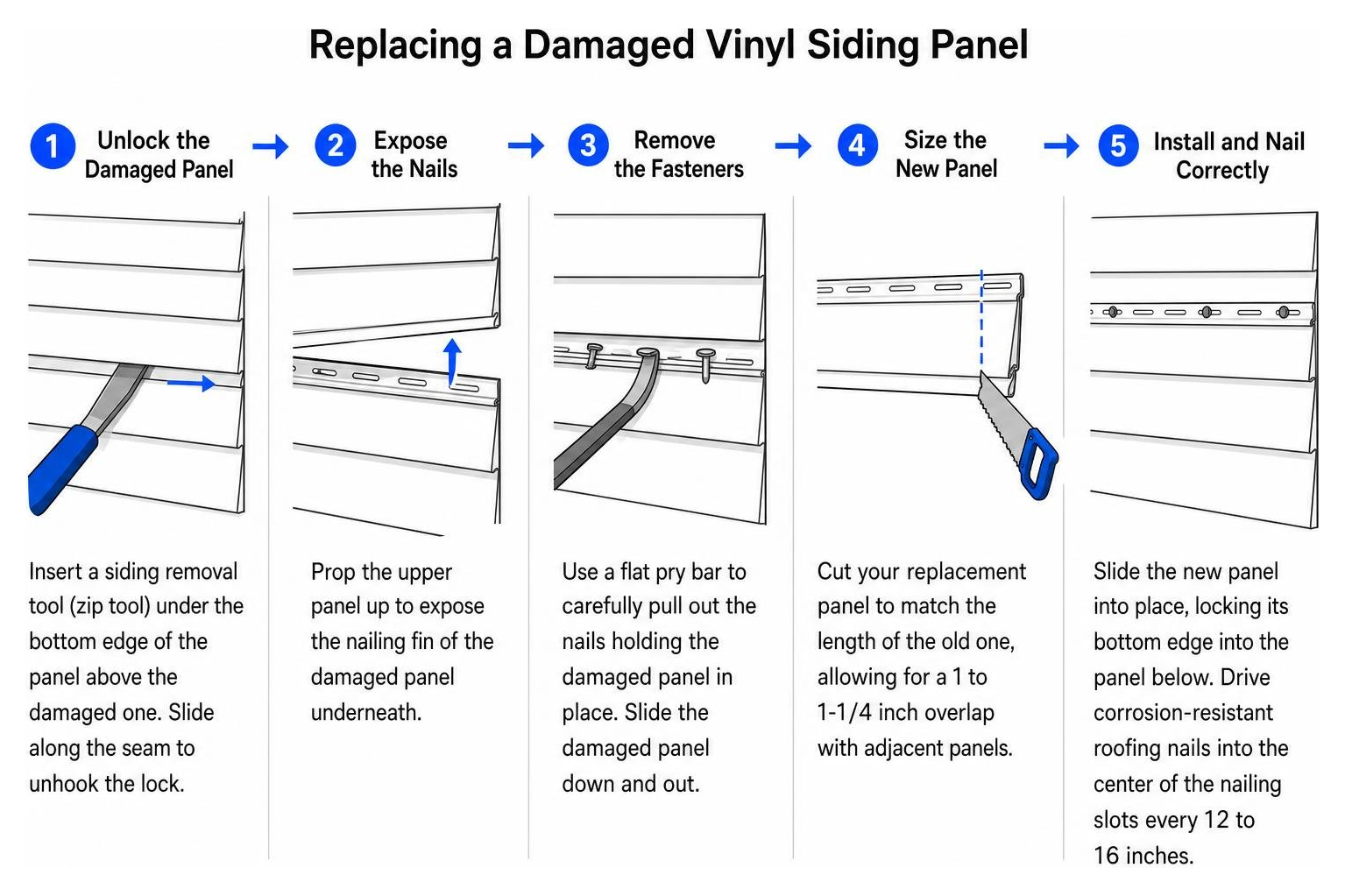
- Unlock the Damaged Panel: Insert a siding removal tool (commonly called a zip tool) under the bottom edge of the panel directly above the damaged one. Slide the tool along the seam to unhook the lock.
- Expose the Nails: Prop the upper panel up to expose the nailing fin of the damaged panel underneath.
- Remove the Fasteners: Use a flat pry bar to carefully pull out the nails holding the damaged panel in place. Slide the damaged panel down and out.
- Size the New Panel: Cut your replacement panel to match the length of the old one, allowing for a 1 to 1-1/4 inch overlap with adjacent panels.
- Install and Nail Correctly: Slide the new panel into place, locking its bottom edge into the panel below. Drive corrosion-resistant roofing nails into the center of the nailing slots every 12 to 16 inches.
- Crucial Step: Never nail vinyl siding tight. Vinyl expands and contracts significantly with local temperature swings. Leave a 1/32-inch gap (about the thickness of a dime) between the nail head and the siding fin so the panel can slide freely. Nailing too tightly is the #1 cause of buckled, wavy siding.
- Lock it Back Up: Use your zip tool to pull the lip of the upper panel back down, locking it securely over the new panel’s top edge.
For highly detailed material-specific techniques, you can consult The Ultimate Siding Repair and Patching Guide | MyHomePros.
Restoring Wood, Fiber Cement, and Composite Siding
Unlike vinyl, rigid siding materials require different handling and fastening techniques.
Wood Siding Repair
Because wood is organic, it is highly prone to rot if moisture gets trapped.
- Remove Rot: Use a utility knife to mark vertical cut lines at least two inches past the damaged area. Set your circular saw depth to match the siding thickness exactly to avoid cutting the underlying weather barrier. Cut and chisel out the rotted section.
- Back-Priming is Essential: Before installing the replacement wood board, paint all four sides and the cut ends with a high-quality exterior primer. Wood end grain acts like a straw; if left unprimed, it will suck up moisture from the wall cavity, causing the paint to peel and the wood to rot prematurely.
- Fasten and Seal: Nail the new board flush using stainless steel or hot-dipped galvanized nails to prevent rust streaks. Apply paintable exterior caulk to the vertical seams, but never caulk the bottom horizontal lap. Siding needs to breathe; caulking the bottom edge traps condensation inside your walls.
Fiber Cement (James Hardie) Siding Repair
Fiber cement is incredibly durable but brittle to cut and heavy to handle.
- Safety First: Cutting fiber cement produces harmful silica dust. Always wear safety glasses and a tight-fitting respirator mask.
- Fastening: When hand-nailing replacement planks, pre-drilling small holes near the ends prevents the board from cracking. Drive fasteners flush to the board surface without breaking the outer skin of the material.
- Learn More: If you are tackling wood or fiber cement projects yourself, check out How to Fix Wood Siding on a House | 10 Easy Steps (2026) for excellent structural insights.
When to Hire Professional Siding Contractors
While minor patches are great DIY projects, major siding repair is best left to experienced professionals.
Here is why calling in a specialized team is often the safest and most economical choice in the long run:
- Safety at Heights: Repairing siding on a second story or near the roofline requires specialized equipment. Professionals use stable platform scaffolding and safety harnesses rather than unstable extension ladders.
- Identifying Hidden Damage: A trained eye can spot structural issues—like rotted wall sheathing, insect nests, or failing window flashing—that a homeowner might easily overlook and accidentally cover up.
- Warranty Protection: Many siding manufacturers will void their product warranties if the material is installed incorrectly (such as nailing vinyl too tightly or failing to back-prime wood). Hiring a certified contractor keeps your warranties intact.
- Seamless Color Matching: Siding fades over years of exposure to the elements. Buying a new panel off the shelf will often result in a glaring, mismatched spot on your wall. Professional contractors have access to advanced color-matching techniques and distributor networks to ensure a seamless blend.
At Martin & Sons, we believe in making home exterior projects stress-free for our neighbors across St. Louis, St. Peters, and Maryland Heights. We offer a true no upfront deposit policy—you pay us only when the job is 100% complete and you are completely satisfied. Plus, we back our craftsmanship with industry-leading lifetime labor warranties.
If you’re ready to hand the project over to the experts, read Your Guide to Professional Siding Services Near You to see what to look for in a local contractor.
Frequently Asked Questions about Siding Maintenance
How do I match the color of my existing siding?
Matching old siding is one of the biggest challenges in exterior repairs. Before trying to match colors, pressure wash the area first. Dirt, pollen, and oxidation can make your siding look shades darker or different than its true color.
Once clean, you can carefully remove a small, damaged piece of siding (or take a panel from an inconspicuous area, like behind a downspout or low near the foundation) and bring it to a local building supplier to find a matching profile and color. If the color is obsolete, you can use the clean sample to get a custom-mixed exterior latex paint formulated specifically for your siding material.
What are the warning signs that I need immediate siding fixes?
You should inspect your exterior immediately if you notice:
- Warped, wavy, or buckling panels.
- Unexplained increases in your monthly heating and cooling bills (damaged siding allows drafts to bypass your home’s insulation).
- Peeling paint or wallpaper inside your home, or water stains on interior drywall.
- Soft, spongy spots on your exterior walls.
For a deeper dive into what these warning signs mean for your home’s health, read our guide on Florissant Siding Repair Signs and Why It Matters.
How much does professional siding repair cost?
As shown in our cost table, minor repairs typically range from $275 to $650, while major structural restorations can go up to $8,500. The final cost depends heavily on the siding material (wood and fiber cement are more expensive to repair than vinyl), the height of the repair, and whether structural sheathing rot is found behind the panels. If your siding was damaged by a sudden storm or fallen tree, your homeowners insurance policy will likely cover the repair costs.
Conclusion
Your siding is the protective envelope of your home. What seems like a minor cosmetic crack today can easily turn into a costly structural nightmare tomorrow. Whether you choose to tackle minor patches yourself or bring in professional support, addressing siding damage promptly is the best way to protect your investment.
If you live in the Greater St. Louis area—including Florissant, St. Charles, O’Fallon, Chesterfield, or Creve Coeur—and want the peace of mind that comes with professional exterior care, we are here to help. At Martin & Sons, we provide top-tier craftsmanship with the best prices upfront, zero upfront deposits, and a lifetime labor warranty.
Contact us today to schedule your free, no-obligation estimate and experience the Martin & Sons difference. Visit our Home Siding Repair Near Me page to get started!