Why Flat Roof Repair Near Me Matters for St. Louis Homeowners
Flat roof repair near me is one of the most urgent searches a homeowner makes—usually right after spotting water stains on the ceiling or standing water on the roof. If you’re dealing with a leaking flat roof, here’s what you need to know right now:
Quick Answer: Finding Flat Roof Repair Near Me
| What You Need | What to Do |
|---|---|
| Immediate leak repair | Call a licensed local roofer for emergency inspection |
| Cost estimate | Expect $380–$1,800 for typical repairs; replacement ranges $2,800–$7,500 |
| Material identification | Know if you have EPDM, TPO, PVC, or Modified Bitumen |
| Repair vs. replace | Repair if damage is isolated and roof is under 15 years old |
| Contractor vetting | Verify licensing, insurance, warranties, and local references |
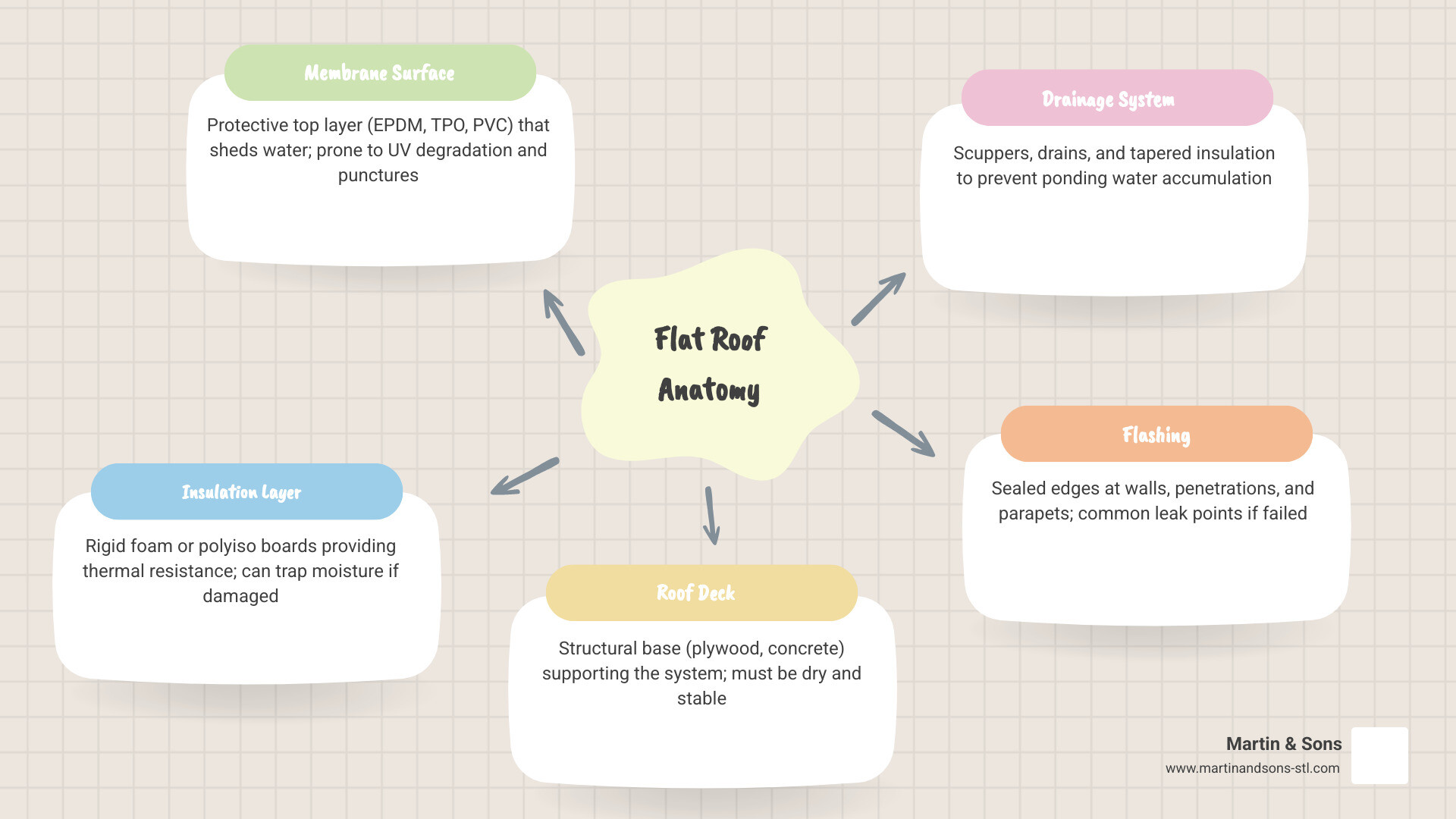
Flat roofs are popular for their cost-effectiveness and modern look, but they’re also prone to leaks because water doesn’t drain as quickly as it does on sloped roofs. Even small issues like membrane shrinkage, ponding water, or damaged flashing can turn into major problems fast—including interior water damage, mold growth, and structural deterioration.
The good news? Most flat roof problems are repairable when caught early. With proper materials and skilled installation, a well-maintained flat roof can last 20–25 years. But as one roofing expert noted in the research, “dealing with a flat leaky roof can be extremely frustrating, not to mention that if things are not done properly, the leaky roof can be extremely detrimental to your property’s overall integrity and value.”
This guide walks you through everything you need to know about flat roof repair—from identifying common materials and leak sources to understanding repair techniques, costs, and how to hire the right local contractor. Whether you’re dealing with an emergency leak or planning preventative maintenance, you’ll learn how to protect your St. Louis home and make informed decisions about your flat roof.
Common Flat Roof Materials and Why They Leak
Before we dive into the “how-to” of repairs, we need to talk about what’s actually on top of your house. Not all flat roofs are created equal. In the St. Louis area, we see a handful of common materials, each with its own personality and—unfortunately—its own way of failing.
EPDM Rubber
Think of EPDM as a giant rubber inner tube for your house. It’s made primarily from ethylene and propylene. It’s durable and can last up to 20 years, but it has a “shrinkage” problem. Over time, UV exposure and temperature swings cause the rubber to pull away from the edges and seams. When that happens, water finds the gap.
TPO Membrane
TPO (Thermoplastic Polyolefin) is the “new kid on the block” in roofing technology. It’s a single-ply reflective membrane that’s great for energy efficiency. However, because the technology is still being refined, some older TPO roofs suffer from signs of flat roof membrane damage like top-ply degradation, which leads to cracks and leaks.
PVC Roofing
PVC is the heavy-hitter of flat roofing. It’s the same material used in high-performance plumbing pipes. It’s naturally white, heat-reflective, and incredibly strong. It’s often the best choice for commercial buildings but is also used in residential applications. Its main weakness? It can become brittle as it ages, leading to punctures.
Modified Bitumen
This is asphalt roofing combined with rubber or plastic. It usually comes in 3-foot-wide rolls. It’s tough, but the seams are its Achilles’ heel. If the torch-down or adhesive application wasn’t perfect during installation, those seams will eventually lift.
Why They Fail: The Usual Suspects
Regardless of the material, there are signs of roof damage you should never ignore.
- Membrane Shrinkage: As materials age, they literally get smaller, pulling at the flashings.
- UV Degradation: The sun is brutal. Constant UV exposure breaks down the chemical bonds in your roof, making it “chalky” or brittle.
- Cracks and Blisters: Trapped moisture under the membrane can expand when heated, creating bubbles (blisters) that eventually pop.
How to Identify and Locate a Leak for Flat Roof Repair Near Me
Finding a leak on a flat roof is a bit like being a detective, but the “crime scene” is 20 feet in the air. On a pitched roof, water usually goes straight down. On a flat roof, water is a world traveler.
The Ponding Water Problem
Flat roofs aren’t actually 100% flat; they should have a slight incline. When they don’t, you get ponding water. If you see water standing on your roof 48 hours after a rainstorm, you have a problem. This weight stresses the structure and accelerates membrane rot.
The Water Travel Phenomenon
This is the most frustrating part of flat roof repair near me. Water might enter the roof membrane in one corner, travel 15 feet across the insulation, and finally drip into your living room through a light fixture. This is why the spot where you see the drip is rarely where the leak actually is.
Identifying the Damage
There are major problems caused by a leaky roof, ranging from mold in the attic to structural wood rot. Use this table to help determine the severity:
| Damage Type | Visual Cues | Action Needed |
|---|---|---|
| Minor Surface Damage | Small punctures, “alligatoring” (fine cracks), debris buildup | Routine maintenance/patching |
| Flashing Failure | Gaps around vents, chimneys, or skylights; rusted metal | Professional resealing |
| Seam Separation | Edges of membrane rolls lifting or curling | Immediate professional repair |
| Structural Leak | Sagging roof deck, interior water stains, musty odors | Emergency inspection & possible replacement |
The Professional Process for Flat Roof Repair Near Me
When we arrive for a flat roof repair near me call, we don’t just slap a patch on and call it a day. A professional repair is a multi-step surgery for your home.
- Initial Inspection: We look for the “entry point.” We measure the distance from your interior leak to the nearest walls and translate that to the rooftop.
- Substrate Cleaning: You can’t stick a patch to a dirty roof. We scrub the area to ensure the repair actually bonds.
- Moisture Detection: We check if the insulation underneath is soaked. If we trap water under a new patch, we’re just making a “moisture sandwich” that will rot your deck.
- The Repair: Whether it’s Creve Coeur emergency roof repair or a scheduled fix, we use material-specific techniques.
- Final Seal Inspection: We verify the integrity of the new seams and flashings.
Specialized Techniques for Flat Roof Repair Near Me
Different roofs require different tools. For O’Fallon roofing repair, we might use:
- Heat Welding: Used for TPO and PVC. We use a hot-air gun to melt the patch to the original roof, creating a permanent, fused bond.
- Adhesive Patching: Common for EPDM. We use a specialized primer and heavy-duty adhesive tape.
- TPO Coatings: If a TPO roof is thinning but still structurally sound, a reflective coating can add years of life.
- EPDM Primer Application: You can’t just use glue on rubber; you need a chemical primer to “prep” the surface for the patch.
Repair vs. Replacement: Costs and Lifespan
The “million-dollar question” (though usually much cheaper) is whether to patch or pull it all off.
The Numbers
According to roofing repair cost data, the typical homeowner spends about $1,100 on a roof repair, with a range of $380 to $1,800. If you’re looking at a full replacement, costs generally land between $5,890 and $12,800, depending on the size and material.
How to Decide
We provide a repair vs. replace guide to help you choose. Here are the rules of thumb:
- Age: If your roof is 15–20 years old, it’s approaching the end of its 15–30 year lifespan. Patching it now might be like putting a band-aid on a broken leg.
- Extent of Damage: If more than 25% of the roof is showing signs of failure (like multiple leaks or widespread blistering), replacement is usually more cost-effective.
- Storm Damage: If a St. Louis hail storm has pummeled your membrane, it’s time for a professional storm damage assessment.
Hiring the Best Flat Roof Repair Near Me Experts
Flat roofing is specialized work. You wouldn’t hire a plumber to fix your transmission, and you shouldn’t hire a “shingle guy” to fix your EPDM membrane.
What to Look For
When searching for trusted roofing contractors near me, always verify:
- Licensing and Insurance: This protects you from liability if a worker is injured on your property.
- Specialization: Ask specifically about their experience with flat roof membranes.
- Workmanship Warranties: A good contractor stands behind their work.
- Customer Reviews: Look for mentions of punctuality and cleanup.
Why Local Expertise Matters for Flat Roof Repair Near Me
St. Louis weather is unique. We deal with humidity that can trap moisture under membranes and temperature swings that cause rapid expansion and contraction. At Martin & Sons, we understand these local challenges.
We’ve built our reputation across St. Louis, St. Peters, Florissant, and O’Fallon on a simple promise: No upfront deposits. You only pay when you are 100% satisfied with the completion of the job. Plus, we offer lifetime labor warranties because we believe in doing it right the first time. Whether you are in Chesterfield or Maryland Heights, you can find our roofing contractor locations near me and get the peace of mind you deserve.
Frequently Asked Questions about Flat Roofs
How long does a flat roof typically last?
On average, a flat roof lasts 15 to 30 years. The material matters—EPDM might last 20 years, while a well-installed PVC roof can hit 30. However, the biggest factor is Creve Coeur roofing maintenance. A roof that is never cleaned or inspected will likely fail closer to the 10-year mark.
Is flat roof repair covered by insurance?
It depends on the cause of the damage. Is roof damage covered by insurance? Usually, yes, if the damage is “sudden and accidental,” like hail impact or a tree limb falling during a wind storm. Insurance typically does not cover damage caused by “wear and tear” or lack of maintenance.
How often should I schedule a flat roof inspection?
We recommend scheduling a roof inspection at least once a year. Ideally, you should check it in the spring and fall. These checks focus on debris removal (which clogs drains) and verifying that the drainage systems are clear. Catching a small seam separation in October can prevent a major interior flood in April.
Conclusion
Your flat roof is a vital investment that protects everything you own. While flat roof repair near me might seem daunting, it doesn’t have to be a headache. By understanding your materials, identifying leaks early, and choosing a contractor who knows the St. Louis climate, you can extend the life of your roof and save thousands in the long run.
Don’t wait for the next heavy rain to find out if your repair was successful. Whether you need a quick patch or a full system evaluation, we’re here to help. Contact us for a free estimate today, and remember: with Martin & Sons, you don’t pay a dime until you’re 100% satisfied.