Why Curling Roof Shingles Need a Closer Look
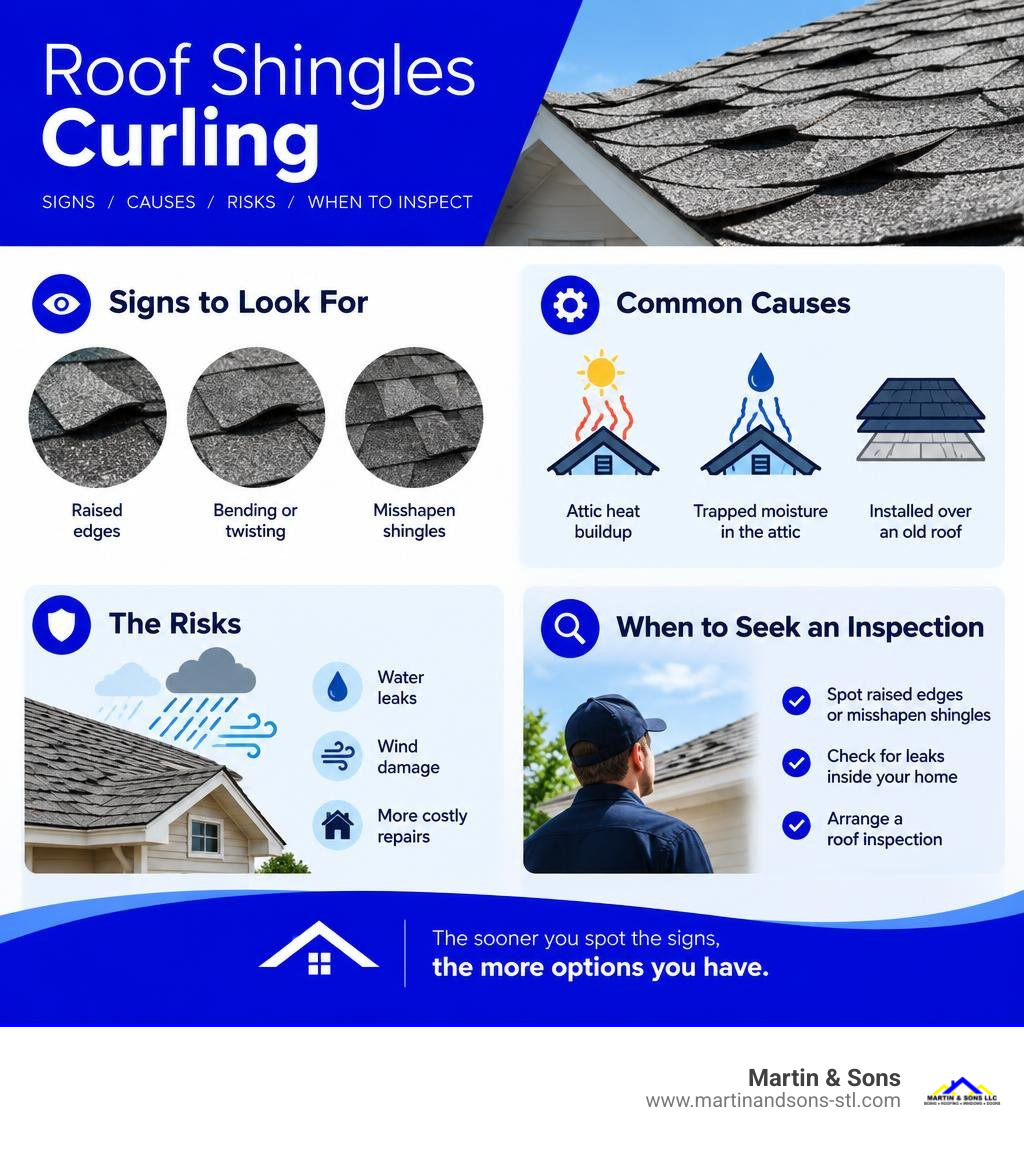
Curling shingles can leave your roof open to wind and rain. Age, trapped attic heat or moisture, and shingles installed over an old roof can all cause curling. If you spot raised edges or misshapen shingles, check for leaks from inside your home and arrange a roof inspection. A few damaged shingles may be repairable; curling across a large area may call for replacement.
I’m John Martin, and I’ve spent more than 35 years in roofing, diagnosing problems that leave roof shingles curling. My family has run Martin & Sons since 1953, and understanding the cause is the first step toward choosing the right fix.
Primary Causes of Roof Shingles Curling

When asphalt shingles begin to lift, twist, or bend, they are telling a story about the environment beneath and above them. Understanding these warning signs is essential because curled shingles are no longer shedding water or resisting wind the way their manufacturers intended. In our decades serving homeowners, we find that shingle distortion rarely happens overnight. Instead, it is the visible result of ongoing physical and chemical changes within the roofing system.
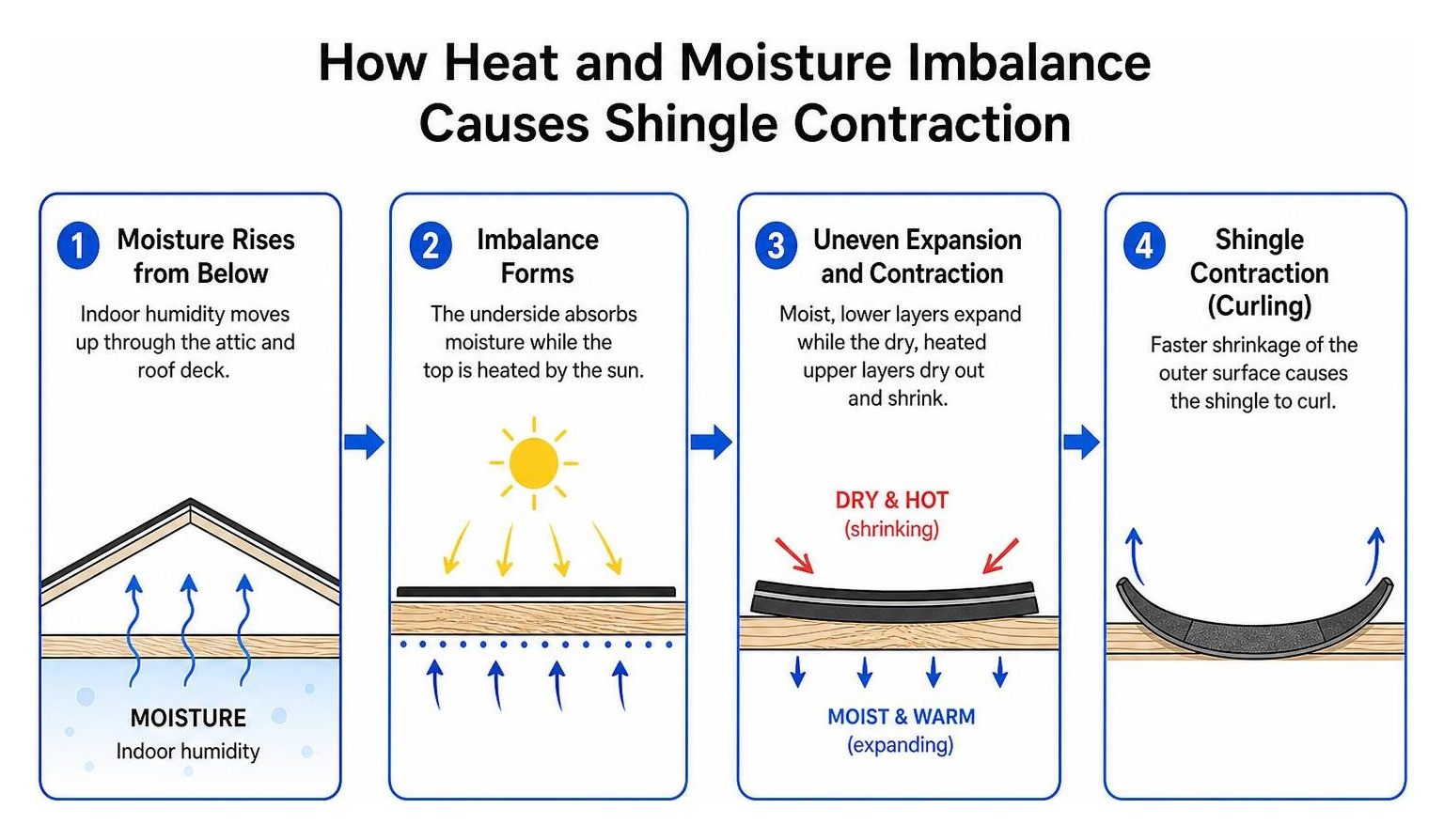
Asphalt shingles consist of multiple layers, including a sturdy fiberglass or organic mat saturated with asphalt and coated in protective mineral granules. Over time, continuous exposure to sun and fluctuating weather dries out the volatile oils in the asphalt. As these compounds evaporate, the asphalt hardens, shrinks, and loses flexibility. Because the upper exposed layers dry out and contract faster than the protected underside, uneven tension builds up within the material, pulling the edges or center out of alignment.
This thermal and chemical stress is one of the common roofing problems that accelerates when moisture vapor moves through the roof deck from below. When rising indoor humidity gets trapped beneath the roof decking, the bottoms of the shingles absorb vapor while the sun bakes the tops. This imbalance forces the material to warp, resulting in distorted shingles that leave your roof vulnerable.
Cupping vs. Clawing: Types of Roof Shingles Curling
Not all curling looks the same. Roofing professionals categorize shingle distortion into two distinct forms: cupping and clawing. Differentiating between them helps pinpoint whether the primary culprit is trapped moisture underneath or age-related drying from above.
- Cupping: This occurs when the outer edges of the shingle tab curl upward while the center remains flat or dips downward, creating a concave, cup-like shape. Cupping is frequently triggered by excessive moisture and heat rising from a poorly ventilated attic, which expands the bottom matting while the top surface dries out.
- Clawing: This happens when the outer edges remain relatively flat against the roof deck, but the center of the tab bulges upward, forcing the bottom edges to curl downward into a claw-like shape. Clawing is typically a sign of advanced age, where the asphalt has become exceptionally brittle and is shrinking around the fiberglass mat.
| Curling Type | Visual Appearance | Primary Cause | Typical Roof Stage |
|---|---|---|---|
| Cupping | Edges curl upward; center dips concave | Moisture vapor & extreme heat from attic | Mid-life (accelerated by poor ventilation) |
| Clawing | Center bulges upward; edges curve downward | Asphalt drying, shrinking, & severe brittleness | Late-life / advanced aging |
Poor Attic Ventilation and Moisture Buildup
A balanced roofing system requires constant airflow. Cool, fresh air must enter through low soffit or intake vents, travel along the underside of the roof deck, and exhaust through ridge or static vents near the peak. When this airflow is blocked or unbalanced, your attic essentially turns into an oven during hot months and a sauna during cold months.
During intense heat, trapped attic air can easily reach temperatures upwards of 150°F. This extreme heat literally bakes the shingles from the bottom up, accelerating the loss of volatile compounds and causing early warping. In the winter, warm indoor air carries moisture into the unvented attic space, condensing on the underside of the wood roof deck. This continuous moisture transmission saturates the underlayment and shingle backing, leading to rapid cupping. Investing in proactive roofing maintenance helps verify that intake and exhaust pathways stay completely clear, preserving the structural integrity of your roof materials.
Aging, Roof-Overs, and Manufacturer Flaws in Roof Shingles Curling
While environmental factors speed up the process, time remains the ultimate factor. Shingles naturally reach the end of their service life as their protective granules wash away and the asphalt core hardens. Curling is quite rare on shingles younger than 12 years of age; seeing widespread distortion before this mark points toward installation issues, severe ventilation problems, or defective materials.

One major installation mistake that drastically shortens shingle life is a “roof-over”—installing a new layer of asphalt shingles directly on top of an old layer. While some property owners consider this to save on immediate labor costs, layering shingles traps massive amounts of heat and moisture between the two asphalt barriers. As highlighted in When Is It Time to Reroof? – Fine Homebuilding, a roof-over reduces the expected lifespan of the new shingles by 20% to 40%. The uneven surface also prevents the new shingles from sealing down flat, inviting wind uplift.
In rare cases, curling on a relatively young roof stems from manufacturing defects, such as an improper ratio of binders, uneven fiberglass matting, or failed factory adhesive strips. When evaluating the overall condition of your home, understanding shingle lifespan helps determine whether your roof is simply aging out or failing prematurely due to improper installation.
Risks, Evaluation, and When to Repair vs. Replace
Curling shingles are much more than an aesthetic issue; they represent a fundamental compromise in your home’s structural defense. When shingles curl, their factory-applied thermal sealant strips break apart. This leaves the tabs loose and creates high wind resistance, allowing wind to catch the underside of the tabs and tear them clean off the roof deck.
Once the tabs are lifted or missing, driving rain can slip directly beneath the shingle course. Water reaches the underlayment and wood decking, eventually causing wood rot, structural sagging, and mold growth inside attics and living areas. Recognizing these 10 alarming signs your roof needs repair is vital to stopping water migration before it damages ceilings, drywall, and insulation. There are critical signs of roof damage to never ignore, and distorted shingles rank right near the top.
The 10-15% Rule: Assessing Damage Severity
Homeowners often ask whether curling shingles can be spot-repaired or if a complete roof replacement is necessary. The answer depends primarily on the scope of the curling and the condition of the surrounding shingles.
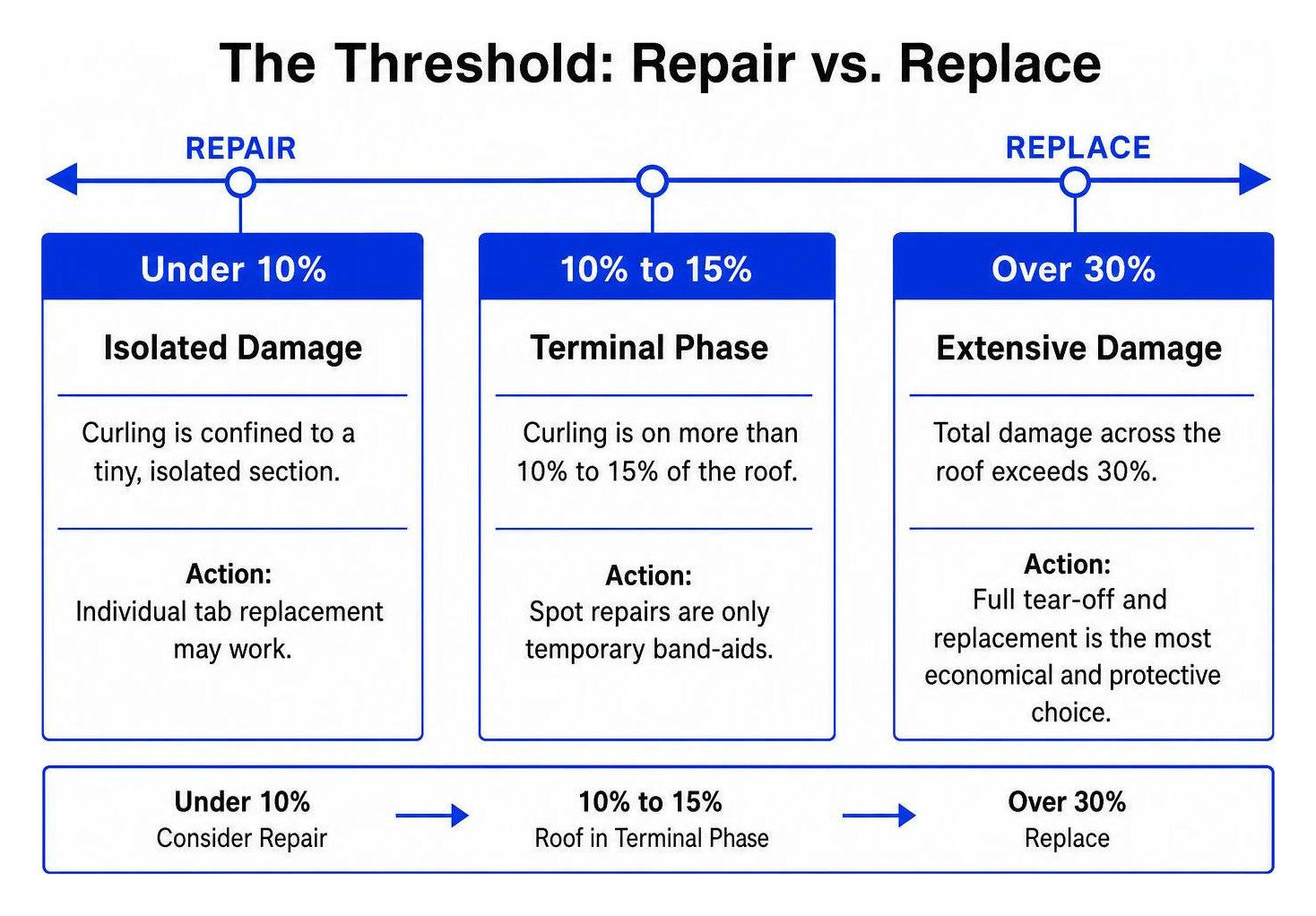
As a professional guideline:
- Isolated Damage (Under 10%): If curling is confined to a tiny, isolated section—such as a small area around a plumbing vent pipe or an unventilated dormer—individual tab replacement may work. However, because curling indicates brittle asphalt, replacing single shingles without cracking adjacent ones requires delicate handling.
- The Terminal Phase (10% to 15%+): If curling is noticed on more than 10% to 15% of the total roof surface, the roof has officially entered its terminal phase. The underlying materials across the slopes have dried out, and spot repairs will only act as temporary band-aids while other sections continue to fail.
- The 30% Threshold: A proven rule of thumb in our industry is that if total damage across the roof exceeds 30%, a full tear-off and replacement is by far the most economical and protective choice.
When weighing a repair vs replace roof evaluation, consider how old the existing system is. If you want to review basic repair methods, consult our homeowner guide to shingle repair to understand why working with brittle, aging tabs can be challenging.
Professional Inspection and Next Steps
If your shingles are starting to look like potato chips, it is time to have your roofing system evaluated by experienced professionals. A complete assessment looks beyond the surface shingles to inspect intake vents, ridge ventilation, decking soundness, flashings, and moisture levels in the attic.
At Martin & Sons, we have protected homes across the St. Louis area for generations. We believe in providing complete peace of mind, which is why we operate with no upfront deposits—you pay only upon 100% completion and satisfaction. We provide our best prices upfront alongside lifetime labor warranties. (Please note: while we provide new gutters when replacing a roof system, we are a comprehensive exterior remodeler and focus primarily on full roof and exterior integrity).
Understanding why timely roof replacement protects home health helps you prevent major interior water emergencies. To keep your home fully protected, understand the importance of regular roof inspections and schedule a professional St. Louis roof inspection with our team. For a detailed breakdown of the primary drivers behind shingle failure, read our guide on the top reasons why your roof shingles are curling and reach out to us today to schedule your comprehensive evaluation.