How to Compare Windows and Doors for Your Home
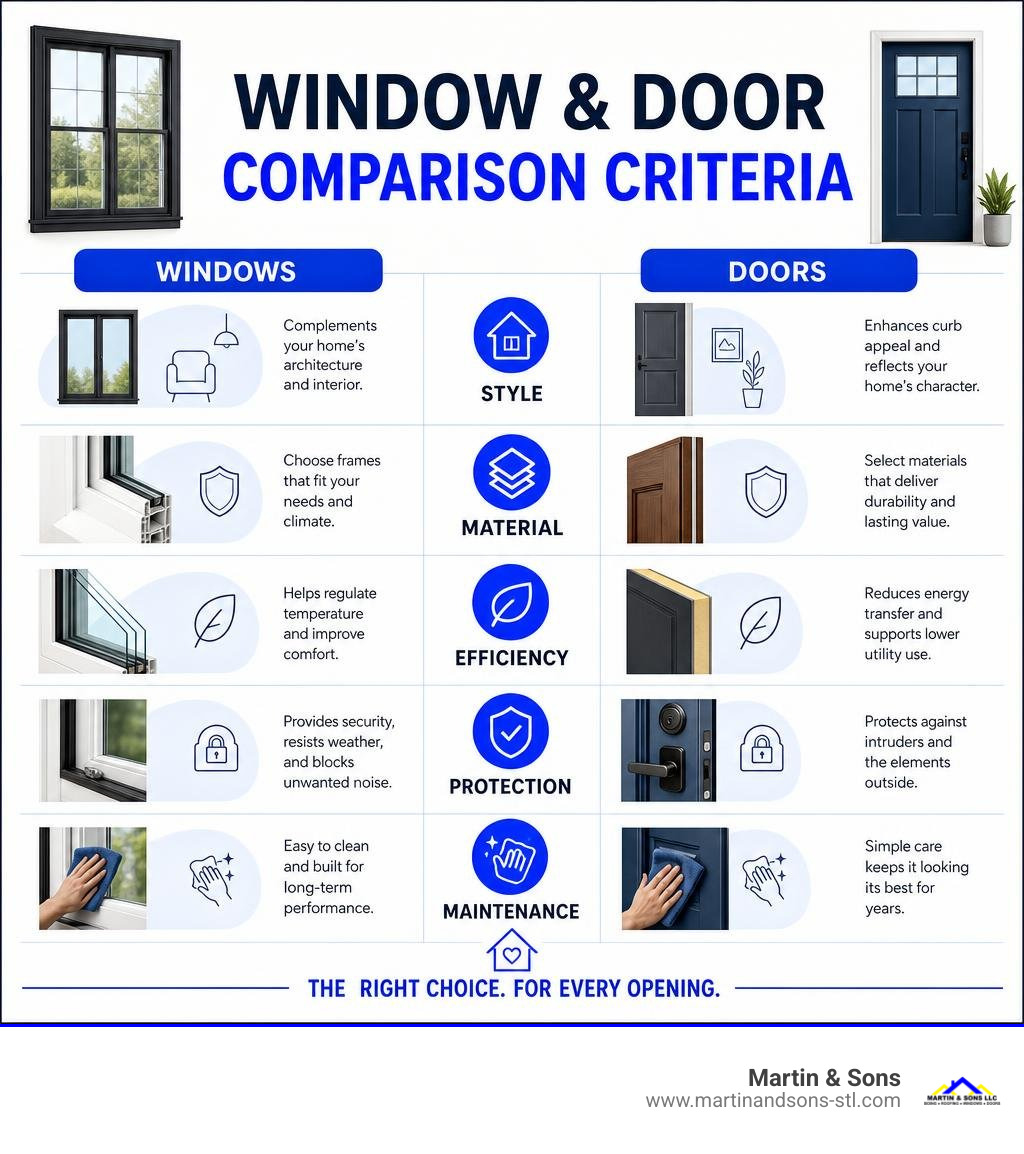
Choose windows and doors by matching four things to your home: purpose, material, energy performance, and fit. Start with the room and opening. Casement and awning windows offer strong ventilation seals, double-hung windows are easy to clean, and picture windows maximize light. For doors, exterior units need weather resistance and security, while interior doors should support privacy, traffic flow, and style.
Look for drafts, fogging between glass panes, sticking operation, damaged seals, or rotting and warped frames. These are common signs that replacement may improve comfort, appearance, and energy use.
Material matters, too. Vinyl is low-maintenance and moisture-resistant. Fiberglass is stable and durable. Steel offers strong security for exterior entries, while aluminum can provide slim, sturdy frames. Energy-efficient glass, tight weatherstripping, and Low-E coatings help reduce unwanted heat transfer. In storm-prone areas, impact-resistant products can add protection from windborne debris, improve security, reduce outside noise, and help block UV rays.
I am John Martin of Martin & Sons LLC, a family-owned business established in 1953, with more than 35 years of experience helping homeowners make informed decisions about windows and doors. This guide breaks down the choices so you can compare products with confidence before your renovation begins.
Exploring Window and Door Styles Across the Home
Finding the right architectural balance means selecting products that fit both how you move through your home and how your home interacts with natural light and ventilation. Upgrading older fixtures breathes life into tired architecture; in fact, new windows and doors can refresh your homes curb appeal while immediately boosting functionality.
Whether you are updating a mid-century ranch in Florissant MO or outfitting a modern build in Chesterfield MO, each room calls for a dedicated approach to airflow, sightlines, and access.
Selecting Exterior Windows and Doors for Architectural Harmony
Your main entryway serves as the central focal point of your exterior facade. Choosing an architectural entry system often involves balancing privacy with ambient daylight. If you are exploring glass options, shattering expectations how to choose the perfect entry door with glass can guide you through privacy ratings, decorative caming, and insulated glass inserts. Adding sidelights—vertical panels of glass flanking one or both sides of an entry door—or choosing a double-door configuration creates a welcoming, grand entrance that floods your foyer with natural lighting.
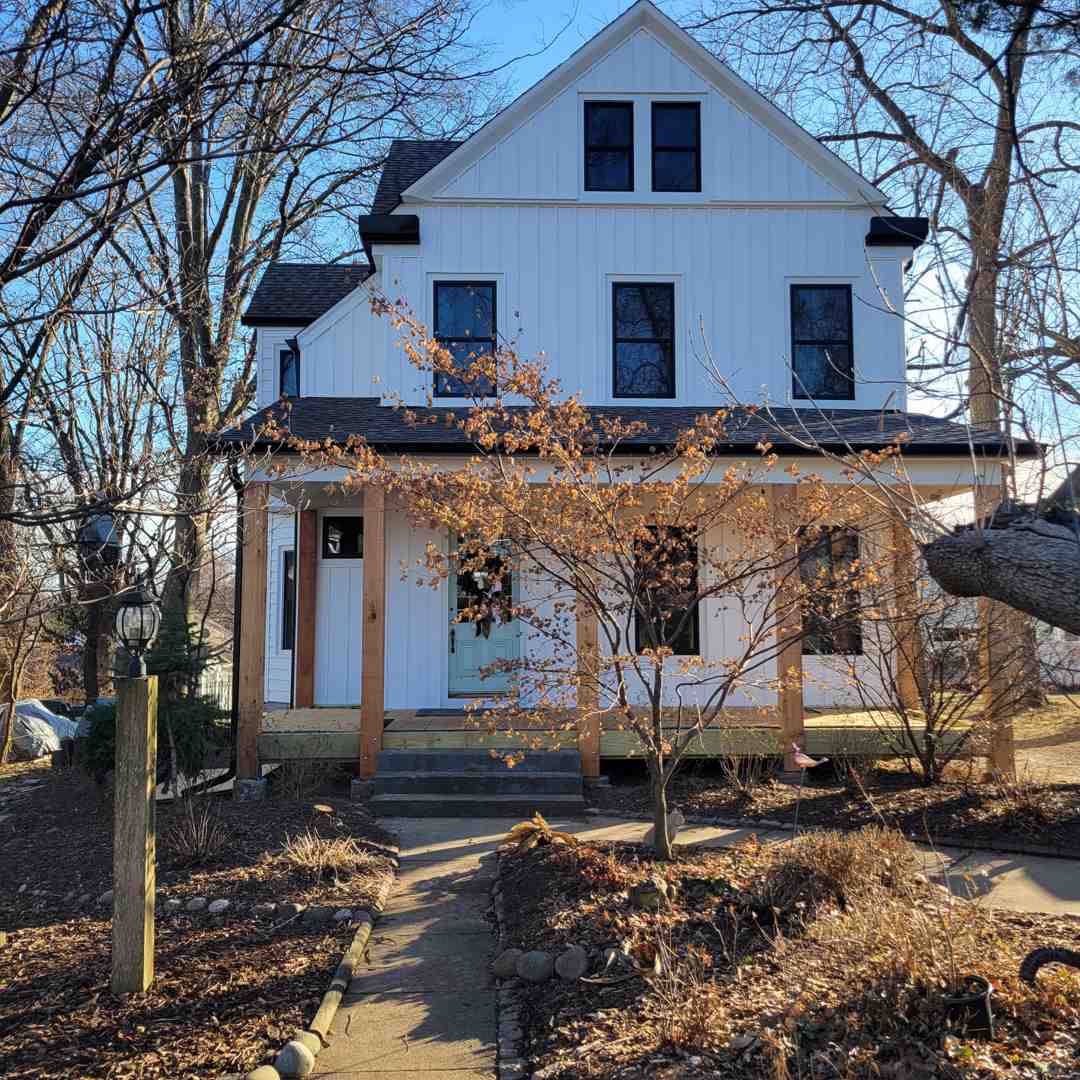
When pairing entryways with exterior windows, matching operating styles to specific living zones creates cohesive balance:
- Casement Windows: Hinged at the side and operated by a hand crank, these units swing outward. Because the sash presses tightly against the frame upon closing, they create an exceptionally airtight compression seal.
- Awning Windows: Hinged at the top and opening outward from the bottom, awning windows allow you to enjoy cool, fresh air even during a light rain shower without letting moisture seep indoors.
- Double-Hung Units: Featuring upper and lower sashes that slide vertically, double-hung windows offer versatile ventilation and tilt inward for effortless glass cleaning from inside the room.
- Picture Windows: Fixed, non-opening units designed to frame wide views, maximize solar heat gain in winter, and deliver complete structural airtightness.
Transitioning from indoor living spaces to your patio or backyard deck requires substantial consideration of opening width and layout. You can consult patio door pricing from standard sizes to 12 foot giants to plan your budget for wide sliding glass panels or multi-panel hinged systems.
To finish the exterior, shutters offer both character and light control. Louvered shutters feature adjustable or fixed horizontal slats for classic charm, while board-and-batten shutters deliver a rustic, timeless aesthetic.
Versatile Interior Door Options and Garage Openers
Interior doors shape your everyday living experience by controlling sound transfer, dividing spaces, and enhancing interior decor. For detailed advice on selecting interior styles, review our choosing the best doors for your home door installation guide.
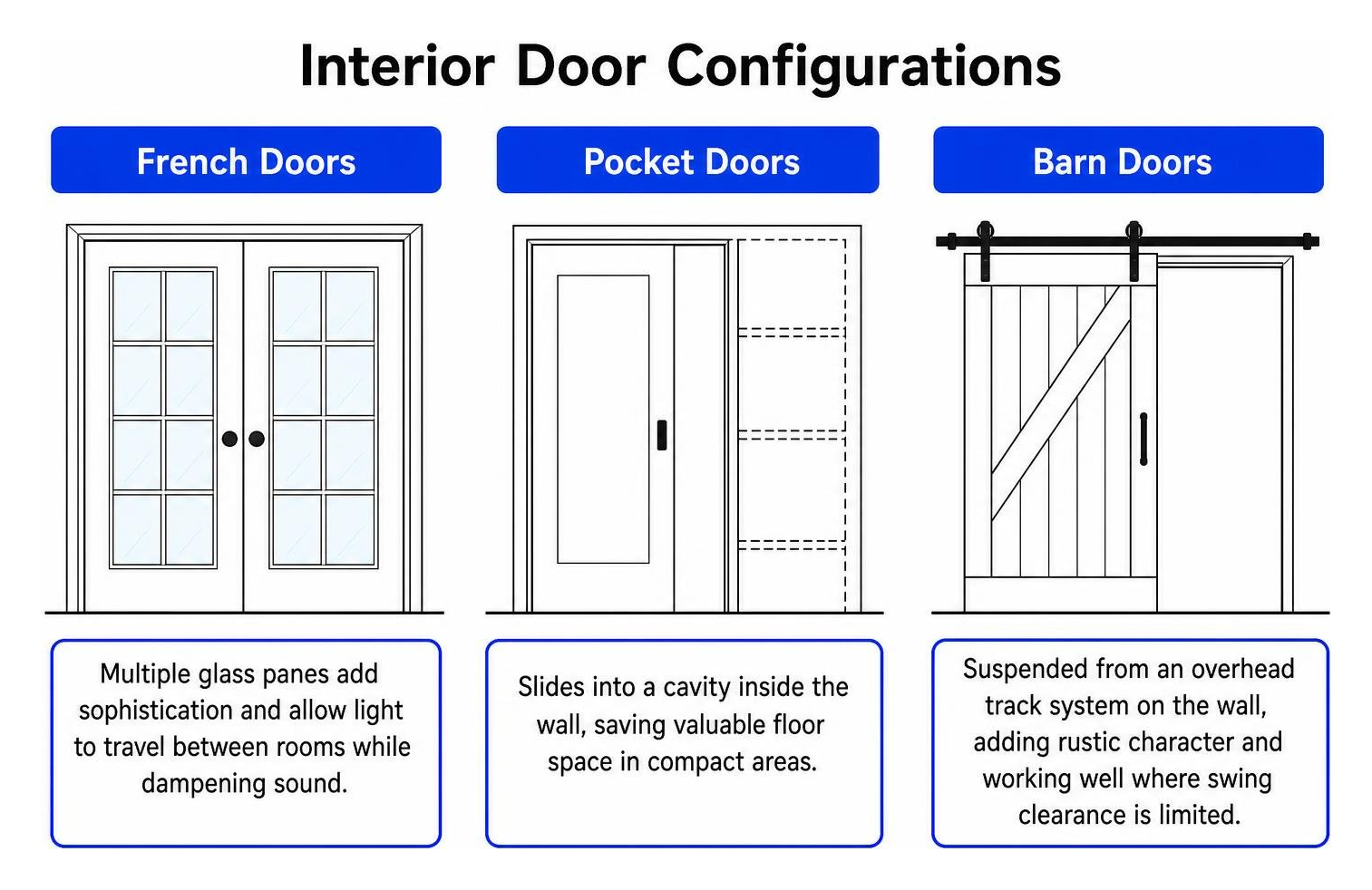
Popular interior door configurations include:
- French Doors: Featuring multiple glass panes extending along their height, French doors add sophistication and allow light to travel between rooms like living rooms and home offices while dampening sound.
- Pocket Doors: Sliding cleanly into a dedicated cavity inside the wall frame, pocket doors save valuable floor space in compact bathrooms, powder rooms, or walk-in pantries.
- Barn Doors: Suspended from an overhead track system mounted across the wall surface, barn doors add rustic character and work well where interior swing clearance is limited.
- Integrated Pet Doors: Designed with durable, weather-sealed flaps in small, medium, and large dimensions, these units give pets independent access to outdoor spaces or utility rooms without compromising indoor comfort.
For attached garage spaces, garage door mechanisms must handle substantial daily wear. Modern systems balance spring mechanics with various drive systems:
- Chain Drives: Use a heavy metal chain to push or pull the door trolley. Extremely durable and cost-effective, though they generate more operating noise.
- Belt Drives: Utilize a reinforced steel-rubber composite belt. They provide ultra-quiet, smooth motion, making them the preferred choice for garages situated beneath bedrooms.
- Direct Drives: Feature a motor that moves directly along a stationary track, eliminating belts and chains entirely for minimal maintenance and nearly silent operation.
- Torsion Springs vs. Extension Springs: High-cycle torsion springs mounted horizontally above the door opening offer smoother counterbalancing and superior longevity compared to side-mounted stretch extension springs.
Core Material Options for Modern Windows and Doors
Every material profile offers distinct mechanical properties, thermal expansion rates, maintenance requirements, and visual appeal.
| Material | Structural Strength | Thermal Insulation | Maintenance Needs | Moisture & Rot Resistance |
|---|---|---|---|---|
| Vinyl | Moderate | High (Multi-chambered) | Minimal (Soap & water) | Impervious to rot & insects |
| Fiberglass | Very High | Excellent | Low | Completely waterproof |
| Steel | Superior | Moderate (Requires core) | Low to Moderate | High (When painted/sealed) |
| Aluminum | High | Low (Requires thermal break) | Low | Resists corrosion |
| Wood | High | High (Natural insulator) | High (Regular paint/stain) | Vulnerable if unclad |
Vinyl and Fiberglass Profiles
Extruded polyvinyl chloride (PVC) is one of the most widely used materials for modern window and patio door construction. Leading manufacturers, including Robinson Window & Door, design vinyl windows engineered for strength and long-lasting performance. Multi-chambered internal vinyl extrusions trap pockets of air to act as natural thermal barriers, preventing exterior cold or heat from radiating into living areas. Vinyl profiles are non-corrosive, naturally impervious to moisture, and completely immune to termites or wood-boring insects. For new construction or full-frame retrofits, integrated nail-fin vinyl designs simplify weather-tight flashing.
Fiberglass profiles represent an exceptional leap in structural stability. Because fiberglass consists of glass fibers bound within a thermoset resin, its rate of thermal expansion and contraction closely mirrors that of the insulated glass pane itself. This stability protects perimeter seals against seasonal stress, ensuring decades of draft-free performance.
Steel, Aluminum, and Natural Wood
Heavy-duty exterior steel doors won’t crack or warp under harsh seasonal temperature swings, making them an outstanding choice for secure entry systems. Steel doors feature an insulated polyurethane foam core wrapped in heavy-gauge galvanized steel, offering excellent security against forced entry alongside reliable thermal resistance.
Aluminum framing is prized for its high strength-to-weight ratio and slim profile, allowing for expansive glass surfaces in contemporary homes across St. Louis MO, Creve Coeur MO, and Maryland Heights MO. Modern residential aluminum products feature internal polyamide thermal breaks that interrupt conductive heat transfer through the metal frame.
Natural solid wood remains a gold standard for historic homes and traditional architectural styles. Wood delivers natural insulating properties and a classic, warm appearance. To minimize ongoing paint upkeep, clad-wood windows pair a solid wood interior with a weather-resistant exterior aluminum or vinyl shell.
Evaluating Energy Efficiency and Storm Protection
Upgrading your home envelope with modern fenestration products stabilizes indoor temperatures year-round. Learning how new windows and doors can increase your homes energy efficiency is key to maximizing energy savings, while discovering how new door installation can improve your homes energy efficiency helps eliminate overlooked perimeter air leaks.
Thermal Performance and Glazing Innovations
Certified ENERGY STAR® windows and doors meet strict regional climate standards designed to reduce heating and cooling demands. Understanding key performance metrics will help you compare different product lines:
- Low-Emissivity (Low-E) Coatings: Microscopically thin, transparent metal oxide coatings applied directly to interior glass surfaces reflect radiant heat back to its source while letting visible light pass through. In summer, Low-E glass blocks solar heat gain; in winter, it reflects interior furnace heat back into the room.
- Argon Gas Fills: Denser than normal air, non-toxic argon gas sealed between double or triple glass panes slows convective currents inside the insulated glass unit (IGU), improving insulation performance.
- U-Factor: Measures the rate of non-solar heat loss through the entire window or door assembly. Lower numbers indicate better insulating value.
- Solar Heat Gain Coefficient (SHGC): Measures the fraction of solar radiation admitted through the glass. Lower ratings prevent uncomfortable summer heat spikes in sun-drenched rooms.
Properly engineered glazing and airtight weatherstripping also minimize interior condensation by keeping the indoor glass surface closer to room temperature, preventing winter moisture buildup that leads to mold.
Severe Weather Resistance and Security
Severe weather demands robust structural engineering. High-velocity winds, flying storm debris, and forced-entry attempts require specialized impact-resistant assemblies. Renowned industry manufacturers like PGT Windows and Doors have led the impact industry for more than 30 years with proven lines like WinGuard, America’s best-selling brand of impact-resistant windows and doors.
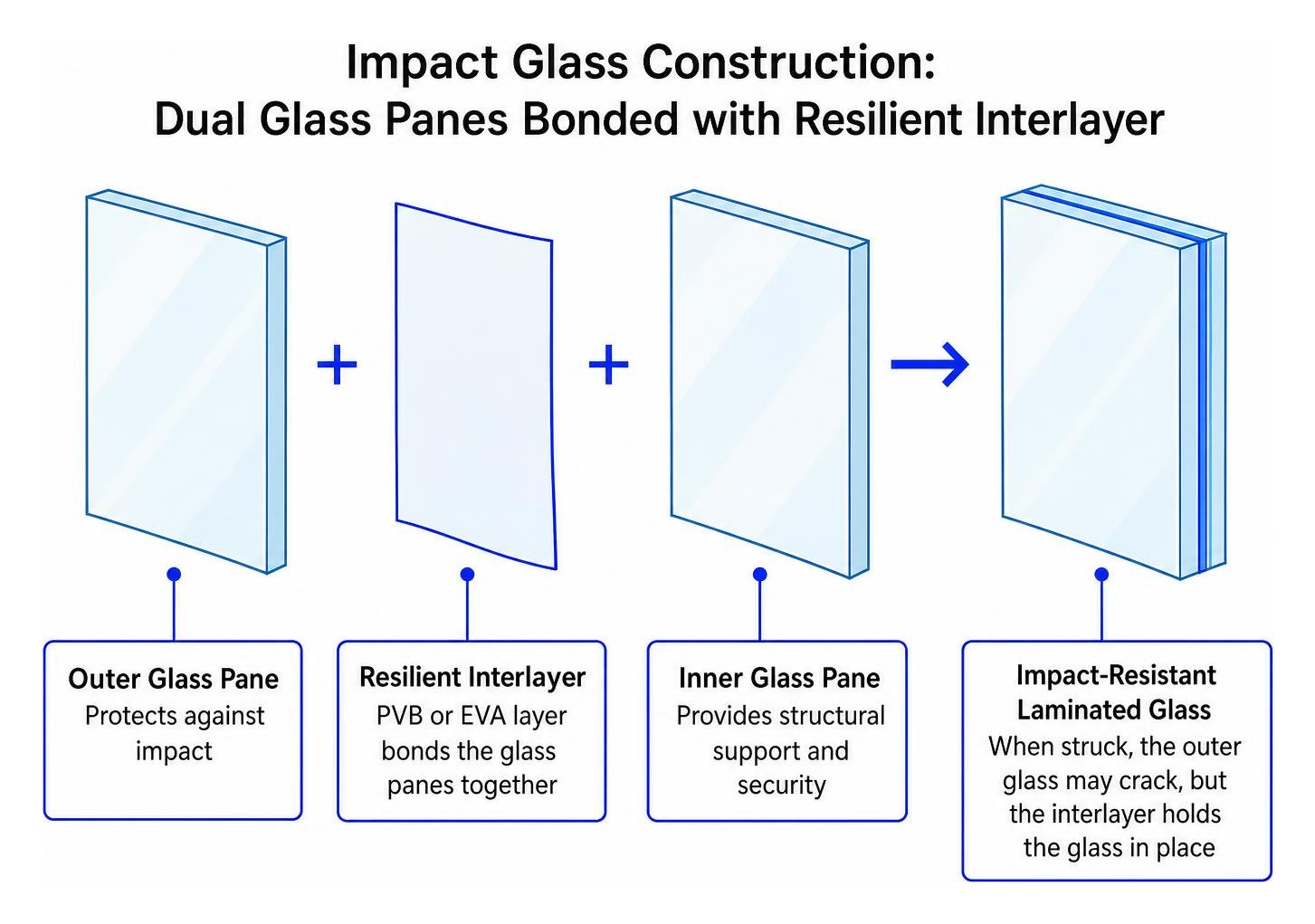
Impact-resistant products offer multiple long-term advantages:
- Impact Glass Technology: Constructed by bonding a heavy-duty polyvinyl butyral (PVB) or ethylene-vinyl acetate (EVA) interlayer between two glass sheets under extreme heat and pressure. When struck by high-speed debris, the outer glass may crack, but the resilient interlayer remains intact, preserving the structural envelope of your home.
- Enhanced Home Security: The shatter-resistant laminated glass core provides a formidable barrier against forced entry, deterring intruders far more effectively than standard tempered or annealed glass.
- Acoustic Dampening: The combination of varying glass thicknesses and dense polymer interlayers dampens sound waves, reducing exterior street noise, lawnmowers, and traffic.
- UV Fade Defense: Laminated impact interlayers block up to 99% of damaging ultraviolet rays, protecting interior hardwood flooring, drapery, and furniture from fading.
- Multi-Point Locking Hardware: Heavy-duty entry and patio doors utilize multi-point stainless steel locking systems that secure the door leaf at the top, center, and bottom of the frame simultaneously.
Maintenance Protocols and Signs for Replacement
Timely upkeep protects the structural integrity of your windows and doors, while knowing the warning signs of failure ensures you replace aging fixtures before hidden water damage harms your home.
Clear Signs It Is Time to Replace Windows and Doors
If your fixtures exhibit any of the following issues, planning a replacement is the most cost-effective path forward:
- Persistent Drafts: Air moving around closed sashes or thresholds points to deteriorated weatherstripping or warped framing that cannot create a tight seal.
- Fogging Between Glass Panes: Condensation trapped inside a double- or triple-pane unit indicates that the perimeter seal has failed, allowing moist air into the gap and eliminating the insulating gas fill.
- Sticking or Jammed Operation: Frames that have warped due to foundation settling, moisture absorption, or repeated seasonal expansion will bind against sashes, making opening and emergency egress difficult.
- Visible Rot and Structural Decay: Soft, peeling wood sills or water stains beneath frame corners mean moisture has penetrated the wall assembly.
- Rising Utility Costs: Steady increases in seasonal heating and cooling bills often stem from inefficient, single-pane units or leaky door perimeters.
Best Practices for Long-Term Maintenance
Routine care preserves your windows and doors and keeps mechanical warranties valid:
- Clean Frames and Glass with Mild Soap: Wash vinyl, fiberglass, and aluminum frames using a soft sponge and mild dish soap diluted in warm water. Avoid abrasive scouring pads that scratch protective finishes.
- Clear Debris from Sill Tracks: Vacuum dust, dirt, and leaves from sliding tracks and ensure exterior weep holes remain open so rainwater drains away properly.
- Lubricate Moving Parts Annually: Apply a light silicone-based lubricant to hinges, rollers, crank gears, and latch assemblies. Avoid petroleum-based greases that attract dirt.
- Inspect Weatherstripping: Check perimeter rubber, vinyl, and foam weatherstripping each autumn. Replace brittle, torn, or flattened seals to keep air leaks at bay.
- Avoid High-Pressure Washers: Never use a pressure washer to clean windows or exterior door assemblies; intense water pressure can break perimeter insulated seals and force water past weatherstripping.
Frequently Asked Questions
Where should I purchase replacement units: retail stores or authorized distributors?
Big-box retail stores offer standard off-the-shelf dimensions suitable for quick utility fixes, but they often stock builder-grade models with limited customization. Purchasing through authorized distributors or certified contractors ensures access to heavy-duty residential lines, exact custom-fit sizing, advanced low-E coatings, and comprehensive factory warranties that may be voided by improper third-party modifications.
What are the most energy-efficient window operating styles?
Hinged units, such as casement and awning windows, are the most energy-efficient operable styles. Because their sashes close by pressing directly against a continuous perimeter compression seal, air infiltration is minimized. Non-operable picture windows offer the ultimate thermal performance because their sealed perimeter frames eliminate air leakage entirely.
How do impact-resistant units differ from standard insulated glass?
Standard insulated glass consists of two panes of tempered or annealed glass separated by an air spacer. Impact-resistant units incorporate laminated safety glass—two panes bonded permanently to a tough structural polymer interlayer. While standard glass shatters into pieces upon impact, laminated impact glass holds firmly in the frame, maintaining a secure barrier against storm winds and forced entry.
Conclusion
Choosing the right combination of windows and doors elevates your home’s comfort, security, and architectural appeal. By carefully comparing core materials like vinyl, steel, and fiberglass, and selecting proven energy-efficient glazing tailored to our Midwest climate, you can protect your investment for decades to come.
At Martin & Sons, we believe home improvements should be straightforward and worry-free. We proudly serve homeowners across St. Louis MO, St. Peters MO, St. Charles MO, Florissant MO, Chesterfield MO, Creve Coeur MO, Maryland Heights MO, and O’Fallon MO from our headquarters at 8460 N. Lindbergh Blvd. Suite 11 in Florissant. We deliver our best prices upfront, require no upfront deposits, and offer lifetime labor warranties with payment due only upon 100% completion and total customer satisfaction. Please note that while we provide comprehensive roofing, siding, and window solutions, Martin & Sons is not a standalone gutter company; we only provide gutter services when performing a roofing project.
Ready to transform your home with precision craftsmanship and reliable products? Reach out today to choose the right windows and doors with martin sons llc and schedule your personalized consultation.