Why Your Entry Door with Glass Is the First Thing People Notice
Choosing an entry door with glass is one of the highest-impact upgrades you can make to your home. It shapes your curb appeal, controls how much natural light enters your home, and signals quality to every visitor — and potential buyer — who walks up to your front door.
Quick answer: What should you know about entry doors with glass?
- Natural light – Glass panels flood your entryway with daylight without sacrificing insulation
- Curb appeal – A glass entry door instantly modernizes or elevates your home’s exterior
- Home value – Glass entry doors can increase resale value by up to 5-10%
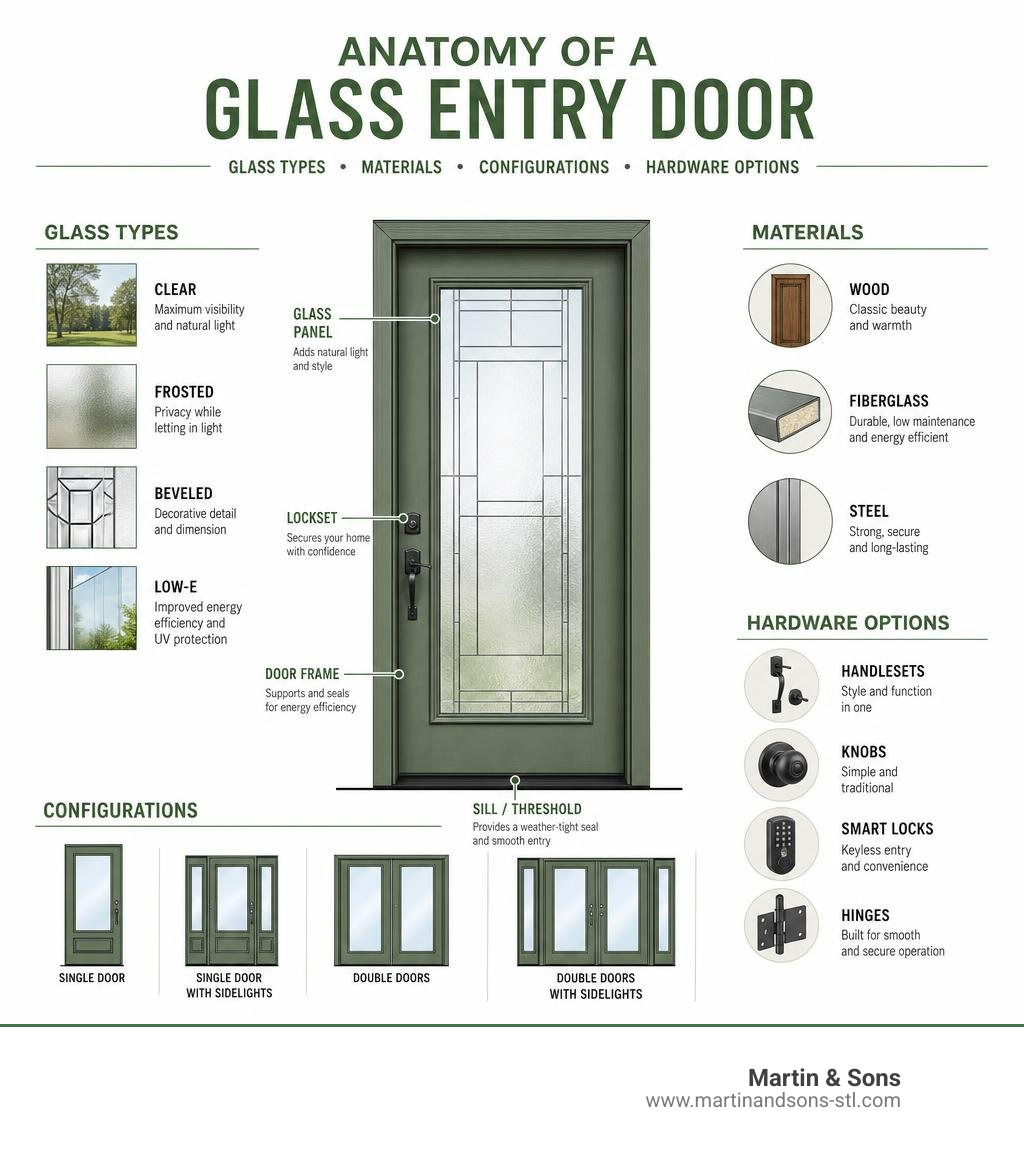
- Glass types – Clear, frosted, beveled, and Low-E glass each offer different levels of privacy and energy efficiency
- Materials – Fiberglass, wood, and steel are the three main options, each with different trade-offs
- Security – Tempered glass and multi-point locks keep glass doors safe and secure
- Cost – Prices typically start around $900 for single doors and can reach $7,500+ for double doors with custom glass
Over 60% of homeowners prefer entry doors with at least some glass element — and it’s easy to see why. The right door does more than look good. It performs.
I’m John Martin, and with over 35 years of hands-on experience helping St. Louis homeowners select and install entry doors with glass, I’ve seen how the right choice transforms a home’s look, comfort, and value. Let’s walk through everything you need to know to make the best decision for your home.
The Benefits of Upgrading to an Entry Door with Glass
When you think about home improvement projects that offer the best bang for your buck, replacing an outdated front door is always near the top of the list. In fact, upgrading your front entryway is one of the most cost-effective ways to boost your home’s resale value, potentially increasing it by 5% to 10%.
But the benefits go far beyond financial return. Let’s look at why an entry door with glass is a game-changer for homeowners in the St. Louis area, from O’Fallon to Maryland Heights:
- Abundant Natural Light: Dark entryways can make an entire home feel gloomy. By introducing glass panels, you allow natural sunlight to spill into your foyer, creating a warm, inviting atmosphere.
- Modernized Aesthetics: Whether you live in a historic home in Creve Coeur or a modern build in St. Peters, a glass-accented door instantly elevates your exterior design. It transitions your home from “standard” to “custom.”
- Enhanced Energy Efficiency: Many homeowners worry that adding glass means sacrificing comfort. However, modern manufacturing has changed the game. Selecting an energy-efficient glass door can improve your home’s thermal performance dramatically. To understand how advanced glass and frame designs protect your home from drafts, check out our guide on How New Door Installation Can Improve Your Home’s Energy Efficiency.
- Improved Curb Appeal: Your front door is the focal point of your home’s facade. Upgrading to a gorgeous glass design is the ultimate facelift. Learn more about how these upgrades make your home the star of the neighborhood in our article on how New Windows and Doors Can Refresh Your Home’s Curb Appeal.

Glass Types: Balancing Privacy, Light, and Energy Efficiency
Selecting the right glass type is a balancing act between how much light you want, how much privacy you require, and how well you want to insulate your home from the humid St. Louis summers and freezing winter winds.
Clear and Beveled Glass for Maximum Brilliance
If your front door faces a private yard, a quiet cul-de-sac, or if you simply love a bright, open view of the outdoors, clear glass is an exceptional choice. It provides complete transparency and allows the maximum amount of natural light to enter.
For a touch of elegance, beveled glass features angled edges cut into the perimeter of the glass pane. These angled cuts act as prisms, catching the sunlight and casting beautiful, subtle patterns across your entryway. If you want a classic, high-end look, a single wood door with sidelites featuring clear beveled glass—such as the Glenview Classic Mahogany-Walnut Entry Door—creates an incredibly grand and welcoming first impression.
Frosted and Textured Glass for Privacy
For homeowners living in bustling neighborhoods like Florissant or Chesterfield, privacy is often a top priority. Fortunately, you do not have to sacrifice natural light to keep prying eyes out. Textured and obscure glass options allow light to filter through while completely softening or obscuring the view from the street.
Some of the most popular textured glass options include:
- Frosted / Satin Glass: Offers a smooth, velvety, translucent finish that provides high privacy while diffusing light beautifully.
- Rain Glass: Mimics the appearance of water trickling down a windowpane, offering a highly stylized look and excellent obscurity.
- Flemish Glass: Features a hand-blown, distorted glass appearance that works beautifully with traditional or rustic home designs.
Low-E Glass Options for Your Entry Door with Glass
No matter which style of glass you choose, we always recommend opting for Low-Emissivity (Low-E) glass. Low-E glass is treated with a microscopic, invisible metallic coating that reflects infrared and ultraviolet light.
During our hot Missouri summers, Low-E glass reflects the sun’s heat away from your home, keeping your foyer cool. In the winter, it does the exact opposite: it reflects your home’s indoor heating back inside, reducing the workload on your furnace. Many premium doors, like the Pease Clear Flush Glazed Fiberglass Entry Door, feature clear Low-E glass that maximizes both incoming light and thermal performance, ensuring your home remains comfortable year-round.
Material Matters: Fiberglass vs. Wood vs. Steel
The material of your door frame and slab dictates how much maintenance you’ll have to perform, how long the door will last, and how well it will withstand the elements. When choosing the best material, it helps to weigh the pros and cons of each option. To dive deeper into making this decision, take a look at our comprehensive Choosing the Best Doors for Your Home Door Installation Guide.
Here is a quick overview of how the three main materials compare:
| Material | Durability | Maintenance | Insulation | Best For |
|---|---|---|---|---|
| Fiberglass | Excellent (No denting, rotting, or warping) | Very Low (Occasional wipe down) | Excellent (Polyurethane foam core) | All-weather performance, wood-like look without the upkeep |
| Wood | Good (Requires protection from moisture) | High (Regular painting or staining) | Good (Natural wood core insulation) | Historic charm, high-end custom traditional aesthetics |
| Steel | High (Can dent if struck hard) | Low (Needs paint touch-ups to prevent rust) | Moderate to High | Budget-friendly security and sleek modern styles |
Fiberglass Entry Door with Glass: The Modern Standard
Fiberglass has quickly become the gold standard for modern exterior doors. Modern fiberglass doors are engineered with a durable fiberglass skin that resists warping, cracking, rotting, and denting. Inside, they are packed with high-density polyurethane foam insulation, making them incredibly energy-efficient.
Furthermore, fiberglass is incredibly versatile. It can be manufactured with a smooth, paintable surface for a sleek modern look, or molded with realistic wood-grain textures (like mahogany or oak) that are virtually indistinguishable from real wood. High-quality systems, such as the Pella Flush Glazed Full Light Fiberglass Entry Doors, offer the ultimate combination of maximum daylight, weather resistance, and low maintenance.
Classic Wood and High-Security Steel
While fiberglass is incredibly popular, real wood and steel still hold valuable places in home design:
- Classic Wood: There is an undeniable warmth and weight to a genuine solid wood door. If you are aiming for architectural authenticity, wood is unmatched. However, because wood naturally expands and contracts with changes in humidity, it requires regular staining or painting every few years to protect it from moisture damage.
- High-Security Steel: Steel doors are cost-effective, exceptionally strong, and offer fantastic home security. While they do not offer the same natural warmth as wood, they can be painted in vibrant colors and fitted with beautiful glass inserts to create a striking, budget-friendly entrance.
Design, Styles, and Customization Options
Your front entryway should match the architectural personality of your home. A sleek, minimalist glass door might look out of place on a historic Craftsman bungalow, just as a heavily decorative leaded-glass door might clash with a mid-century modern home.
Upgrading your door is the perfect opportunity to redefine your exterior. Read more about how a simple change can transform your home’s aesthetic in our article on how New Windows and Doors Can Change the Entire Look of Your Home.
Sidelights and Transoms
If you want to create a truly grand entrance, consider expanding your door configuration to include sidelites or a transom:
- Sidelights (Sidelites): These are vertical glass panels installed on one or both sides of your front door. They make your entryway appear much wider and allow light to enter from multiple angles.
- Transoms: A transom is a decorative glass panel installed directly above the door frame. They are excellent for homes with high ceilings, drawing the eye upward and capturing extra sunlight.
For instance, a prehung option like the Framewell 3/4 View Decorative Glass Entry Door with Sidelites uses matching glass panels on either side of the main door slab to create a balanced, bright, and architecturally stunning foyer.
Hardware and Finishes
The final touches on your entry door with glass are the hardware and finishes.
- Locks and Handlesets: For modern doors, minimalist pull bars or sleek, low-profile smart locks look fantastic. Traditional doors pair beautifully with classic brass or oil-rubbed bronze handlesets.
- Multi-Point Locking Systems: Rather than relying on a single deadbolt, a multi-point lock secures the door at the top, middle, and bottom with one turn of the key, providing unmatched security and a tighter weather seal.
- Finishes: Bold paint colors like deep charcoal black, navy blue, or rich forest green can make your glass door pop. If you prefer a natural look, high-quality stains can highlight the beautiful wood-grain textures of your wood or fiberglass door.
Frequently Asked Questions About Glass Entry Doors
How do glass entry doors impact home security?
This is the number one concern we hear from homeowners. It’s a common misconception that having glass in your front door makes your home an easy target.
In reality, modern glass entry doors are built with safety and security in mind. The glass used in exterior doors is tempered safety glass, which is up to four times stronger than standard window glass. If it does break, it crumbles into small, dull pieces rather than sharp shards. Furthermore, many glass doors feature double- or triple-paned insulated units, making them incredibly difficult to penetrate. When paired with a multi-point locking system and a reinforced frame, a glass entry door is just as secure as a solid door.
What is the typical cost of an entry door with glass?
The cost of a new glass entry door varies widely based on the materials, size, glass type, and customization options you choose.
- Budget-Friendly Options ($900 – $1,800): Standard steel or smooth fiberglass doors with simple clear or half-lite glass panels.
- Mid-Range Options ($1,800 – $3,500): Premium fiberglass doors with decorative, frosted, or Low-E glass, and basic sidelites.
- High-End Custom Options ($3,500 – $7,500+): Large double doors, custom solid wood doors with intricate beveled glass patterns, transoms, and smart multi-point locking systems.
Can I replace my front door without replacing the frame?
While it is technically possible to buy just a “slab” (the door itself) and hang it in your existing frame, we rarely recommend it. Over time, your home settles, and your existing door frame can become slightly warped or out of alignment.
Buying a pre-hung door — which comes pre-mounted inside its own perfectly square frame with weatherstripping already attached — ensures a flawless fit. This eliminates drafts, prevents leaks, and guarantees that your new door will open and close smoothly for decades to come.
Conclusion
Upgrading your home with a gorgeous entry door with glass is an investment that pays dividends in natural light, energy savings, and daily enjoyment. By selecting the right combination of durable materials, energy-efficient glass, and a style that complements your home, you can create an entrance that truly shatters expectations.
At Martin & Sons, we have spent decades serving our neighbors throughout St. Louis, St. Charles, Florissant, and the surrounding areas. We believe in doing business the right way:
- No upfront deposits — you don’t pay a single dime until the job is 100% complete and you are completely satisfied.
- Lifetime labor warranties on our installations, giving you ultimate peace of mind.
- Best prices upfront without any high-pressure sales tactics.
Ready to transform your home’s entrance? Contact our team of experts today and let us help you Choose the Right Windows and Doors with Martin & Sons.