
Why Chimney Cricket Debris Cleanup Is the Roof Task Most St. Louis Homeowners Overlook
Chimney cricket debris cleanup is one of the most overlooked — and most damaging — maintenance tasks on any sloped roof. Here’s the short version of what you need to know:
Quick Answer: How to Clean Debris from a Chimney Cricket
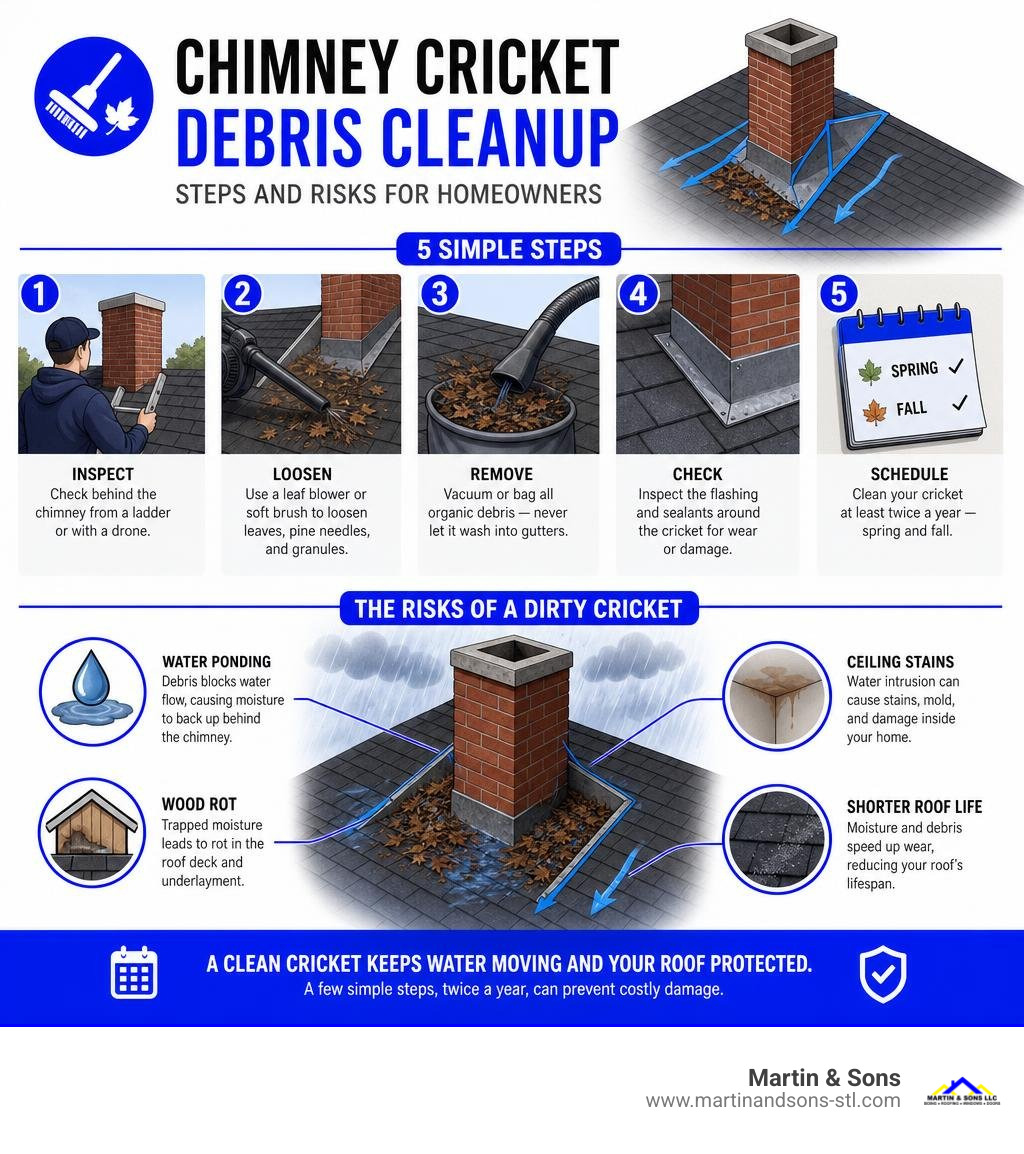
- Inspect the area behind the chimney from a ladder or with a drone
- Use a leaf blower or soft brush to loosen leaves, pine needles, and granules
- Vacuum or bag all organic debris — never let it wash into gutters
- Check the flashing and sealants around the cricket for wear
- Schedule this at least twice a year — spring and fall
That wedge-shaped structure sitting behind your chimney is called a cricket (or saddle). Its only job is to push water around your chimney instead of letting it pool against the back wall. When leaves, pine needles, and roof granules pile up behind it, that system fails — and the damage that follows is expensive.
Think a brown ring on your ceiling is a masonry problem? It might actually be a clogged cricket holding moisture against your roof deck for days after every rainstorm.
Debris-clogged crickets can reduce a roof’s lifespan by 20–30%. And in St. Louis, with over 40 inches of rain and 25 inches of snow each year, that risk compounds fast.
I’m John Martin of Martin & Sons LLC, and with over 35 years of hands-on roofing experience — including hundreds of chimney cricket debris cleanup jobs across the St. Louis area — I’ve seen how this one neglected valley can quietly rot a roof from the inside out. In this guide, I’ll walk you through exactly how to handle it.
What is a Chimney Cricket and Why Does Debris Accumulate?
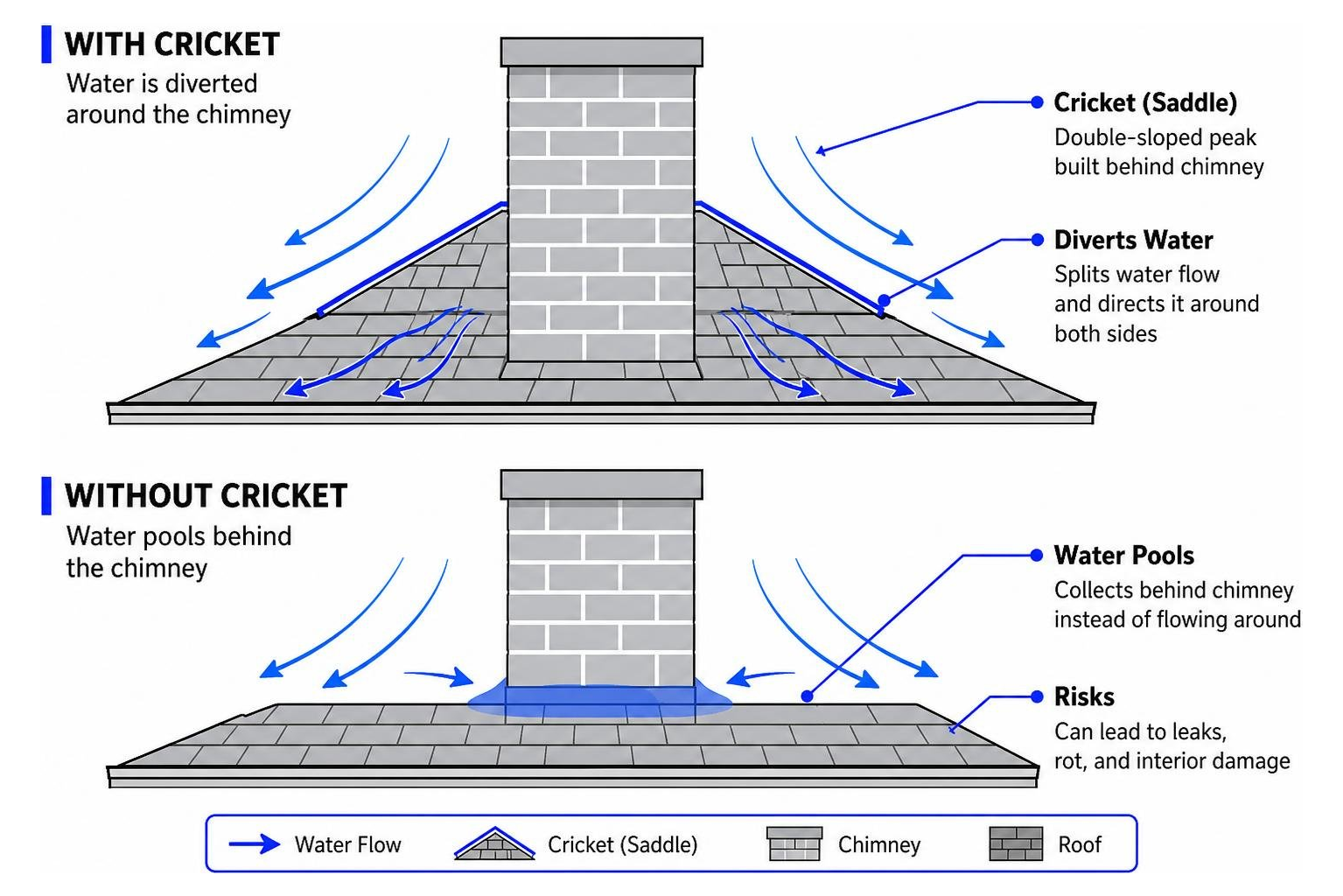
To understand why a chimney cricket requires regular maintenance, it helps to look at how water behaves on your roof. Think of your roof as a high-velocity drainage highway. When rain falls, it flows down the shingles toward your gutters. If you have a chimney, you essentially have a massive, flat-backed brick wall obstructing that highway.
Without a diversion system, water rushing down the slope hits the back of the chimney and stops dead. It pools, sits, and eventually finds a way under your shingles.
This is where the chimney cricket (also known as a roof saddle) comes in. A cricket is a small, double-sloped, triangular peak built behind the high side of a chimney. Its sole purpose is water diversion—splitting the downward flow of water and guiding it safely around the left and right sides of the masonry structure.
According to modern building codes (specifically the International Residential Code), a chimney cricket is legally required for any chimney that is wider than 30 inches at the base. You can read more about these exact specifications in our Best Practices for Installing a Roof Cricket Essential Guide.
While crickets are excellent at shedding water, their physical design makes them natural debris traps. The valley formed where the slope of the cricket meets the main slope of your roof creates a tight, V-shaped channel.
Several factors cause debris to pack into these channels:
- Tree Canopy Proximity: If your St. Louis home is surrounded by mature oak, maple, or pine trees, autumn leaves and pine needles will inevitably settle in these roof valleys.
- Wind Patterns: Wind gusts sweep across your roof, carrying loose organic matter. When the wind hits the vertical obstacle of your chimney, it loses velocity, dropping leaves, twigs, and pine needles directly behind the cricket.
- Asphalt Granule Shedding: As shingles age, they naturally shed protective mineral granules. These heavy granules wash down the roof and settle at the lowest point of the cricket valleys, mixing with organic debris to form a dense, heavy sludge.
The Hidden Dangers of Neglecting Chimney Cricket Debris Cleanup
Leaving a pile of leaves and twigs behind your chimney might seem harmless, but it sets off a destructive chain reaction.

The Physics of Water Diversion: Shedding vs. Submersion
Under normal conditions, asphalt shingles are designed for shedding water—meaning gravity pulls water over the overlapping layers. However, when debris blocks a chimney cricket, water can no longer flow freely. It transitions from shedding to submersion.
When water pools behind a blockage, it rises. Through a physical phenomenon known as capillary action, liquid is drawn upward into the narrow gaps between overlapping shingles, completely bypassing your standard metal flashing. This trapped water eventually penetrates the underlayment, rotting the roof deck beneath. If you want to know what else to watch out for, check out our guide on Signs of Roof Damage You Should Never Ignore.
The St. Louis Climate Factor: Rain, Snow, and Freeze-Thaw Cycles
Our local weather here in the St. Louis metro area—from Florissant down to Chesterfield—places extreme stress on residential roofs.
- Heavy Rainfall: With St. Louis averaging over 40 inches of rain annually, a clogged cricket will repeatedly experience severe water pooling.
- Freeze-Thaw Cycles: St. Louis averages 25 inches of snow per year. When snow melts on a warm roof and runs down to a debris-packed chimney cricket, it gets trapped. As temperatures drop overnight, this trapped water freezes, forming an ice dam.
- Masonry and Flashing Rupture: When water turns to ice, it expands. This expansion forces its way under shingles, tears apart metal counter-flashing, and cracks the mortar joints of your chimney.
Over time, this cycle leads to expensive structural damage, requiring extensive masonry repairs. To learn how to spot and fix these issues early, see A Homeowner’s Guide to Chimney and Flashing Repair.
Reduced Roof Lifespan and Interior Odors
A neglected cricket can reduce your roof’s overall lifespan by 20% to 30%. Instead of lasting 25 years, a roof deck constantly exposed to wet, rotting organic matter may fail in as little as 15 years.
Furthermore, the constant moisture trapped behind the chimney can seep through the masonry. During warm, humid summer months in Missouri, this moisture activates old creosote deposits inside the chimney flue, releasing a strong, unpleasant “campfire” or “asphalt” odor inside your home.
Other roofing professionals across the country face similar challenges. For example, regional roofers in wet climates emphasize this maintenance task heavily; you can read about their perspectives on Why is the removal of debris from behind chimney crickets a priority for Indianapolis roofers? – RoofingSafe.
Step-by-Step Professional Process for Chimney Cricket Debris Cleanup
When we perform a professional chimney cricket debris cleanup at Martin & Sons, we follow a strict, safety-first protocol to ensure the roof and chimney are left completely clean and undamaged.
1. Pre-Inspection (Including Drones)
Before we ever set foot on a ladder, we conduct an initial inspection. Often, we use high-definition drone photography to get a clear view of the chimney cricket’s condition without walking on steep or fragile shingles unnecessarily.
2. Safety Setup
Roof work is inherently dangerous. Our crews wear professional OSHA-compliant safety harnesses anchored securely to the roof ridge. We also place protective, waterproof tarps over the landscaping below the chimney to catch falling debris and protect your flowers and shrubs.
3. Dry Debris Removal
We never use high-pressure power washers on shingles, as this strips away their protective mineral granules. Instead, we use gentle, specialized tools:
- Commercial Leaf Blowers: Used at a low, angled setting to carefully blow dry leaves and loose pine needles out of the valleys.
- Soft-Bristled Hand Brushes: Perfect for manually sweeping out compacted debris and loose shingle granules that accumulate in the tight corners behind the chimney.
- Roof Vacuums: In some cases, we vacuum the debris directly to keep it from blowing into your yard or clogging your gutter system.
If moss or algae has started growing in the damp shade behind your chimney, we treat it using safe, soft-wash methods. You can read more about this in The Ultimate Guide to Professional Roof Moss Removal Services.
4. Flashing and Sealant Inspection
Once the cricket is completely clear of debris, we inspect the metal flashing, step flashing, and counter-flashing. We look for rusted metal, loose reglet cuts, or cracked caulking. If we find any issues, we re-secure the metal and apply high-grade, UV-resistant polyurethane sealants to ensure a watertight seal.
DIY vs. Professional Chimney Cricket Debris Cleanup
While some homeowners enjoy tackling weekend home improvement projects, clearing debris from a chimney cricket is a task that carries significant risks.
| Feature / Risk | DIY Roof Cleaning | Professional Service (Martin & Sons) |
|---|---|---|
| Safety Equipment | Standard ladder, rarely use harnesses | Full OSHA fall-arrest harnesses, roof anchors |
| Risk of Roof Damage | High (accidental shingle tearing, scraping) | None (trained techniques, soft-bristle tools) |
| Inspection Quality | Visual from ladder | Comprehensive (checking flashing, underlayment, masonry) |
| Time & Effort | 2–4 hours of high-risk labor | Quick, efficient, and completely hands-off for you |
| Warranty Protection | DIY mistakes can void shingle warranties | Work is fully insured and backed by lifetime labor warranties |
| Average Cost | $50–$100 (tools) + physical risk | $200–$500 (standard professional rate) |
Can Homeowners Safely Perform DIY Chimney Cricket Debris Cleanup?
We generally advise against homeowners attempting this cleanup themselves, primarily due to safety and structural concerns:
- Severe Fall Hazards: Chimneys are typically located near the highest points of your roof. Working on a steep pitch near a chimney requires specialized training and safety gear.
- Shingle Damage: Walking on shingles during hot summer afternoons can tear the asphalt, while walking on them in freezing winter temperatures can crack them. Furthermore, using metal shovels, harsh wire brushes, or high-pressure power washers to scrape away packed leaves will strip the shingle granules, exposing the underlying asphalt to rapid UV damage.
- Hidden Issues: A homeowner might successfully scoop out the leaves but miss a rusted piece of step flashing or a hairline crack in the mortar, leaving the roof vulnerable to leaks anyway.
How Often to Schedule Professional Chimney Cricket Debris Cleanup?
We recommend scheduling a professional inspection and cleanup twice a year:
- Late Spring: To clear out fallen tree tassels, seed pods, and spring storm debris.
- Late Autumn: To clear out compacted fall leaves and pine needles before winter snows arrive.
If your property in St. Peters or Maryland Heights is heavily wooded, or if you have mature pine trees hanging directly over your roofline, you may need to clear the cricket more frequently. Regular maintenance ensures your roofing underlayment remains dry and secure. To understand the different layers protecting your home, check out our guide on Roofing Underlayment Replacement and Decking Essentials.
Frequently Asked Questions
What is the difference between a roof cricket and a chimney saddle?
In the roofing industry, the terms “roof cricket” and “chimney saddle” are used interchangeably. Both refer to the same triangular, ridge-like structure built on the upslope side of a chimney to divert water and snow around the masonry block.
Does debris behind a chimney cricket cause interior ceiling leaks?
Yes. When leaves and pine needles pack tightly into the valley behind a chimney cricket, they act like a sponge. Water pools against the chimney wall and rises. Thanks to capillary action, the water flows under the shingles and bypasses the flashing, eventually soaking through your roof decking and showing up as unsightly brown water stains on your drywall ceiling.
Will a clogged chimney cricket void my roof warranty?
It can. Most roofing manufacturer warranties cover defects in the shingles themselves, but they do not cover damage caused by homeowner neglect. If water backs up and rots your roof deck because you allowed debris to accumulate behind your chimney cricket for years, the manufacturer may deny your warranty claim. Regular, documented maintenance is key to keeping your warranty intact.
Conclusion
A chimney cricket is a small but vital component of your home’s water shedding system. Keeping it clear of organic debris is one of the most cost-effective ways to prevent expensive roof rot, ruined drywall, and early roof failure.
For homeowners in St. Louis, St. Charles, Florissant, and the surrounding areas, Martin & Sons is here to help keep your roof in perfect condition. We make roof maintenance entirely stress-free with our unique customer-first policies:
- No Upfront Deposits: You don’t pay a single penny until the job is 100% complete and you are entirely satisfied.
- Lifetime Labor Warranties: We stand behind the quality of our craftsmanship for as long as you own your home.
- Best Prices Upfront: Honest, transparent pricing with zero high-pressure sales tactics.
Don’t wait for the next heavy St. Louis rainstorm to find out if your chimney cricket is clogged. Schedule Professional Roof Maintenance with Martin & Sons today, or call us to get a free, upfront estimate on your next roofing project!