Business Roof Repair Starts With the Right Decision
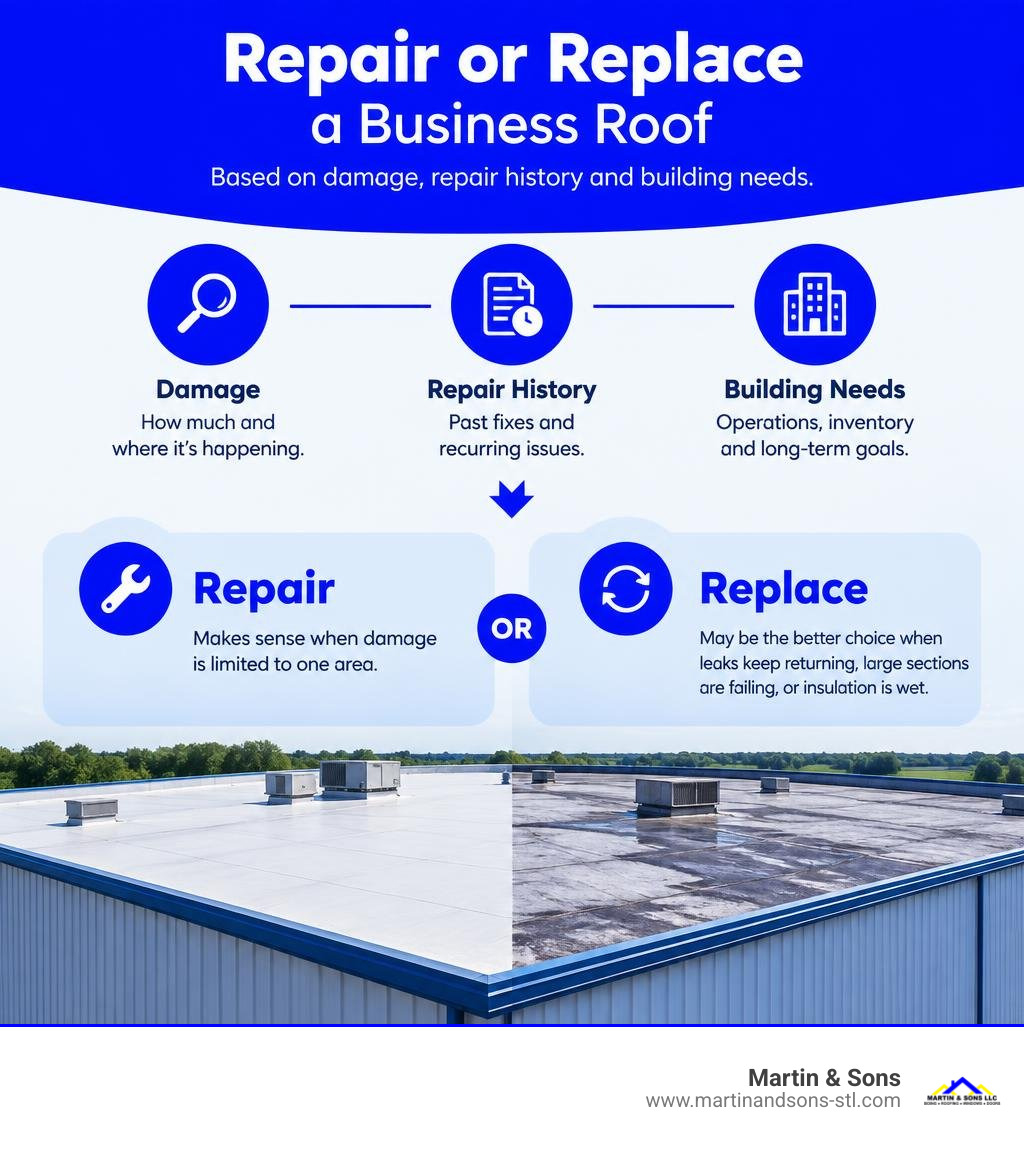
For business roof repair, start by finding the source of the leak and checking the roof’s seams, drainage, and insulation. Repair may make sense when damage is limited to one area. Replacement may be the better choice when leaks keep returning, large sections are failing, or insulation is wet.
A leak can threaten inventory and interrupt work, so the decision is about more than the roof itself. A clear inspection helps you plan the work around your building’s needs instead of paying for another patch that may not last.
I’m John Martin of Martin & Sons, a family-owned St. Louis business started in 1953. I bring more than 35 years of roofing industry experience to this guide to business roof repair.
Business roof repair terms you need:
Business Roof Repair: When to Repair or Replace a Commercial Roof
A commercial roof is a business asset. It protects inventory, equipment, tenants, and employees. A leaking warehouse roof is not a home-repair annoyance. It is lost stock, liability exposure, and a tenant calling at 7am.
Most commercial buildings have flat or low-slope roofs, and those play by different rules than pitched shingle roofs. A pitched roof sheds water. A flat roof has to manage it, so seams, drains, and membrane integrity matter a great deal. Leaks also travel. Water can run along seams and decking and pool in low spots, so the stain on your ceiling may be far from the actual hole.
Here in St. Louis, the roof faces hot, humid summers, freeze-thaw winters, and severe storms. Each one stresses seams and flashing in its own way. Work also has to fit around your operations, which is why the repair-or-replace choice deserves a plan.
Business Roof Repair: Warning Signs and Inspection Schedule
Watch for these common warning signs:
- Water stains on ceilings or walls
- Leaks that keep coming back
- Ponding water that lingers more than a day or two after rain
- Cracked, blistered, or torn membrane
- Open seams and failed flashing around vents, curbs, and edges
- Soggy or saturated insulation
- Mold or musty smells
- Energy bills that creep up for no clear reason
Our guide to roof damage warning signs covers more of them. When you spot one, trace a leak to its source instead of patching the visible symptom.
Most commercial properties should have a professional inspection at least twice a year, usually in spring and fall, plus after severe storms. Waiting for the leak is the expensive route. Scheduled inspections, including drone and infrared scans, can reveal membrane wear and trapped moisture before they turn into a five-figure repair.
Commercial Roofing Systems, Lifespans, and Repair Options
Three systems dominate flat and low-slope roofs:
- TPO is a reflective single-ply membrane that resists heat, punctures, and chemicals.
- EPDM is a flexible synthetic rubber membrane that handles UV and temperature swings well.
- Modified bitumen is a layered, asphalt-based system known for toughness.
| System | Typical lifespan | Key traits | Maintenance needs |
|---|---|---|---|
| TPO | 20 to 30 years | Reflective, puncture and chemical resistant | Check seams and flashing regularly |
| EPDM | 20 to 30 years | Flexible, weather resistant | Inspect seams, adhesive, and penetrations |
| Modified bitumen | Decades when well maintained | Durable, layered, tough | Watch seams, surfacing, and flashing |
Those numbers are not promises. Maintenance history, UV exposure, drainage, and foot traffic all shift them.
Typical repairs include resealing seams, replacing failed flashing, patching the membrane, and correcting drainage so water leaves the roof. Silicone coatings are another option. They form a seamless waterproof layer that resists ponding water and UV damage without cracking or peeling, and they can extend the life of a sound roof while improving energy efficiency.
Business Roof Repair vs. Replacement: How to Choose
Here is the simple version of the repair-versus-replacement decision.
Repair usually fits when damage is isolated to a seam, a flashing detail, a penetration, or one small area. Replacement becomes more likely when you see widespread deterioration, repeated failed repairs, chronic ponding, wet insulation, or a roof near the end of its life. Wet insulation is the big one. Patching over it just traps moisture.
| Option | Best for | Likely scope | Operational impact |
|---|---|---|---|
| Repair | Isolated damage, sound roof | Seams, flashing, patches | Minimal, often short visits |
| Coating | Aging but dry, intact roof | Cleaning, repairs, seamless coating | Moderate, with weather timing |
| Replacement | Widespread failure, wet insulation | Tear-off or overlay, new system | Greatest, needs phased planning |
Costs depend on roof size, access, materials, labor, and the extent of damage. Our roof repair cost factors guide explains what moves a price. A useful rule: when repair bills start to approach a meaningful share of replacement, the patching is probably costing you more than it saves.
Contractors, Codes, Insurance, and Business Continuity
When choosing a commercial roofing contractor, look for:
- Proper licensing and liability insurance
- Workers’ compensation coverage
- Experience with your specific roof system
- A written scope that spells out materials, prep, cleanup, and closeout
- Permits handled correctly
- Clear warranty terms
Safety matters too. Rooftop crews should follow OSHA fall-protection guidance.
Energy codes and insurers are pulling in the same direction. Reflective cool roof membranes and better insulation can lower energy bills, and the U.S. Department of Energy offers guidance on cool roofs. Insurers also look harder at roof condition when underwriting commercial policies. Keep inspection reports, photos, and repair records. They help if you ever need to file one of those roof repair insurance claims.
Can work happen without shutting you down? Often, yes. Phased work, planned access routes, staging areas, and clear communication with tenants and staff keep disruption low.
Storms do not wait for a convenient week. After damage, emergency tarping and temporary repairs protect the building until permanent work can start. Having an emergency roof repair plan before you need it saves scrambling.
Conclusion: Make a Proactive Plan for Your Commercial Roof
Proactive care costs less over a roof’s life than reacting to leaks. Set an inspection schedule, decide how quickly repairs should happen, budget for eventual replacement, and write down a storm-response plan.
At Martin & Sons, we ask for no upfront deposits. You pay only when the work is 100% complete and you are satisfied. We back our work with lifetime labor warranties and give you our best price upfront. Ready to get ahead of your next leak? Schedule our roofing maintenance service and let us look at your roof.