The Most Popular Home Cladding in North America — And Why It Matters
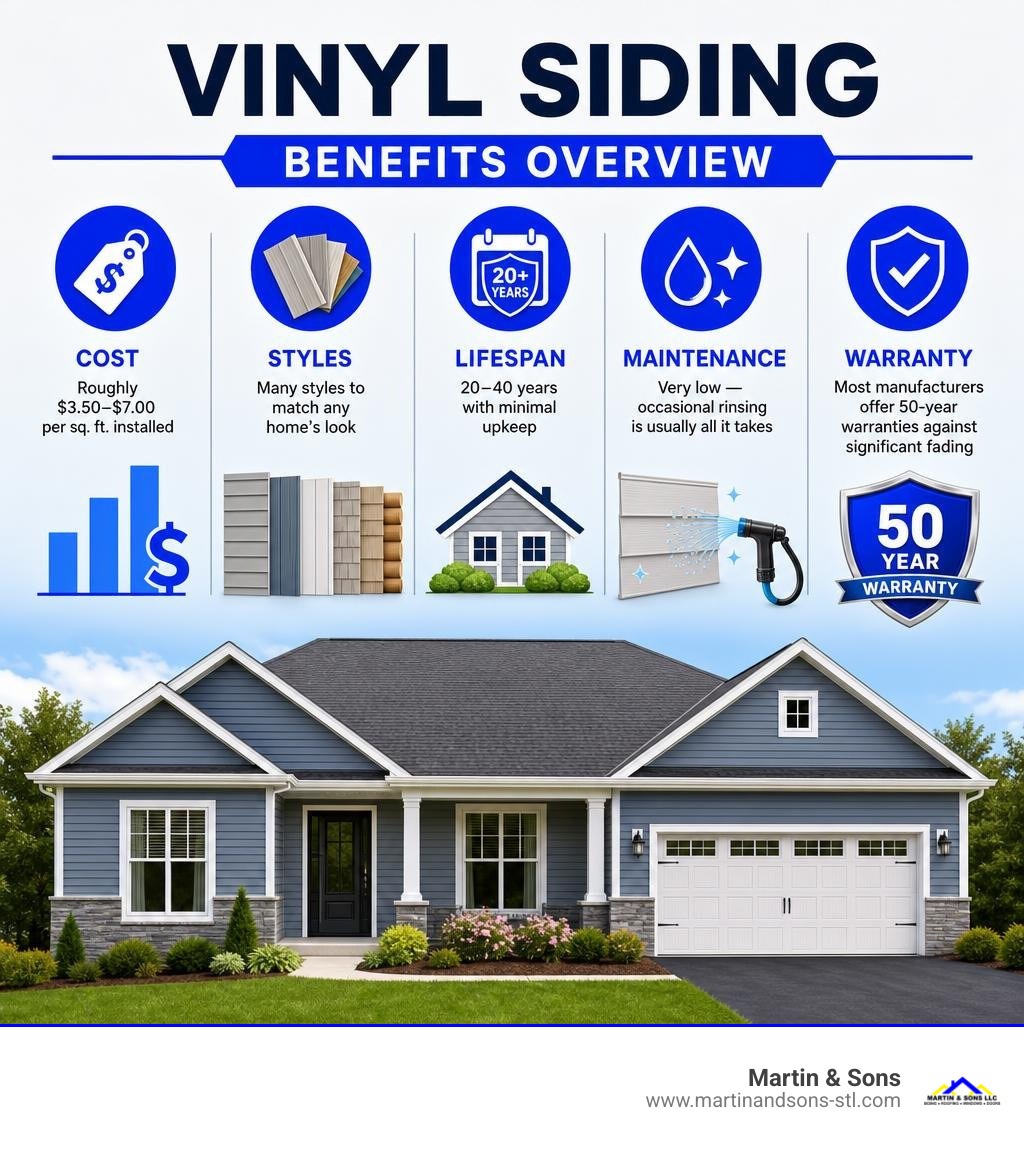
Vinyl siding is the most commonly installed exterior cladding for residential homes in the United States and Canada. If you’re trying to decide whether it’s right for your home, here’s a quick snapshot of what you need to know:
- What it is: A durable plastic exterior cladding made from PVC resin, designed to protect and beautify your home
- Styles available: Horizontal lap, Dutch lap, Board & Batten, Shake & Shingle, log, and more
- Cost range: Roughly $3.50–$7.00 per square foot installed
- Lifespan: 20–40 years with minimal upkeep
- Maintenance: Very low — occasional rinsing is usually all it takes
- Warranties: Most manufacturers offer 50-year warranties against significant fading
It’s a practical, affordable choice for millions of homeowners — and the variety of styles available today means it can suit almost any home’s look.
Choosing the wrong product, installer, or installation method can lead to warping, cracking, and costly repairs down the road. That’s why understanding your options before you commit matters.
I’m John Martin, and along with my family, I’ve been installing vinyl siding on St. Louis homes for over 35 years — so I’ll walk you through everything you need to make a confident, informed decision.
What is Vinyl Siding and How is it Made?
When you look at a beautiful home wrapped in modern cladding, you might not realize the high-tech engineering that goes into those panels. In its simplest terms, vinyl siding is an engineered plastic exterior cladding designed to mimic traditional wood clapboard, board and batten, or shingles.
First produced in the late 1950s by Crane Plastics in Columbus, Ohio, early vinyl manufacturing was a manual, sometimes inconsistent process. Today, it has evolved into a highly automated, scientific industry. Understanding how it is manufactured can help you appreciate the 7 Benefits of Choosing Vinyl Siding for Your Home and pick a product that stands the test of time.

PVC Composition and Manufacturing
Modern manufacturing relies on a process called co-extrusion. Instead of a single layer of plastic, co-extrusion fuses two distinct layers of material together:
- The Capstock (Top Layer): This represents up to 25% of the total panel thickness. It contains premium ingredients like titanium dioxide (typically around 10% of the capstock) for superior UV resistance to prevent fading, along with high-grade color pigments.
- The Substrate (Bottom Layer): This is the structural backbone of the panel. It contains approximately 15% ground limestone (calcium carbonate) to reduce manufacturing fluidity and keep costs reasonable, along with chemical stabilizers like tin mercaptan to neutralize hydrochloric acid released as the PVC ages.
Approximately 80% of the overall weight of the siding is pure PVC resin, while the remaining 20% consists of these vital additives that govern color, opacity, gloss, flexibility, and impact resistance. The entire manufacturing process complies with strict standards set by the Polymeric Exterior Products Association (PEPA) — formerly known as the Vinyl Siding Institute — ensuring that certified products meet rigid weatherability, wind load, and impact guidelines. For a deeper dive into the material science, you can read the Vinyl siding Wikipedia article.
Determining Quality and Thickness
Not all plastic panels are created equal. The easiest way to spot cheap material is to check its thickness. Siding thickness typically ranges from:
- .035″ to .040″ (Builder Grade): Thin, highly flexible, and often prone to sagging or cracking under high impact.
- .042″ to .046″ (Standard/Residential Grade): Good balance of cost and durability, offering reliable impact resistance.
- .048″ to .052″ (Premium Grade): Thicker, much stiffer, and highly resistant to cracking in cold weather.
While some industry experts argue that chemical formulation and stabilizers matter more than thickness when it comes to long-term impact resistance, thicker panels do provide a flatter, more rigid wall appearance. Investing in premium grades ensures you get Durable Vinyl Siding Options for a Lifetime that won’t sag or ripple over time. You will find that understanding these physical differences helps highlight the long-term Benefits of Vinyl Siding Installation for your home.
Architectural Styles, Profiles, and Color Choices
Gone are the days when choosing vinyl siding meant settling for flat, cheap-looking plastic sheets. Today’s market boasts immense aesthetic diversity, making it easy to match your home’s unique architectural character and dramatically boost curb appeal.
Popular Vinyl Siding Profiles
When planning your exterior remodel, you can mix and match several profiles to create texture and depth:
- Lap (Clapboard): The classic horizontal style where each board overlaps the one below it. It is perfect for traditional, colonial, or ranch-style homes.
- Dutchlap: Similar to horizontal lap, but features a distinct notch or bevel at the top edge of each board. This notch creates a deeper shadow line, giving the exterior a heavier, more dimensional look.
- Board & Batten: A vertical siding style featuring wide boards with narrow raised strips (battens) covering the seams. This is the absolute go-to choice for the popular modern farmhouse aesthetic.
- Shake & Shingle: Modeled after rustic, rough-split cedar shakes. This profile adds incredible texture and is commonly used as an accent on gables or historical cottage-style homes.
- Insulated Siding: Features a rigid foam backing adhered directly to the vinyl panel. This built-in insulation increases the panel’s rigidity, improves impact resistance, and delivers an R-value of 2.0 to 3.0, helping to lower utility bills year-round.
If you are trying to narrow down these choices, check out our guide on How to Pick the Perfect Vinyl Siding for Your House and our localized Vinyl Fiber and Fun The Florissant Siding Guide for regional styling tips.
Choosing Colors for Your Home
Modern manufacturing pigments are highly advanced. Leading brands offer hundreds of fade-resistant colors, ranging from classic linen whites and warm beiges to deep, dramatic hues like navy blue, forest green, and charcoal gray.
Before committing to a color, we highly recommend ordering physical color swatches. Seeing how a specific color behaves under the bright midday Missouri sun versus the evening shade can prevent a major design mistake. For inspiration, explore the latest Vinyl Siding Color Trends You Won’t Want to Miss and follow our Step by Step Guide to Siding Colors for House to find the perfect palette.
Comparing Cladding Materials
To understand why so many homeowners opt for polymeric materials, it helps to see how they stack up directly against alternative claddings.
| Performance Metric | Vinyl Siding | Natural Wood Siding | Fiber Cement |
|---|---|---|---|
| Upfront Cost (Installed) | $3.50 – $7.00 / sq. ft. | $5.00 – $12.00 / sq. ft. | $6.00 – $11.00 / sq. ft. |
| 30-Year Maintenance Cost | Extremely Low (Occasional wash) | Very High (Paint/stain every 3-7 years) | Moderate (Requires repainting every 15 years) |
| Rot & Insect Resistance | 100% Immune | Highly Vulnerable | 100% Immune |
| Average R-Value | 0.61 (Standard) to 3.0 (Insulated) | 1.0 to 1.4 | 0.15 to 0.50 |
| Resale ROI | 75% – 80% | 50% – 75% | 75% – 80% |
Why Vinyl Siding Outperforms Wood and Alternative Claddings
The choice between wood and vinyl often comes down to convenience versus authenticity. While natural wood offers unmatched warmth, it demands relentless upkeep. Wood must be painted or stained every 3 to 7 years to protect it from moisture, rot, termites, and mold. Over 30 years, maintaining wood siding on a standard 2,000 sq. ft. home can easily add $15,000 to $20,000 in painting bills, bringing the total 30-year cost of ownership to over $36,000.
Fiber cement is beautiful and durable, but it is incredibly heavy, difficult to install, and carries a much higher upfront material cost. Aluminum siding, while durable, is highly susceptible to permanent denting and scratching.
By comparison, vinyl siding is immune to rot, requires no post-installation painting, and has a highly predictable resale ROI. To explore budget-friendly material pairings, check out The Top 10 Most Affordable Vinyl Siding and Window Options for 2026 and read the comprehensive breakdown on Vinyl Siding vs Wood Siding (2026) — Cost, Durability & Value Compared | SidingCosts.com. You can also read Vinyl Siding Prices That Won’t Leave You Feeling Board to see how polymeric options keep your long-term budget intact.
Weather Resistance and Fire Safety
Some homeowners worry about how plastic behaves in extreme heat or fire. Because of its chlorine base, rigid PVC is actually inherently slow to ignite and self-extinguishes easily. It won’t ignite, even from another flame, until it reaches about 730°F (387°C), and won’t self-ignite until about 850°F (454°C). In comparison, standard wood framing lumber ignites at a much lower 500°F (260°C).
Additionally, modern polymeric panels are engineered to withstand severe wind loads and impact when installed correctly. They are designed to expand and contract freely as temperatures swing from freezing winter nights to humid St. Louis summer afternoons.
Environmental and Health Considerations
When it comes to green building, vinyl performs surprisingly well. Because it requires no paint, stain, or harsh solvent-based caulks, it minimizes job site waste and chemical emissions. The National Association of Home Builders (NAHB) recognizes vinyl in its green building guidelines. While groups like Greenpeace raise concerns about historical PVC manufacturing byproducts, modern manufacturing facilities operate under highly regulated, clean OSHA and EPA standards, and the material itself is recyclable at the end of its lifespan.
Installation, Accessories, and Maintenance
No matter how high-quality your siding panels are, their performance relies entirely on proper installation and trim accessories.
Essential Accessories and Trim
A complete siding system requires several specialized trim accessories to seal out weather and finish the look:
- Starter Strip: Secured at the very bottom of the wall to lock the first course of siding in place.
- J-Channel: Used around windows, doors, and at the top of walls to receive the cut ends of the siding panels and hide the edges.
- Utility Trim (Undersill Trim): Installed under window sills and at the top of the wall to hold cut panels securely in place.
- Inside and Outside Corner Posts: Cap off the corners of the home, providing a clean, waterproof channel for the horizontal panels to slide into.
Understanding these components will help you when Calculating the Lifetime Cost of Vinyl Siding Installation Repairs Maintenance for your remodeling project.
Proper Installation Process
Installing vinyl is a precise trade. Because vinyl expands and contracts up to 1/2 inch or more over a 12-foot-6-inch length, it must be installed using a “loose” nailing system.
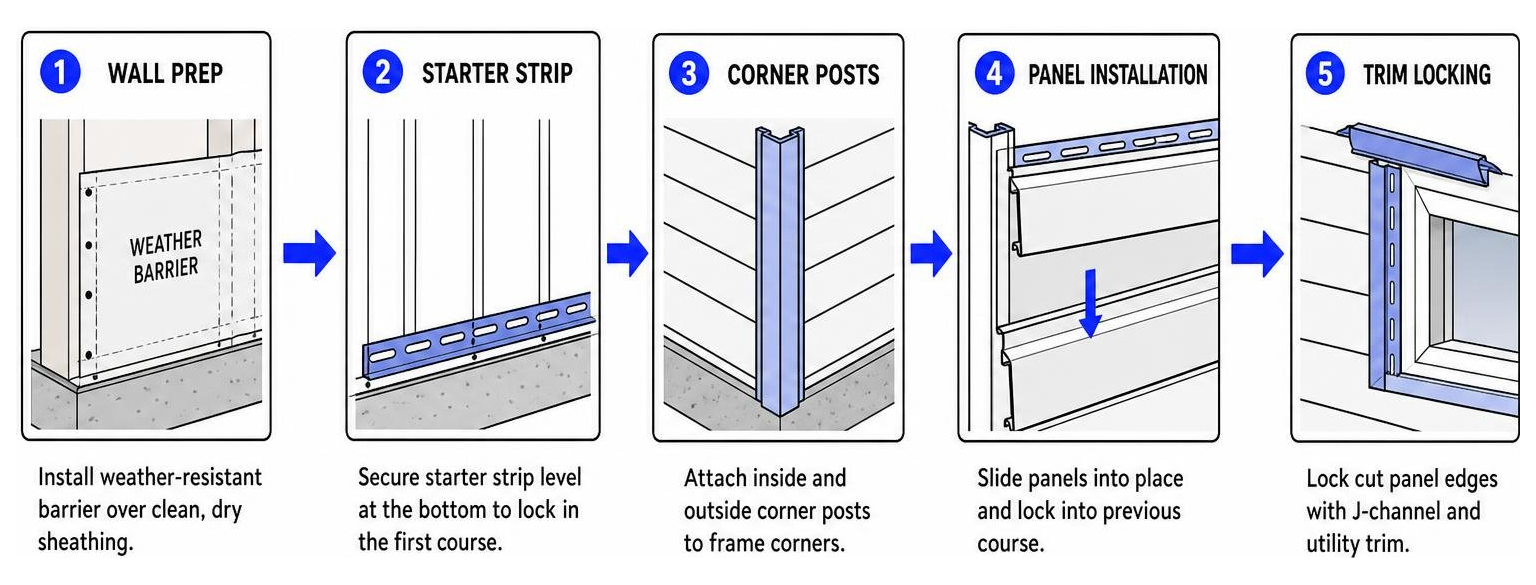
According to ASTM D4756 standards and the official Installation Guide, installers must follow these critical rules:
- Never nail tightly: Always leave a 1/32-inch gap (about the thickness of a dime or nickel) between the fastener head and the vinyl. The panels must be able to slide horizontally.
- Nail in the center of the slot: Placing nails at the edge of the slot restricts thermal movement, causing the panels to buckle and ripple.
- Use a weather-resistant barrier: Siding acts as a supplemental rainscreen, not a waterproof seal. A high-quality housewrap must be installed underneath to protect the wood framing.
Cleaning and Maintaining Your Siding
Maintaining your siding is remarkably easy. For standard dirt and dust, a simple rinse with a garden hose is all it takes.
If you develop mold or mildew on shaded areas of your home, you can easily wash it away using a soft-bristled brush and a DIY cleaning solution:
- 1/3 cup powdered laundry detergent
- 2/3 cup powdered household cleaner
- 1 quart liquid laundry bleach
- 1 gallon of water
Crucial Tip: Always wash from the bottom of the wall upward to prevent dirty water from running down dry panels and creating permanent streaks.
If a single panel ever gets damaged by a runaway lawnmower or a stray baseball, you don’t need to tear down the whole wall. A simple specialty tool called a “zip-lock” tool can slide under the damaged panel, unhook the locking mechanism, and allow you to swap in a replacement panel in minutes.
Frequently Asked Questions about Home Cladding
What is the average cost of installation?
On average, vinyl siding costs between $3.50 and $7.00 per square foot installed. For a typical 2,000-square-foot home, this translates to an upfront investment of roughly $7,000 to $14,000. That complex architectural shapes, multi-story layouts, and upgrading to premium insulated options will increase these rates. To get a precise takeoff of material panels, cartons, and starter strips, you can use the Vinyl Siding Calculator | Calcipedia. To ensure you get a fair deal locally, read our guide so you Don’t Get Sided Swiped by St Louis Vinyl Siding Prices.
What warranties are typically offered?
Most reputable manufacturers offer a 50-year to lifetime limited warranty on their products, which often includes protection against severe color fading. However, manufacturer warranties only cover material defects — they do not cover poor installation. That is why working with a contractor who offers a lifetime labor warranty is so critical.
Can you paint or should you replace damaged panels?
While you can paint vinyl siding using specialized, light-colored “vinyl-safe” acrylic paints, we generally do not recommend it. Dark paint colors absorb heat, which can cause the underlying PVC panels to warp, buckle, and ruin your home’s exterior. Because individual panels are so easy to replace using a zip-lock tool, it is almost always faster, cheaper, and more durable to simply replace damaged panels rather than painting them. If you live in O’Fallon and need professional assistance, you can learn more about our local Vinyl Siding Replacement in O’Fallon MO services or find help nearby with Vinyl Siding Near Me Florissant MO.
Conclusion
Upgrading your home’s exterior cladding is one of the smartest investments you can make to protect your property and enhance its beauty. But the success of your project depends entirely on the skill and integrity of the team installing it.
At Martin & Sons, we have spent over 35 years serving homeowners throughout St. Louis, St. Peters, St. Charles, Florissant, Chesterfield, Creve Coeur, Maryland Heights, and O’Fallon. We do things differently to give you absolute peace of mind:
- No upfront deposits: You don’t pay us a single dime until the job is complete.
- Pay only on 100% satisfaction: We only collect payment when you are completely happy with our work.
- Lifetime labor warranties: We stand behind our craftsmanship for as long as you own your home.
- Best prices upfront: No high-pressure sales tactics or hidden fees — just honest, competitive pricing from day one.
If you also need window upgrades during your exterior remodel, we are proud to offer comprehensive solutions — check out The Complete Guide to Vinyl Windows, read about Vinyl Windows What Are the Pros and Cons of This Material, or explore our step-by-step process in Out With the Old Step by Step Vinyl Window Replacement. We are proud to be recognized among The Best Vinyl Window Installers for a Maintenance Free Life and offer combined packages like our O’Fallon MO Residential Vinyl Siding Windows Replacement services.
Ready to transform your home? Upgrade Your Curb Appeal with Seamless Vinyl Siding in St Louis today. Give us a call or visit our office at 8460 N. Lindbergh Blvd. Suite 11, Florissant, MO 63031, and let’s discuss your project!