
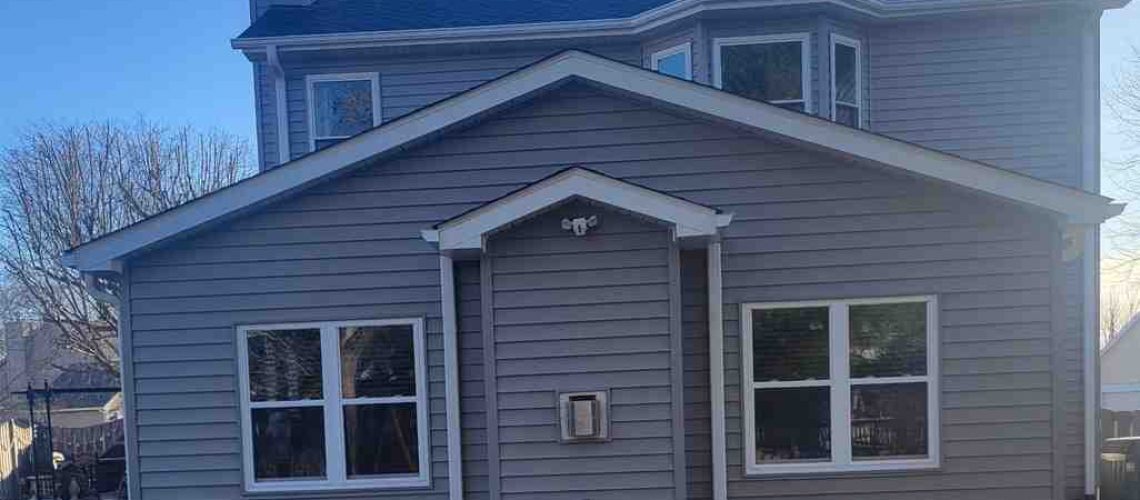
How to Choose the Right House Siding
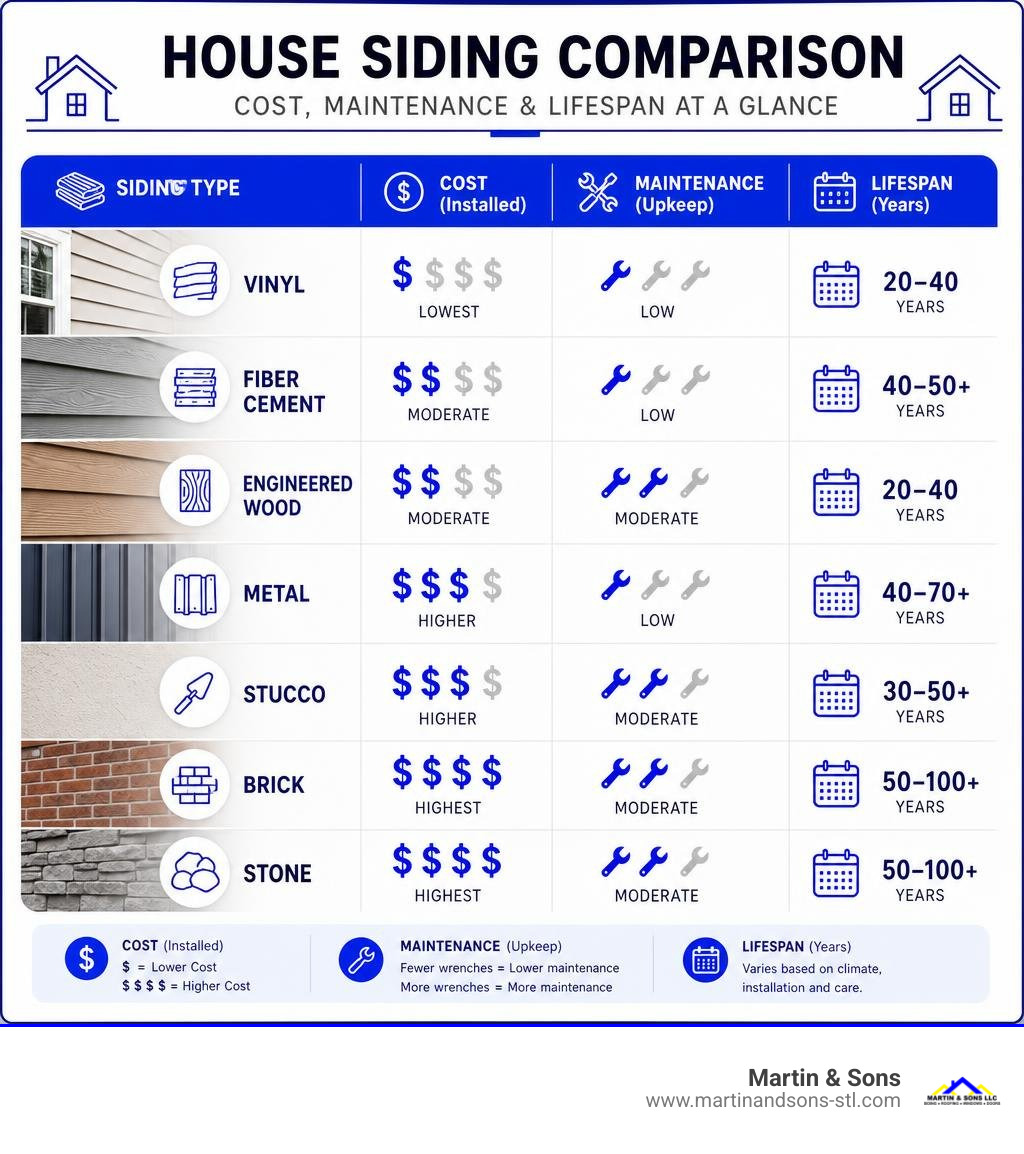
The best house siding depends on your budget, St. Louis weather exposure, maintenance tolerance, and the look you want. Start by comparing these common options:
- Vinyl: Lowest upfront cost and low maintenance; usually lasts 20 to 40 years.
- Fiber cement: Strong, fire-resistant, and long-lasting; often lasts 40 to 50+ years.
- Engineered wood: Delivers a wood-like look with good impact resistance and simpler installation than fiber cement.
- Metal, stucco, brick, and stone: Can last decades longer, but costs and climate fit vary widely.
Siding is more than an exterior finish. It helps manage rain, wind, pests, and temperature changes when installed with the right weather barrier, flashing, and trim. A good choice should protect the wall system and make your home look cared for when it is time to sell.
I am John Martin of Martin & Sons, a family-owned company with more than 35 years of experience helping homeowners make informed house siding decisions. In this guide, I will break down the materials, costs, design choices, and installation details that matter most.
Comparing Popular House Siding Materials and Costs
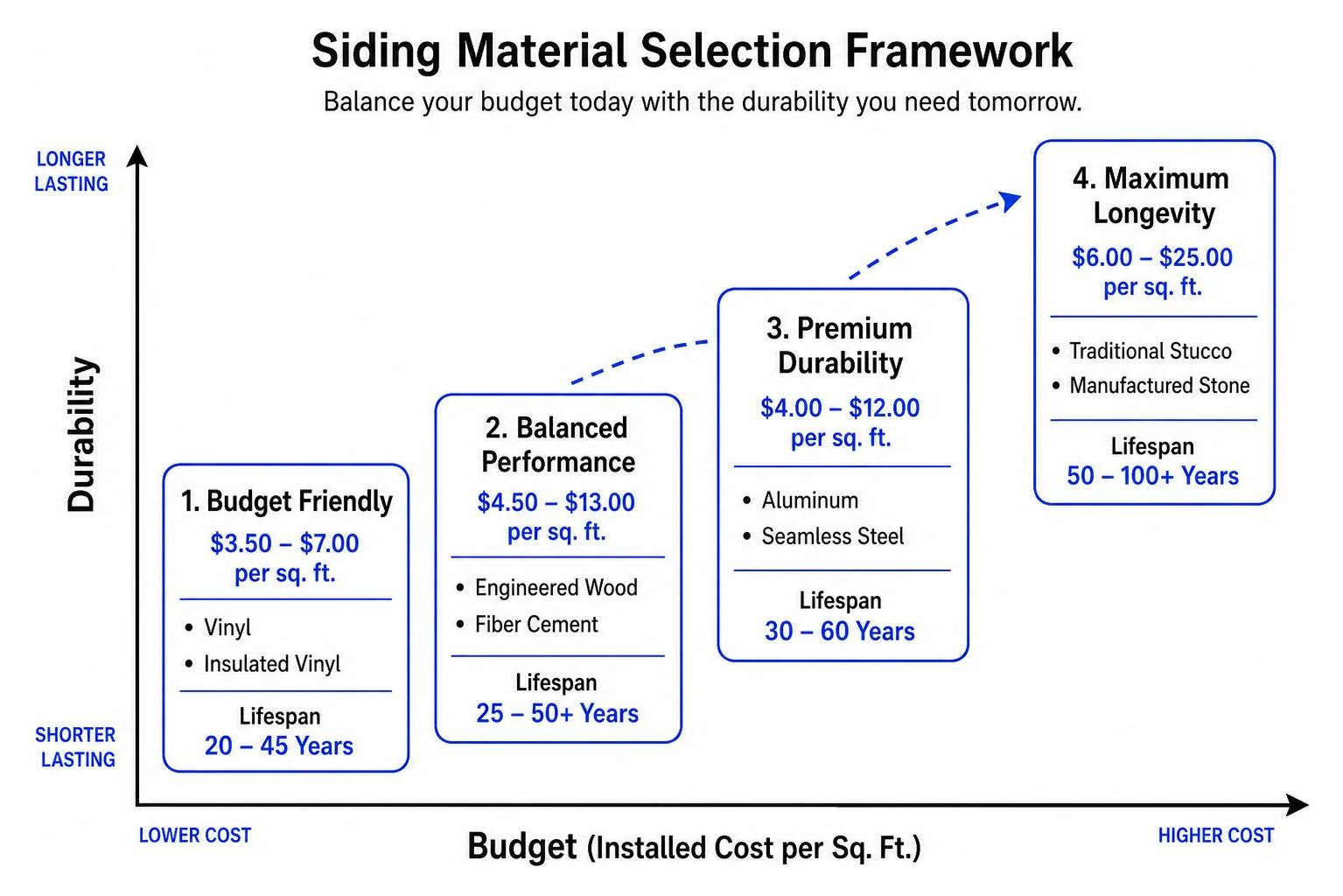
Selecting new siding means balancing initial installation expenses against long-term maintenance cycles and performance benchmarks. Siding material pricing is commonly measured by the “square,” an industry term representing 100 square feet of exterior wall area. Overall installed costs range widely across materials, typically between $3.50 and $25.00 per square foot depending on the product grade, structural access, and job complexity.
Reviewing a comprehensive 2026 house siding cost breakdown helps highlight the dramatic differences in material durability, fire safety, and maintenance requirements:
| Siding Material | Average Installed Cost (Per Sq. Ft.) | Expected Lifespan | Typical Maintenance Frequency | Fire Rating (ASTM E84 / E136) |
|---|---|---|---|---|
| Standard Vinyl | $3.50 – $7.00 | 20 – 40 Years | Low (Wash every 1–2 years) | Class A / Varies (Melts in high heat) |
| Insulated Vinyl | $5.00 – $9.50 | 25 – 45 Years | Low (Wash every 1–2 years) | Class A (EPS backing adds insulation) |
| Fiber Cement | $6.00 – $13.00 | 40 – 50+ Years | Moderate (Repaint every 12–15 yrs) | Noncombustible (ASTM E136 / Class A) |
| Engineered Wood | $4.50 – $9.00 | 25 – 40 Years | Moderate (Repaint every 8–12 yrs) | Class C (Can be treated for higher) |
| Natural Cedar/Wood | $8.00 – $14.00 | 20 – 40 Years | High (Stain or paint every 5–7 yrs) | Class C |
| Aluminum | $4.00 – $8.00 | 30 – 50 Years | Low (Repaint chalking at 15–20 yrs) | Noncombustible (Class A) |
| Seamless Steel | $5.00 – $12.00 | 40 – 60 Years | Very Low (Occasional rinse) | Noncombustible (Class A) |
| Traditional Stucco | $6.00 – $10.00 | 50 – 80 Years | Moderate (Seal hairline cracks) | Noncombustible (Class A) |
| Manufactured Stone | $12.00 – $25.00 | 50 – 100+ Years | Very Low (Inspect mortar joints) | Noncombustible (Class A) |
Traditional Vinyl and Insulated Vinyl Siding
Vinyl siding, manufactured from durable polyvinyl chloride (PVC), remains the single most common residential cladding in America, covering roughly 27% of new single-family homes. Homeowners consistently explore diverse vinyl siding options because the material never rots, does not support insect nesting, and eliminates the need for exterior painting. Standard vinyl panels cost between $3.50 and $7.00 per square foot installed, with an average 2,000-square-foot home requiring about $10,500 for a quality mid-grade installation.
For improved energy performance, upgrading to high performance insulated siding integrates contoured expanded polystyrene (EPS) foam directly behind the PVC face. This rigid backing bridges the thermal gap created by standard wall studs, boosting your home’s wall R-value while providing superior impact resistance against stray baseballs and severe hailstorms. Premium vinyl lines also feature advanced UV stabilizers and acrylic caps that resist surface chalking and sun fading on south-facing elevations.
Fiber Cement and Engineered Wood House Siding
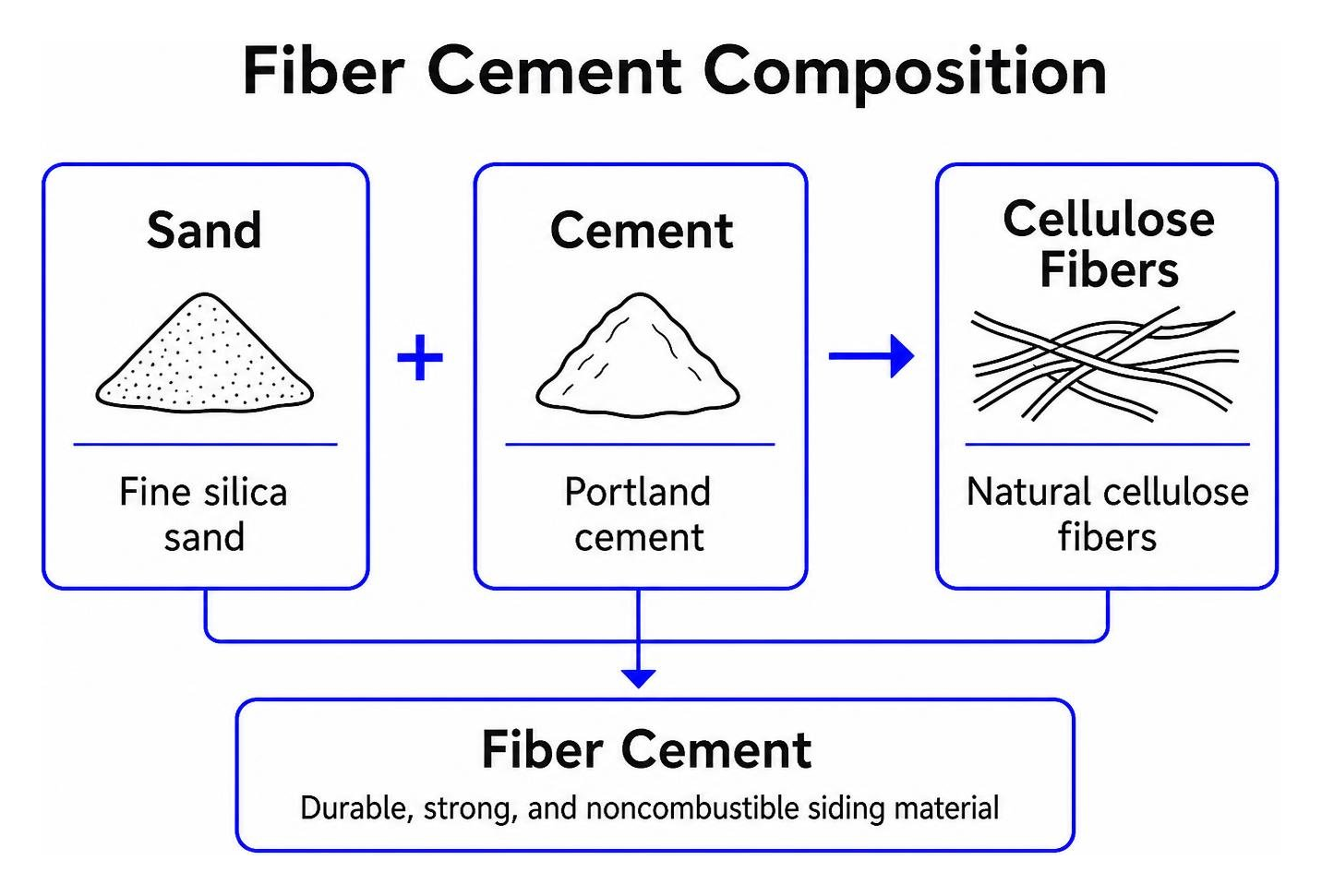
Fiber cement combines Portland cement, fine silica sand, water, and natural cellulose fibers to create an ultra-resilient exterior plank. Widely trusted for demanding environments, fiber cement siding replicates the deep grain patterns of authentic wood without warping, splitting, or rotting. Fiber cement runs between $6.00 and $13.00 per square foot installed, with top-tier brand solutions like James Hardie running $20,000 to $25,000 for a complete 2,000-square-foot residence. Because it is completely impervious to woodpeckers, carpenter bees, and termites, fiber cement stands as a multi-decade protective shell.
Engineered wood products, such as LP SmartSide, use wood strands bonded with industrial-grade resins, waxes, and zinc borate wood preservatives to create durable, lightweight siding. As noted in this man-made siding engineering study, engineered wood has an embodied carbon footprint roughly one-tenth that of fiber cement while offering exceptional impact resistance. Engineered wood lap siding is engineered to resist hail strikes up to 1.75 inches in diameter and can handle sustained wind gusts of up to 200 miles per hour when fastened to code. Furthermore, its lightweight 16-foot planks result in 33% fewer seams across large wall spans compared to standard 12-foot siding boards.
Metal, Stucco, and Masonry Cladding
Metal claddings provide an exceptional defense against rot, pests, and fire. Aluminum siding costs between $4.00 and $8.00 per square foot installed. It resists rust, making it an excellent moisture-resistant solution, though it can dent under heavy impacts. Heavy-gauge seamless steel siding costs between $5.00 and $12.00 per square foot, providing extreme rigidity and hail resistance that lasts 40 to 60 years.
Traditional three-coat stucco ($6.00 to $10.00 per square foot) and manufactured stone veneer ($12.00 to $25.00 per square foot) create dense, masonry envelopes. While masonry demands a higher initial labor investment during application, it offers an incredible cost per year of service. Stucco averages approximately $231 per year and aluminum about $263 per year across their lifespans due to minimal routine maintenance demands.
Choosing Siding for Climate Durability, Fire Safety, and ROI
Selecting exterior materials requires matching product capabilities to local weather challenges. Extreme heat, humid summers, and freezing winter temperatures place continuous stress on building envelopes. In fact, 76% of homeowners in recent exterior surveys noted that the increasing frequency of extreme weather directly influenced their home renovation choices.

Pairing durable cladding with high-grade continuous insulation is essential for boosting energy efficiency across seasonal temperature swings. Reviewing recent residential construction siding research confirms that matching proper cladding types with localized detailing prevents premature envelope failure.
Weather Resistance and Wildfire Ratings Across Cladding
Cladding materials vary significantly in their reaction to heat, flame spread, moisture, and high winds:
- Fire Performance: Fiber cement, masonry, stucco, and steel provide noncombustible fire protection, achieving ASTM E136 compliance and Class A flame spread ratings. They do not ignite when exposed to flying embers or open flames. Conversely, standard engineered wood holds a Class C fire rating, and traditional vinyl will soften and distort when exposed to intense radiant heat.
- Wind Load Integrity: Rigorous fastening schedules allow engineered wood, fiber cement, and heavy-gauge vinyl to withstand wind speeds upwards of 110 to 200 mph.
- Moisture and Freeze-Thaw Resistance: Freeze-thaw cycles cause trapped moisture to expand, which can crack rigid stucco and unsealed fiber cement. Cellular synthetics, vinyl, and prefinished engineered wood flex naturally with temperature swings without cracking.
- Pest Defense: Fiber cement, metal, and composite materials offer zero nutritional value to termites, carpenter ants, or rodents, eliminating pest degradation.
Upfront Investment vs. 50-Year Total Cost of Ownership
Looking strictly at initial material purchase prices can hide the real financial picture. A material that costs less on day one can become more expensive over a 50-year home lifecycle if it requires frequent repainting, panel replacements, or full tear-offs.
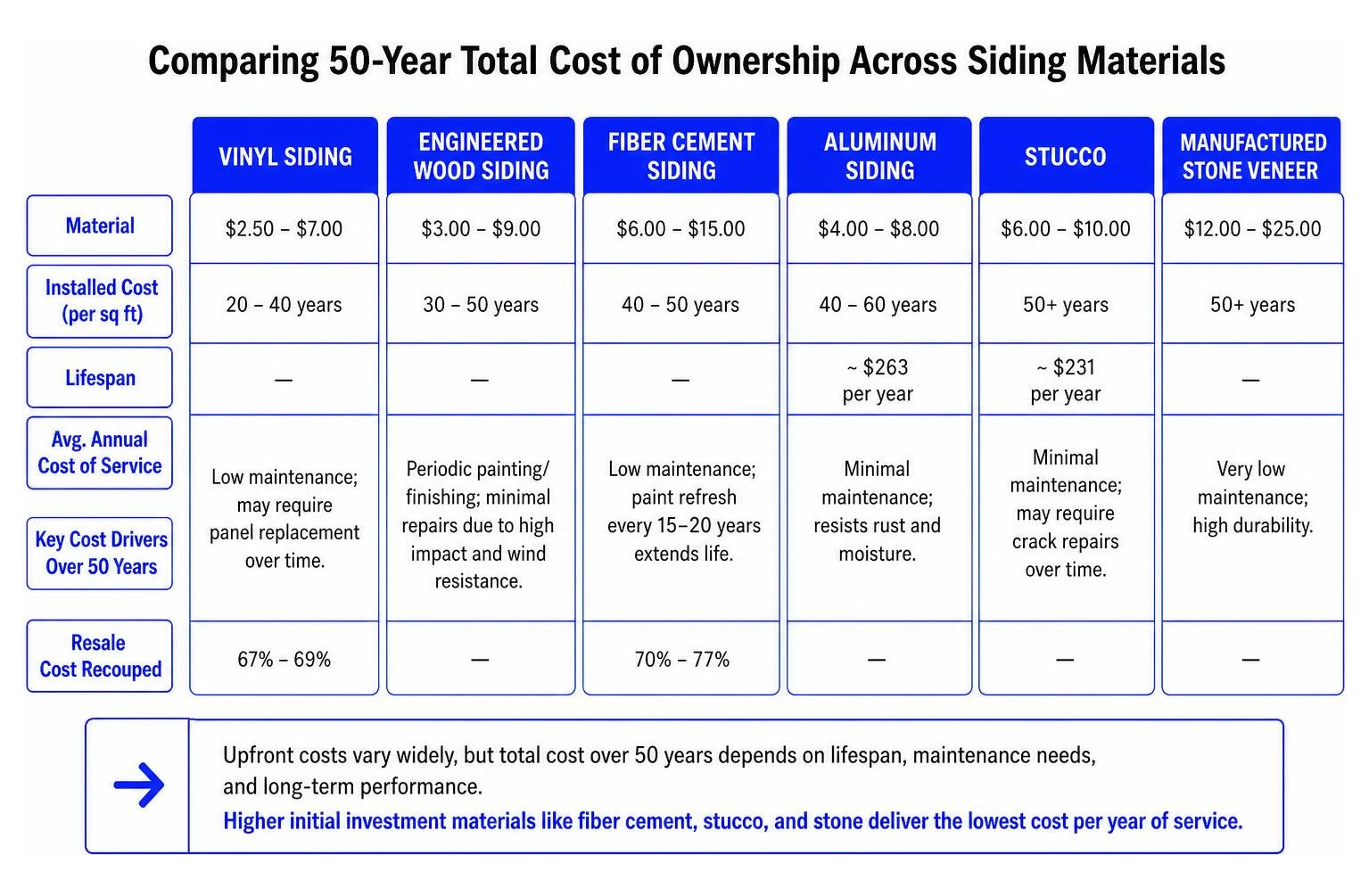
When calculating the lifetime cost of vinyl siding alongside fiber cement or engineered wood, remember to include long-term paint cycles (every 5–7 years for natural wood versus 15–20 years for factory-baked fiber cement coatings) and insurance savings. Quality exterior siding also delivers strong returns at resale:
- Fiber cement siding replacements recoup approximately 70% to 77% of their project cost at resale.
- Vinyl siding replacements recoup roughly 67% to 69% of initial installation costs according to industry Cost vs. Value data.
Modern Architectural Styles and Exterior Design Trends
Today’s home designs move away from plain, single-profile exteriors in favor of multidimensional surfaces, rich textures, and contrasting architectural lines. By mixing profiles and colors, homeowners can showcase architectural features and elevate everyday curb appeal.
Refreshing your home with modern siding styles lets you create an updated, tailored exterior that highlights rooflines, entryways, and gables.
Modern Profiles: Board and Batten, Vertical Panels, and Shake
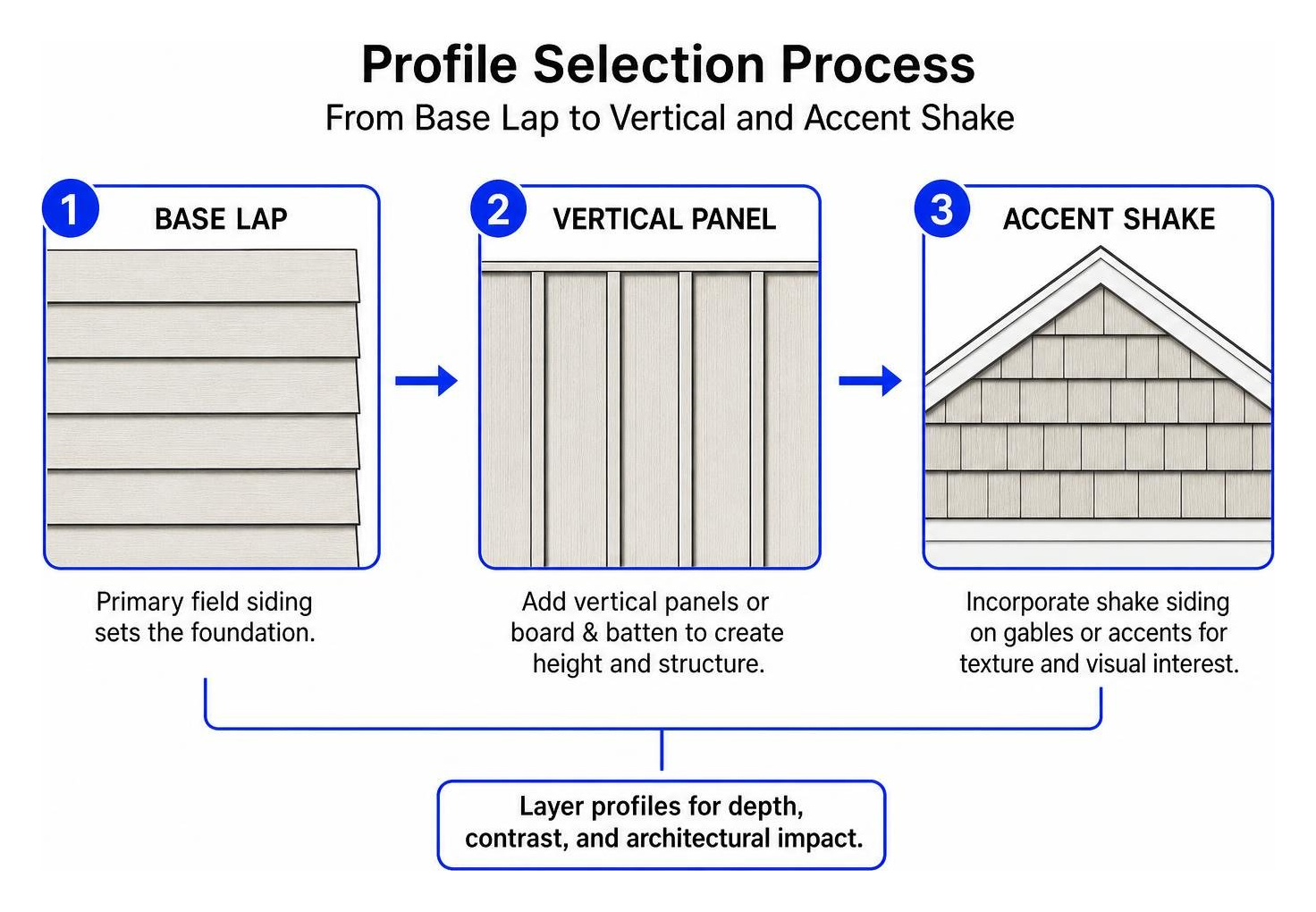
Contemporary exteriors frequently blend multiple siding profiles to add architectural depth:
- Horizontal Lap Siding: The traditional standard, available in smooth or cedar-grain textures with reveals ranging from narrow 4-inch Dutch lap to bold 8-inch profiles.
- Board and Batten Vertical Panels: Characterized by wide vertical planks paired with slender batten strips over the seams, this profile defines the popular modern farmhouse aesthetic. You can review exact Hardie panel vertical siding specifications to see how vertical panels create dramatic height and crisp architectural shadows.
- Cedar Texture Shakes: Frequently applied to gable ends, dormers, and bump-outs, shake siding delivers textured, rustic warmth with straight or staggered edge reveals.
Trending Exterior Color Palettes and House Siding Textures
Exterior color palettes in 2026 balance earthy organic tones with bold architectural contrasts:
- Warm Neutrals: Shades like putty, warm taupe, light sand, and creamy off-white are replacing cool grays to create welcoming, timeless facades.
- Earthy Forest Greens and Coastal Blues: Deep olive, sage, slate, and navy blue add character when paired with crisp white or natural wood trim.
- Dramatic Dark Tones: Discover why black siding homes are making waves in modern architecture. Charcoal, iron gray, and rich black finishes create striking, moody exteriors when accented with warm natural cedar details.
- Matte and Low-Sheen Textures: Modern low-luster finishes conceal minor substrate imperfections and minimize solar glare compared to older high-gloss vinyl materials.
Essential Installation Best Practices and Contractor Bids
Proper material installation is just as critical as selecting the right siding. Siding alone is not a 100% waterproof barrier; it acts as a water-shedding exterior screen. The weather-resistive barrier behind the siding is what keeps moisture out of your structural framing.
Before beginning your exterior renovation, reviewing real-world siding installation costs and using a vetted guide for hiring siding replacement contractors will help ensure your project runs smoothly from start to finish.
Critical Installation Details: Rainscreens, WRBs, and Expansion Gaps
To protect your exterior walls from moisture damage and thermal buckling, professional siding installations must follow key technical guidelines:
- Weather-Resistive Barrier (WRB) Integration: High-performance housewrap must be layered shingle-style with taped seams and integrated flashing around all window, door, and wall penetrations.
- Ventilated Rainscreen Gaps: Installing vertical furring strips (1/4-inch to 3/4-inch thick) behind the siding creates a drainage and ventilation plane. This airspace allows trapped moisture to drain away and lets air circulate to dry out the framing.
- Kick-Out Flashing: Dedicated kick-out flashings must be installed at roof-to-wall intersections to direct water runoff away from the wall assembly and into the roof drainage system.
- Thermal Expansion Clearances: Vinyl siding expands and contracts 1/2 inch or more over a 12-foot length. Fasteners must be placed in the center of the nailing slots, leaving a 1/32-inch gap (the thickness of a dime) beneath the nail head. Never face-nail through the vinyl panel.
- Clearances to Grade and Rooflines: Siding must maintain a minimum 6-inch clearance from finished earth grade and a 2-inch clearance above hard surfaces and roof shingles to prevent water wicking.
- Gentle Cleaning: Clean siding using soft-washing methods with mild detergents rather than high-pressure power washing, which can force water past flashings and into the wall cavities.

Common Siding Mistakes and Evaluating Detailed Bids
Improper installation can void manufacturer warranties and trap moisture inside wall cavities. Knowing the early signs of siding damage—such as rippling vinyl, loose boards, peeling interior paint, or musty odors—can help you catch problems before structural sheathing rots.
When collecting contractor estimates, avoid vague, single-paragraph quotes. A comprehensive contractor bid should detail:
- Complete removal and disposal of old siding, including dedicated dumpster fees.
- Inspection and per-sheet replacement costs for damaged OSB/plywood wall sheathing.
- Brand name, model line, thickness, and color profile of the specified siding.
- WRB brand, window pan flashing, and weep screed specifications.
- Soffit, fascia, trim, and corner post scope.
- Labor warranty coverage terms and installation timelines.
Frequently Asked Questions About Exterior Siding
How do I estimate how much siding material my home requires?
To estimate your home’s exterior surface area:
- Measure the perimeter of your home and multiply it by the exterior wall height to calculate gross square footage.
- For gable ends, multiply the width of the wall by the height from the eave to the roof peak, then divide by two.
- Calculate the square footage of large openings (such as two-car garage doors and picture windows) and subtract them from the gross total.
- Divide the final square footage by 100 to determine how many “squares” of siding are needed.
- Add a 10% to 15% waste factor to account for corner cuts, window openings, and material trimming during installation.
Should trim, fascia, and soffits be replaced at the same time as siding?
Yes. Replacing trim, fascia, and soffits alongside your siding ensures a fully integrated moisture envelope. Because staging and scaffolding are already set up around the home, bundling these installations avoids duplicate labor charges later. It also allows installers to inspect the underlying fascia boards for hidden water damage before securing new aluminum or composite trim.
How does home shape and architectural complexity affect siding costs?
A home’s architectural shape significantly impacts installation labor, which accounts for 40% to 65% of total project costs. A simple single-story rectangular home requires fewer cuts and standard ladder setups. In contrast, complex architectural plans with multiple stories, steep gables, dormers, and bump-outs require extensive custom cuts, specialized staging, and higher material waste factors. These variables can shift total project costs by 15% to 30% compared to simple home designs.
Conclusion
Choosing the right house siding comes down to balancing your aesthetic vision, budget, and performance needs. Whether you select versatile insulated vinyl, high-durability fiber cement, engineered wood, or clean modern metal, investing in high-grade cladding and a properly sealed weather barrier safeguards your home and builds lasting equity.
At Martin & Sons, our team has delivered dependable exterior renovations across St. Louis, St. Charles, Florissant, Chesterfield, and surrounding communities for more than three decades. We believe in providing real peace of mind: we charge no upfront deposits, require payment only upon 100% project completion and satisfaction, provide transparent pricing upfront, and back our work with lifetime labor warranties. In addition to siding, windows, and roofing, we also provide integrated gutter installations whenever we perform a complete roofing replacement (please note that Martin & Sons is not a standalone gutter company and only provides gutter services when performing a roofing project).
Ready to refresh your home’s exterior? Contact our team today for a free inspection and discover how our professional siding replacement services can bring your home’s design vision to life.