Why Homeowners Are Turning to Vinyl Wrapped Windows for Easy Color Makeovers
Vinyl wrapped windows give you a way to change the look of your window frames — without tearing anything out or committing to a permanent paint job.
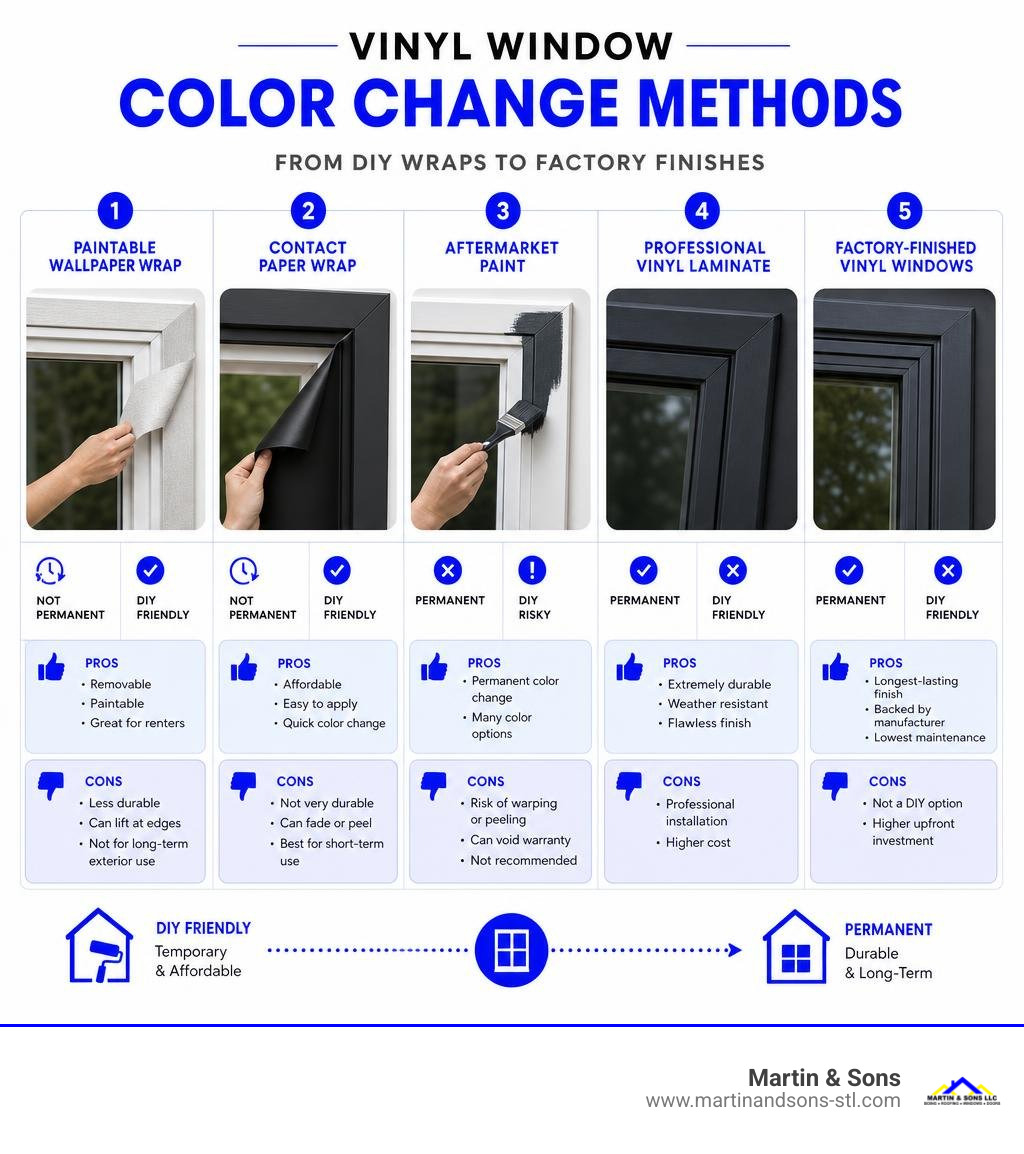
Here’s a quick overview of your main options:
| Method | Permanent? | DIY-Friendly? | Best For |
|---|---|---|---|
| Factory-finished vinyl windows | Yes | No | Long-term color change |
| Aftermarket paint | Yes | Risky | Not recommended |
| Paintable wallpaper wrap | No | Yes | Renters, temporary updates |
| Contact paper wrap | No | Yes | Low-cost color changes |
| Professional vinyl laminate | Yes | No | Durable exterior recolor |
Changing your window color sounds simple — but the material matters a lot. Painting vinyl windows directly can cause warping, peeling, and permanent damage to the factory finish. Once you paint them, there’s no going back.
That’s why many homeowners are exploring wrapping as a smarter alternative — whether that’s a DIY peel-and-stick solution or a professional factory finish.
I’m John Martin, and my family business has been installing and replacing windows in St. Louis since 1953 — we’ve seen every approach to updating vinyl wrapped windows, from quick DIY hacks to full professional replacements. Whether you’re looking for a temporary fix or a permanent upgrade, this guide will walk you through exactly what works and what doesn’t.
Learn more about vinyl wrapped windows:
Understanding Vinyl Wrapped Windows: What Are They?
When we talk about vinyl wrapped windows in a residential setting, we are generally looking at one of two things: a structural window frame that has been wrapped in a vinyl foil laminate during manufacturing, or a window accessory (like an extension jamb) that features a thin vinyl film wrapped over a wood composite core.
To help you identify what is currently installed in your home, let’s look at how these materials compare:
| Feature | Vinyl Wrapped Components | Painted Wood | Factory-Finished Vinyl |
|---|---|---|---|
| Surface Texture | Slight “orange-peel” texture | Smooth or visible wood grain | Ultra-smooth, uniform matte |
| Maintenance | 100% maintenance-free; wipe clean | Needs periodic repainting/sealing | Low-maintenance; wash with water |
| Moisture Resistance | High; vinyl skin protects the core | Low; prone to rot if seal fails | High; completely impervious |
| Primary Use | Extension jambs, interior casing | Traditional trim, historic homes | Full window frame and sash |
If you are trying to figure out if your existing interior window trim is painted wood or vinyl-wrapped, use your sense of touch. Run your fingers over the frame. A vinyl-wrapped extension jamb typically exhibits a very subtle “orange-peel” texture. Prefinished painted wood jambs, on the other hand, will either feel completely smooth or have a distinct wood grain texture beneath the paint.
Knowing this difference is crucial. If you attempt to paint directly over a vinyl-wrapped jamb without the proper primer, the paint will bubble and peel off in sheets. If you are torn between the warmth of interior wood and the durability of vinyl, you might want to read The Best of Both Worlds A Guide to Vinyl Clad Wood Windows to see how hybrid systems operate.
Pre-Assembled Vinyl Wrapped Glass Block Windows
Another highly popular application of this technology is the pre-assembled vinyl wrapped glass block window. Often used in basement remodels, bathrooms, and garages across St. Louis, these units combine the security and privacy of glass blocks with the ease of a modern vinyl installation.
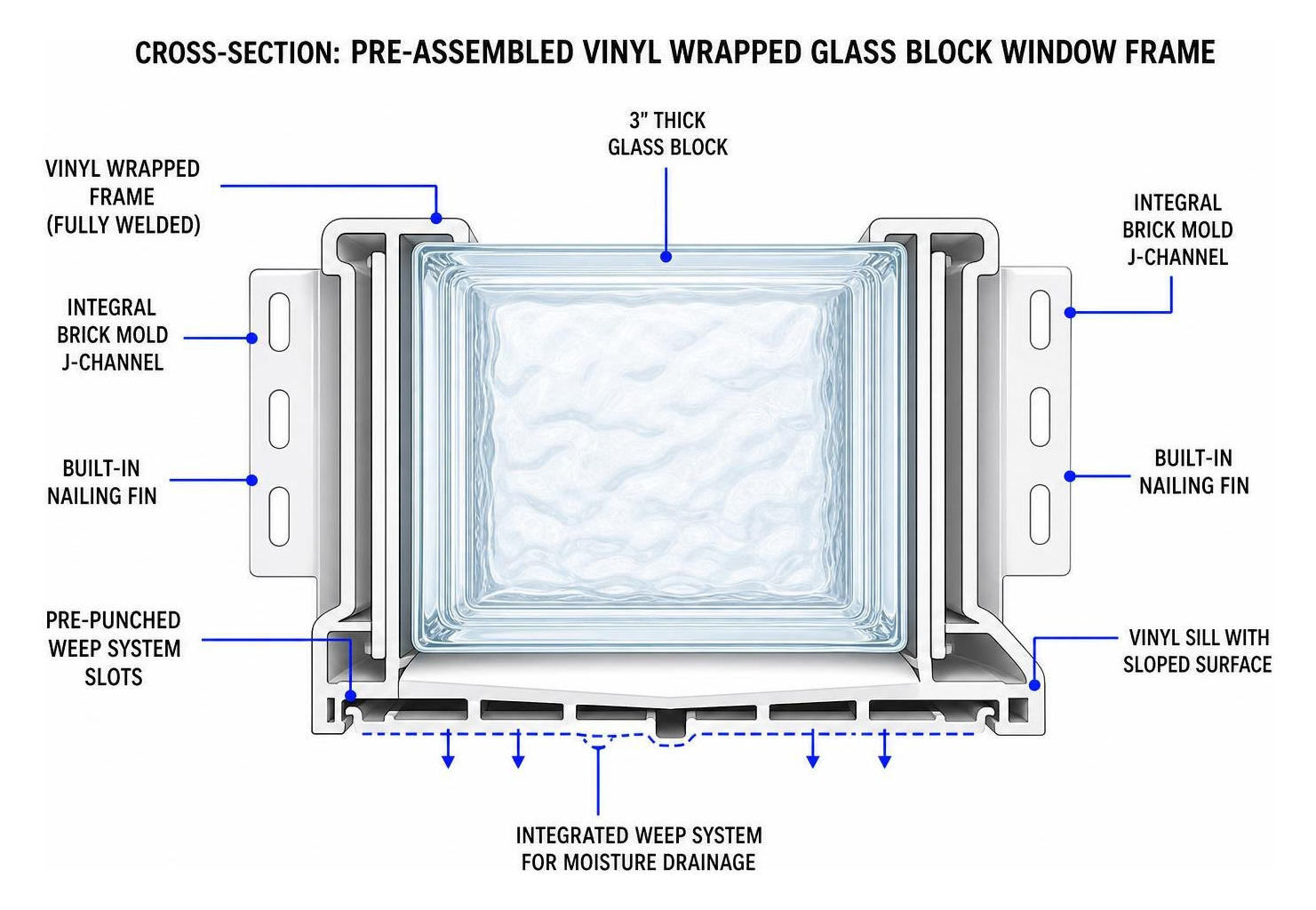
These specialty windows feature 3-inch thick glass blocks (such as the popular Nubio pattern, which lets in natural light while distorting the view for privacy) encased in a heavy-duty, fully welded vinyl frame.
- Built-In Nailing Fins & J-Channels: These frames come with built-in nailing fins and decorative brick mold J-channels, making the installation watertight and straightforward for builders.
- Weep System: The frame is pre-punched for a integrated weep system to ensure proper moisture drainage.
- Sizing Flexibility: These units are highly customizable. For example, Nubio vinyl wrapped glass block windows are available in 11 width options ranging from 8″ to 80″ and 11 height options from 8″ to 80″.
- Lead Times: Because these are built to order, the typical lead time for custom production is about 3 to 4 weeks.
Can You Paint Vinyl Windows? Risks and Permanent Alternatives
It is a question we get all the time at Martin & Sons: “Can I just buy some black paint and paint my white vinyl windows?”
Technically, yes, you can paint them. But doing so is a high-commitment option with massive structural risks.
Vinyl is a material that expands and contracts significantly with temperature changes. In our St. Louis climate — where summers routinely soar past 90°F and winters drop below freezing — this thermal movement is extreme.
White vinyl is designed to reflect sunlight. If you paint that white vinyl a dark color like black or dark bronze, the frame will absorb a massive amount of heat. The vinyl can easily reach temperatures north of 140°F in direct sunlight, causing the frame to warp, twist, bow, or completely fail. Once warped, the window will no longer open or close properly, and its energy-efficient seal will be permanently broken.
Furthermore, painting vinyl is permanent. Once painted, you can never return them to their original factory state. If you are considering this path, we highly recommend reading The Complete Guide to Vinyl Windows and weighing the Vinyl Windows What Are the Pros and Cons of This Material before making a decision that could void your manufacturer’s warranty.
If you want dark windows, the safest and most durable route is factory-finished vinyl. High-quality manufacturers use advanced co-extrusion or heat-cured exterior coatings designed specifically to handle thermal expansion. In fact, factory-applied dark bronze and black painted vinyl windows have been reported to look as good as new even after 15 years of continuous use.
The Pros and Cons of DIY Vinyl Wrapped Windows
If you are renting a home in St. Charles or Chesterfield, or if you simply aren’t ready to commit to a permanent color change, a DIY vinyl wrap is a fantastic alternative to painting.
Using materials like paintable wallpaper or high-quality adhesive contact paper on the non-moving parts of your window frame allows you to change the color of your windows without damaging the underlying vinyl.
- The “Wallpaper Wrap” Hack: You can cut strips of paintable wallpaper to match the width of your window sashes, apply them to the vinyl, and paint the wallpaper whatever color you desire. When it is time to move out or change styles, you simply peel the wallpaper off.
- DIY Window Grids (Muntins): To complete the look, some creative homeowners buy thin wood screen molding, cut it to size using hand-held miter shears, and paint it. To keep the street view looking uniform, they back the grid with white contact paper before adhering it to the glass using small beads of clear caulk.
- Decorative Glass Films: If you want to add a stained-glass look to the glass pane itself, you can use specialty products like Rwraps™ Crisp Window Stained Glass Vinyl Wrap | Stained Glass Print Car Wrap Film – Rvinyl, which is available in convenient widths of 12″, 24″, and 59″ with gloss or matte lamination.
Step-by-Step Guide: How to Wrap Your Home Windows
If you have decided to tackle a temporary or semi-permanent DIY vinyl wrap on your home window frames, preparation is everything.
Tools and Materials Needed:
- High-quality vinyl wrap film (with air-release adhesive)
- Isopropyl alcohol (70% or higher)
- Lint-free microfiber cloths
- A sharp utility knife or razor blade
- A felt-edge squeegee
- A heat gun or high-powered hair dryer
Step 1: Deep Clean the Frames
Vinyl adhesive will not stick to dust, grease, or window cleaning chemicals. Wipe down the entire frame with a mixture of mild soap and water. Once dry, clean the surface thoroughly with isopropyl alcohol to remove any remaining oils.
Step 2: Measure and Rough-Cut
Measure each section of the window frame (top, bottom, and sides). Cut your vinyl wrap film into strips, leaving at least an extra inch of length and width on all sides.
Step 3: Apply the Vinyl
Peel back a small section of the backing paper. Align the vinyl strip with the edge of the frame. Using your felt-edge squeegee, slowly press the vinyl onto the frame, working from the center outward to push out any air bubbles. High-quality films with air-release channels make this step much easier.
Step 4: Heat and Conform
Use your heat gun on a low setting to gently warm the vinyl. This softens the material, allowing it to conform perfectly to the slight orange-peel texture or contours of the frame. Do not overheat, or you will melt the film!
Step 5: Trim the Excess
Using a fresh, sharp razor blade, carefully trim the excess vinyl flush with the window edge. Use a steady hand and a shallow angle to avoid scratching your glass or cutting into the window’s rubber seals.
If your current windows are simply too old, drafty, or damaged to wrap, it might be time to look into a full upgrade. Take a look at our guides on Out with the Old Step-by-Step Vinyl Window Replacement and Window Replacement Tips for Your Next Home Project for professional advice on starting fresh.
How to Install and Maintain Your Vinyl Wrapped Windows
Once your DIY wrap is applied, proper maintenance will ensure it looks great for years:
- Curing Time: Allow the adhesive to cure for 24 to 48 hours before washing the windows or opening and closing them excessively.
- Lamination Matters: If you are wrapping exterior surfaces, always choose a laminated vinyl film. Unlaminated wraps are only suitable for low-traffic indoor use; they will quickly fade and degrade under direct sunlight.
- Cleaning: Never use abrasive scrubbers or harsh chemical solvents on wrapped frames. A soft cloth with mild dish soap and warm water is all you need to keep them clean.
For more long-term planning, check out What to Consider When Replacing Your Windows to see how maintenance-free factory vinyl stacks up against DIY wraps over time.
Automotive vs. Residential Window Wraps: Key Differences
It is easy to get confused when searching for “window wraps” online, as the term is heavily used in both the home improvement and automotive industries. However, the materials and purposes are completely different.
Automotive window wraps are designed for glass application, whereas residential wraps are typically designed for the vinyl frames surrounding the glass.
- Perforated Vinyl: Vehicles often use perforated vinyl film (typically 6.0 mil thick) for rear and side windows. This material features tiny holes that allow passengers to see out, while people on the outside only see the printed graphic. For example, a Custom 3-Window Perforated Vinyl Wrap Set for SUV & Pickup Trucks – Favor Graphics is a popular option for business advertising or personalization.
- Nano-Ceramic Window Tint: Unlike frame wraps, these are applied directly to the interior glass surface. High-end automotive products, like the Nano Ceramic Windows Tint | Tesla Model Y Juniper 2026 – TWRAPS, are engineered to block over 99% of harmful UV rays and reject massive amounts of infrared heat.
- Heat Rejection Technology: Advanced films like the Nano Ceramic Window Tint Black Crystal | 35 % VLT UV Heat Film use non-metal ceramic particles to block heat without interfering with GPS, radio, or mobile phone signals.
Legal Considerations for Vehicle Window Tinting and Wraps
If you are considering wrapping or tinting the windows on your vehicle in the St. Louis metro area, you must remain compliant with Missouri state laws.
Missouri law requires a minimum of 35% Visible Light Transmission (VLT) on the front driver and passenger side windows. This means at least 35% of light must pass through the glass. Rear side windows and back windshields can be tinted darker, but front windshields can only have tint applied to the top portion (above the AS-1 line).
Using high-quality nano-ceramic films is highly recommended because they can block over 90% of infrared heat even at lighter, fully legal VLT levels (like 50% or 70% VLT), giving you maximum comfort without risking a traffic ticket.
Frequently Asked Questions about Window Wraps
Can you wrap vinyl windows in a different color instead of painting them?
Yes! Using a temporary vinyl wrap (like contact paper or paintable wallpaper) is a highly effective, renter-friendly way to change your window frame color. It protects the original white vinyl frame underneath and can be peeled off cleanly when you want to revert to the factory finish.
How long do factory-painted dark vinyl windows last?
High-quality, factory-finished dark vinyl windows are built to last. Premium lines, such as the GoldenVinyl® Triple Glaze 1000 Series, are engineered with advanced thermal resistance to prevent warping. These factory finishes routinely look as good as new after 15+ years of direct sun exposure.
Does nano-ceramic window tint block UV rays and heat?
Yes. Nano-ceramic window tint is incredibly efficient, blocking over 99% of harmful UV rays and rejecting up to 96% of infrared heat. Because it is completely metal-free, it provides this protection without interfering with your cell phone or smart home signals.
Conclusion
Whether you choose a creative DIY temporary wrap or decide it is time to upgrade to gorgeous, factory-finished black vinyl frames, changing your window color can completely transform your home’s curb appeal.
If you are tired of dealing with old, drafty windows or worrying about the risks of painting your current vinyl frames, let us help. At Martin & Sons, we have been serving homeowners across St. Louis, St. Peters, St. Charles, Florissant, Chesterfield, Creve Coeur, Maryland Heights, and O’Fallon for over seven decades.
We make the process completely stress-free:
- No upfront deposits — you only pay when the job is 100% complete and you are totally satisfied.
- Lifetime labor warranties on our installations.
- The best prices upfront without high-pressure sales tactics.
Ready to explore your options for a permanent, maintenance-free window upgrade? Contact us today or visit our showroom at 8460 N. Lindbergh Blvd. Suite 11, Florissant, MO 63031.
Check out our guides on The Best Vinyl Window Installers for a Maintenance-Free Life and Vinyl Windows What Are the Pros and Cons of This Material to start planning your home’s next big upgrade!